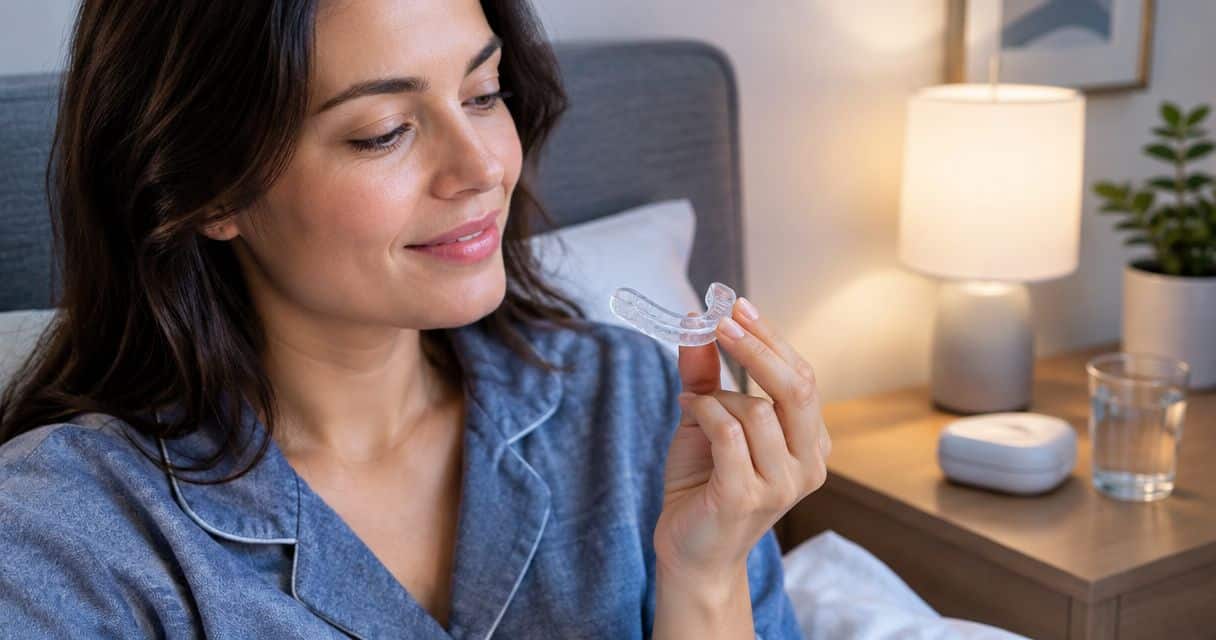
You need a night guard after a dental crown if your dentist finds grinding, clenching, or other bite-related risks that warrant protection; a new crown alone does not make a guard necessary. A guard separates your teeth during sleep, but it does not cure grinding or correct a crown that hits too high when you bite.
TL;DR
A night guard after dental crown treatment is not automatic; grinding, clenching, and bite findings guide the decision.
An existing night guard needs a fit check after a new crown; never force it over the tooth.
A crown that hits first needs a dental assessment, not a night guard to cover the problem.
Affordable Dentist Near Me provides crown care; ask whether your bite and existing appliance need review.
Why this matters
Protecting a crown starts with identifying the problem, not automatically buying an appliance. Grinding protection, bite adjustment, and treatment for tooth pain address different concerns. Choosing the wrong response leaves the actual cause untreated.
For your 2026 crown-care plan, discuss symptoms and any appliance you already wear during your dental services visit. Bring the guard itself, not just a description of how it fits.
Do you need a night guard after getting a new crown?
A night guard is appropriate when a dental assessment identifies a reason to protect your teeth and restorations from grinding or clenching. Your dentist checks your bite, looks for wear or damage, and asks about symptoms such as morning jaw soreness. Those findings matter more than the fact that you have a crown.
Use the situations below to prepare for that discussion. They are decision points, not a diagnosis you can make at home.
Situation
Best next step
Best for
Important limitation
Grinding or clenching with signs of tooth damage
Discuss a dentist-fitted night guard
Patients who need protection from tooth-to-tooth contact
A guard does not stop the underlying grinding habit
An existing guard no longer seats after crown placement
Have the guard and crown checked together
Patients who already use an appliance
Adjustment is not always enough; replacement sometimes is necessary
The new crown touches before surrounding teeth
Request a bite assessment
Patients with an uneven bite after treatment
A night guard does not correct the crown's contact
No grinding signs, symptoms, or other identified risk
Continue routine crown care and monitoring
Patients without a current reason for a guard
New symptoms or wear require reassessment
Do not use a night guard to make an uncomfortable crown tolerable. A tooth that hurts on biting needs an examination, even if you also grind your teeth.
An existing night guard: check the fit before reuse
A crown changes the outside shape of a tooth. Even a small change can affect how an appliance seats, where it grips, and how your teeth meet against it. A guard that worked before treatment is not automatically suitable afterward.
Bring your appliance to the crown appointment or follow-up visit. Your dentist can check whether it seats fully, removes safely, and contacts the opposing teeth appropriately. Do not bite hard to push a tight guard into position.
An existing guard is best for continued use only when its fit remains appropriate. Keeping a suitable appliance avoids an unnecessary replacement, but forcing an unsuitable appliance risks pressure on the restored tooth. Do not trim, heat, or reshape a dentist-made guard yourself.
This fit check belongs on your 2026 treatment checklist even when the guard looks unchanged. How it feels and functions around the crown matters more than its appearance.
A custom night guard: protection matched to your teeth
A dentist-fitted night guard is made using an impression or scan of your teeth. The dentist checks its fit and the way your teeth contact it, then adjusts it when needed. That oversight is particularly relevant when you have a new restoration.
A custom guard is best for patients whose dentist identifies grinding-related protection needs. Its advantage is an individually assessed fit, not a promise that your crown will never chip or that your jaw symptoms will disappear.
The limitation is ongoing care. A custom appliance still needs cleaning, wear checks, and reassessment after dental changes. Tell your dentist if it becomes loose, develops damage, presses on a tooth, or changes how your bite feels after removal.
Do not assume that a thicker or harder guard is automatically better. Your dentist should select the design around your teeth, bite, symptoms, and treatment history rather than a general rule about crown material.
A store-bought guard: convenience does not confirm fit
Store-bought guards provide a barrier between the teeth without an individually prescribed design. Some are molded at home; others have a ready-made shape. Neither format confirms that the appliance fits safely around your particular crown.
An over-the-counter guard is best considered only after your dentist confirms that it is suitable for your situation. The practical advantage is that it does not require fabrication from a dental scan or impression. The drawback is that its fit and tooth contacts are not individually established by the packaging instructions.
Ask before using a heat-molded appliance around a temporary crown or a restoration that feels loose. Stop using a guard that causes tooth pain, presses on the crown, or will not seat without force. Do not keep modifying it to work around an unexplained problem.
Why night guard recommendations vary
Two people with new crowns can receive different advice without either recommendation being wrong. The decision depends on the examination and the appliance involved, not a blanket rule that every crowned tooth needs coverage.
Grinding evidence: Worn tooth surfaces, repeated chips, and a history of grinding help establish whether protection is needed.
Symptoms: Morning jaw fatigue, tenderness, or headaches deserve assessment, but symptoms alone do not prove grinding.
Bite contacts: A crown that contacts too early needs its bite checked rather than concealed beneath an appliance.
Existing guard fit: A usable appliance and one that grips the new crown too tightly require different next steps.
Treatment stage: Temporary and final crowns have different handling considerations, so your dentist must confirm when an appliance is appropriate.
Other appliances: Retainers, aligners, and sleep-apnea appliances affect the plan; do not layer appliances without instructions.
A crown's material does not replace an individual grinding assessment. Strong materials still need an appropriate bite, and the supporting tooth and surrounding teeth also matter.
How do you safely start wearing a guard after a crown?
There is no universal start date for every crown and appliance. Your dentist should confirm timing based on the restoration, the cement used, and whether the guard fits. Follow your own aftercare instructions rather than an online waiting period.
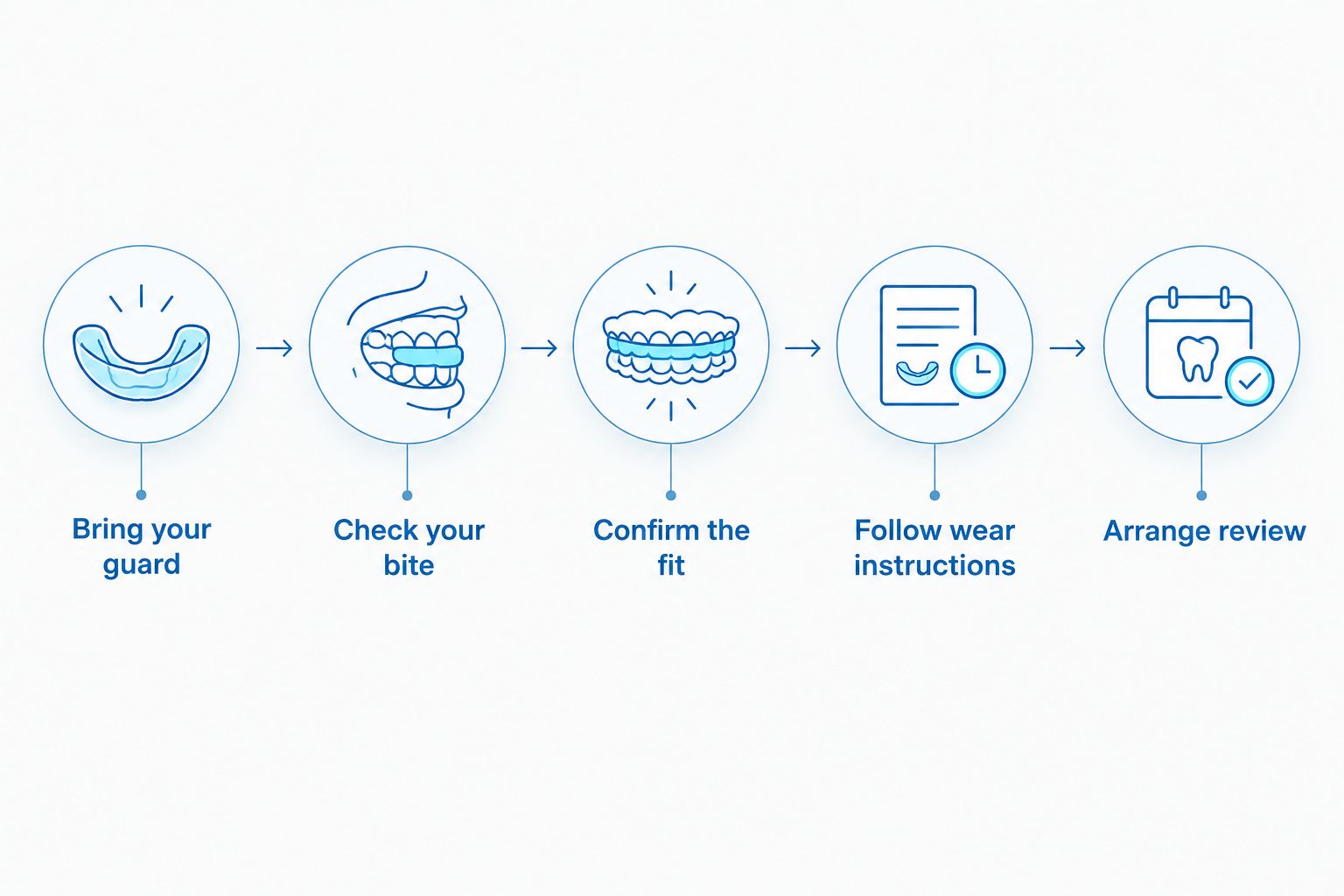
Bring your guard. Take your current appliance to the crown visit and explain whether you wear it consistently.
Check your bite. Tell the dentist if the crown feels taller or touches before your other teeth.
Confirm the fit. Have the appliance assessed around the new crown before resuming use.
Follow wear instructions. Ask when to start, when to remove it, and what symptoms mean you should stop.
Arrange review. Report new pain, damage, looseness, or persistent bite changes instead of waiting for a routine visit.
A useful 2026 appointment note is simple: record what appliance you use, what changed after the crown, and what the dentist instructed. That makes it easier to explain a problem accurately if you need follow-up care.
Confirm the crown’s bite and the guard’s fit before resuming wear.
Before leaving, ask for a clear answer about your own appliance. Knowing whether to use it that night is more useful than a general instruction to protect the crown.
Can you wear a night guard over a temporary crown?
Wear a night guard over a temporary crown only when your treating dentist confirms that the appliance is appropriate. A temporary crown can loosen, and an appliance that grips it tightly creates an avoidable removal concern.
Tell the dentist if your guard covers the temporary crown or feels different after treatment. Do not force the guard on, pull repeatedly against a stuck area, or use a home adjustment to solve the fit. Ask what to do until the final crown is placed.
Does a night guard stop a new crown from breaking?
A night guard provides a protective barrier against tooth-to-tooth contact, but it does not guarantee that a crown will remain intact. Crown damage has more than one possible cause, and a guard cannot address decay, a loose restoration, or every bite problem.
Keep the rest of your care routine. Avoid chewing ice or using your teeth to open packaging, and have a new chip or rough edge checked rather than assuming the guard makes it harmless.
What if the crown hurts when you wear the guard?
Stop using a guard that causes pain around the new crown and contact your dentist. The appliance needs a fit check, and the tooth itself also needs assessment. Do not assume the discomfort is a normal adjustment period.
Report whether the pain happens during insertion, while biting, or after removal. Also explain whether the crown feels high without the guard. These details help your dentist distinguish an appliance problem from a bite or tooth problem.
Seek prompt dental care for a loose crown, worsening pain, swelling, or a bad taste with drainage. Trouble breathing or swallowing, or swelling that is spreading, requires emergency medical attention rather than waiting for an appliance appointment.
Daily care still matters more than the appliance alone
A night guard does not clean the crowned tooth or seal out decay. The edge where the crown meets the tooth still needs daily attention. Brush for 2 minutes, twice a day, with fluoride toothpaste, and clean between your teeth once a day using the method your dentist recommends.
Clean the guard according to its material-specific instructions. Avoid hot water unless the manufacturer or dentist specifically directs it, because heat can distort some appliances. Inspect it for cracks and bring it to dental visits.
For your 2026 home-care routine, keep crown care and appliance care as separate tasks. Putting a clean guard over unclean teeth does not replace brushing or cleaning between them.
Where local crown care fits
Affordable Dentist Near Me is best for Texas families seeking general dental care and crown treatment within a multi-location practice. The practice serves Fort Worth, Dallas, Houston, Waco, Grand Prairie, and Crowley.
Affordable Dentist Near Me's crown services are relevant to this discussion, but the need for a particular night guard still requires an examination. Ask the office about appliance assessment rather than assuming that every crown visit includes a guard. That distinction keeps the next step specific to your needs.
FAQ
Does everyone need a night guard after dental crown treatment?
No, a night guard after dental crown treatment is not necessary for everyone. Your dentist bases the recommendation on grinding, clenching, tooth wear, bite findings, and other individual risks.
Can I use my old night guard after getting a crown?
Use your old night guard only after its fit has been checked around the new crown. Do not force an appliance that no longer seats fully or feels tight against the restored tooth.
Should I wear my night guard the first night after a crown?
Wear your guard the first night only if your dentist has confirmed that its fit and the timing are appropriate. Instructions depend on the crown, cement, and appliance involved.
Is a custom night guard better than a store-bought guard for a crown?
A custom night guard allows your dentist to assess and adjust its fit around your crown. A store-bought guard does not provide that individual fit assessment, and neither option guarantees protection from every cause of crown damage.
Can a night guard fix a crown that feels too high?
No, a night guard does not fix a crown that contacts too early when you bite. Ask your dentist to assess the bite before trying to cover the discomfort with an appliance.
Can a retainer protect my crown instead of a night guard?
A retainer is not automatically a substitute for a night guard because the appliances have different purposes. Tell your dentist about your retainer so protection and tooth-position needs can be considered together.
What should I ask about crown protection at my 2026 dental visit?
Ask whether you have signs of grinding, whether your crown’s bite is even, and whether your current appliance still fits. Affordable Dentist Near Me provides crown care; contact the office for information about your individual treatment needs.
One last thing
Bring the guard even if it fits the opposite arch from your new crown. The crowned tooth still meets that appliance when you close, so the contact deserves a check. An appliance does not have to cover the crown to be affected by it.