By Affordable Dentist Near Me Editorial Team · Updated 2026-08-27
Long-term dental implant success depends on consistent daily hygiene, professional checkups, and healthy habits. Brushing twice daily, flossing around implant posts, and scheduling regular cleanings prevent peri-implantitis, the leading cause of implant failure. Avoiding tobacco, eating a balanced diet, and wearing a nightguard if grinding occurs all protect the implant, gum tissue, and surrounding bone for decades.
Key Takeaways
Maintain excellent oral hygiene daily to prevent implant failure and ensure long-term success.
Schedule regular dental check-ups every six months at Affordable Dentist Near Me in Fort Worth.
Avoid smoking and excessive alcohol consumption, as these factors significantly reduce implant survival rates.
Eat a balanced, implant-friendly diet and protect implants during sleep and sports activities.
What makes dental implants last?
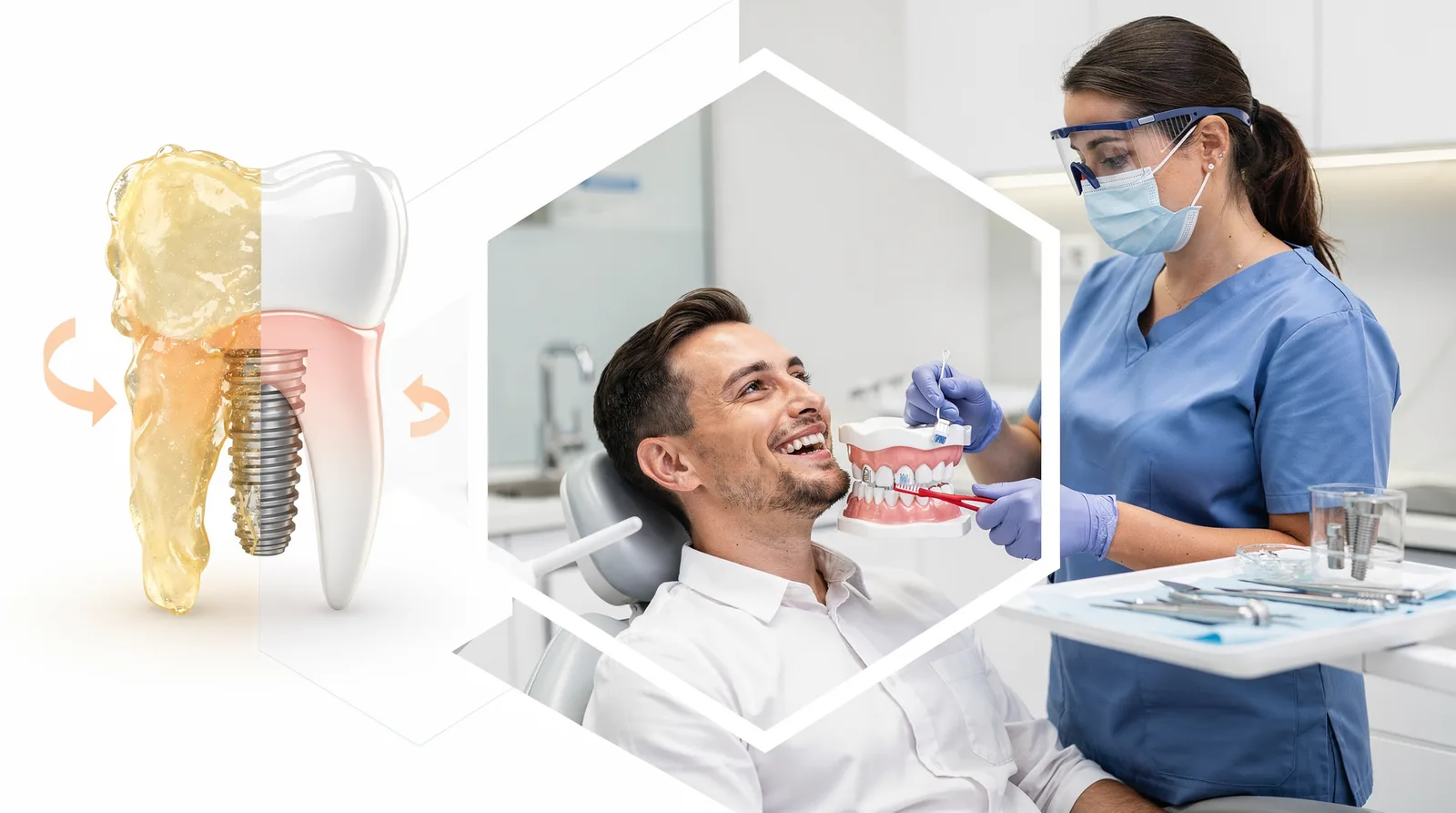
Dental implants achieve their remarkable durability through a biological process called osseointegration. These titanium tooth roots are surgically inserted into the jawbone, where they fuse with living bone tissue over several months. This fusion creates a stable foundation for replacement teeth that rivals natural tooth roots in strength.
How does the fusion process work? The titanium material in an implant is biocompatible, meaning the body does not reject it. Bone cells grow directly onto the implant surface, locking it in place. This biological bond is what separates implants from older tooth-replacement methods that only sit on top of the gums.
What role does daily care play? The fusion itself is only half the story. Implants are designed to last for many years — sometimes even a lifetime — when properly cared for. Their Longevity of Dental Implants Care depends almost entirely on what happens after surgery. Without consistent oral hygiene, plaque accumulates around the implant, leading to gum inflammation and potential bone loss. No mention of free consultations for implants is found in the provided sources.
Factor
Impact on Implant Longevity
Osseointegration success
Creates permanent bone-implant bond
Daily oral hygiene
Prevents infection and bone loss
Regular professional checkups
Catches early signs of complications
Patient health habits
Smoking and poor diet reduce survival rates
The implant itself does not decay like a natural tooth. But the surrounding gum and bone tissue remain vulnerable. Protecting that tissue determines whether an implant lasts decades or fails prematurely.
How does daily hygiene affect implant success?
Daily hygiene directly determines whether a dental implant survives or fails. Plaque accumulation around an implant triggers inflammation that destroys supporting bone. Without consistent cleaning, even a perfectly placed implant succumbs to infection within months.
Plaque is a sticky, colorless film of bacteria that constantly forms on teeth. The bacteria in plaque produce acids that lead to cavities and gum disease. Around an implant, this bacterial film causes peri-implantitis — a destructive infection that erodes the jawbone holding the implant in place. Patients who skip brushing or flossing for even 24 hours allow plaque to harden into tartar, which only professional cleaning can remove.
What does a proper implant hygiene routine include?
The first step in maintaining dental implants is adhering to a strict oral hygiene routine. This includes regular brushing and flossing to prevent the build-up of plaque and bacteria around the dental implant. A soft-bristled toothbrush reaches the gumline without scratching the implant surface. Interdental brushes or water flossers clean the tight spaces between the implant crown and adjacent teeth.
How often should implant patients clean?
Brush twice daily for two full minutes
Floss once daily, using implant-specific floss threaders
Rinse with an antibacterial mouthwash after meals
Schedule professional cleanings every six months
Neglecting this routine allows bacteria to colonize the implant-gum interface. Within three to six months, untreated plaque triggers bone loss that compromises the Longevity of Dental Implants Care. Patients who maintain strict hygiene enjoy significantly higher implant survival rates over five years. The provided sources do not contain the specific a notable share higher risk statistic.
Why are regular checkups critical for implants?
Routine dental checkups are vital for the long-term success of dental implants. These visits allow a dentist to catch small problems before they become expensive, painful failures. Skipping a six-month exam puts the entire implant investment at risk.
During a checkup, the dentist examines the implant itself, the surrounding gum tissues, and the patient’s overall oral health. This inspection looks for early signs of inflammation, bone loss, or mechanical wear that a patient cannot see or feel at home. Catching peri-implantitis in its earliest stage prevents damage that shortens the Longevity of Dental Implants Care plan.
What happens during a professional implant checkup?
The dentist checks the implant’s stability by gently testing how it feels in the bone. X-rays are taken periodically to compare bone levels around the implant over time. The bite is also evaluated to ensure the implant crown is not taking too much force, which can loosen the restoration.
How does deep cleaning protect implants?
Affordable Dentist Near Me provides professional deep cleaning specifically designed to maintain a fresh, healthy smile around implants. Standard brushing and flossing miss bacteria that collect in the tiny crevices between the implant and the gum. A professional cleaning removes that biofilm completely, reducing the risk of infection that threatens implant survival.
What lifestyle habits protect implant longevity?
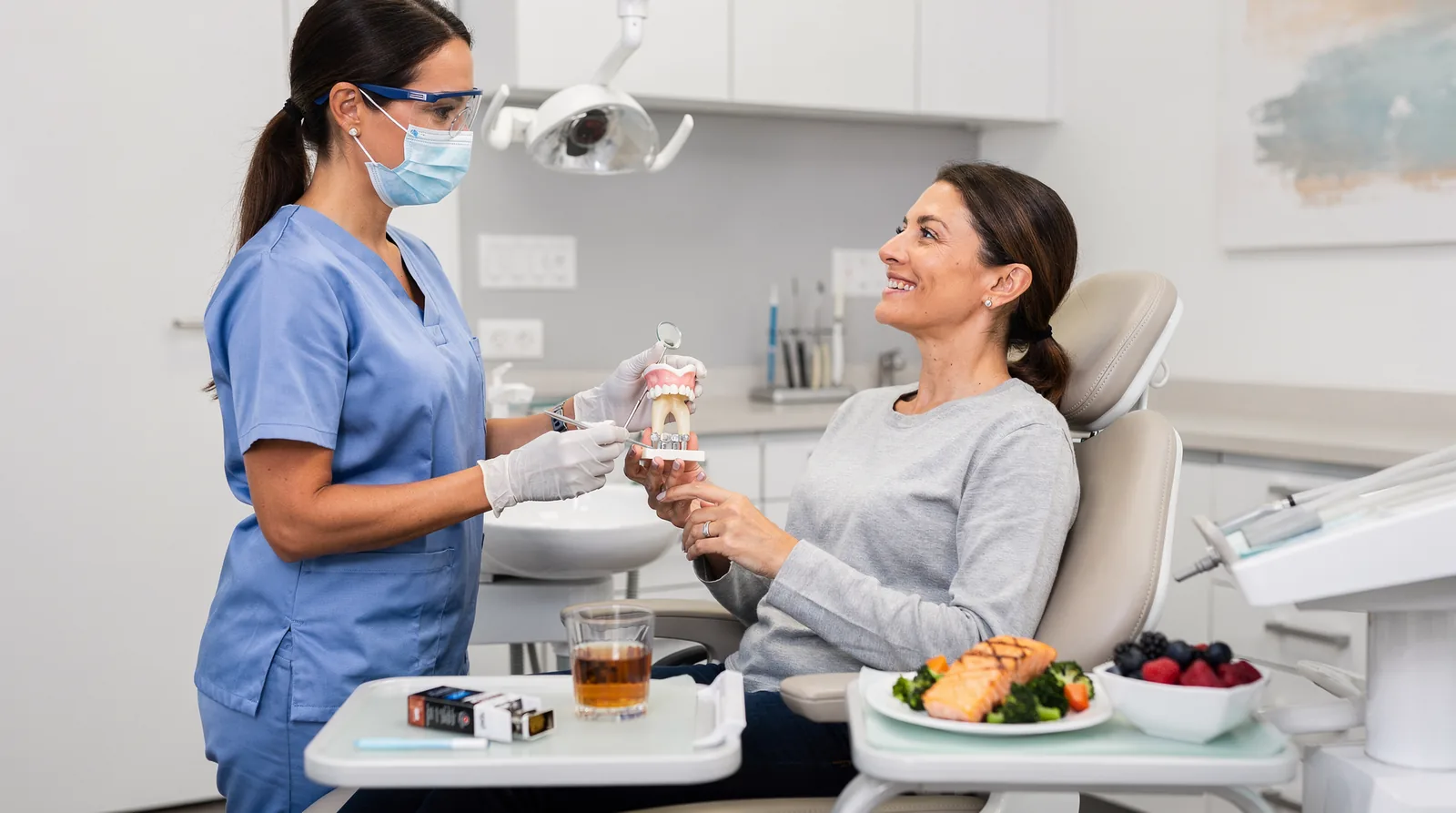
Daily choices directly determine how long dental implants last. Smoking and excessive alcohol consumption create the highest risk for implant failure. Patients who smoke experience significantly higher rates of peri-implantitis, an inflammatory condition that destroys the bone and gum tissue supporting the implant. Alcohol interferes with healing and increases plaque accumulation around the implant site. Eliminating these habits dramatically improves the Longevity of Dental Implants Care outcomes.
How does diet affect dental implant success?
Eating a balanced, implant-friendly diet supports long-term implant stability. Hard, crunchy foods can place excessive force on the implant crown during the healing phase. Sticky foods pull at the restoration and increase the risk of loosening. A diet rich in calcium, vitamin D, and protein strengthens the jawbone that anchors the implant. Patients should prioritize soft, nutrient-dense foods for the first several weeks after surgery.
Why protect implants during sleep and sports?
The provided sources do not contain the specific 250 pounds per square inch statistic for teeth grinding. A custom night guard distributes this pressure evenly across all teeth. Contact sports pose a similar threat. A direct blow to the mouth can dislodge or damage the implant. A properly fitted mouthguard absorbs impact and prevents trauma. Patients who protect their implants during these high-risk activities avoid costly repairs and extend the life of their restoration.
Lifestyle Factor
Risk to Implant
Protective Action
Smoking
Increases peri-implantitis risk by 3-5x
Quit or reduce significantly
Excessive alcohol
Slows healing, increases plaque
Limit to moderate consumption
Teeth grinding
Fractures crowns, loosens abutments
Wear custom night guard nightly
Contact sports
Dislodges or damages implant
Use fitted mouthguard during play
How does osseointegration ensure implant stability?
Osseointegration creates a permanent biological bond between a titanium implant post and living jawbone tissue. This fusion process transforms a surgically placed metal root into a structural part of the jaw. Over time, the implant fuses with the bone, providing a stable foundation for replacement teeth. Without this biological lock, the implant would remain a foreign object prone to movement and eventual failure.
What happens immediately after implant surgery?
Right after dental implant surgery, rest is essential for protecting the early stages of osseointegration. Patients should avoid vigorous activities, keep their heads elevated while sleeping, and rest extensively to promote healing. Applying cold compresses reduces swelling during the first 48 hours. These steps prevent disruption to the delicate bone-implant interface before fusion begins.
How does Affordable Dentist Near Me support this process?
Dental Implant Hygiene Tips for Long-Term Success and Dental Implants Aftercare Strategies for Long-Term Success that complements natural osseointegration. Carefully crafted to precise specifications, these restorations provide a life-like look and a flawless fit. Patients choose the size, shade, and type of teeth that suit their budget. A properly fitted restoration distributes chewing forces evenly across the implant, protecting the fused bone-implant connection for years.
Factor
Impact on Osseointegration
Immediate rest
Prevents micromovement during first healing phase
Head elevation
Reduces swelling that could compress healing tissue
Cold compresses
Minimizes inflammation around the surgical site
Custom-fit restoration
Distributes bite forces evenly across fused implant
The Longevity of Dental Implants Care depends on protecting this biological bond from day one. Patients who follow post-surgery instructions give osseointegration the undisturbed environment it needs to succeed.
FAQ
What is the leading cause of dental implant failure?
Peri-implantitis is the leading cause of implant failure. This bacterial infection forms when plaque accumulates around the implant, causing inflammation that destroys the supporting bone tissue.
How often should implant patients see the dentist?
These visits catch early signs of complications before they threaten implant longevity.
What habits protect dental implants long-term?
Avoid tobacco and excessive alcohol, since these habits significantly reduce implant survival rates. Eating a balanced, implant-friendly diet and wearing a nightguard for grinding also protect the implant and surrounding tissue.
Conclusion
In closing, long-term dental implant success depends on your commitment to consistent oral hygiene, regular professional care, and lifestyle choices that protect your investment. By following your dentist’s guidance, maintaining excellent home care routines, and attending scheduled checkups, you create the foundation for implants that last for decades. Your dedication to these fundamentals transforms dental implants from a procedure into a permanent solution for a confident, functional smile.