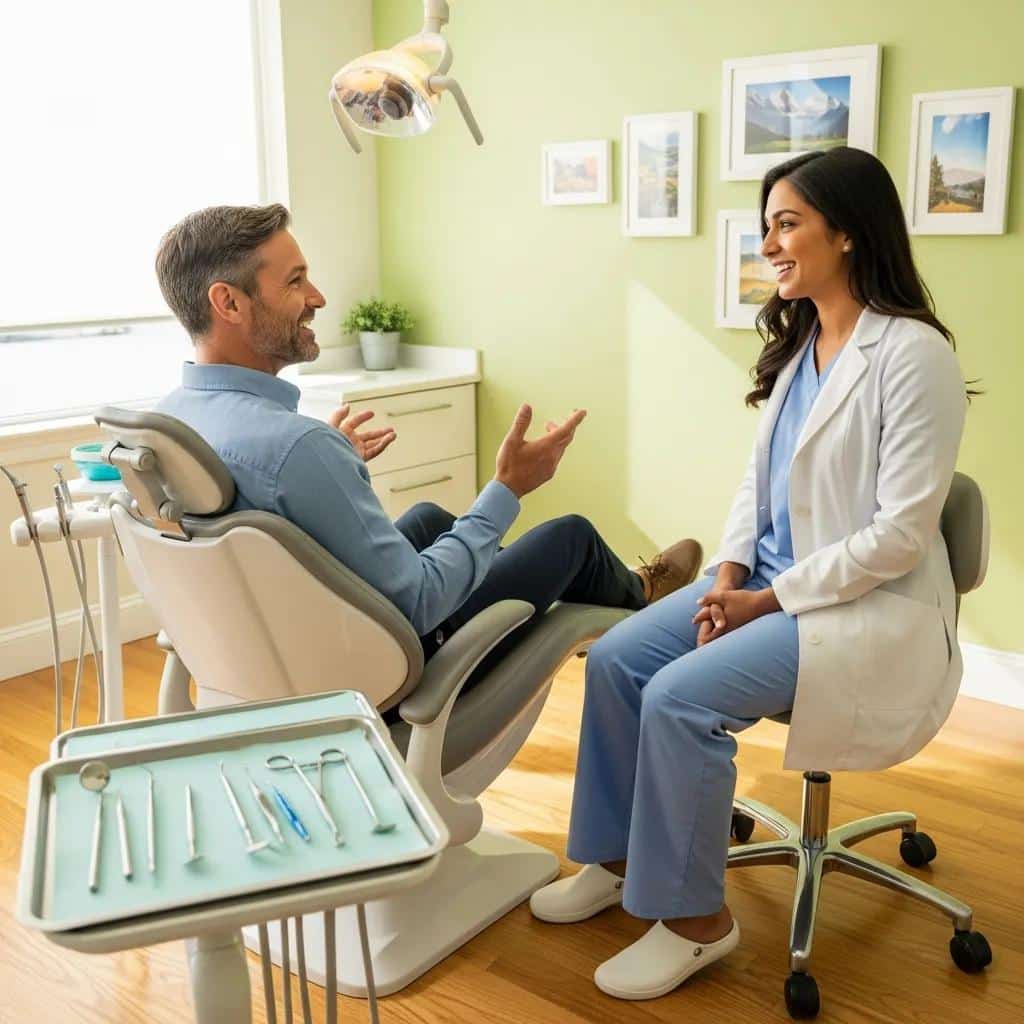
Patient Testimonials: Your Secret Weapon in Deciding on Dental Implants in Dallas
Patient testimonials provide real-world evidence about dental implants, helping prospective patients weigh risks and benefits with clarity and confidence. This article explains how patient stories function as social proof, what Dallas patients report after implant treatment, and how aggregated feedback addresses common worries like pain, recovery, and cost. You will learn which implant types appear most often in reviews, how consults change decision-making, and where to find credible before-and-after and video evidence that supports realistic expectations. Throughout, the content connects testimonial themes to clinical concepts—osseointegration, implant components, and prosthetic outcomes—so you can make an informed choice about restorative dentistry. Expect practical guidance on reading testimonials, structured comparison tables for implant types and common concerns, and three clear prompts to schedule a Free Dental Implant Consult with Affordable Dentist Near Me of Dallas if you’re ready to explore treatment locally.
Why Are Patient Testimonials Crucial When Choosing Dental Implants?
Patient testimonials are crucial because they translate clinical outcomes into lived experience, showing how implants restore function and quality of life through documented patient narratives. These accounts reveal mechanisms that matter to future patients—how implants feel, how chewing and speech improve, and how recovery typically unfolds—so prospective patients can set realistic expectations. Testimonials also function as social proof that reduces perceived surgical risk, as reading multiple independent accounts fosters trust and reduces decision paralysis. Finally, narratives often disclose practical details that clinical summaries omit, such as appointment flow, staff interactions, and financing experiences, which help readers judge fit beyond technical success. Understanding these testimonial functions leads naturally into how real patient stories actually change choices and what benefits reviewers most frequently highlight.
How Do Real Patient Stories Influence Dental Implant Decisions?
Real patient stories influence decisions primarily by increasing relatability and trust: readers identify with people who had similar dental problems and see plausible pathways to improvement. Testimonials often describe the sequence of events—initial symptoms, evaluation, treatment, and recovery—which helps readers mentally simulate their own journey and reduces uncertainty. Narrative details like describing regained ability to eat certain foods or return to social activities create emotional resonance that complements technical information about implant posts and crowns. Aggregated sentiment analysis of reviews typically shows recurring themes—confidence, chewing ability, and satisfaction with aesthetics—that prospective patients weigh against clinical parameters. These narrative signals prompt readers to prioritize specific outcomes and often lead them to request consults to validate similarity to their own case.
What Key Benefits Do Patients Highlight in Their Reviews?
Patients consistently highlight a short list of tangible benefits that matter most after dental implants, giving future patients clear priorities when comparing options. Review themes commonly emphasize restored chewing function, improved smile aesthetics, reduced denture-related hassles, and long-term confidence in oral health outcomes. Many reviewers also note secondary benefits such as clearer speech, fewer dietary restrictions, and reduced anxiety about future tooth loss—factors that drive life-quality improvements beyond immediate function. Understanding these commonly reported benefits helps readers decide which outcomes are non-negotiable for them and frames questions to ask during consultations. These benefit patterns set the stage for localized Dallas patient experiences and case examples that show how outcomes translate into day-to-day life.
Patient testimonials emphasize restored chewing ability, which improves nutrition and enjoyment of food.
Reviews often praise smile aesthetics restoration, boosting self-confidence in social and professional settings.
Many patients report fewer maintenance hassles and greater long-term stability compared with removable dentures.
These patterns help readers focus on outcomes that matter most before exploring local success stories in Dallas.
What Do Dallas Patients Say About Their Dental Implant Success Stories?
Dallas patient feedback localizes the general testimonial landscape, showing outcomes in a community context and validating care at nearby clinics through volume and ratings. Local reviews often call out specific life improvements—smiling without covering the mouth, enjoying orchestral roles that require clear speech, or returning to favorite foods—demonstrating how implants affect daily life in concrete ways. Aggregating Dallas feedback reveals consistent themes that mirror broader implant literature: functional restoration, aesthetic satisfaction, and durable results. Local trust signals, such as clinic responsiveness and clinician communication, further influence decisions by making treatment logistics feel manageable. These local narratives prepare readers to evaluate before/after evidence and look for credibility markers when reviewing individual case galleries.
Which Patient Experiences Showcase Confidence and Quality of Life Improvements?
Dallas patients commonly describe quality-of-life gains that go beyond mechanical function, reporting improved social confidence and reduced self-consciousness after restoration of missing teeth. Case vignettes in this context usually emphasize resumption of social activities, renewed willingness to smile in photographs, and regained career confidence where appearance factors mattered. Patients often attribute these psychosocial gains to predictable outcomes—secure implant stability and natural-looking prosthetics—which underscores the link between technical success and personal wellbeing. Hearing consistent reports of such improvements from local residents helps prospective patients visualize similar benefits for themselves and encourages deeper questions during consultations. These personal outcome themes naturally lead to examining photographic and video evidence that substantiate subjective claims.
How Do Before and After Testimonials Demonstrate Dental Implant Transformations?
Before-and-after testimonials provide measurable and visual evidence that supports narrative claims about implants, helping viewers assess aesthetics, alignment, and prosthetic integration. High-quality galleries show consistent photo angles, documented procedure dates, and concise captions stating the procedure type and stages, which enable meaningful comparison across cases. Visual evidence works with testimonial text to demonstrate functional improvements—such as bite alignment and crown shape—that photographs alone may not fully convey without descriptive context. Including metadata like the clinician’s role and approximate timeline enhances credibility and gives patients a clear sense of expected outcomes. Understanding how to evaluate these visual materials helps readers distinguish persuasive, trustworthy evidence from anecdotal or poorly documented claims.
Check for consistent photo angles and lighting to evaluate true aesthetic changes.
Look for captions that state the procedure type and dates to confirm timelines.
Prefer galleries with short video clips that show speech and chewing for functional evidence.
After reviewing image and video best practices, readers are better equipped to interpret testimonials and consider when to request a local consult.
How Do Patient Testimonials Address Common Concerns About Dental Implants?
Patient testimonials are especially useful for answering the common questions that deter people from pursuing implants—pain, recovery time, and perceived cost—because they report lived pain levels, coping strategies, and financing experiences. Aggregated patient feedback typically provides a range of expected recovery timelines, practical advice on pain control, and first-hand perspectives on how implants compare in long-term value to alternatives like dentures. Testimonials also reveal clinic-level supports that make treatment more accessible, such as payment plans or clear pre-op instructions that reduce anxiety. Presenting aggregated evidence in a concise Q&A style helps capture searcher intent and supplies the PAA-style snippets that readers often seek when deciding whether implants are worth pursuing.
What Do Patients Say About Pain and Recovery After Dental Implant Surgery?
Patients frequently report that discomfort after implant surgery is moderate and short-lived when managed with prescribed analgesics and appropriate aftercare, with most swelling and acute pain subsiding within the first week. Typical recovery narratives describe a sequence: immediate post-op soreness, gradual reduction in swelling over several days, and a return to routine eating behaviors within two weeks for single implants. Patients commonly recommend ice, soft foods, and adherence to follow-up visits as effective coping strategies that accelerated comfort and healing. Aggregate timelines indicate that while soft-tissue recovery is quick, osseointegration—the bone bonding process—takes several months before definitive crowns are placed, which helps set expectations for staged treatment. These recovery themes lead naturally into how patients view the cost/value trade-off for implants in Dallas.
Many patients report moderate, manageable pain controlled by short-term medications and home care.
Most reviewers state that normal daily activities resume within a few days to two weeks after single-tooth implant placement.
Long-term integration of the implant post requires several months, which patients accept as part of durable outcomes.
Patient experiences of pain and recovery help inform realistic decisions and the timing of treatment milestones.
Patients’ Experiences of Dental Implant Treatment: A Literature Review
Recovering personal identity and confidence after implant treatment were also reported and from the patients’ perspective, the implant treatment was a life-changing experience. The patients’ experiences of dental implant treatment were generally positive, with most patients reporting satisfaction with the aesthetic and functional outcomes of their treatment. However, some patients also reported experiencing pain and discomfort during the recovery period.
Patients’ experiences of dental implant treatment: A literature review of key qualitative studies, WA Kashbour, 2015
How Do Patients Describe the Cost and Value of Dental Implants in Dallas?
When patients discuss cost in testimonials, they often frame implants as a long-term investment rather than simply an upfront expense, highlighting reduced maintenance costs compared with removable dentures and fewer replacement cycles than some alternatives. Reviews commonly mention financing options or payment plans that made treatment feasible and stress the perceived value when implants restore important functions like eating and speech. Testimonial language frequently balances sticker shock with long-term satisfaction, noting that many would choose implants again given the quality-of-life improvements. Aggregating these perspectives yields patterns readers can use to compare short-term costs with projected long-term benefits, and prepares them to ask targeted financial questions at consults.
Implant Cost Context
Common Patient Comments
Value Interpretation
Upfront expense concerns
Patients often note initial sticker shock but proceed when payment options exist
Patients view financing as key to access
Long-term maintenance
Patients compare fewer adjustments vs. dentures
Implants seen as lower lifecycle cost
Functional payoff
Reports of improved eating and social confidence
Benefits often justify expense for many patients
This table clarifies how patients balance cost against anticipated functional and psychosocial returns, helping prospective patients frame questions for consultations.
Factors Impacting Patient Satisfaction with Dental Implants
Implant-site related and patient-based factors with the potential to impact patients’ satisfaction, quality of life measures and perceptions toward dental implant treatment. The extent of patient satisfaction with various forms of dental implant treatment and the factors that influence it have been investigated in numerous studies. These studies have consistently shown that patient satisfaction is a crucial outcome measure in implant dentistry.
Implant-site related and patient-based factors with the potential to impact patients’ satisfaction, quality of life measures and perceptions toward dental implant treatment, GN Güncü, 2017
Which Types of Dental Implants Are Featured in Patient Testimonials?
Testimonials typically reference hyponyms of implant therapy—single-tooth implants, multiple-tooth restorations, and full-arch solutions like All-on-4—each with distinct patient-reported outcomes and recovery profiles. Single-tooth cases often emphasize aesthetics and ease of maintenance, while full-arch and All-on-4 narratives stress rapid functional restoration and relief from denture instability. Patient accounts also reference implant components—implant post, abutment, crown—which helps demystify the prosthodontic process and shows how meronymic parts contribute to outcomes like chewing stability and natural appearance. Comparing these types with an EAV-style table helps readers evaluate which option aligns with their goals and dental situation.
What Are Patient Experiences With Single Tooth Implants?
Patient reports on single-tooth implants frequently highlight excellent aesthetic matching to adjacent teeth and high satisfaction with chewing and speech restoration. Typical accounts document a short surgical visit, minimal disruption to daily life, and staged prosthetic work culminating in a natural-looking crown that blends well with neighbors. Recovery narratives for single implants often note brief swelling and a few days of soft-food diets, followed by gradual return to normal bite forces as osseointegration progresses. Patients appreciate predictable outcomes and often report that single implants feel more like a natural tooth than removable options. These common experiences make single-tooth restoration a frequently recommended solution for isolated tooth loss.
This comparison clarifies typical timelines and benefits drawn from aggregated patient narratives, helping readers set realistic expectations.
How Do Patients Review All-on-4 and Full-Arch Dental Implants?
Patients who undergo All-on-4 or full-arch restorations commonly emphasize rapid improvement in chewing and immediate gains in confidence compared with prior removable dentures. Testimonials for these procedures often mention a single comprehensive surgical phase followed by provisional prosthetics that restore appearance and function quickly. Patient feedback also touches on maintenance expectations—regular checkups, hygiene routines—and long-term satisfaction with stability and comfort. Many reviewers contrast the transformative impact of moving from unstable dentures to fixed prosthetics, noting improved speech and social ease. These accounts are useful for readers weighing a full-arch approach against partial restorations.
All-on-4 patient reports frequently highlight immediate improvement in eating function.
Reviewers note fewer mid-course adjustments compared with traditional denture relines.
Long-term satisfaction centers on stability and the ability to eat varied textures confidently.
These testimonials guide readers to ask specific questions about surgical staging and expected immediacy of results during consultations.
Social Media Patient Testimonials in Implant Dentistry: Information or Misinformation?
Patient testimonials on dental implant treatment were examined. Inaudible or non-English videos were excluded. The remaining videos were analyzed for the type of information provided, the source of the information, and the overall sentiment expressed by the patient. The findings suggest that while patient testimonials can provide valuable insights into the patient experience, they can also be a source of misinformation. It is important for patients to critically evaluate the information they find in testimonials and to consult with their dentist for accurate information.
Social media patient testimonials in implant dentistry: information or misinformation?, C McGrath, 2017
How Does the Free Dental Implant Consult Enhance Patient Confidence?
A free consult reduces uncertainty by offering a no-risk opportunity to learn about personalized treatment options, imaging assessments, and realistic timelines, all of which help patients make informed decisions. Consults commonly include clinical evaluation, discussion of implant types, explanation of components such as implant posts and crowns, and preliminary treatment planning—elements that patients cite as crucial for decision confidence. Seeing diagnostic imaging and getting a tailored plan converts abstract outcomes into tangible next steps, thereby lowering the perceived barrier to treatment. For readers ready to act, a clear call-to-action can translate testimonial momentum into an appointment: Get Patient to schedule an appointment for a Free Dental Consult. This consult model is particularly valuable for people comparing providers or weighing financial options.
What Do Patients Say About Their Initial Consultation Experience?
Patients often report that a thorough initial consultation provides clarity, reduces anxiety, and builds trust when clinicians take time to explain the technical aspects and expected outcomes. Testimonial patterns highlight appreciation for visual aids like CBCT 3D imaging and stepwise treatment timelines that show when crowns or prosthetics will be placed. Many patients specifically note that staff demeanor and clear scheduling guidance made the consult feel supportive rather than sales-driven. A concise checklist of consult takeaways—diagnostic imaging, treatment options, estimated timeline, and financing pathways—reflects what patients found most useful. These consult impressions naturally lead to understanding how consults convert uncertainty into clear next steps.
Consult Component
What’s Covered
Patient Takeaway
Clinical exam
Oral health assessment and implant candidacy
Clear eligibility understanding
Diagnostic imaging
3D imaging and bone assessment
Visualization of treatment needs
Treatment overview
Options, timeline, and stages
Personalized roadmap for care
This EAV-style summary illustrates how consult elements map to patient confidence and actionable next steps.
How Does the Consult Help Patients Make Informed Implant Decisions?
The consult translates technical data into a personalized plan by combining clinical findings with patient priorities—esthetic goals, functional needs, and budget constraints—so that decisions align with real-life expectations. Patients report that seeing an individualized timeline and explanation of meronymic parts (implant post, abutment, crown) demystifies the process and helps them prioritize which outcomes matter most. Consults also often outline follow-up steps, hygiene responsibilities, and when definitive prostheses will be delivered, which mitigates surprises during treatment. For many readers, this educational, personalized experience is the tipping point from consideration to commitment. If you are ready to take that next step locally, Get Patient to schedule an appointment for a Free Dental Consult.
Consults provide a personalized timeline that clarifies when each treatment milestone will occur.
Reviewing imaging and components during the consult empowers patients to ask focused clinical questions.
Clear next-step planning reduces anxiety and facilitates scheduling for definitive prosthetics.
After learning how consults support decision-making, prospective patients can evaluate clinician expertise reflected in testimonials.
How Do Patient Testimonials Reflect the Expertise of Dr. Mike Pham and Affordable Dentist Near Me of Dallas?
Testimonials can serve as indirect measures of clinician expertise when they consistently reference professional communication, predictable outcomes, and clinic processes that support patient needs. For Affordable Dentist Near Me of Dallas, public review metrics provide a community-level trust signal—reported Google ratings show a 4.7 rating with over 440 reviews for the Dallas location and an overall 4.8 across locations—which corroborates local testimonial themes of quality and satisfaction. Patients often comment on clinician clarity, staff coordination, and follow-up care, all of which reflect both individual practitioner skill and clinic systems. Reading these patterns in testimonials helps prospective patients assess whether a provider’s approach aligns with their preferences for technical competence and patient-centered service.
What Do Patients Say About Dr. Pham’s Professionalism and Care?
Review aggregates indicate that patients appreciate clinician communication, perceived technical skill, and attentive follow-up—attributes frequently associated with favorable outcomes in implant therapy. Testimonials often point to explanations that simplify complex concepts like osseointegration and prosthetic sequencing, which patients find reassuring when planning multi-stage treatments. Many patients value bedside manner and the confidence conveyed during consults and procedures, interpreting clear communication as a proxy for clinical competency. These testimonial themes suggest that clinicians who combine technical proficiency with empathetic explanation tend to generate higher patient confidence and repeatable satisfaction patterns.
How Do Testimonials Highlight the Clinic’s Patient-Centric Approach?
Testimonials commonly praise clinic-level features such as appointment scheduling ease, helpful staff, and supportive pre- and post-operative instructions, all of which influence perceived access and comfort during treatment. Patients frequently mention low-barrier entry points like free consultations that make exploring implant options less risky, and they cite clear financial discussions as enabling decisions. These operational strengths—combined with clinician competence—create a patient experience that reviewers report as calm, organized, and focused on outcomes. For readers considering local care, note that these system-level attributes often matter as much as technical skill in ensuring satisfactory implant journeys.
Patients praise transparent scheduling and friendly staff as key elements of a positive clinic experience.
Testimonials highlight clear post-op instructions and follow-up care that support smooth recovery.
The availability of a free consult is frequently cited as a helpful, low-pressure first step to explore implant options.
These clinic-level testimonial signals complement technical outcome reports and help patients choose a provider that meets both clinical and experiential expectations.
Where Can You Find More Dental Implant Success Stories and Visual Testimonials?
Reliable testimonial hubs combine written reviews, before-and-after galleries, and short video testimonials, each with metadata that establishes credibility—procedure type, dates, and clinician named. Seek galleries that include clear captions, consistent imaging standards, and brief notes about functional outcomes to evaluate claims accurately. Video testimonials are especially valuable because they can show speech and chewing and capture unscripted emotion; short clips of 60–120 seconds that follow a problem-treatment-result structure are most persuasive. When assembling your own evidence set, prefer sources that publish dates, procedure descriptions, and clinician attribution, as these markers reduce the risk of outdated or unverifiable claims. Understanding where to find well-documented stories helps you compare providers and set realistic goals.
How Does the Before and After Gallery Showcase Patient Transformations?
A well-constructed gallery presents sequential images with consistent angles and captions that state the procedure type and date, enabling viewers to assess both aesthetic and functional improvements objectively. Best-practice galleries include accessibility features like ALT-text describing the change and short notes about the stage of treatment (provisional vs. final restoration). Captions that indicate whether photos are immediate post-op, provisional, or final allow readers to track healing progression and prosthetic refinements over time. Galleries that pair images with short patient narratives about regained activities—eating, speaking, or smiling—offer a fuller picture of transformation. These standards help viewers separate high-quality evidence from superficial photo collections.
Prefer galleries with dates and clear captions stating the procedure type and stage.
Look for consistent photographic technique to ensure fair comparison between before and after shots.
Seek ALT-text and accessibility features that describe the visual change for inclusive evaluation.
After identifying robust galleries, videos provide complementary functional evidence to confirm testimonial claims.
What Video Testimonials Reveal About Patient Satisfaction and Outcomes?
Video testimonials that follow a concise 60–120 second format—problem, treatment, result—deliver potent cues about authenticity and satisfaction and reveal functional outcomes like speech and chewing in real time. Authentic signals include unscripted emotion, specific details about what improved, and mention of concrete timelines or steps taken during treatment. When reviewing videos, check metadata—upload date, brief description, and clinician attribution—which helps verify recency and context. Prompting patients with targeted questions about pain, recovery, and functional milestones yields the most informative clips and equips future patients to compare experiences. Combining video with photo galleries and written reviews creates a multimodal evidence base that supports confident decisions.
Video Element
What to Look For
Why It Matters
Duration and structure
60–120 seconds, problem→treatment→result
Keeps focus on key outcomes
Authenticity cues
Specific details and unscripted emotion
Signals credibility
Metadata
Upload date and clinician attribution
Verifies recency and context
Using these heuristics improves your ability to interpret testimonial media and apply insights to your own treatment choices.
What Are the Most Frequently Asked Questions From Patients About Dental Implants?
Patients commonly ask whether implants are worth the investment, how long recovery takes, and what to expect functionally and financially—questions that testimonials can help answer with lived experience rather than theoretical descriptions. Aggregated testimonial evidence often forms short, actionable answers suitable for featured-snippet-style presentation: implants are typically considered a durable long-term solution; recovery involves short-term soft-tissue healing and longer osseointegration; and many patients perceive implants as good value over time. Structuring these FAQ-style responses with testimonial-backed points helps capture searcher intent and provides practical next steps, including scheduling a consult for personalized evaluation. If this addresses your questions, consider the next step: Get Patient to schedule an appointment for a Free Dental Consult.
Are Dental Implants Worth the Investment According to Patient Reviews?
Most patient narratives conclude that implants are worth the investment when measured over time, citing fewer replacements, improved function, and enhanced quality of life compared with removable alternatives. Rather than focusing solely on sticker price, reviewers often evaluate return on investment in terms of restored activities—eating, speaking, and social confidence—which carry long-term personal value. Many testimonials also reference financing conversations and payment plans that made treatment accessible, suggesting that perceived affordability increases when payment options are available. Aggregated review sentiment favors implants for patients prioritizing durability and function, though individual financial calculus varies.
Reviewers often rate implants favorable on long-term value due to reduced maintenance and improved function.
Patients considering implants should weigh upfront cost against anticipated lifespan and quality-of-life gains.
These insights equip readers to assess personal ROI and prepare financing questions for consultations.
How Long Is the Recovery Time Based on Patient Experiences?
Patient-reported recovery follows a two-phase pattern: short-term soft-tissue healing with noticeable soreness and swelling in the first days to two weeks, and a longer bone-healing phase—osseointegration—lasting several months before definite prosthetic loading. Single-tooth procedures often allow a quicker return to normal eating within days to a couple of weeks, whereas full-arch restorations may involve provisional prosthetics and staged follow-up visits over several months. Patients commonly report that adherence to aftercare—ice, soft foods, and hygiene—accelerates comfort and reduces complications. Understanding these timelines helps set realistic expectations for staging and total treatment duration.
Recovery Phase
Typical Patient Experience
Expected Timeline
Soft-tissue healing
Soreness and swelling, manageable with medication
Days to two weeks
Osseointegration
Bone bonding to implant post, delaying final crown placement
Several months
Functional return
Gradual restoration of chewing power
Weeks to months depending on procedure
This FAQ-style synthesis clarifies typical recovery milestones and helps patients plan timeframes for treatment completion.
Get Patient to schedule an appointment for a Free Dental Consult.
14902 Preston Road STE 401, Dallas, Texas 75254
Dr. Mike Pham and the team at Affordable Dentist Near Me of Dallas welcome patients who want a clear, no-obligation evaluation that pairs clinical assessment with testimonial insights to form a personalized plan.
The free consult provides diagnostic clarity without financial commitment.
Scheduling a consult connects testimonial observations to your personal oral health needs.
Local clinic information and review ratings help you choose a comfortable, trusted provider.
This final CTA encourages readers to convert testimonial confidence into a planned appointment for individualized evaluation.