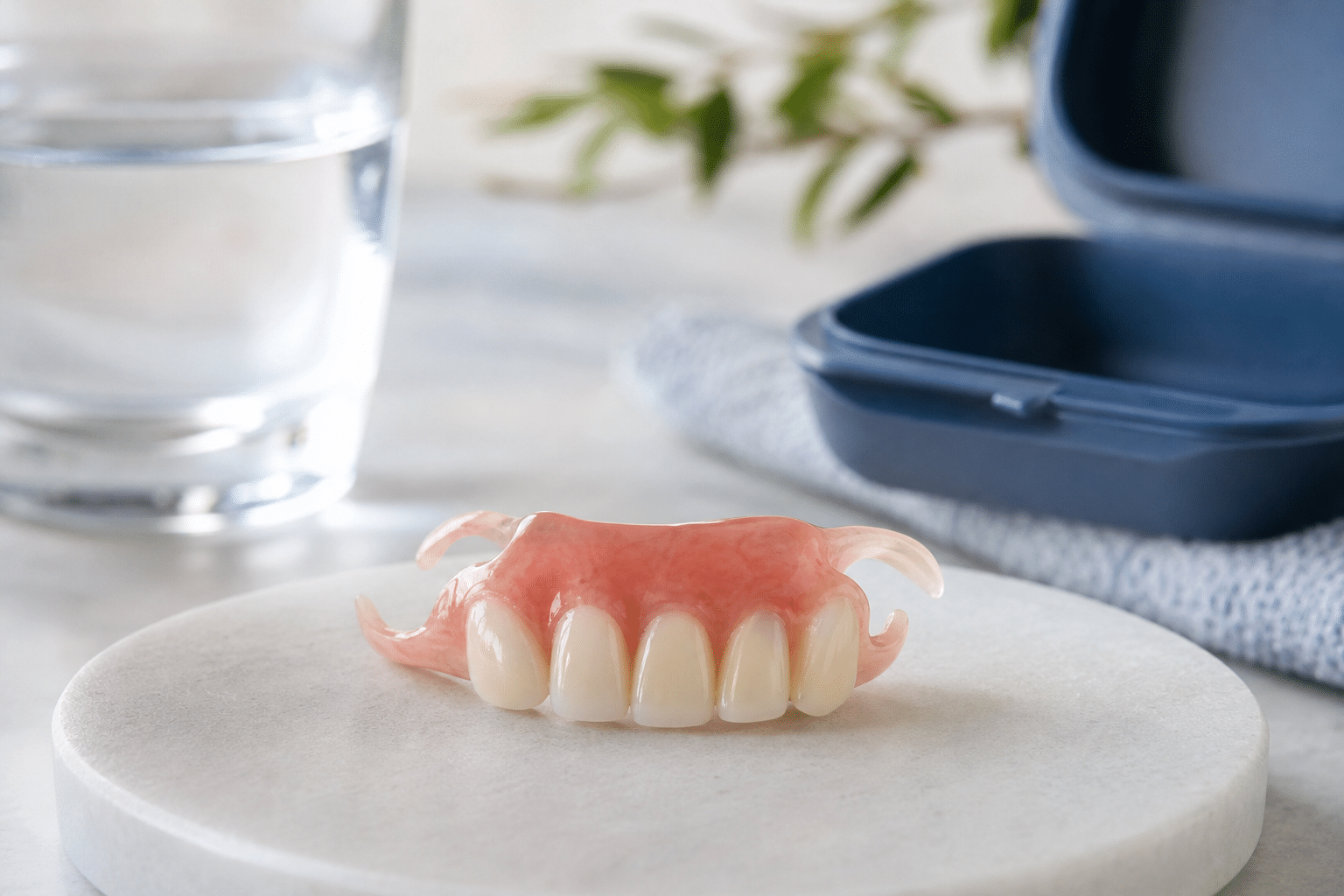
A teeth flipper is a lightweight, removable acrylic partial denture that fills the gap left by one or a few missing teeth. It is a temporary option designed to protect your smile and speech while you heal or save up for a permanent solution such as an implant or bridge.
If you are missing a tooth right now, a flipper can have you looking and speaking normally within days. This article explains what a flipper is, how it compares to other partial dentures, what you can and cannot do while wearing one, and when it makes sense to move on to something permanent.
What Is a Teeth Flipper?
A dental flipper is a removable partial denture made from pink acrylic resin with one or more prosthetic teeth attached. It sits against the roof of your mouth or along the lower jaw, staying in place through light wire clasps and suction against the gum tissue. There are no metal frameworks or precision attachments like you would find on a more permanent appliance.
The name "flipper" comes from how easily the appliance flips in and out of the mouth. A one tooth flipper replaces a single missing tooth, and a dental flipper for front teeth addresses a gap that is immediately visible in the smile line. An acrylic flipper denture is not meant to be a long-term solution. It is a placeholder that protects the gap, prevents neighboring teeth from shifting, and lets you feel confident while a permanent plan comes together.
Dental Flipper vs. Partial Denture: Which One Do You Need?
A flipper and a conventional partial denture both replace missing teeth, but they serve different purposes and are built differently. Knowing the distinction helps you understand what your dentist is recommending and why.
The table below compares the three most common removable appliances. For a broader look at fixed and removable replacement options side by side, see the full guide to tooth replacement options.
| Feature |
Dental Flipper |
Conventional Partial Denture |
Flexible (Valplast) Partial |
| Material |
Acrylic resin |
Acrylic with metal framework |
Flexible nylon resin |
| Rigidity |
Rigid, lightweight |
Rigid, heavier |
Flexible, no metal clasps |
| Fabrication time |
Faster than other options |
Several weeks |
Several weeks |
| Durability |
Temporary use |
Long-term wear |
Moderate to long-term |
| Best use |
Short-term gap coverage |
Long-term multiple tooth replacement |
Long-term comfort-focused replacement |
A flipper is the fastest path to covering a gap and typically carries the lowest upfront cost. A conventional partial uses a metal frame for retention. A flexible Valplast partial has no metal clasps, takes longer to make, and costs more. If you are deciding between these options, preparing for partial dentures walks through what each appointment involves.
Pros and Cons of a Dental Flipper
A flipper solves a real problem quickly, but it comes with trade-offs you should know before agreeing to one.
Advantages:
- Fast turnaround. A flipper is fabricated faster than other partial denture options, so you can cover the gap sooner after an extraction.
- Affordable entry point. A flipper carries a lower upfront cost than other partial denture appliances, which makes it accessible when you are waiting on insurance approval or saving for an implant.
- Protects the gap. A flipper fills the empty space left by a missing tooth, helping to maintain the position of neighboring teeth while a permanent plan comes together.
- Looks natural. A shade-matched acrylic tooth can blend with surrounding teeth for everyday social situations.
- Removable. You can take it out to clean it and your gums.
Disadvantages:
- Not built for long-term wear. A flipper is intended as a temporary appliance, not a permanent replacement.
- Limited retention. Without a rigid framework, a flipper may shift during chewing.
- Gum and bone changes. The gum ridge changes shape after an extraction, which can affect how the flipper fits over time.
- Speech adjustment. The added acrylic bulk can affect speech at first, particularly with certain sounds.
- Not covered by all plans. Insurance coverage for flippers varies widely. Check with your plan for applicable partial denture billing codes.
How Is a Dental Flipper Made? A Step-by-Step Look
The process from first appointment to finished appliance usually takes just a few days.
- Take an impression. Your dentist maps the gap and surrounding teeth using a soft material or a digital scan. [S1]
- Match the shade. You and your dentist select a tooth shade so the prosthetic blends with your natural teeth. [S2]
- Lab fabrication. A technician sets the replacement tooth into an acrylic base shaped to fit your palate or lower jaw. [S3]
- Fitting appointment. You return to check the bite and have pressure points adjusted so the flipper sits evenly. [S4]
- Care instructions. Your dentist explains how to store and clean the appliance, including keeping it in water or a denture solution overnight to prevent warping. [S5]
If the flipper feels uneven or causes soreness after the fitting, contact your dentist for an adjustment.
Can You Eat with a Flipper Tooth?
You can eat with a flipper in place, but you need to adjust what you eat. A flipper rests on soft tissue without the firm anchoring of a natural tooth root, so hard, crunchy, or sticky foods can stress the appliance and press into the healing gum.
Foods to avoid: raw carrots, hard rolls, nuts, ice, caramel, gummy candy, chewy bread, and tough meats.
Foods that work well: soft cooked vegetables, pasta, eggs, fish, yogurt, and soft fruit.
Cut food into small pieces and chew on both sides of your mouth. Remove the flipper before eating if your dentist advises it during the early healing period.
Can You Sleep with a Flipper Tooth?
Most dentists recommend removing your flipper at night. Wearing any removable appliance around the clock reduces the time your gum tissue gets to breathe and recover, and it raises the risk of bacterial buildup under the acrylic base. Store the flipper in a glass of water or a denture-cleaning solution overnight. [S5] Follow your dentist's specific guidance, since the recommendation may vary if you had a very recent extraction and the flipper is being used for clot protection during the first day or two.
How Long Should You Wear a Dental Flipper Before Switching to a Permanent Option?
A flipper is a bridge between extraction and a permanent solution, not a destination. According to myspecialtydentist.com's 2026 guide, patients typically wear a flipper for the 3 to 6 months required for jawbone healing following a tooth extraction or implant placement. After that window closes, the bone is stable enough to support a dental implant or anchor a fixed bridge. You can compare those options in Types of Tooth Replacement Options: Implants, Bridges, Dentures.
Affordable Dentist Near Me (ADNM) is an independent, Texas-owned dental group with 17 offices across the Dallas, Fort Worth Metroplex, East Texas, and Central Texas. Every new patient receives a free exam and X-rays along with a written treatment plan listing exact fees before any work begins.
FAQs
What is the insurance billing code for a dental flipper?
Insurance plans vary widely in how they cover temporary partial dentures. Check your specific plan documents or call your insurer to ask which partial denture codes apply to a flipper. Your dentist's office can also submit a pre-authorization request so you know your out-of-pocket amount before the appointment.
Can children wear a dental flipper for a missing baby or permanent tooth?
Children can wear a flipper, but the right call depends on the child's age, the tooth involved, and how much the jaw is still growing. A pediatric or general dentist can assess the timing.
How do I clean a dental flipper at home?
Follow the cleaning instructions your dentist provides. In general, rinse the flipper after eating, clean it with a soft toothbrush and a denture cleanser rather than regular toothpaste, and store it in water or a denture-cleaning solution overnight.
Will a dental flipper affect my speech?
Most people notice a slight change in speech during the first few days, particularly with "s" and "th" sounds, because the acrylic adds bulk to the roof of the mouth. If a lisp persists or worsens, ask your dentist to check the fit.
Conclusion
A teeth flipper is a practical way to cover a gap while your mouth heals or while you plan a permanent replacement. It works best as a short-term appliance, typically worn during the 3 to 6 month healing period after an extraction, protecting your smile, speech, and the spacing of surrounding teeth. It is not a substitute for a permanent solution. Once the healing window closes, talk to your dentist about which permanent option fits your bone health, budget, and timeline so you have a clear path forward.