Mini Dental Implants: Benefits, Limits, and How They Compare to Traditional Implants
Mini dental implants are an increasingly common alternative to traditional implants. They come with distinct advantages and trade-offs that can affect your comfort, recovery, and budget. This guide breaks down what mini implants are, how they differ from standard implants, who they’re best for, and what to expect in terms of cost, durability, and everyday use. Read on to get clear, practical information so you can talk with your dentist about the right option for your smile.
We’ll cover the basics—what mini implants look like and how they’re placed—then compare them side-by-side with traditional implants. You’ll learn which situations make mini implants a good choice and when a full-size implant might be a better long-term solution.
This article is written to help you prepare questions for your appointment, understand common clinical steps, and set realistic expectations about outcomes and maintenance. It is not a substitute for a clinical exam or personalized treatment plan, but it will give you the vocabulary and key considerations to discuss with your dentist.
What Are Mini Dental Implants and How Do They Differ from Traditional Implants?
Mini dental implants are a smaller form of dental implant made to stabilize crowns or dentures. With a diameter usually under 3 mm, they require less invasive placement. That smaller profile often means simpler surgery, shorter recovery, and less discomfort for many patients.
Both mini and traditional implants rely on a biocompatible metal (commonly titanium) integrating with the jawbone, a process called osseointegration. The principle is the same: provide a stable anchor in the jaw for a prosthetic that restores function and appearance. What differs is how each implant is manufactured, the connection to the restoration, and the forces it is designed to withstand.
What Is a Mini Dental Implant?
A mini implant is a single, slim titanium post placed into the jawbone to anchor a crown or denture. Because it’s narrower than a standard implant, it’s often used when there isn’t enough bone for a full-size implant without a graft. Mini implants are commonly chosen to secure removable dentures or when immediate stabilization is needed.
Mini implants are frequently one-piece designs that combine the implant and abutment into a single unit. That one-piece form can simplify placement and allow for immediate loading in many cases—meaning the denture or attachment can be fitted the same day. Attachments for dentures often use ball-style housings or small locator systems that clip to the denture and keep it stable.
What Defines a Traditional Dental Implant?
Traditional implants are wider—usually between about 3.4 and 6 mm in diameter—and often consist of separate parts, like a post and an abutment. Placing them can involve a more extensive surgical process, and sometimes bone grafting is needed first. Their larger size gives them extra strength and long-term durability for a wide range of restorations.
Standard implants are commonly used for single-tooth crowns, fixed bridges, and full-arch fixed prostheses. Because the implant body and abutment are separate, the restorative dentist has more options for angulation, prosthetic connections, and restorative materials. This flexibility can be important for complex restorative cases or where precise alignment is required for function and esthetics.
What Are the Key Differences in Size, Structure, and Surgical Procedure?
Size is the most obvious difference, but design and the placement process also vary. Those differences affect how each implant performs and how quickly you recover.
Understanding the procedural differences helps patients anticipate timelines and possible additional steps such as imaging, grafting, or staged restoration.
How Do Implant Diameter and Components Vary?
Mini implants are usually one-piece fixtures with a narrower diameter, while traditional implants often have separate components (implant body, abutment, crown). The multi-part design of traditional implants can offer more restorative flexibility and may contribute to greater overall stability.
Because traditional implants can accept a wider range of abutments and angulation corrections, they are often chosen when precise prosthetic positioning is required— for example, in the esthetic zone or when replacing a single tooth where bite forces are concentrated.
What Are the Differences in Surgical Invasiveness and Healing Time?
Mini implants are less invasive to place and can often be done under local anesthesia in a single visit. Traditional implants may require sedation, longer procedures, and sometimes staged surgeries—especially when bone grafting is needed—so healing can take longer. Many patients with mini implants are back to normal activities within a few days to a week.
Typical steps for a mini implant visit include a focused examination, local anesthesia, a small pilot hole or flapless placement, and immediate attachment of a retention element. For traditional implants, steps can include comprehensive imaging (CBCT), planning, possible bone or soft tissue grafting, implant placement, a healing period of several months, and later restoration placement. Your dentist will explain whether a one-stage or two-stage approach is recommended.
Who Is a Suitable Candidate for Mini vs. Traditional Dental Implants?
Choosing the right implant depends on your oral health, jawbone condition, and restorative goals. Your dentist will evaluate these factors to recommend the best path.
Candidacy is determined by a clinical exam, radiographic imaging, and consideration of medical history, habits, and functional needs. Certain conditions—such as uncontrolled diabetes, active periodontal disease, or heavy smoking—may require management before implants are placed, regardless of type.
Which Patients Benefit Most from Mini Dental Implants?
Mini implants work well for patients with limited bone density who want to avoid bone grafting, those who need quick denture stabilization, and individuals seeking a less invasive, lower-cost option. They’re a practical solution when full-size implants aren’t feasible.
Patients with narrow ridges who wish to avoid or cannot undergo grafting.
Individuals needing improved retention for lower dentures, where suction and fit are poor.
Patients who prefer a shorter treatment timeline or who need a less invasive option for medical reasons.
Because mini implants are often used for denture stabilization, they can substantially increase comfort and confidence when speaking and eating. However, suitability should always be assessed by a clinician who will consider opposing teeth, bite forces, and prosthetic design.
Who Should Consider Traditional Dental Implants?
If you have sufficient bone and want a restoration designed for heavy chewing or a long-term single-tooth replacement, traditional implants are often the better choice. They’re generally preferred when long-term strength and versatility are priorities.
Traditional implants are typically recommended for:
Single-tooth replacements in the back of the mouth where bite forces are greater.
Fixed bridges or multi-tooth restorations that require strong support.
Patients seeking the most durable, long-term restorative option and who accept a longer treatment timeline.
Your dentist will weigh the pros and cons, including available bone, esthetic demands, financial considerations, and expected functional load, before recommending a specific implant type.
How Do Mini and Traditional Dental Implants Compare in Cost and Long-Term Value?
Cost is an important factor for most patients. While mini implants are less expensive up front, long-term value depends on your needs and how the implants are used.
When evaluating cost, consider initial surgical fees, any additional procedures (imaging, extractions, grafts), prosthetic components, laboratory fees for crowns or dentures, follow-up care, and potential repairs or replacements over time. Financing options and insurance coverage vary, so ask your provider about payment plans and what portions may be eligible for reimbursement.
What Is the Average Cost Range for Mini vs. Traditional Implants?
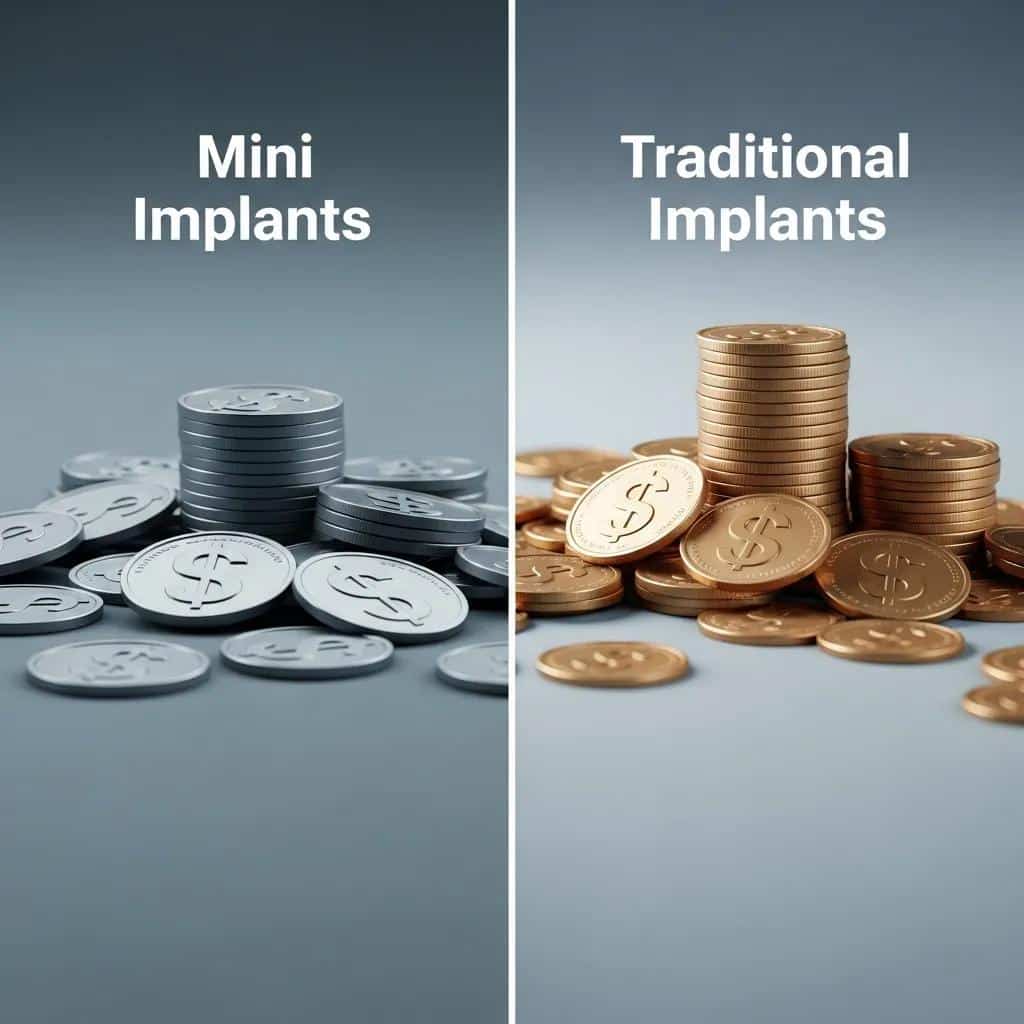
Mini dental implants typically range from $500 to $1,500 per implant. Traditional implants usually cost between $1,000 and $3,000 each. Prices vary by procedure complexity, location, and materials.
Remember that the per-implant cost is only part of the total. For example, a full-arch denture using mini implants will include the cost of the denture itself and the attachment housings. A traditional implant-supported crown will include the implant, abutment, and lab-made crown. Ask your provider for a full, written treatment estimate so you can compare options fairly.
What Factors Influence Dental Implant Costs?
Costs depend on the implant type, whether you need bone grafting or extra procedures, the number of implants, lab and material fees, and your provider’s experience. Talk with your dentist about a full estimate so you can budget accurately.
Preoperative imaging and planning (X-rays, CBCT scans).
Any required extractions or treatment of infections before implant placement.
Bone grafts, sinus lifts, or soft tissue grafts if needed.
Type of prosthesis (removable denture vs. fixed crown or bridge).
Laboratory fees, materials (porcelain, zirconia), and follow-up visits.
Clinicians with advanced training or specialist practice settings may charge higher fees, but those practitioners can also offer additional expertise for complex cases. Balance cost with the provider’s experience and the complexity of your needs.
What Are the Differences in Durability, Lifespan, and Strength Between Implant Types?
Durability and expected lifespan differ with implant type and how they’re cared for. Knowing these differences helps set realistic expectations.
Lifespan also depends on patient behavior—smoking, oral hygiene, bruxism (teeth grinding), diet, and overall health all influence long-term success. Regular checkups and maintenance can extend the functional life of either implant type.
How Long Do Mini Dental Implants Typically Last?
Mini implants commonly last about 5 to 10 years, depending on oral hygiene, implant location, and overall health. With proper care they can be reliable, especially for stabilizing dentures.
In many cases, the retention components or the denture itself may wear before the implant fails, and those parts can often be repaired or replaced with less involvement than replacing an entire standard implant restoration. Still, patients should expect a greater likelihood of adjustments or repairs over time compared with standard implants.
What Is the Durability and Bite Force of Traditional Implants?
Traditional implants are built to handle higher bite forces and often last 10 to 25 years or more with good maintenance. They’re usually the stronger option for replacing larger teeth or for patients who need maximum chewing support.
Because of their greater diameter and multi-component designs, traditional implants distribute occlusal forces more broadly within the bone, which can reduce the risk of mechanical overload. Provided the restoration and occlusion are well-designed, traditional implants are generally the preferred option for long-term single-tooth solutions and fixed bridges.
What Are the Advantages of Mini Dental Implants?
Mini implants offer clear benefits that make them a good choice in many situations.
They can expand treatment options for patients who would otherwise be limited by cost, medical considerations, or bone volume. For many denture wearers, the improvement in stability and confidence is immediate and noticeable. The minimally invasive nature of the procedure can also appeal to patients who prefer to avoid more invasive surgery.
How Do Mini Implants Offer Faster Recovery and Lower Cost?
Because their placement is less invasive, mini implants often mean a quicker procedure, less soreness afterward, and faster return to daily life. They also cost less up front than traditional implants, which can make treatment more accessible.
Many mini implant cases can be completed in a single appointment with local anesthesia, and the reduced surgical time lowers chair time and postoperative discomfort for most patients. This can be especially helpful for older adults or those with medical conditions that make longer procedures less desirable.
Why Are Mini Implants Ideal for Patients with Bone Loss and Denture Stabilization?
Mini implants need less bone volume, so they can often be used without bone grafts. They’re especially effective at anchoring removable dentures, improving comfort and reducing slipping while eating and speaking.
For lower dentures, which often have poorer retention due to lower jaw anatomy, placing a few mini implants can transform function and reduce sore spots. Clinicians design the attachment pattern to distribute retention forces and maximize stability for the denture wearer.
What Are the Limitations of Mini Dental Implants Compared to Standard Implants?
Mini implants aren’t the right choice for every case. It’s important to understand their limits before deciding.
Limitations are not just about strength but also about restorative flexibility: the single-piece design and narrower diameter can restrict the types of prosthetic work that can be performed and may complicate certain restorative phases if angulation or emergence profile adjustments are required.
Why Are Mini Implants Less Stable for Heavy Chewing?
The smaller diameter and single-piece design mean mini implants may not tolerate the same heavy chewing forces as traditional implants. For larger teeth or high-bite-demand situations, a standard implant often provides better stability.
Patients who clench or grind their teeth, who have very high bite forces, or who require a single posterior tooth replacement for heavy chewing should discuss the mechanical demands with their dentist; in many of those circumstances, a traditional implant is the safer long-term choice.
What Is the Expected Shorter Lifespan and Restricted Use Cases?
Mini implants can have a shorter lifespan and are best used in specific scenarios—like denture retention or when bone volume is limited. They’re not always recommended for every type of restoration.
Expect that restorative needs may evolve over time. What begins as a mini implant–retained overdenture can later be upgraded to a different solution if bone or financial circumstances change, but planning for future steps is part of a responsible treatment discussion.
Why Choose Dentist in Denton for Your Mini and Traditional Dental Implants?
Picking an experienced provider helps ensure the right treatment plan and the best possible results for your situation.
Experience matters for accurate diagnosis, proper case selection, correct surgical technique, and durable restorative design. A team that coordinates surgery and prosthetics will reduce surprises and help you understand trade-offs between options.
What Makes Dentist in Denton a Trusted Provider for Dental Implants?
At Dentist in Denton, we focus on comfortable care and clear communication. Our team evaluates your needs, explains your options, and customizes treatment so you feel confident at every step.
We emphasize thorough preoperative planning, including appropriate imaging and assessment of systemic health, and we involve you in decision-making so the chosen plan matches your functional needs and budget. Coordination between surgical and restorative phases reduces treatment time and helps achieve predictable outcomes.
How Can You Schedule a Mini Dental Implant Consultation Near Me?
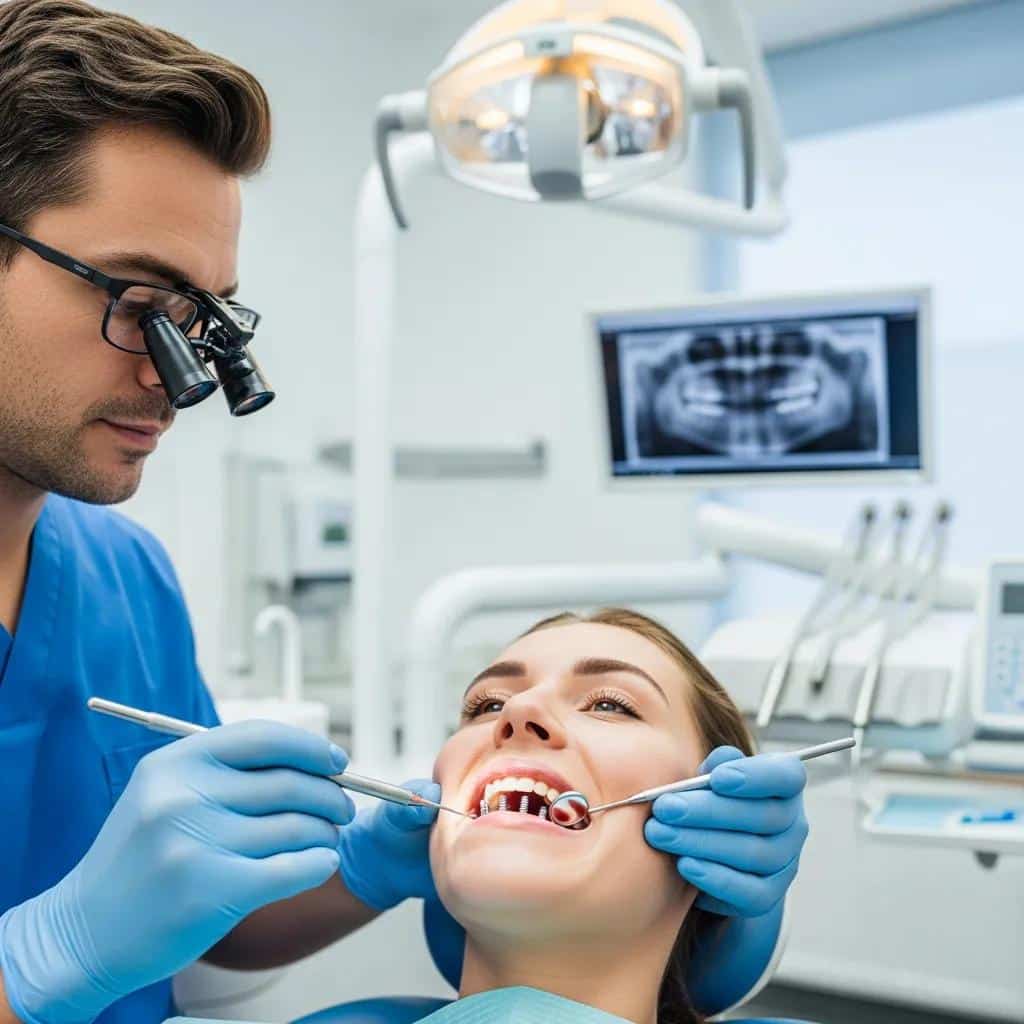
To schedule a consultation, visit our online scheduler or call our office. We’ll review your history, take any needed images, and help you decide which implant option is right for you.
A typical consultation includes a review of medical and dental history, oral examination, digital imaging if needed, and a discussion of treatment alternatives, timelines, and costs. Bring a list of medications and any dental records you have to help streamline the evaluation.
Frequently Asked Questions
What are the potential risks associated with mini dental implants?
Mini implants are generally safe, but like any procedure they have risks. Possible issues include infection at the implant site, failure if the implant doesn’t integrate with bone, and rare nerve irritation during placement. Because they’re smaller, mini implants may loosen more easily under heavy bite forces. We’ll review risks with you and plan care to lower those chances.
Other considerations include the possibility of soft tissue irritation from attachments, continued need for denture relines as tissues change, and the chance that worn attachment housings will require replacement. A comprehensive exam and good oral hygiene reduce many risks.
Can mini dental implants be used for all types of dental restorations?
Mini implants are most commonly used to stabilize dentures and for smaller restorations. They’re not typically recommended for larger single-tooth replacements that experience high chewing forces—traditional implants are usually better for those cases. Your dentist will recommend the right restoration based on your needs.
For some patients, a hybrid approach may be appropriate: mini implants for denture retention in one arch and traditional implants for single-tooth replacements elsewhere. Treatment planning should consider long-term maintenance and potential future upgrades.
How do I maintain my mini dental implants?
Care for mini implants much like natural teeth: brush twice daily, floss or use interdental brushes as recommended, and use an antiseptic rinse if advised. Regular dental checkups are important so we can monitor implant health and address any issues early.
Clean around attachment housings daily to prevent plaque buildup.
Have the denture and attachments evaluated periodically for wear.
Report loosening, persistent soreness, or changes in fit promptly to your dentist.
Are there any dietary restrictions after getting mini dental implants?
After placement, follow a soft-food diet for the first few days to allow healing. Avoid very hard, sticky, or chewy foods until your dentist clears you. As healing progresses, most people return to their normal diet.
If your implants are stabilizing a denture, avoid biting directly into very hard items with the front teeth of the denture until you’re confident in the retention and comfort. Over time, as tissues heal and attachments are adjusted, you can gradually resume normal foods within your comfort level.
What should I expect during the recovery process for mini dental implants?
Recovery is often quicker than with traditional implants. Expect some swelling and mild discomfort the first few days, manageable with over-the-counter pain relief. Most patients resume normal activities within a week, but follow your dentist’s post-op instructions for the best outcome.
Follow-up visits are usually scheduled within a week to check healing and to adjust the denture attachments as needed. If immediate loading is done, your dentist will monitor the implant closely in the early weeks to ensure stability and to make adjustments for comfort and function.
Can I get mini dental implants if I have existing dental issues?
Existing problems like gum disease or untreated decay can affect implant success. We’ll treat any underlying issues first and perform a thorough exam to determine if mini implants are a suitable option for you.
Periodontal treatment, restorations for decayed teeth, and stabilization of medical conditions are common prerequisites. Addressing these issues first improves the chance of a successful implant outcome and reduces the likelihood of complications.
Conclusion
Mini dental implants can be an excellent, less invasive option—especially for denture stabilization or when bone is limited. They offer faster recovery and lower up-front cost, though they aren’t ideal for every situation. Talk with a trusted provider to weigh the benefits and limitations based on your mouth, lifestyle, and long-term goals. Ready to learn more? Schedule a consultation and we’ll help you find the solution that fits your smile.
When you meet with your dentist, ask about alternative approaches, the expected timeline for placement and restoration, follow-up care, and the plan if an implant or attachment needs attention later. Transparent planning and clear communication are the best ways to ensure a successful, comfortable outcome that matches your expectations.