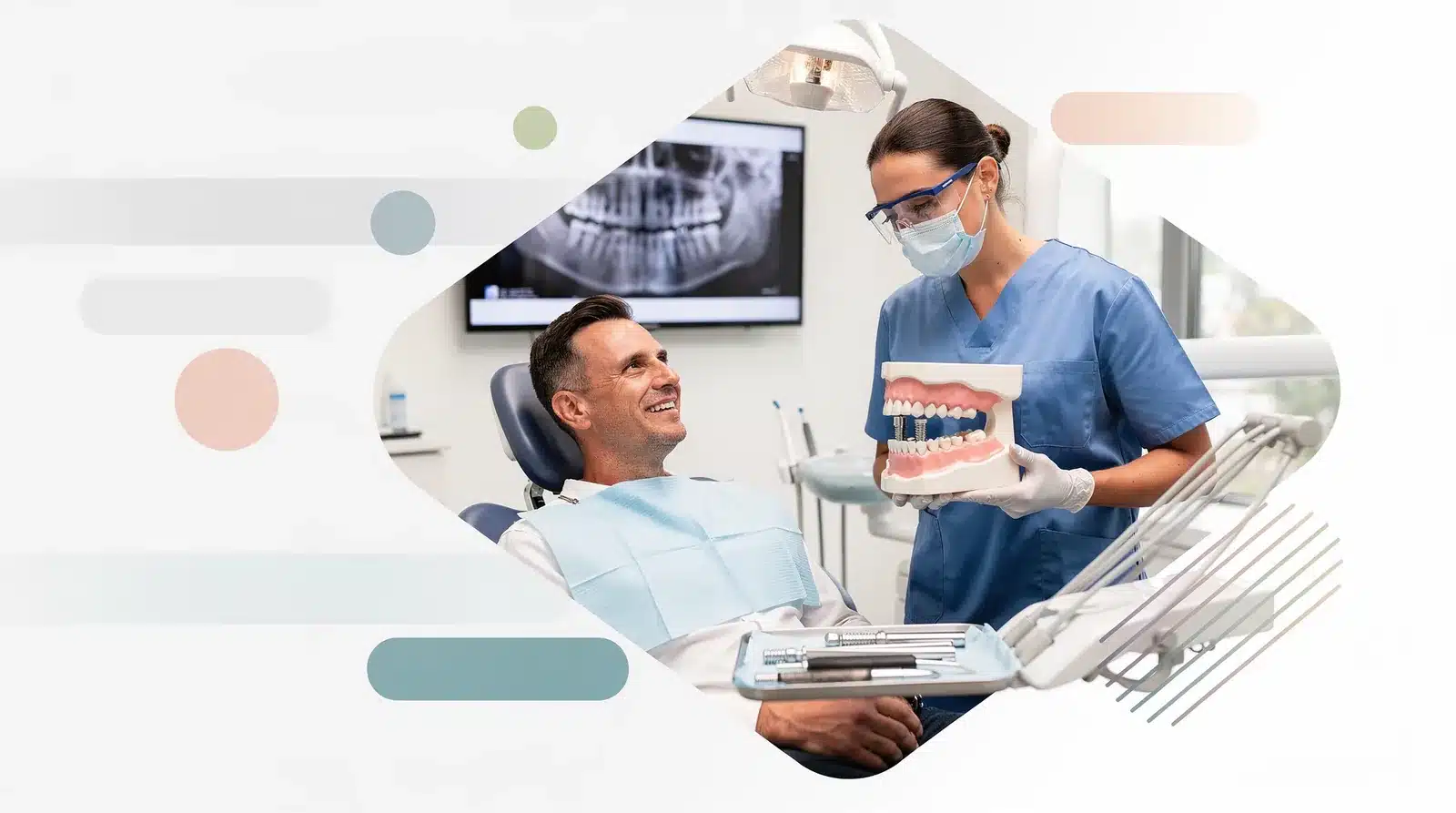
Dental implant complications require immediate evaluation by a qualified professional, such as the team at Affordable Dentist Near Me in Fort Worth, TX. Treatment includes antibiotics for infection, bone grafting for insufficient density, or implant removal and replacement after proper healing, typically 3-6 months.
Peri-implantitis, the most common implant complication, causes redness, swelling, and bleeding around the gum and bone. Catching signs early and seeking prompt evaluation at Affordable Dentist Near Me in Fort Worth, TX resolves most cases through targeted infection control and treatment before bone loss progresses.
Troubleshooting Dental Implant Issues starts with understanding that problems rarely announce themselves during surgery. Most patients focus on the procedure itself, but the real challenges surface months or years later, after the crown, bridge, or full restoration has been attached. Recognizing early warning signs protects both your investment and your oral health.
Key Takeaways
Early detection of implant complications prevents costly treatments and protects your long-term smile investment.
Oral surgeons use advanced imaging and specialized surgical skills to resolve complex bone loss and infections.
Common implant issues like nerve changes and bone deterioration require professional diagnosis within Fort Worth.
Most dental implant problems become treatable when identified early through regular professional monitoring and care.
Why Implant Problems Appear Later, Not Sooner
Dental implant complications fall into two distinct categories: biological and mechanical. Biological issues involve the bone and gum tissue surrounding the implant. Mechanical issues involve the components themselves—the crown, the abutment screw, or the connection between them.
The publication 2 Dental Implant Complications You Should Know — Video by … explains that complications frequently appear after the permanent restoration is in place. This surprises many patients who assume that once the surgical site heals, the hard part is over. In reality, the months and years following restoration demand the same vigilance as the initial healing period.
Regular dentistry carries its own failure points. Fillings break, crowns wear out, and root canals lose their seal. Nothing in dental care lasts forever without potential issues. The key difference with implants is that Troubleshooting Dental Implant Issues requires specialized expertise to address bone-level or infection-based problems that natural tooth problems rarely create.
Biological Complications: Infection and Bone Loss
Peri-implantitis stands as the most serious biological complication. This infection attacks the gum and bone around the implant, and it progresses silently. Patients often notice no pain until significant damage has already occurred.
Your dentist treats peri-implantitis with a deep cleaning of the implant surface, antibiotics, and in advanced cases, surgical debridement to save the bone. Early intervention makes the difference between a simple cleaning and a complex revision procedure.
Bone loss around implants follows a predictable pattern when left untreated. The infection spreads from the gum tissue into the supporting bone, creating a pocket that deepens over time. Regular checkups catch these pockets early, when conservative treatment still works.
Mechanical Complications: Loose Parts and Worn Components
Mechanical issues appear months or years later, after the crown, bridge, or full restoration attaches to the implant. These problems stem from normal wear and tear, not from poor surgical technique.
A loose crown or a clicking sound when chewing points to a loosened abutment screw or a worn-out crown. Both are straightforward fixes your dentist performs in a single visit. Ignoring these signs allows the problem to worsen, potentially damaging the underlying implant body.
Troubleshooting Dental Implant Issues often requires a skill set beyond what general dentistry provides, particularly when bone or nerve structures are compromised. Your dentist checks the implant’s stability and screens for early infection at every visit, catching small problems before they become surgical ones.
When to Seek Immediate Care
Certain symptoms demand urgent attention. Persistent numbness lasting more than 48 hours signals possible nerve involvement. Visible swelling or pus indicates active infection. Pain when chewing suggests a loose component or failing bone integration.
Surgeons perform revision surgery when infections cause significant bone loss around the implant, or when nerve changes produce persistent numbness. A team approach with emergency surgical skills allows same-day intervention that limits harm. Restores function more predictably than delayed treatment.
Diagnostic Tools That Catch Problems Early
Modern imaging plays a critical role in implant maintenance. A CBCT scan provides three-dimensional views of the bone volume, nerve location, and implant angle that standard X-rays cannot match. This technology detects bone loss around the implant with remarkable precision, allowing your dentist to intervene before the condition advances.
The Affordable Dentist Near Me team in Longview maintains a fully equipped laboratory that customizes dental appliances to match each patient’s unique oral structure. This in-house capability supports precise surgical revisions when complications arise, eliminating the delays associated with external laboratories.
Prevention: Your Best Strategy
Preventing implant complications starts with choosing the right provider and continues with disciplined home care. Regular professional cleanings remove plaque that brushing and flossing miss, particularly in the hard-to-reach areas around implant crowns.
Your dentist screens for early signs of trouble at every visit. These routine checks catch small problems before they become surgical ones, saving you time, discomfort, and money. Patients who maintain regular schedules experience fewer complications than those who skip appointments.
The Cost of Delayed Treatment
Delaying treatment for implant issues carries real consequences. What starts as a minor inflammation can progress to significant bone loss requiring bone grafting. A loose crown can lead to a fractured implant body requiring complete removal.
The financial impact of revision surgery far exceeds the cost of routine maintenance. More importantly, early intervention preserves the bone structure needed for future restorations. Once bone is lost, rebuilding it requires additional surgical procedures and extended healing time.
Troubleshooting Dental Implant Issues works best when you have a partner who understands both the surgical and restorative sides of implant dentistry. The Longview team brings that combined expertise to every appointment, whether you are coming in for a routine cleaning or a complex revision.
Do not wait for pain to force your hand. Implant problems rarely resolve on their own, and early intervention preserves both your smile and your investment. Contact the Longview office today to schedule your free consultation and take the first step toward protecting your dental implants for years to come.
FAQ
What is the most common dental implant complication?
Peri-implantitis is the most common complication, causing redness, swelling, and bleeding around the gum and bone. Prompt evaluation at Affordable Dentist Near Me in Fort Worth, TX resolves most cases before bone loss progresses.
What causes mechanical problems like a loose implant crown?
Mechanical issues stem from normal wear and tear on components like the crown or abutment screw, not poor surgical technique. A loose crown or clicking sound signals a loosened screw or worn crown, fixed in a single visit.
How does a dentist treat bone loss from peri-implantitis?
Treatment includes deep cleaning of the implant surface, antibiotics, and, in advanced cases, surgical debridement to save the bone. Regular checkups catch bone pockets early, when conservative treatment still works.
Conclusion
In closing, dental implant complications require prompt professional attention to preserve your investment and oral health. By recognizing warning signs early and following your dentist’s post-treatment care instructions, you significantly reduce the risk of serious problems. Should complications arise, seeking expert evaluation ensures the best possible outcome for your smile’s longevity and function.