Dental implant options include All-on-4 Dental Implants Procedure Explained, a common type of endosteal implant,, placed directly into the jawbone when enough healthy bone exists. Alternatives include subperiosteal implants for patients lacking bone density, plus zygomatic and mini implants. Affordable Dentist Near Me evaluates jawbone health before recommending the right implant type for lasting, natural-looking tooth replacement.
Key Takeaways
Endosteal implants represent the most common dental implant option available to patients today.
Adults aged 20 to 64 have lost an average of 4 teeth throughout their lifetime.
Your dentist selects the best implant type based on the amount of healthy jawbone you have.
Dental implants offer solutions for single-tooth replacement and full-arch restoration needs.
Types of Dental Implants Explained
Types of Dental Implants Explained starts with one core fact: a dental implant is a titanium screw placed into the jawbone to replace a tooth root. The most common type is the endosteal implant, which resembles a small screw and is surgically inserted deep into the jawbone. This option works when you have enough healthy jawbone to support it. For adults exploring tooth replacement, understanding the main categories helps you make a confident, budget-conscious decision.
Endosteal Implants: The Standard Choice
Endosteal implants are the most common type of dental implants. Your dentist will recommend this option when you have adequate jawbone density. The procedure involves placing a titanium screw directly into the jawbone, where it fuses with the bone over several months. This fusion creates a stable foundation for a crown, bridge, or denture. Because this approach uses your natural bone, it offers long-term durability and a natural look. Most patients with one missing tooth or several missing teeth qualify for endosteal implants.
Subperiosteal Implants: A Solution for Limited Bone
When your jawbone lacks the height or density for endosteal implants, a subperiosteal implant may be the answer. Instead of going into the bone, this type rests on top of the jawbone, with metal posts protruding through the gum to hold the artificial teeth. This approach suits patients who cannot wear conventional dentures and do not want a bone graft. While less common than endosteal implants, subperiosteal options provide a viable path for those with significant bone loss.
Zygomatic Implants: For Severe Bone Loss
For patients with severe upper jaw bone loss, zygomatic implants offer an alternative. These implants anchor into the cheekbone, or zygoma, rather than the jawbone. This technique eliminates the need for bone grafting in many cases. Zygomatic implants are longer than standard implants and require specialized surgical skill. This option is typically reserved for complex cases. It provides a lifeline for patients who have been told they have no other options.
All-on-4 and Full-Arch Solutions
When you need to replace an entire arch of teeth, All-on-4 or full-arch implant solutions use four strategically placed implants to support a full set of fixed teeth. This approach maximizes the use of available bone, often eliminating the need for bone grafts. The procedure provides immediate function, meaning you leave with a temporary set of teeth the same day. For adults dealing with loose dentures or multiple missing teeth, this option restores chewing power and confidence without the instability of traditional dentures.
Comparing Implant Types at a Glance
Implant Type
Best For
Bone Requirement
Procedure Time
Endosteal
Single or multiple missing teeth
Healthy jawbone
Several months for bone fusion
Subperiosteal
Limited bone, no grafting
Minimal bone
Shorter than endosteal, no drilling into bone
Zygomatic
Severe upper jaw bone loss
Cheekbone anchor
Longer recovery due to complexity
All-on-4
Full arch replacement
Moderate bone
Same-day teeth
Choosing the Right Implant for Your Smile
Your dentist will select the best implant type based on the amount of healthy jawbone you have. A thorough consultation, including 3D imaging, reveals your bone density and guides the recommendation. For most patients, endosteal implants deliver the most predictable results. However, if bone loss has progressed, subperiosteal or zygomatic options keep treatment possible. Every choice affects your upfront cost, recovery time, and long-term outcome. Discuss all options with your dental team before committing.
What to Ask at Your Consultation
Am I a candidate for endosteal implants, or does my bone density require another approach?
How long will the entire process take, from implant placement to final restoration?
What is the total cost for my chosen implant type, including the crown or bridge?
Will I need a bone graft, or can a subperiosteal or zygomatic implant avoid that step?
What does the recovery period involve, and when can I return to normal eating?
Understanding the types of dental implants explained here gives you a clear starting point. Each option serves a specific purpose, and your dentist will match the right one to your unique oral health. Schedule a consultation to learn which implant type fits your smile and your budget.
How do endosteal implants work for tooth replacement?
Endosteal implants replace a missing tooth’s root with a small screw-shaped post placed directly into the jawbone. A dental surgeon surgically inserts the implant deep into the bone during the procedure.
The jawbone then does the heavy lifting. Over time, the natural jawbone grows around the dental implant, making it stronger and more stable. This process creates a fixed foundation for the replacement tooth.
What makes an endosteal implant different from a natural root?
Unlike natural tooth roots, an implant can anchor several teeth instead of just one. This versatility makes endosteal implants a practical choice for clients missing one tooth or multiple teeth in a row.
The implant itself acts as a sturdy base. A crown, bridge, or denture attaches to the top of the implant to complete the smile.
How does the technology improve the outcome?
Affordable Dentist Near Me uses advanced technology to provide durable, natural-looking dental implants. The result is a restoration that functions and appears like a natural tooth.
Key benefits of endosteal implants include:
Stability: The bone fuses with the implant over time
Versatility: One implant can support multiple teeth
Durability: The titanium post resists wear and decay
Appearance: The final crown matches surrounding teeth
Clients with enough healthy jawbone typically qualify for this treatment. A consultation determines whether endosteal implants fit the individual’s needs.
Types of Dental Implants Explained
Types of dental implants explained starts with the two main categories: endosteal implants, which sit in the jawbone, and subperiosteal implants, which rest on top of the jawbone. Endosteal implants are the most common type, and they work for most patients with healthy bone. Subperiosteal implants serve patients who lack enough bone height and do not want a bone graft. Your dentist in Longview will recommend one based on your jaw structure and budget.
Endosteal Implants: The Standard Choice
Endosteal implants resemble small titanium screws. A surgeon places the implant deep into the jawbone, where it fuses with the bone over several months. This fusion, called osseointegration, creates a stable anchor for a crown, bridge, or denture. Most patients with adequate bone density qualify for this option. The procedure requires one surgical visit for placement, followed by a healing period before the final restoration attaches.
Subperiosteal Implants: For Limited Bone
Subperiosteal implants use a metal frame that fits under the gum but on top of the jawbone. The frame has posts that protrude through the gums to hold a prosthetic tooth. This option suits patients who cannot wear conventional dentures and do not want a bone grafting procedure. The recovery time is shorter than endosteal implants because the surgery does not involve drilling into the bone.
Zygomatic Implants: The Complex Case Solution
Zygomatic implants anchor into the cheekbone instead of the upper jaw. This approach serves patients with severe bone loss in the upper jaw who cannot use standard implants. The procedure is more complex and requires a specialist with advanced training. Recovery takes longer, and the cost runs higher than other implant types. However, this option avoids the need for bone grafts in most cases.
All-on-4 and All-on-6 Implants: Full-Arch Solutions
All-on-4 and All-on-6 techniques use four or six implants to support a full arch of replacement teeth. The dentist places the rear implants at an angle to maximize contact with available bone. This method often eliminates the need for bone grafts, even in patients with moderate bone loss. The result is a fixed, non-removable set of teeth that functions like natural dentition. This approach typically costs less than placing a separate implant for each missing tooth.
Mini Dental Implants: A Less Invasive Option
Mini dental implants are narrower than standard implants, measuring less than 3 millimeters in diameter. Dentists use them to stabilize lower dentures or replace small teeth. The procedure is less invasive, with a faster recovery time and lower cost. Mini implants work best for patients with limited bone density who cannot undergo more extensive surgery.
Implant-Supported Bridges and Dentures
Implant-supported bridges replace one or more missing teeth without relying on adjacent natural teeth for support. The bridge attaches to implants placed on either side of the gap. Implant-supported dentures snap onto implants for a secure fit, eliminating the slipping and clicking of traditional dentures. These options provide more stability and chewing power than conventional prosthetics.
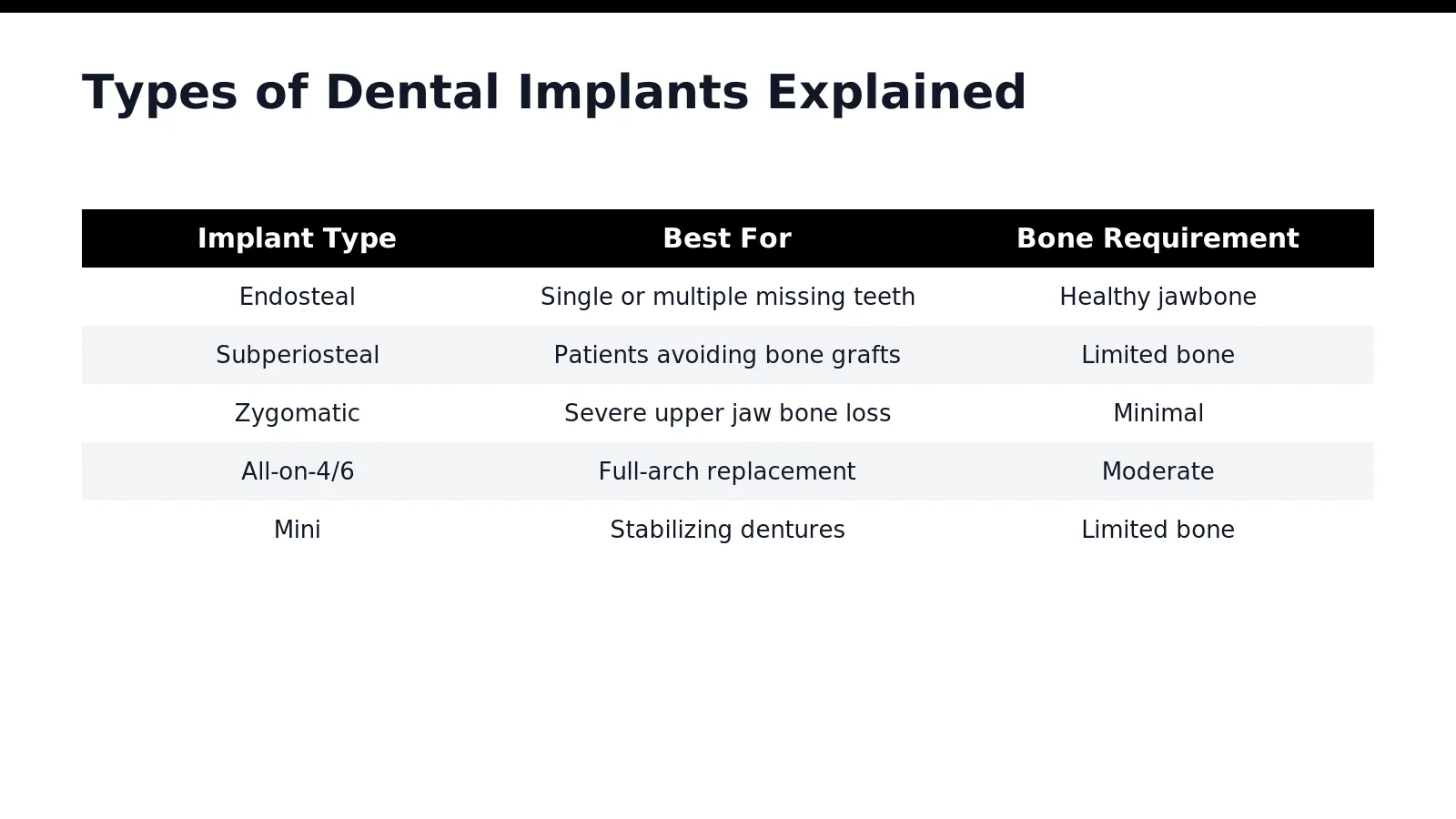
Comparing Implant Types: A Quick Reference
Implant Type
Best For
Bone Requirement
Procedure Complexity
Relative Cost
Endosteal
Single or multiple missing teeth
Healthy jawbone
Moderate
Moderate
Subperiosteal
Patients avoiding bone grafts
Limited bone
Low
Higher
Zygomatic
Severe upper jaw bone loss
Minimal
High
Highest
All-on-4/6
Full-arch replacement
Moderate
High
High
Mini
Stabilizing dentures
Limited bone
Low
Lower
Choosing the Right Implant for Your Smile
Your dentist will evaluate your jawbone density, overall health, and budget before recommending an implant type. Patients with healthy bone typically choose endosteal implants for their reliability and longevity. Those with bone loss may benefit from subperiosteal or zygomatic options. Full-arch solutions like All-on-4 offer a balance of cost and function for patients missing most or all of their teeth.
Schedule a Consultation in Longview
Affordable Dentist Near Me in Longview offers dental implant consultations to help you determine the best option for your situation. Dr. Pham, DDS, will examine your jaw and discuss which implant type fits your needs and budget. Schedule a free new patient consultation to explore your tooth replacement options today; pricing varies by package.
FAQ
What is the most common type of dental implant?
The endosteal implant is the most common type. It’s a titanium screw placed directly into the jawbone, used when patients have enough healthy bone to support it.
What if I don’t have enough jawbone for implants?
Subperiosteal implants work for patients lacking bone density. This type rests on top of the jawbone with metal posts protruding through the gum to hold artificial teeth.
How does Affordable Dentist Near Me choose the right implant type?
Affordable Dentist Near Me, located in Fort Worth, TX, evaluates your jawbone health first. This evaluation determines whether endosteal, subperiosteal, zygomatic, or mini implants suit your tooth replacement needs.
Conclusion
In closing, understanding the distinctions among dental implant types empowers you to make informed decisions about your oral health and restoration options. Each implant variety addresses specific clinical needs and anatomical considerations, ensuring that your treatment aligns with your unique dental situation. Whether you’re exploring endosteal, subperiosteal, or zygomatic solutions, consulting with a qualified dental professional helps determine which approach delivers the most durable, natural-looking results for your smile.