The Hidden Risks of Dental Implants: What Every Patient Should Consider About Implant Failure, Complications, and Safety
Dental implants are titanium or zirconia fixtures placed into the jawbone to replace missing teeth and restore chewing, speech, and aesthetics. Understanding their potential risks is essential before deciding on treatment. This article explains how implants work, the biological process that underpins their long-term success, and the specific complications patients may face so they can make informed choices. You will learn the most common complications—such as peri-implantitis, infection, nerve injury, and mechanical failure—the signs that suggest a problem, and practical prevention and early-detection steps to protect your oral health. We also cover diagnostic and treatment pathways for infections and peri-implant disease, identify patient-level and local anatomical risk factors, and provide checklists for choosing a qualified provider in Longview. Finally, the piece offers local, factual context about how Affordable Dentist Near Me of Longview supports safe implant care, including comfort measures and financial access, to help readers connect the clinical information to local options. Read on for clear red flags, step-by-step prevention guidance, and structured comparisons that make complex decisions easier.
What Are Dental Implants and How Do They Work?
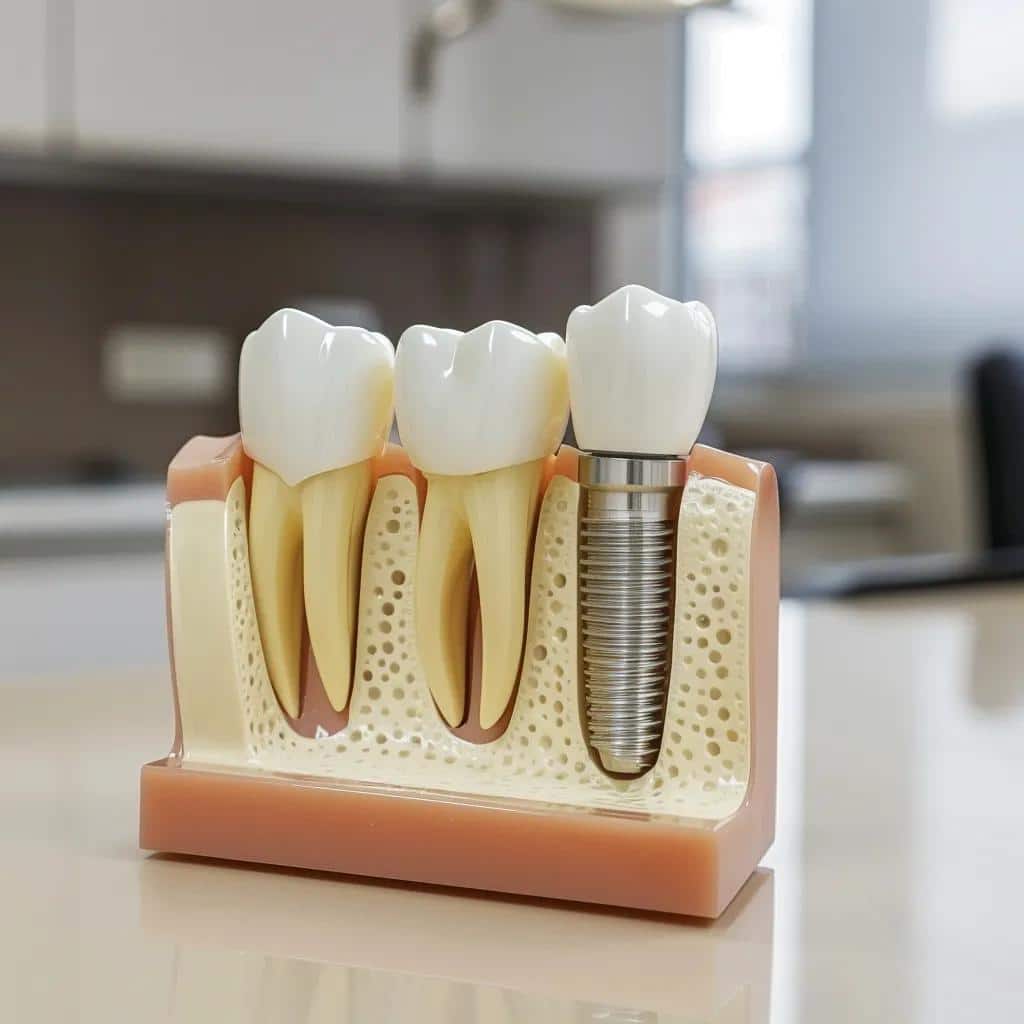
A dental implant is a man-made root replacement, typically a biocompatible titanium or zirconia fixture, that is surgically inserted into jawbone to support an abutment and a crown, restoring a missing tooth’s function and appearance. The success of this restoration depends on osseointegration, the biological process where living bone bonds to the implant surface, creating a stable anchor for chewing forces and long-term prosthetic support. Proper implant selection, surgical technique, and patient biology all contribute to stable osseointegration and reduce the chance of early loosening or mechanical complications. When osseointegration proceeds normally, radiographs show a close bone-to-implant interface without radiolucency, and the restoration functions like a natural tooth; conversely, poor integration increases risk for mobility and failure. Understanding these basic components and mechanics sets the stage for recognizing how complications arise and what prevention strategies protect implant longevity.
What Is a Dental Implant and Its Key Components?
A dental implant system usually involves three core parts: the fixture (the implant body placed in bone), the abutment (the connector), and the crown (the visible tooth replacement), with each part designed to work together for function and hygiene. Fixtures are commonly made from titanium because of its high biocompatibility and proven osseointegration record; zirconia implants offer a metal-free alternative with favorable soft-tissue response for select patients. Abutments may be prefabricated or custom-milled and determine emergence profile and prosthetic fit, while crowns are fabricated from porcelain, zirconia, or hybrid materials to balance strength and aesthetics. Each component is a potential site for mechanical or biological issues: an ill-fitting abutment can promote plaque accumulation, a crown with poor occlusion can cause overload, and an implant surface characteristic can influence bacterial adhesion. Recognizing these parts helps patients understand where problems may originate and why careful planning matters for durable outcomes.
How Does Osseointegration Affect Implant Success?
Osseointegration is the process by which living bone forms a direct structural and functional connection to the implant surface, providing primary and secondary stability that resists chewing forces and daily function. The timeline for osseointegration typically spans weeks to months: initial primary stability relies on mechanical engagement at placement, and secondary biological stability develops as bone remodels and matures around the implant. Factors such as bone density, surgical technique, micromotion during healing, and systemic health influence whether osseointegration completes successfully; inadequate bone volume or uncontrolled systemic conditions can interrupt healing and lead to early loosening. Clinically, failed osseointegration may present as persistent mobility or pain and often requires removal or staged reimplantation after corrective grafting. Understanding osseointegration clarifies why preoperative planning, imaging, and patient optimization are essential for predictable outcomes and fewer complications.
What Are the Most Common Risks and Complications of Dental Implants?
Dental implants carry several predictable risks that range from biological infections to mechanical failure; patients should understand the typical complications so they can recognize warning signs and engage in prevention. The most commonly encountered issues include peri-implantitis, surgical-site infection, nerve injury, bone loss around the implant, and mechanical problems such as loosening or fracture of components. Each complication has distinct causes and early signs; timely identification and appropriate management can often preserve the implant or limit damage. Below is a concise list of top complications for quick reference, followed by a comparison table that clarifies causes, typical presentation, incidence ranges, and initial patient actions.
Dental implant complications to know:
Peri-implantitis: inflammation around the implant with progressive bone loss caused by bacterial biofilm and host response.
Implant site infection: localized infection after surgery presenting with pain, swelling, or pus.
Nerve injury: sensory changes such as numbness or tingling due to proximity to the inferior alveolar or lingual nerves during surgery.
Mechanical failure: loosening or fracture of the abutment, screw, or crown due to overload or material fatigue.
Complication
Likely Cause
Common Signs
Immediate Action
Peri-implantitis
Biofilm-driven inflammation, poor hygiene, history of periodontitis
Redness, bleeding on probing, pocketing, progressive bone loss on X-ray
Schedule prompt dental evaluation and professional debridement
Surgical-site infection
Contamination at surgery, compromised host response
Seek urgent assessment; imaging and neurologic exam recommended
Mechanical failure
Overload, malocclusion, faulty components
Mobility of restoration, clicking, prosthetic fracture
Avoid chewing on side; see clinician for assessment and repair
This comparison clarifies the distinct pathways that lead to complications and helps patients prioritize immediate steps when problems arise. Recognizing these differences moves us naturally into deeper explanations of peri-implant disease and nerve injury mechanisms and how clinicians detect them.
What Is Peri-implantitis and How Does It Develop?
Peri-implantitis is a progressive inflammatory condition affecting soft tissue and supporting bone around an implant, initiated by bacterial biofilm and perpetuated by the host immune response, which leads to bone loss if untreated. It is distinct from peri-implant mucositis—an earlier, reversible inflammation confined to soft tissues—and shares risk factors with periodontitis, including poor oral hygiene, smoking, and a history of periodontal disease. The pathogenic process involves biofilm accumulation on implant surfaces, eliciting chronic inflammation that results in pocket formation, bleeding on probing, and radiographic bone loss; left unchecked, it can undermine osseointegration and compromise the fixture. Management emphasizes early detection through regular probing and radiographs, rigorous oral hygiene, and professional decontamination; advanced cases may require surgical intervention and regenerative attempts. Understanding how peri-implantitis develops underscores the importance of daily maintenance and frequent professional reviews to halt progression early.
How Can Nerve Damage Occur During Implant Surgery?
Nerve injury during implant placement most commonly affects the inferior alveolar nerve in the lower jaw and, less frequently, the lingual nerve; such injuries occur when the surgical osteotomy encroaches on the nerve canal or when traumatic instrumentation compresses or severs nerve fibers. Mechanisms include incorrect vertical depth, misdirected angulation, overheating of bone during drilling, or placement too close to anatomic landmarks; immediate symptoms can include numbness, tingling, altered sensation, or sharp radiating pain in the lip, chin, or tongue. Diagnosis relies on careful clinical neurologic testing and three-dimensional imaging to assess implant position relative to nerve anatomy; early recognition allows some reversible injuries to recover with conservative measures such as observation, medication, or surgical repositioning if indicated. Because prognosis varies from temporary neurapraxia to permanent axonotmesis, meticulous preoperative imaging and surgical planning are crucial to minimize these risks.
Inferior Alveolar Nerve Injury During Dental Implant Placement
Inferior alveolar nerve injury can result from traumatic local anesthetic injections, during dental implant placement.
What Are the Signs and Symptoms of Dental Implant Failure?
Knowing the difference between normal postoperative healing and warning signs of failure helps patients act quickly, which can preserve the implant or prevent systemic spread of infection. Early warning signs include mobility, persistent severe pain beyond normal healing timelines, swelling or abscess formation, and purulent discharge; later indicators include gum recession revealing implant threads and radiographic evidence of progressive bone loss. Distinguishing normal postoperative discomfort—mild swelling and soreness in the first few days—from persistent or worsening symptoms after the first week is essential for timely care. The checklist below prioritizes red flags that require immediate attention and explains how to triage symptoms based on severity and timing.
Recognize these red flags for implant failure:
Mobility of the implant or restoration: Any mobility beyond the expected minor movement of a temporary crown suggests loss of osseointegration and needs urgent evaluation.
Persistent severe pain or throbbing: Pain that worsens after the initial healing phase, especially with swelling, may indicate infection or nerve involvement.
Swelling with fever or spreading redness: Signs of systemic involvement require same-day medical or dental attention.
Pus or foul drainage: Visible discharge is a strong indicator of active infection needing treatment.
These red flags guide immediate next steps and support a practical triage approach for patients deciding between urgent care and scheduled appointments.
How to Recognize Early Warning Signs of Implant Problems?
Early recognition relies on understanding expected healing timelines and watching for deviations: modest soreness and mild swelling are typical in the first 48–72 hours, while persistent pain, increasing swelling, or new numbness after that period are warnings. Within the first week, pain should trend downward and function should gradually improve; if the chewing surface feels unstable, or if bleeding, increased sensitivity, or bad taste persists, contact your dental provider. Clinicians use clinical probing, mobility testing, and radiographs to differentiate routine healing from complications like infection or failure of osseointegration. Patients should keep a symptom diary for the first two weeks after placement and report any progressive symptoms promptly to allow early conservative interventions. Timely reporting increases the chance that problems can be managed without implant removal.
When Should Patients Seek Immediate Dental Care?
Patients should seek same-day dental attention when they experience heavy uncontrolled bleeding, rapidly spreading facial swelling, fever with oral signs of infection, or sudden onset of numbness and weakness that affects daily function. These urgent situations may indicate a deep space infection, a nerve injury that needs prompt evaluation, or systemic involvement that requires antibiotics and possibly surgical drainage; delayed care increases risk of more extensive interventions. For other concerns—such as persistent but stable soreness or minor aesthetic issues—arranging an expedited office appointment is appropriate; describe symptom onset, severity, and any systemic signs when contacting the office to help prioritize care. When in doubt, err on the side of prompt evaluation, since early examination and imaging can preserve implant structure and prevent escalation.
How Can Patients Prevent Long-Term Dental Implant Complications?
Prevention combines diligent at-home care, lifestyle modification, regular professional maintenance, and appropriate preoperative optimization of systemic conditions to lower the long-term risk of peri-implant disease and mechanical problems. Daily plaque control around implant restorations with effective interdental cleaning, soft-bristle brushing, and adjunctive tools reduces biofilm formation that drives peri-implantitis. Professional maintenance visits allow clinicians to monitor probing depths, remove subgingival calculus, evaluate radiographs for early bone changes, and manage occlusal forces to prevent overload; these visits are critical because early changes are often asymptomatic. Patients who stop smoking, maintain good glycemic control if diabetic, and follow postoperative instructions reduce their complication rates significantly. Below is a step-by-step hygiene and maintenance routine designed specifically for implant longevity.
Recommended daily and periodic prevention steps:
Brush twice daily with a non-abrasive toothbrush and low-abrasive paste designed for prosthetics.
Use interdental brushes or floss around abutments once daily to disrupt biofilm at contact points.
Consider adjuncts such as a water flosser or chlorhexidine rinses for short-term postoperative care as advised by your provider.
Attend professional maintenance every 3–6 months based on your clinician’s risk assessment and periodontal history.
Avoid smoking and manage systemic conditions like diabetes with your medical team to support healing.
These daily habits and scheduled check-ins form the backbone of long-term implant preservation and naturally lead into an explanation of specific tools and monitoring techniques clinicians use to detect early problems.
What Oral Hygiene Practices Reduce Implant Risks?
Specific oral hygiene techniques reduce plaque accumulation at the implant-abutment interface and the peri-implant sulcus, thereby lowering the chance of mucositis progressing to peri-implantitis. Patients should use a soft-bristled brush or powered toothbrush twice daily, employ interdental brushes sized to contact points for supragingival and subgingival cleaning, and floss carefully around abutments; these mechanical methods remove the biofilm that causes inflammation. A water flosser can be particularly helpful for patients with limited dexterity or complex prostheses, and short-term antiseptic rinses may be recommended postoperatively to reduce microbial load during initial healing. Avoid abrasive pastes and hard scrubbing that can damage soft tissue seals or prosthetic surfaces; ask your clinician for product recommendations tailored to your prosthesis. Consistent technique reduces long-term risk and sets the stage for effective professional surveillance.
How Do Regular Dental Check-Ups Help in Early Detection?
During maintenance visits, clinicians perform targeted assessments—probing for bleeding, checking probing depths, assessing mobility, and taking radiographs—to detect early biological or mechanical changes that patients may not feel. These periodic checks allow professional debridement of subgingival deposits that home care cannot reach, and clinicians can identify occlusal overload or prosthetic wear that predisposes to mechanical failure. Radiographic comparisons over time reveal progressive bone loss before clinical mobility appears, enabling earlier, less invasive interventions. Recall intervals vary with patient risk—those with prior periodontal disease or systemic risk factors may require three-month recalls, while lower-risk patients may be seen every six months. Regular monitoring protects the investment in implants by catching problems when they are most treatable.
What Are the Risk Factors That Increase Dental Implant Complications?
Certain local and systemic factors change the probability of complications and should inform candidacy, planning, and postoperative management for implants; differentiating modifiable from non-modifiable factors empowers patients to reduce risk where possible. Major modifiable risk factors include smoking, poor oral hygiene, and uncontrolled diabetes, each of which impairs healing and increases infection and peri-implantitis rates. Non-modifiable or structural factors—such as inadequate bone volume or certain anatomic variations—require surgical strategies like bone grafting or alternative implant selection to mitigate risk. The table below maps key risk factors to mechanisms and practical mitigation steps to guide preoperative optimization.
Risk Factor
How It Increases Risk
Practical Mitigation
Smoking
Reduces blood flow and immune response, increasing infection and peri-implantitis
Smoking cessation prior to surgery and avoidance during healing
Uncontrolled diabetes
Impairs wound healing and immune function, raising infection risk
Optimize glycemic control with medical team before surgery
Poor oral hygiene
Allows biofilm accumulation that drives peri-implant disease
Intensive hygiene instruction and early professional maintenance
Insufficient bone volume
Reduces primary stability and osseointegration potential
Pre-op grafting, sinus lift, or alternative implant designs
This structured view clarifies which factors patients can change and which require surgical planning, and it leads directly into more detailed mechanisms for smoking, diabetes, and bone quality.
How Do Smoking and Diabetes Affect Implant Success?
Smoking decreases local blood perfusion and oxygenation and alters immune cell function, which impairs wound healing and increases rates of peri-implantitis and implant failure compared with non-smokers. The risk rises with the number of cigarettes smoked daily and often shows dose-response behavior in clinical studies, so cessation is strongly advised before surgery to improve outcomes. Diabetes, particularly when poorly controlled, reduces neutrophil function and collagen deposition, leading to delayed healing and higher infection rates; patients with well-controlled glycemia have outcomes closer to non-diabetic peers. Preoperative medical optimization—collaboration with a physician to improve glycemic control—and postponing elective implant surgery until systemic conditions are stabilized meaningfully reduce complication likelihood.
What Role Does Bone Density and Quality Play?
Bone density and volume directly influence primary stability at placement and the biological environment for osseointegration; low bone quality or insufficient height/width increases the chance of early micromotion and later failure. Clinicians use three-dimensional imaging such as CBCT to evaluate bone anatomy and plan implant size, angulation, and the need for adjunctive procedures like bone grafting or sinus lifts. When bone is inadequate, strategies include staged grafting to rebuild volume, using shorter or wider implants to maximize contact, or selecting alternative prosthetic plans to minimize biomechanical load. Appropriate planning based on bone quality reduces mechanical overload and improves the odds of long-term integration and function.
How Are Dental Implant Infections Diagnosed and Treated?
Diagnosing implant infections begins with clinical signs—redness, bleeding, suppuration, and increased probing depths—and is confirmed through radiographs or three-dimensional imaging that reveal bone loss; early diagnosis enables conservative therapy that often preserves the fixture. Treatment follows a stepwise approach: initial conservative measures include professional debridement and antiseptic therapy, escalation to localized antibiotics and mechanical decontamination, and surgical access or regenerative procedures for advanced peri-implantitis; implant removal is reserved for cases where infection or mechanical compromise cannot be controlled. The table below summarizes common treatments, their indications, and expected recovery timelines to give patients a clear sense of what to expect.
Treatment
When Used
Expected Outcome / Recovery Time
Non-surgical debridement + antiseptic
Early mucositis or mild peri-implantitis
Improvement in days–weeks with strict home care
Local antibiotics / topical antiseptics
Moderate peri-implantitis as adjunct to debridement
Variable; may require repeated visits over weeks
Surgical flap debridement ± regeneration
Advanced bone loss or pockets not responding to conservative care
Longer recovery (weeks); aims to arrest disease and reconstruct bone
Implant removal
Uncontrollable infection, severe mobility, or failed integration
Immediate resolution of infection source; prosthetic planning thereafter
This treatment ladder clarifies how clinicians escalate care based on severity and supports the idea that early detection preserves more conservative options.
What Are the Common Signs of Implant Site Infection?
Local signs of infection include increasing pain, warmth, swelling, redness, bleeding on probing, and purulent discharge from around the implant; systemic signs such as fever, malaise, or lymphadenopathy indicate more serious spread and require urgent attention. Radiographs may show radiolucency or vertical bone loss around the implant threads as the infection progresses; increased probing depths with bleeding are clinically suspicious for peri-implantitis. Timelines matter: worsening symptoms after the early postoperative period or any new discharge months to years after placement merit prompt evaluation. Clear recognition of these signs enables faster diagnosis and earlier, less invasive therapy.
What Treatment Options Are Available for Implant Infections?
Treatment begins conservatively—with professional mechanical debridement, removal of supragingival and subgingival biofilm, and adjunctive antiseptic rinses—and escalates to localized antibiotics or surgical intervention when conservative measures fail. Non-surgical approaches are often effective for early peri-implant mucositis and mild peri-implantitis, while surgical access, soft-tissue management, and regenerative techniques are used to treat deeper bone defects and arrested disease progression. In selected cases, lasers or air-abrasion systems are used for decontamination as adjuncts to mechanical cleaning, although long-term evidence varies and clinicians choose modalities based on defect morphology and response. When an implant is mobile or infection persists despite appropriate therapy, removal becomes the safest option to resolve infection and consider later reconstruction.
Inferior Alveolar Nerve Injury in Dental Implant Placement: A Review
The purpose of present article was to review aetiological factors, mechanism, clinical symptoms, and diagnostic methods as well as to create treatment guidelines for the management of inferior alveolar nerve injury during dental implant placement.
How Does Affordable Dentist Near Me of Longview Ensure Safe Dental Implant Procedures?
Affordable Dentist Near Me of Longview emphasizes patient safety, modern technology, and comfort measures to reduce implant-related risks while providing accessible care to the Longview community. The practice provides dental implants and dentures and highlights modern diagnostic tools, sedation dentistry for patient comfort, and everyday low fees with affordable payment plans to improve access. Patients can obtain a free implants consultation to review candidacy, treatment options, and financial arrangements; the practice’s local address and phone number are available for scheduling and in-person assessment. These factual practice-level resources complement the clinical strategies described above by making evaluation and risk discussion accessible to local patients.
What Technologies and Techniques Minimize Implant Risks?
The practice notes the use of contemporary imaging and guided planning approaches that support accurate implant placement and risk reduction: three-dimensional imaging and guided surgical workflows typically reduce the chance of malpositioning and reduce intraoperative surprises. Guided planning allows clinicians to visualize bone volume, nerve canals, and sinus anatomy before surgery and select appropriate implant size and angulation to avoid nerve proximity and ensure primary stability. Use of digital planning combined with careful surgical technique minimizes drilling errors and helps maintain bone health during implant site preparation. Confirming specific technologies during a consultation clarifies how these tools are applied to an individual case and supports safer surgical outcomes.
How Does the Professional Team Support Patient Comfort and Safety?
Affordable Dentist Near Me of Longview highlights an experienced team approach that combines surgical and restorative expertise with patient-centered comfort measures, including sedation dentistry options to make procedures tolerable for anxious patients. Sedation can facilitate a calmer, more controlled surgical environment, which helps clinicians maintain steady technique and reduces the risk of traumatic events during placement. The practice also offers everyday low fees and affordable payment plans alongside a free implant consultation, enabling patients to discuss risks, treatment sequencing, and maintenance protocols in a no-pressure setting. These support systems—clinical expertise, sedation, and accessible consultations—help patients engage with care and follow prevention and recall plans that reduce long-term complications.
What Should Patients Consider When Choosing a Dental Implant Dentist in Longview?
Choosing a qualified implant provider requires evaluating clinician experience, diagnostic capabilities, treatment planning rigor, and practical access factors such as financing and consultation offerings; objective criteria help patients compare options effectively. Key considerations include clinician training and volume of implant cases, availability of modern imaging (CBCT) for accurate planning, clear maintenance and follow-up protocols, and transparent financial arrangements that allow patients to pursue appropriate care without undue delay. Below is a practical checklist of questions and selection criteria to bring to consultations, followed by a short explanation of why each matters.
Checklist for choosing an implant dentist:
Ask about the clinician’s implant training and average number of implant cases per year.
Confirm whether three-dimensional imaging (CBCT) is used for preoperative planning.
Request details on postoperative maintenance schedules and recall intervals.
Inquire about sedation options and how comfort and medical history are managed.
Discuss financing options and whether a free implant consultation is available.
These questions help patients assess whether a provider uses evidence-based planning and offers the continuity of care needed to reduce complication risks, and they naturally lead into why experience matters clinically.
Why Is Experience Important in Reducing Implant Complications?
Clinician experience influences outcome through improved case selection, refined surgical technique, and superior complication recognition and management; experienced clinicians typically identify borderline cases and plan staged approaches to optimize conditions for success. High-volume practitioners develop nuanced judgment about when to graft, when to alter implant dimensions, and how to manage prosthetic occlusion to avoid overload. Experience also improves the ability to detect early signs of peri-implant disease and apply evidence-based interventions before problems escalate. Patients should ask prospective implant providers about typical workflows, complication management protocols, and examples of how complex cases are handled to gauge the team’s capability and preparedness.
How Do Affordable Payment Plans and Free Consultations Help Patients?
Free implant consultations and affordable payment plans make it easier for patients to gather information, compare options, and pursue appropriate preoperative optimization without the barrier of upfront cost concerns; access to a no-cost consult supports informed decision-making. A free consultation allows patients to review imaging, discuss systemic risk factors, and obtain a realistic plan that includes maintenance needs, which promotes realistic expectations and informed consent. Payment plans remove financial barriers that otherwise push patients toward lower-cost but potentially riskier options or delayed care that increases complication likelihood. For local patients in Longview, these offerings provide practical pathways to safe, well-planned implant care while aligning with the clinical emphasis on prevention and follow-up.