Understanding the Full Financial Picture: Dental Implant Costs, Surgery, and Additional Procedures in Waco, TX
Dental implants are a durable restorative dentistry solution that replaces missing teeth by anchoring a titanium post into the jawbone, attaching an abutment, and restoring function with a crown or prosthetic. This guide explains how dental implant components, surgical steps, and adjunctive procedures translate into real costs for patients in Waco, TX, and shows how financing, insurance optimization, and careful planning can reduce out-of-pocket burden. Many patients face sticker shock without an itemized view of implant-related charges, so this article provides clear cost ranges, a breakdown of common add-on procedures, and practical strategies to make implants affordable while preserving long-term value. You will learn what implants are, the variables that drive price, local Waco ranges for single-to-full-arch treatments, financing options with example amortizations, and steps to maximize insurance contributions. The sections below cover procedure mechanics and timelines, factors that increase cost, EAV-style cost tables for quick comparison, financing and payment plans in Waco, insurance navigation, and what to expect during a free dental implant consultation. Throughout, the focus is on transparent, actionable information to help you plan both clinically and financially for dental implants in Waco.
What Are Dental Implants and How Do They Impact Your Financial Planning?
Dental implants are a prosthetic solution in restorative dentistry that restore missing teeth by replacing the root with a surgically placed implant and attaching a crown or prosthesis, which provides long-term functional and esthetic value. The mechanism begins with an implant (titanium post) that osseointegrates with jawbone, creating a stable foundation that reduces future prosthetic replacement needs and often preserves adjacent bone. Because implants replace both root and crown components, they typically require higher upfront investment than removable dentures or bridges but tend to lower lifetime maintenance and replacement costs. Financial planning for implants therefore involves evaluating immediate procedure fees, potential adjunctive surgeries, and projected maintenance savings over decades compared with alternatives. Understanding treatment stages, timelines, and likely additional procedures helps patients build realistic budgets and select financing or insurance strategies that align with their goals.
What Is a Dental Implant and How Does the Procedure Work?
A dental implant consists of three meronomic parts: the implant (titanium post), the abutment that connects the post to the restoration, and the crown or prosthesis that restores chewing and esthetics. The procedure typically follows a staged protocol: initial consultation and imaging, surgical placement of the implant (osteotomy), a healing phase for osseointegration that can last several months, and finally restoration with an abutment and crown or an implant-supported denture. Local or conscious sedation is commonly used during surgery, and postoperative recovery includes short-term swelling and gradual return to normal function; most patients resume routine activities within days while avoiding heavy chewing on the site until final restoration.
Because the implant integrates with bone, it reduces bone resorption that often accompanies tooth loss, directly affecting long-term oral health and lowering future rehabilitative needs. Understanding each stage clarifies when costs are incurred and how financing milestones or phased payments can be scheduled around the treatment timeline.
Why Are Dental Implants Considered a Long-Term Investment?
Dental implants are considered an investment because they offer high success rates, long service life, and downstream savings relative to removable prosthetics that require periodic replacement or relining. Recent industry data indicate high implant survival rates over 10+ years when placed by experienced providers and when oral hygiene is maintained, which means the cost-per-year for implants often becomes favorable after a decade compared with bridges or dentures. Beyond dollars, implants improve chewing efficiency, speech, and oral health by preserving bone and preventing adjacent tooth drift, which can reduce the need for future orthodontic or restorative work. When planning financially, patients should compare lifecycle costs—initial surgical and prosthetic fees plus occasional maintenance—against the recurring replacements and maintenance that dentures or bridges typically require. Evaluating long-term value alongside upfront affordability clarifies whether implants are the right option for each patient’s clinical needs and financial situation.
What Factors Influence the Cost of Dental Implants in Waco?
Multiple variables determine the final price of dental implant treatment, ranging from the number and type of implants to material quality, required adjunctive procedures, provider experience, and facility fees. Implant brand and crown materials are meronyms of the overall prosthetic and can shift costs significantly; premium implants and ceramic crowns typically command higher fees, while generic components may lower immediate expenses. Additional surgical needs such as bone grafting, sinus lifts, or extractions introduce separate costs and extend treatment timelines, which in turn affect financing choices and the timing of payments. Anesthesia type (local vs. IV sedation), diagnostic imaging (CBCT scans), laboratory fees for custom prosthetics, and the surgical setting (dental office vs. hospital-based surgery) also contribute to price variability. Understanding these factors helps patients anticipate where costs cluster, choose cost-effective alternatives like All-on-4 when appropriate, and discuss itemized estimates with their provider to plan financing.
How Do Number and Type of Implants Affect Pricing?
The number and type of implants are primary cost drivers because per-unit surgical time, materials, and laboratory work scale with quantity and complexity. A single dental implant involves one implant post, an abutment, and a single crown, whereas multiple implants increase surgical and restorative labor proportionally; however, economies of scale can apply—placing several implants in one surgical session can reduce per-unit facility and anesthesia costs. Full-arch protocols such as All-on-4 use fewer implants to support a fixed prosthesis, which can offer a lower per-arch cost compared with placing individual implants on every missing tooth while providing improved stability over removable dentures. Complex cases that require angled implants, bone augmentation, or staged grafting add to both surgical complexity and total price because of additional materials, extended operating time, and specialized lab work. Patients should discuss per-unit pricing and full-arch alternatives with their clinician to compare total cost, function, and longevity.
What Additional Procedures Can Increase Dental Implant Costs?
Adjunctive procedures such as bone grafting, sinus lifts, tooth extractions, and soft-tissue grafts add to implant costs because they require separate surgical time, materials, and healing periods that can delay restoration. Bone grafts vary from simple socket preservation to block grafts; the more extensive the graft and the higher the material cost (autograft, allograft, xenograft, or synthetic), the greater the price increase and the longer the healing timeline before implant placement. Sinus lifts are required when the posterior maxilla lacks sufficient vertical bone height; they involve raising the sinus membrane and placing graft material, creating added surgical and grafting fees. Surgical extractions and complicated removals may require more anesthesia and postoperative care, increasing fees compared with simple extractions. Anticipating these potential additions helps patients budget conservatively and ask for itemized estimates that separate primary implant fees from adjunctive procedures.
Dental Implant Costs: Private vs. NHS and Patient Decision-Making
Dental implant treatment is an effective treatment for missing teeth, but is only available via the NHS in some specific clinical circumstances. The majority of people who receive this treatment therefore pay privately, often at substantial cost to themselves. People are used to paying towards dental treatment costs. However, dental implant treatment is much more expensive than existing treatments – such as removable dentures. We know very little about how dentists make decisions about whether to offer such treatments, or what patients consider when deciding whether or not to pay for them.
Paying for treatments? Influences on negotiating clinical need and decision-making for dental implant treatment, CE Exley, 2009
The significant cost of dental implants often means patients must make substantial personal financial decisions, especially since NHS coverage is limited. This highlights the importance of understanding patient decision-making processes when faced with private treatment costs.
Treatment Type
Components Included
Typical Waco Range
Single dental implant
Implant post, abutment, crown (standard materials)
$3,000–$5,500
Multiple implants (per tooth average)
Surgical placement and individual restorations (scaled)
This cost matrix highlights the range patients can expect locally and clarifies that quoted prices often reflect variations in materials, complexity, and included services.
What Are the Average Costs for Dental Implant Surgery and Related Procedures in Waco?
Below are realistic local ranges for single implants, multiple implants, and full-arch restorations in Waco, presented to help patients quickly understand typical financial expectations. These figures reflect common scenarios: a straightforward single implant with a standard abutment and crown, multi-unit cases where economies of scale may apply, and full-arch protocols like All-on-4 that replace an entire arch with fixed prosthetics. Costs at the lower end typically assume minimal adjunctive work and standard materials, while higher ranges include premium implant systems, custom zirconia prosthetics, extensive grafting, or complex surgical needs. Presenting these averages helps patients request comparable itemized quotes and identify which components are included or billed separately.
How Much Does a Single Dental Implant Cost in Waco?
A single dental implant in Waco typically ranges from $3,000 to $5,500 and usually includes the implant post, standard abutment, and porcelain-fused-to-metal or ceramic crown when listed as a complete single-tooth restoration. Common exclusions that can push the final price higher are bone grafts, CT imaging, advanced sedation, and unexpected surgical complications; these items are often quoted separately on an itemized estimate. Price drivers include the implant brand, crown material (porcelain vs. full-contour zirconia), laboratory fees for custom shading and fit, and the provider’s experience level. Patients should request a written, itemized treatment plan that lists which components are included in the single-tooth price and which are optional or conditional based on clinical findings.
What Are the Costs for Full Mouth or Multiple Implants?
Full-arch or multiple-implant solutions vary dramatically: individual implants for every missing tooth can cost tens of thousands of dollars, while fixed full-arch protocols such as All-on-4 may offer a more cost-effective route with per-arch ranges commonly between $15,000 and $35,000 in Waco. All-on-4 and similar protocols reduce the number of implants needed to support a full fixed prosthesis and can shorten surgical time and lab work compared with placing numerous individual implants and crowns. Cost factors for full-arch treatments include prosthesis material (acrylic vs. hybrid zirconia), number of implants per arch, surgical complexity, and any required grafting or extractions. For patients comparing options, it helps to calculate a per-year cost projection and to consider expected maintenance and potential prosthesis replacement over a multi-decade timeline.
The next section explains practical financing strategies and payment plans available to Waco patients to make these procedures more affordable.
How Can You Make Dental Implants Affordable? Financing and Payment Options in Waco
Financing and payment strategies can significantly reduce upfront barriers to implant care by spreading costs over time, leveraging promotional interest-free periods, or combining insurance reimbursements with third-party lending. Common options include third-party healthcare credit lines, in-house payment plans offered by dental practices, personal loans, and using tax-advantaged accounts like FSAs/HSAs for eligible costs. Careful comparison of monthly payments, promotional terms, and total interest paid is essential; promotional zero-interest plans can be advantageous if the balance is repaid within the promotional period, whereas long-term loans may increase total cost despite lower monthly payments. Practical affordability strategies also include phased treatment plans that prioritize critical implants first, using implant-supported removable prosthetics as interim solutions, and negotiating itemized payment milestones tied to procedural stages.
What Dental Implant Financing Plans Are Available in Waco?
Patients in Waco commonly access three categories of financing: third-party healthcare credit programs offering promotional terms, in-house payment plans from dental practices that may accept low or zero-interest installment agreements, and traditional personal loans or credit cards for medical expenses. Third-party providers often advertise 6–24 month promotional interest-free periods for qualified applicants, which can make higher-cost procedures manageable if payments are steady. In-house plans frequently allow flexibility around treatment milestones—deposit at scheduling, subsequent payments at surgery and final restoration—and can be arranged directly with the clinic’s financial coordinator. When choosing an option, patients should compare total cost, repayment schedule, required down payment, and any penalties for missed payments to select the best-fit solution for their budget and treatment timeline.
Financing Option
Typical Terms
Notes
CareCredit-style third-party credit
Promotional 6–24 months interest-free, longer-term financed options at variable APR
Quick approval, used widely for dental procedures
In-house payment plan
Clinic-managed installments with flexible milestones and potential interest or fee structures
Often customizable to treatment stages and deposit requirements
Personal loan or credit card
Fixed monthly payments over 2–7 years with variable APR
May have higher interest but consolidates cost into one payment
This comparison helps patients weigh convenience, total interest exposure, and approval timelines when selecting financing.
Immediately following this practical financing overview, Affordable Dentist Near Me of Waco offers concrete financial support consistent with the clinic’s stated services: the practice provides affordable dental services with everyday low fees, availability of payment and financing options, and free consultations for implant evaluation. Patients interested in exploring these financing options or understanding in-house payment plans are invited to schedule a free dental implant consultation through the practice’s online appointment resources or by contacting the clinic directly; the consult includes a review of cost estimates and available payment strategies to help you plan next steps.
How Do Payment Plans Work for Dental Implant Surgery?
Payment plans for implant surgery typically begin with a deposit at treatment planning, followed by milestone payments at key stages: surgical placement, healing check, and final restoration delivery. Interest-free promotional plans require full repayment within the promotional window to avoid deferred-interest charges, whereas interest-bearing installments spread cost but increase total interest paid over time. A concrete example helps illustrate mechanics: for an $8,000 procedure with a $1,000 down payment and a 24-month interest-free plan, monthly payments would be approximately $291; by contrast, financing the same $7,000 balance over 60 months at 8% APR yields monthly payments near $142 but results in higher total interest. Common financial protections include payment schedules tied to clinical milestones, documented refund or cancellation policies for incomplete treatment, and clear disclosure of missed-payment penalties. Patients should request sample amortizations and a written financial agreement before starting treatment to align expectations.
After understanding financing structures, the article next clarifies common insurance coverage patterns and steps to maximize reimbursement for implant procedures.
Does Dental Insurance Cover Dental Implants in Waco? How to Maximize Your Benefits
Dental insurance coverage for implants varies widely; while some plans provide partial coverage for implant-related prosthetics or surgical components, many treat implants as elective and limit benefits. The binary answer is: sometimes—coverage depends on your specific plan, employer benefits, and whether the insurer views implants as a medically necessary restorative treatment versus an elective procedure. To maximize benefits, patients should follow a stepwise strategy: verify plan details, obtain a predetermination of benefits with an itemized treatment plan, and use tax-advantaged accounts alongside financing to cover remaining costs. Coordination of benefits, timely claims submission, and documentation of medical necessity when applicable can increase reimbursement chances and reduce out-of-pocket exposure.
Which Insurance Providers Cover Dental Implants?
Several major insurers may offer coverage for dental implants depending on the plan type and employer group; however, coverage is highly variable and benefit percentages differ by policy year and contract. Rather than relying on a provider name alone, patients should request their Summary Plan Description or contact their plan administrator to confirm implant benefit categories, annual maximums, and any waiting periods or exclusions that apply. Because implant components can be billed under multiple codes—surgical placement, abutment, and crown—getting a predetermination that lists expected reimbursement for each line item is essential. The variability across plans means that two patients with the same insurer can experience very different coverage outcomes, underscoring the need for plan-specific verification.
How Can You Maximize Dental Insurance Benefits for Implants?
Maximizing insurance benefits requires proactive steps that combine documentation, timing, and use of available accounts: verify benefits, obtain a predetermination, use FSAs/HSAs, and prepare to appeal denials if justified.
Verify benefits and exclusions: Confirm whether implants are covered under your specific plan and identify annual maximums and waiting periods.
Request a predetermination: Submit an itemized treatment plan to the insurer before beginning work to get an estimate of reimbursement.
Use FSA/HSA funds: Apply tax-advantaged accounts to cover deductibles or uncovered portions of treatment.
Coordinate claims and appeals: Submit itemized claims promptly and provide clinical documentation if an appeal is necessary.
These practical steps increase the chance that insurers will contribute and help you combine benefits with financing for an affordable plan. The next section details additional procedures that commonly affect implant costs and their typical Waco ranges.
What Additional Dental Procedures Affect the Total Cost of Implants?
Adjunctive procedures such as bone grafting, tooth extractions, sinus lifts, and soft-tissue grafts frequently affect both cost and timeline for implant treatment, sometimes representing a significant portion of the total price. Each procedure has specific indications: bone grafts rebuild deficient alveolar bone, sinus lifts increase vertical height in the posterior maxilla, extractions remove nonrestorable teeth, and soft-tissue grafts improve gingival contours for esthetics and health. Because these procedures vary in complexity—from a simple socket preservation to block grafts or extensive lifts—they carry a wide cost range and can require additional healing time that impacts when the final prosthesis is placed. Itemizing these potential charges in the initial estimate gives patients a clearer financial roadmap and helps prioritize steps for phased treatment when budgeting is limited.
How Much Does Bone Grafting Cost Before Implant Surgery?
Bone grafting costs in Waco depend on graft type, extent of augmentation, and whether bone material is autogenous, allograft, xenograft, or synthetic; prices typically range from several hundred dollars for a simple socket graft to several thousand dollars for block grafts or large site reconstructions. A simple socket preservation after extraction is a less complex grafting procedure that often adds modest cost and short healing time, while extensive horizontal or vertical augmentation with block grafts requires additional surgical time, potential donor site considerations, and longer healing periods before implant placement. The choice of graft material and the need for membrane barriers or growth factors influence both cost and success probability. Patients should discuss specific graft recommendations with their clinician and obtain separate line-item pricing for grafting so they can factor this into financing and scheduling plans.
What Are the Costs of Tooth Extractions and Sinus Lifts?
Tooth extraction costs vary by complexity: a simple non-surgical extraction is typically less expensive than a surgical or impacted tooth removal, and these differences reflect operating time, anesthesia, and postoperative care. Sinus lifts are among the more costly adjunctive procedures because they involve specialized surgical technique and graft material placement in the posterior maxilla; costs can range substantially depending on whether a lateral window or crestal approach is used and whether grafting material is extensive. When extractions and sinus lifts are performed in the same surgical episode as implant placement, some providers offer bundled pricing that can reduce duplicate facility or anesthesia fees. Requesting an itemized estimate for extractions and sinus lifts clarifies whether these procedures will be charged separately or included in bundled treatment.
Procedure
When It’s Needed
Typical Cost Range
Bone grafting (socket)
After extraction to preserve ridge volume
$300–$1,200
Bone grafting (block/augmentation)
Significant bone deficiency requiring structural graft
$1,200–$3,000+
Sinus lift
Insufficient posterior maxillary height for implants
$800–$3,000+
Tooth extraction (surgical)
Impacted or broken roots needing surgical removal
$150–$800
This table clarifies that adjunctive procedures can materially change the total implant cost and highlights the importance of pre-treatment imaging and planning.
Why Choose Affordable Dentist Near Me of Waco for Dental Implants?
Affordable Dentist Near Me of Waco offers implant and denture services with an emphasis on affordability, transparent pricing, and patient-centered care in a modern clinical setting. The practice’s stated value propositions include affordable dental services with everyday low fees, free consultations for implants, availability of payment and financing options, high-quality care in a state-of-the-art facility, and a caring, knowledgeable staff. Choosing a provider who communicates itemized costs, offers financing support, and provides a free, no-obligation implant consultation can simplify your financial planning and ensure the treatment pathway aligns with both clinical and budgetary goals. When evaluating providers, patients should weigh transparent pricing, available payment options, and the degree to which the practice explains trade-offs between materials and fees so they can make informed decisions.
What Affordable Dental Implant Specials and Offers Are Available?
The clinic explicitly offers free dental implant consultations, which allows prospective patients to obtain an itemized treatment plan and discuss financing without an initial fee. Free consultations for implant evaluation enable patients to understand the scope of necessary procedures, receive a written estimate that separates implant components and adjunctive fees, and review financing or in-house payment options before committing to treatment. While additional specials beyond the free consult are not specified here, the availability of payment and financing options combined with everyday low-fee positioning can reduce initial financial barriers. Patients interested in these offers should schedule a no-cost implant consultation to receive an individualized cost estimate and an explanation of available payment pathways.
How Does Our State-of-the-Art Facility and Experienced Staff Benefit You?
A modern facility and experienced clinical team improve clinical outcomes by enabling precise diagnostics, efficient surgical workflows, and high-quality prosthetic fabrication, which together reduce complication rates and long-term maintenance costs. Advanced imaging and in-office planning tools allow for more predictable implant placement, potentially minimizing the need for extensive grafting or corrective procedures. An experienced staff that coordinates insurance predeterminations and financing options helps patients maximize benefits and structure payments around treatment milestones. These elements—technology, clinician skill, and administrative support—translate into clinical reliability and clearer financial forecasting, which are important when investing in long-term restorative solutions like implants.
What Can You Expect During a Free Dental Implant Consultation in Waco?
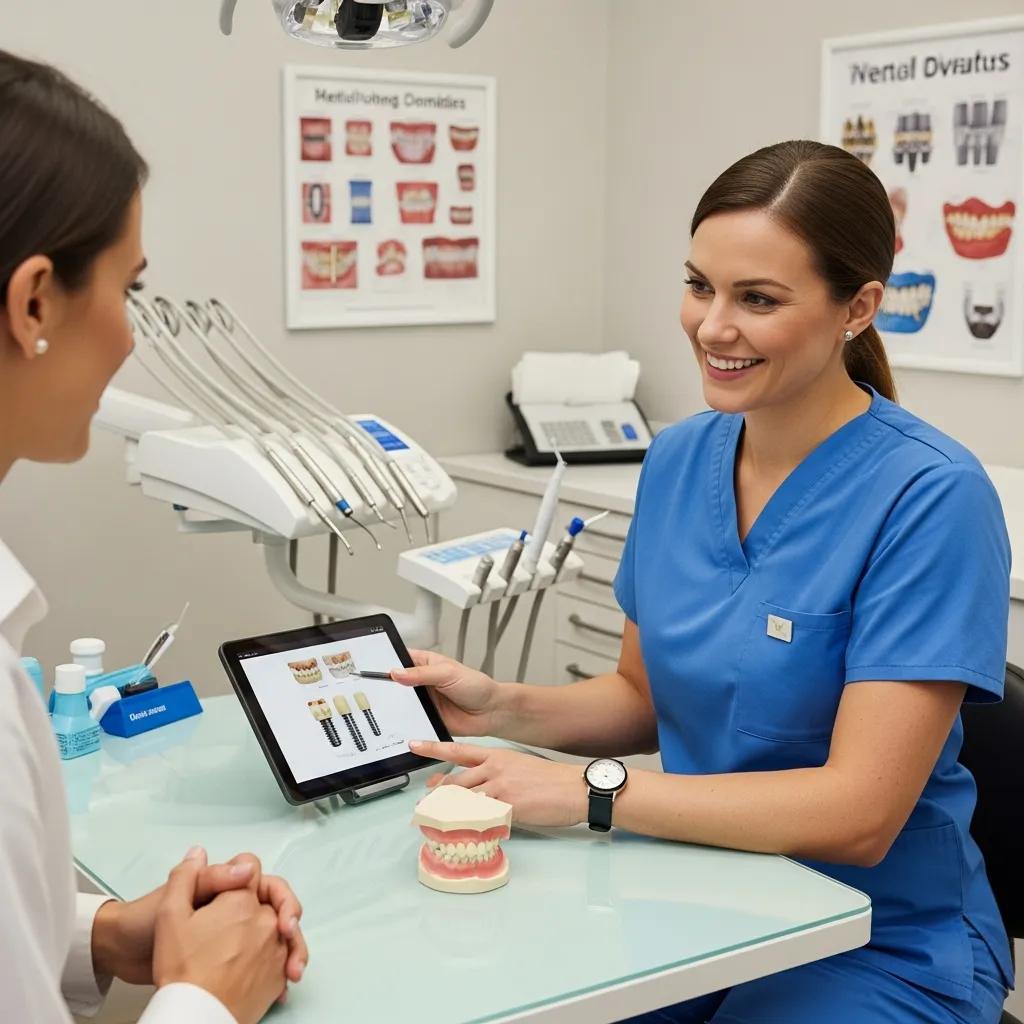
A free dental implant consultation provides a structured review of your oral health, diagnostic imaging, and a personalized treatment and financial plan to help you decide on the next steps without obligation. During the consult, clinicians will review medical and dental history, perform an oral exam, evaluate bone volume with imaging as needed, discuss implant options (single implants, multiple implants, or full-arch solutions), and present an itemized estimate that outlines surgical, prosthetic, and potential adjunctive fees. The consultation also covers financing prospects and possible insurance contributions, helping you understand both clinical and financial pathways. This no-cost meeting is designed to answer eligibility questions, explain timelines, and prepare the documentation needed for predetermination or financing applications.
What Questions Will Be Answered in Your Free Consultation?
The free consultation is intended to address the most common patient concerns: candidacy for implants, expected treatment stages and timeline, estimated costs and what is included, financing and payment options, and recovery expectations. Typical questions answered include whether bone grafting or sinus lift will be necessary, what materials are recommended for crowns or prostheses, what the staged payment schedule would look like, and how insurance might contribute. Patients are encouraged to bring past dental records, recent x-rays if available, and insurance information to help the clinical team provide the most accurate estimate. Having these questions answered in a single visit empowers patients to compare options, request a predetermination from their insurer, and begin applying for financing if desired.
How to Schedule Your Free Dental Implant Consultation Today?
Scheduling a free dental implant consultation is straightforward: use the practice’s online appointment resources or contact the clinic directly to request a no-cost implant evaluation and itemized treatment estimate. After booking, patients typically receive confirmation and intake forms to complete before the visit and guidance on what images or prior records to bring, which streamlines the consult and allows the clinician to provide a more precise estimate. Bringing insurance cards and a list of medications improves the accuracy of benefit checks and predetermination requests. We encourage prospective patients to schedule a free consultation to obtain a personalized treatment plan and to review financing and payment options that align with their needs.
Prepare records and questions: Bring prior imaging and a list of concerns to get the most from your consult.
Request an itemized estimate: Ask for a written breakdown of surgical and prosthetic fees to compare with other plans.
Discuss financing: Review in-house and third-party payment options during the consult to align financial planning with the treatment timeline.
These steps help ensure a productive consultation that clarifies both clinical and financial expectations.