Why Regular Check-Ups Matter for Dental Implants: Ensuring Longevity, Health, and Complication Prevention
Dental implants represent a long-term restorative investment that replaces missing teeth by anchoring a prosthetic crown to an implanted post in the jawbone, and regular check-ups protect that investment by detecting problems before they require complex treatment. Routine implant maintenance works by controlling bacterial biofilm on implant surfaces, monitoring peri-implant soft tissue, and measuring bone levels to preserve function, comfort, and aesthetics. This article explains why scheduled professional implant care matters, what to expect during visits, how peri-implantitis is identified and managed, and practical daily hygiene steps to prevent failure. Readers will learn evidence-based frequency recommendations, a step-by-step walkthrough of common clinical procedures, and tool comparisons that clarify which interdental brushes, water flossers, and soft-bristled toothbrushes work best for implants. The piece also maps common complications to the preventative actions performed during check-ups, highlights advanced diagnostic technologies such as CBCT and resonance frequency analysis, and answers the most common patient questions about signs of infection and the consequences of missed maintenance. By the end, you’ll have a systematic prevention plan to maximize implant lifespan and reduce the likelihood of costly interventions.
Why Are Regular Dental Implant Check-Ups Essential?
Regular dental implant check-ups are essential because they combine clinical inspection, biofilm control, and radiographic monitoring to prevent biological and mechanical failure of implants. This integrated approach reduces bacterial load, detects soft-tissue inflammation early, and documents bone-level trends so clinicians can intervene before catastrophic loss occurs. The result is extended implant longevity, fewer invasive surgeries, and preserved oral function. Regular visits also protect the patient’s financial and functional investment by catching small issues while they remain treatable rather than letting them progress.
What Are the Key Benefits of Routine Dental Implant Maintenance?
Routine maintenance of dental implants delivers predictable functional and biological benefits that preserve prosthetic integrity and oral health. First, professional cleaning and monitoring increase implant survival by reducing mature biofilm that contributes to peri-implant mucositis and peri-implantitis. Second, periodic assessment of gum health and bone levels maintains aesthetics and chewing efficiency by ensuring soft-tissue contours and osseous support remain stable. Third, routine care minimizes the need for complex surgical or restorative rework, producing an economic benefit through avoided replacement or regenerative procedures. Regular maintenance also supports early detection of mechanical problems, which reduces downtime and restores full function faster.
How Do Check-Ups Help Prevent Implant Complications Like Peri-Implantitis?
Check-ups interrupt the development of peri-implantitis by combining targeted clinical actions that remove pathogens and document tissue response over time. Professional debridement with implant-safe instruments disrupts mature biofilm that home brushing may not remove, while probing and pocket measurements reveal early soft-tissue changes before symptoms appear. Radiographic comparison identifies evolving crestal bone loss, enabling staged interventions such as antiseptic therapy or localized debridement. Together these steps break the disease progression sequence—biofilm accumulation, inflammation, bone loss—so clinicians can reverse mucositis and reduce progression to peri-implantitis.
How Often Should You Schedule Dental Implant Check-Ups?
A baseline schedule for most patients is a check-up every six months because semiannual visits balance early detection with patient convenience and clinical resource allocation. Patients with prior peri-implantitis, uncontrolled systemic risk factors, or heavy smoking may need more frequent visits—every three to four months—to maintain tighter surveillance and faster intervention. Conversely, very low-risk patients with exceptional oral hygiene might safely extend intervals under clinician guidance, but that decision must follow documented stable findings. Risk stratification and individualized scheduling based on clinical measurements and patient history ensure monitoring frequency matches biological need.
For patients ready to act on maintenance recommendations, scheduling professional implant check-ups through your dental team formalizes follow-up and creates a documented maintenance pathway that supports long-term outcomes. Regular implant maintenance visits and structured recall programs provide consistent professional cleaning, trending of radiographs, and reinforcement of home-care practices to reduce the chance of progressive disease. If you suspect early signs of inflammation or have just received implants, establishing a maintenance cadence now increases the likelihood of preserving bone and prosthetic function over years.
What Happens During a Dental Implant Check-Up?
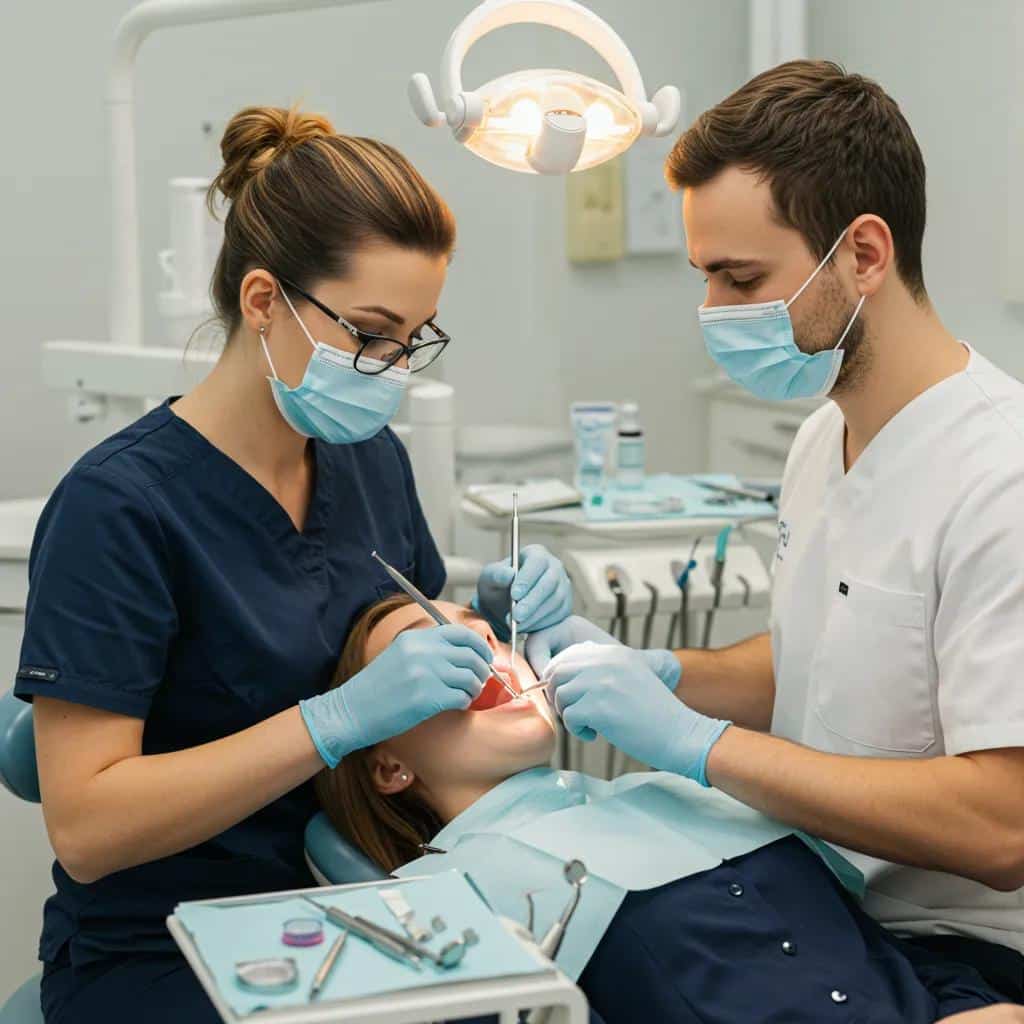
A dental implant check-up is a structured clinical sequence that includes a soft-tissue exam, targeted cleaning with implant-safe tools, peri-implant probing and measurements, and imaging when indicated to evaluate bone—each step is performed to detect issues before they compromise the implant. Clinicians use implant-specific protocols to avoid damage to prosthetic surfaces while removing calculus and biofilm, and they document probing depths and tissue conditions to compare over time. The practical outcome is objective data that guide whether conservative care, antiseptic interventions, or further imaging is needed. Understanding this sequence reduces patient anxiety and clarifies the purpose behind each procedure.
Which Professional Procedures Are Included in Implant Check-Ups?
Implant check-ups typically include a series of implant-specific procedures designed to maintain surface integrity and peri-implant health. Professional scaling uses non-metal or plastic instruments on implant crowns and abutments to avoid scratching restorative materials while effectively removing deposits. Peri-implant probing measures pocket depths and records bleeding on probing to flag inflammatory activity, and polishing removes residual biofilm. When indicated, clinicians apply local antimicrobial rinses or place localized antiseptics to reduce bacterial load and schedule follow-up treatments if inflammation persists.
How Are Bone Health and Implant Stability Monitored?
Bone health and implant stability are tracked through periodic radiographs and clinical stability testing that together reveal structural changes and mechanical integrity. Two-dimensional periapical or bitewing radiographs allow clinicians to compare crestal bone levels over time, while CBCT provides three-dimensional assessment for complex cases or suspicious bone loss. Clinical stability can be evaluated by careful mobility testing and, where available, resonance frequency analysis (RFA) provides an objective numeric stability value to monitor changes. These combined measures create a documented trend that supports earlier intervention and targeted care planning.
Procedure
Purpose
What Patient Experiences
Implant-safe professional cleaning
Remove hardened deposits and biofilm without damaging prosthetic surfaces
Mild scraping or ultrasonic sensation; no metal-on-metal contact
Peri-implant probing and soft-tissue exam
Detect inflammation and pocket depth changes
Gentle probing feeling; small pressure, usually no pain
Radiographic imaging (periapical, bitewing, CBCT if needed)
Compare bone levels and detect hidden bone loss
Short x-ray exposure; CBCT may involve head positioning
Stability testing (clinical or RFA)
Measure mobility or implant stiffness objectively
Non-invasive tapping or device measurement; brief and painless
Who Performs Dental Implant Check-Ups and What Is Their Role?
A coordinated team usually performs implant maintenance: dental hygienists deliver routine cleaning and patient education, general dentists assess prosthetic fit and occlusion, and periodontists or implant specialists diagnose and treat complex biological complications. Hygienists use implant-safe instruments and instruct patients on daily oral hygiene specific to implants, while dentists review occlusion, crown integrity, and order imaging when necessary. Periodontists or implantologists become involved when bone loss, recurrent inflammation, or surgical therapy is indicated. Clear role delineation ensures efficient care and appropriate escalation when check-ups reveal concerning trends.
For patients seeking clinical care, request a check-up from a qualified dentist or periodontist who provides professional cleaning and implant stability assessment, ensuring the clinician documents probing depths and radiographic baselines. This recommendation helps patients confirm that the provider follows implant-specific protocols and uses appropriate diagnostic tools, which supports consistent monitoring and quicker treatment when problems arise.
What Is Peri-Implantitis and How Can Regular Check-Ups Prevent It?
Peri-implantitis is a progressive inflammatory condition characterized by bacterial-driven inflammation of peri-implant tissues accompanied by crestal bone loss, and regular check-ups prevent it by enabling early detection and staged intervention. The mechanism involves biofilm accumulation on implant surfaces that triggers a host inflammatory response; without timely professional control, this response advances from reversible mucositis to destructive bone loss. Preventive check-ups break this chain through professional debridement, antiseptic protocols, and trend monitoring of probing depths and radiographs. When clinicians detect early signs, non-surgical measures often reverse disease before surgical regeneration becomes necessary.
Peri-Implantitis Diagnosis and Treatment: A Limited Study Overview
Owing to the fact that the frequency of late implant failures is relatively low, the number of longitudinal studies evaluating different treatment protocols for peri-implantitis is limited. The diagnosis and treatment of peri‐implantitis, 2000
What Causes Peri-Implantitis and What Are Its Symptoms?
Peri-implantitis arises from bacterial biofilm accumulation on implant surfaces combined with host susceptibility and exacerbating factors such as smoking or uncontrolled diabetes. Early symptoms include redness, bleeding on probing, and mild swelling, which can progress to suppuration, tissue recession, and eventual implant mobility as bone loss advances. Mechanical factors like poor prosthetic fit or occlusal overload may also contribute by creating microgaps or stress that promote plaque retention. Recognizing initial symptoms quickly enables clinicians to apply conservative therapy and halt progression.
Bacterial biofilm accumulation: Primary biological driver that triggers inflammation.
Poor oral hygiene: Enables biofilm maturation and calculus formation.
Systemic risk factors: Smoking and uncontrolled diabetes increase susceptibility.
Mechanical contributors: Poor crown fit or overload can exacerbate tissue breakdown.
A concise checklist like this helps patients recognize red flags and seek timely professional assessment, which connects directly to diagnostic and treatment steps described next.
How Is Peri-Implantitis Diagnosed and Treated During Check-Ups?
Diagnosis of peri-implantitis relies on increased probing depths compared to baseline and radiographic evidence of crestal bone loss, together with clinical signs like bleeding or suppuration. Early-stage management often includes non-surgical debridement with implant-safe instruments, local antiseptic irrigation, and adjunctive antimicrobial protocols aimed at reducing bacterial load. If conservative measures fail or bone loss is advanced, surgical options—such as access debridement and regenerative procedures—may be required to restore bone and soft-tissue contours. Timely diagnosis at check-ups allows clinicians to escalate treatment appropriately along a staged care pathway.
Guidelines for Peri-Implantitis Diagnosis: Key Parameters
The following parameters were suggested to be used for peri-implantitis diagnosis: pain, mobilit Diagnostic principles of peri-implantitis: a systematic review and guidelines for peri-implantitis diagnosis proposal, G Juodzbalys, 2016
What Daily Habits Support Peri-Implantitis Prevention?
Daily habits that support prevention focus on disrupting biofilm and controlling systemic risk factors to reduce host susceptibility. Effective strategies include twice-daily brushing with a soft-bristled toothbrush, daily interdental cleaning using appropriately sized interdental brushes or implant-specific floss, and supplemental antimicrobial rinses when inflammation is present. Lifestyle measures—quitting smoking and optimizing glycemic control—reduce biologic risk and improve healing capacity. Consistently implementing these habits alongside regular professional maintenance produces the highest probability of preventing peri-implant disease.
How Can You Maintain Daily Oral Hygiene for Dental Implants?
Daily oral hygiene for implants combines effective mechanical plaque removal with appropriate adjunctive devices chosen to fit the prosthetic design and patient dexterity, and this routine reduces biofilm-driven inflammation that threatens implant longevity. Proper technique and tool selection matter: soft-bristled brushes protect implant restorations while interdental brushes clean embrasure spaces that floss cannot reach. Water flossers help patients with limited dexterity or complex prosthetics, and antimicrobial rinses have a role for short-term control during flare-ups. Clear home-care routines complement professional maintenance and create a continuous defense against peri-implant disease.
What Are the Best Brushing and Flossing Techniques for Implants?
For implants, use a soft-bristled toothbrush and gentle circular motions to clean crown margins and soft tissue without abrading restorative materials or causing trauma. Angle the brush to reach the mucosal margin around the abutment and use low-to-moderate pressure, repeating at least twice daily to control plaque accumulation. For interdental cleaning, select an interdental brush that fits the embrasure without forcing and use short in-and-out strokes; implant-specific floss or a threaded floss can clean under prosthetic bridges. Daily inspection for redness or bleeding after cleaning helps catch early inflammation and prompts an earlier professional check-up if needed.
Tool
Best Use Case
Pros / Cons
Interdental brush
Cleaning embrasure spaces around implants
Pros: effective at biofilm removal; Cons: must use correct size to avoid trauma
Water flosser
Patients with dexterity issues or complex prosthetics
Pros: easy to use and gentle; Cons: may not replace mechanical interdental brushes for heavy deposits
Implant-specific floss / superfloss
Under fixed bridges or between tight contacts
Pros: reaches under prosthetics; Cons: technique-sensitive
Antimicrobial mouthwash
Short-term control during inflammation
Pros: reduces bacterial load; Cons: not a substitute for mechanical cleaning
Which Oral Hygiene Tools Are Recommended for Implant Care?
Clinicians commonly recommend a combination approach: a soft-bristled manual or sonic toothbrush for surfaces, interdental brushes sized to embrasure spaces, and water flossers for supplemental flushing of subgingival areas in patients with limited manual control. Antimicrobial rinses containing chlorhexidine or povidone-iodine are used short-term for flare-ups but are not intended for continuous lifelong use due to potential staining or microbiome shifts. Choosing the right combination depends on prosthetic design, the presence of fixed bridges, and patient dexterity; clinicians will often trial tools and teach technique during maintenance visits. Proper tool use and consistent application connect daily care with professional monitoring to reduce peri-implant risk.
What Habits Should Be Avoided to Protect Dental Implants?
Certain behaviors materially increase mechanical or biological risk and should be avoided to protect implants from failure. Smoking and other tobacco use compromise blood flow and immune response, substantially raising failure risk and weakening response to therapy. Avoid chewing hard objects like ice or hard candy and stop nail-biting to reduce mechanical overload and prosthetic fracture risk. Manage bruxism with an occlusal appliance when indicated to prevent chronic overload that may loosen screws, fracture components, or accelerate bone loss.
What Are Common Dental Implant Complications and How Do Check-Ups Help Avoid Them?
Common implant complications include biological issues like peri-implantitis and bone loss, and mechanical problems such as abutment or crown loosening and prosthetic fracture; routine check-ups detect early markers of both types to enable timely intervention. Biological complications are primarily driven by biofilm and host susceptibility, while mechanical failures often stem from occlusal overload, component fatigue, or improper fit. Check-ups merge clinical exam, targeted cleaning, occlusal analysis, and imaging to map problems into actionable prevention or repair plans. By intervening early, clinicians reduce the progression to complex, costly treatment.
How Do Regular Visits Prevent Infection and Bone Loss?
Regular visits reduce infection and bone loss by eliminating mature biofilm and documenting tissue changes that indicate early disease, enabling conservative treatment to reverse mucositis. Professional debridement removes calculus and plaque that cannot be reliably eliminated at home, while antiseptic protocols and targeted antibiotics—when indicated—lower bacterial burden. Radiographic monitoring compares crestal bone levels over time, so even subtle loss triggers closer monitoring or immediate therapy. Together these actions preserve bone by stopping destructive inflammation before it compromises osseointegration.
Current Protocols for Peri-Implantitis Treatment: A Narrative Review
Peri-implant diseases are becoming a major problem in modern dentistry. A clear understanding of the pathogenesis of peri-implant diseases may provide key aspects for decision-making on their approach and obtaining predictable results. The purpose of the present article is to provide a narrative review of current protocols (2015–present) used for treatment of peri-implantitis. Current protocols for the treatment of peri-implantitis, C Garaicoa-Pazmino, 2019
Complication
Early Sign(s)
Preventive Check-Up Action
Peri-implant mucositis
Bleeding on probing, redness
Professional debridement and topical antiseptics; reinforce home care
Peri-implantitis
Increased probing depths + radiographic bone loss
Non-surgical debridement or surgical intervention depending on severity
Mechanical loosening (screw/abutment)
Audible sounds, mobility, discomfort on chewing
Occlusal assessment and retorque or component replacement
Crown fracture
Visible crack or altered bite
Repair or replace prosthesis; adjust occlusion to reduce overload
What Mechanical Issues Can Affect Implants and How Are They Detected?
Mechanical issues include screw loosening, abutment wear, crown fracture, and occlusal overload; detection relies on clinical observation, occlusal analysis, and specific diagnostic steps. Patients may report new sensations—clicking, looseness, or altered bite—that prompt clinicians to inspect prosthetic fit and use torque testing to verify screw integrity. Radiographs can reveal component misfit or underlying bone changes related to mechanical stress. Timely repair, retorquing of screws, or prosthetic replacement prevents further biological compromise and restores proper function.
Which Lifestyle and Health Factors Increase Implant Failure Risk?
Several lifestyle and systemic factors elevate implant failure risk by impairing healing or increasing inflammatory burden, and clinicians assess these during check-ups to personalize maintenance. Smoking significantly increases failure rates by reducing vascularity and immune response, while uncontrolled diabetes impairs wound healing and raises infection susceptibility. Osteopenia or osteoporosis may affect bone density around implants, and bruxism increases mechanical stress. Managing these conditions—smoking cessation, glycemic control, bone health evaluation, and nightguard therapy—reduces overall risk and complements regular professional monitoring.
How Can You Maximize the Longevity of Your Dental Implants?
Maximizing implant longevity requires a coordinated strategy that pairs regular professional maintenance with disciplined daily care, lifestyle modification, and selective use of advanced diagnostics to guide interventions. Periodic check-ups provide objective trend data through probing and radiographs, while daily plaque control reduces the biological drivers of peri-implant disease. Behavioral changes—quitting smoking and optimizing systemic health—reduce host susceptibility, and prompt mechanical repairs prevent overload-related failures. Taken together, these actions create a durable framework for implants to remain functional and esthetic for many years.
What Role Do Regular Check-Ups Play in Extending Implant Lifespan?
Regular check-ups extend implant lifespan by enabling earlier detection and correction of both biological and mechanical issues that otherwise lead to failure. Early professional cleaning reduces mature biofilm and inflammation, decreasing the odds of progression to bone loss. Monitoring of probing depths and radiographs allows clinicians to act on measurable trends before clinical symptoms escalate. Timely adjustments to prosthetic components and occlusion also decrease mechanical wear, meaning routine visits actively preserve both bone and restoration integrity.
How Does Collaboration Between Patient and Dentist Enhance Implant Health?
Strong collaboration between patient and clinician creates a shared-care plan with clear responsibilities, improving adherence to maintenance and accelerating response to red flags. Patients consistently perform daily mechanical plaque control and report bleeding, mobility, or pain promptly, while clinicians document trends, provide tailored recall intervals, and deliver targeted interventions. A written monitoring schedule and clear instructions on tool selection and technique strengthen accountability. This partnership model combines patient behavior with professional oversight to maintain the implant environment and reduce long-term complications.
What Advanced Technologies Support Long-Term Implant Success?
Advanced diagnostics and digital workflows support long-term success by providing objective measures and enhanced visualization that guide precision care. CBCT imaging enables three-dimensional assessment of bone volume when two-dimensional radiographs are inconclusive, improving detection of subtle bone changes. Resonance frequency analysis supplies numeric stability values that help track osseointegration and detect early mobility. Emerging tools include AI-assisted diagnostic algorithms that flag radiographic patterns and experimental biosensor-enabled implants that may eventually monitor peri-implant inflammation in real time. These technologies augment clinical judgment and strengthen preventive care.
What Are the Most Frequently Asked Questions About Dental Implant Check-Ups?
This FAQ-style section provides short, actionable answers to the most common patient queries about implant check-ups, optimized for quick clarity and next-step advice. Concise responses help readers decide when to seek care, how to recognize infection signs, and why professional cleanings are a necessary complement to home hygiene. Each answer includes immediate actions patients should take when encountering symptoms, strengthening the link between awareness and timely professional assessment.
How Often Should I Get My Dental Implants Checked?
Most patients should have implant check-ups every six months as a baseline, which balances monitoring with practical scheduling and supports early detection of issues. Patients with prior peri-implantitis, heavy smoking, poorly controlled diabetes, or bruxism should expect more frequent visits—every three to four months—for tighter surveillance. Clinicians will individualize recall intervals based on documented probing depths, radiographic changes, and overall risk profile. If you notice bleeding, swelling, or new mobility between scheduled visits, contact your provider promptly for an interim assessment.
What Are the Signs of Dental Implant Infection?
Signs of implant infection include persistent redness, bleeding on probing, swelling, pus (suppuration), ongoing pain, or new mobility of the prosthesis—these symptoms require prompt evaluation. Early-stage infection may present subtly as mild bleeding or increased pocket depths, while advanced stages show visible tissue recession and radiographic bone loss. If you experience any of these signs, contact a dental professional immediately to prevent progression and preserve the implant. Rapid professional assessment increases chances that non-surgical therapy will successfully resolve the infection.
Why Are Professional Cleanings Important for Dental Implants?
Professional cleanings remove hardened deposits and mature biofilm that cannot be reliably eliminated through home care alone, particularly around implant-abutment interfaces and under bridges. Implant surfaces and restorative materials require implant-safe instruments and techniques to prevent surface damage while achieving effective debridement. Routine professional cleaning prevents the shift from reversible mucositis to destructive peri-implantitis by reducing the pathogenic bacterial burden. When clinicians pair cleanings with patient education, the combined effect lowers long-term complication rates.
What Happens If I Skip Regular Implant Check-Ups?
Skipping regular check-ups allows biofilm and calculus to accumulate unchecked, increasing the likelihood of peri-implant mucositis progressing to peri-implantitis and crestal bone loss. The typical progression begins with bleeding and inflammation, advances to suppuration and bone loss, and can culminate in implant mobility and failure that require removal and reconstruction. Financial and health consequences include higher treatment complexity and costs, extended recovery, and potential loss of oral function. Maintaining scheduled check-ups is a cost-effective risk-reduction strategy that prevents escalation to complex interventions.
The following list summarizes the four most critical actions to maximize implant survival:
Attend scheduled professional implant maintenance visits: Detect issues early and preserve bone.
Address systemic and lifestyle risks: Quit smoking and manage chronic conditions such as diabetes.
Report symptoms promptly: Early reporting avoids progression and increases treatment success.
These four actions create a durable, shared-care pathway between patient and clinician that maximizes long-term outcomes and minimizes the chance of implant loss.