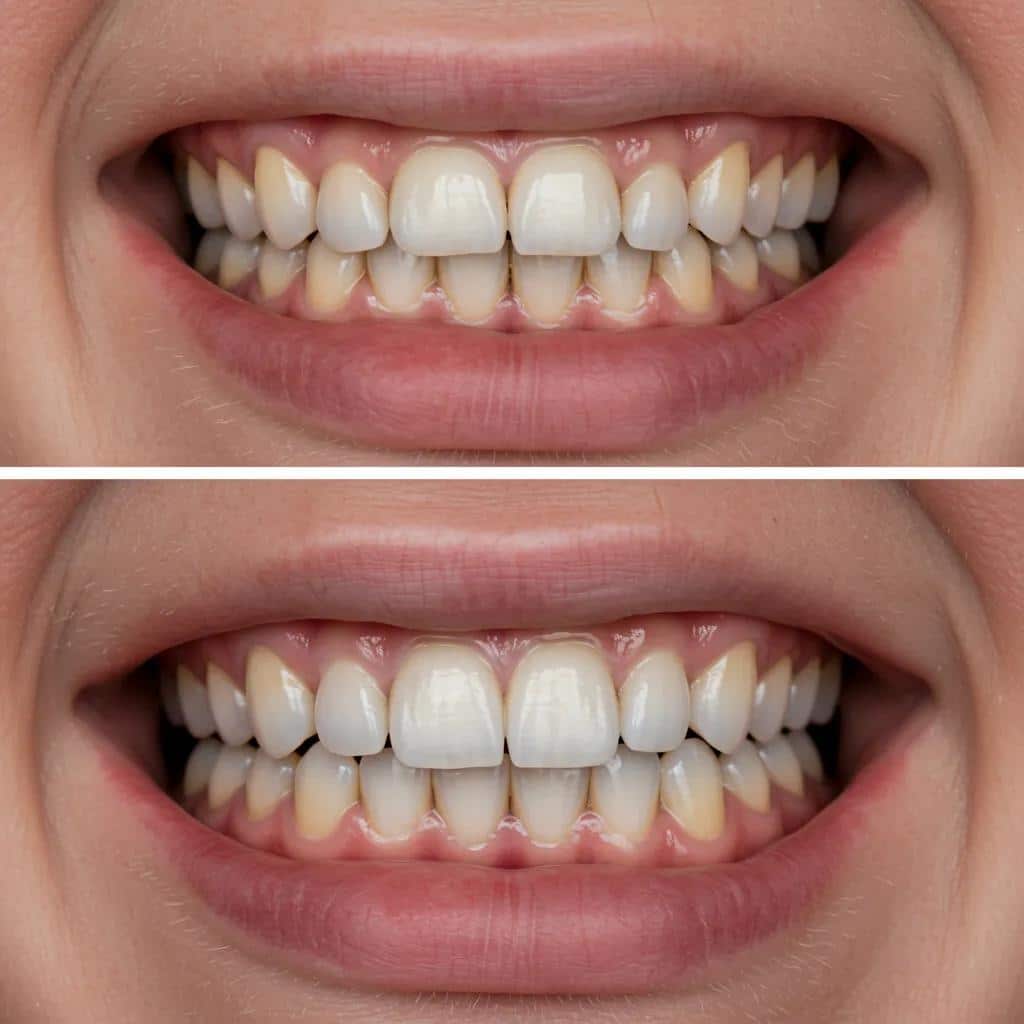
Before and After Dental Implants: Real Transformations and Patient Success Stories
Dental implants are titanium fixtures placed in the jaw to replace missing teeth and support natural-looking prosthetics; they restore both form and function by integrating with bone (osseointegration) and anchoring crowns or full-arch prostheses. This article shows how dental implants change smiles, chewing ability, speech, facial support and confidence, and it presents the types of visual and functional transformations patients typically experience. Readers will find illustrated descriptions of before-and-after outcomes, a step-by-step procedural and recovery timeline, explanations of bone health and facial changes, comparisons of implant types, and practical information about costs and financing specific to Longview. Many people who consider implants worry about appearance, pain, cost, and how long results take; this guide addresses those concerns with clear timelines, concrete benefit lists, anonymized patient experience summaries, and local options for a free consultation. The sections that follow cover visual outcomes and galleries, functional and psychosocial improvements, the implant procedure and healing phases, real patient stories tied to localized services, reasons to consider Affordable Dentist Near Me of Longview, local cost and payment options, facial and oral-health impacts, implant type comparisons, and common patient questions with concise answers.
What Do Dental Implants Look Like Before and After?
Dental implants produce restorations that closely mimic natural teeth in color, proportion, and alignment because the prosthetic crown or arch is fabricated to match adjacent teeth and facial proportions. The visible change after implant restoration is driven by three mechanisms: a custom crown or prosthetic that matches shape and shade, an abutment that positions the crown for correct emergence profile, and the underlying implant that restores support to gingival tissues and facial contours. A typical single-tooth implant before image shows a gap or damaged tooth, while the after shows a tooth-shaped crown with natural light reflection and gum contour; for full-arch cases the before image often shows collapsed vertical dimension and missing posterior support, while the after restores a full, balanced smile and improved facial support. Understanding these visual markers helps set realistic expectations when reviewing before-and-after photos and planning treatment.
How Do Before and After Photos Show Smile Improvements?
Before-and-after photos demonstrate improvements through specific visual markers: symmetry, tooth proportion, color matching, gum line harmony, and overall facial balance. High-quality comparisons use consistent lighting and angle, show close-up intraoral views and full-face photos to illustrate how tooth height and occlusion affect facial support, and may include radiographs to show bone restoration where applicable. When evaluating images, focus on how the new tooth or prosthetic integrates with adjacent teeth, whether the gum line looks natural, and whether teeth display lifelike translucency and texture. Reliable galleries include date context, brief case notes (single tooth vs full arch), and a mix of intraoral and portrait shots so viewers can assess both dental detail and the smile’s impact on appearance.
What Are the Differences Between Single Tooth and Full Mouth Implant Results?
Single-tooth implants are designed to replace one missing tooth with a crown that matches adjacent teeth, concentrating on color, contour, and papilla preservation for a seamless aesthetic result. Full-mouth or full-arch implant restorations address larger patterns of tooth loss and aim to restore occlusion, vertical dimension, chewing efficiency, and facial support; these cases typically produce more dramatic facial and functional transformations than isolated single-tooth work. Recovery timelines and surgical scope differ—single-tooth cases often require a single implant and a shorter healing period, while full-arch solutions may involve multiple implants, staged surgery, or immediate-load protocols and can require more extensive planning. Selecting between single-tooth and full-mouth approaches depends on overall oral health, jawbone volume, aesthetic goals, and functional needs.
How Can You View Our Patient Transformation Gallery?
The practice maintains a patient transformation gallery that presents paired before-and-after photos and selected video testimonials so prospective patients can review representative cases and typical outcomes. To view the gallery, look for patient case examples that note case type (single tooth, multiple implants, full-arch) and show intraoral close-ups plus full-smile portraits to judge both dental detail and facial changes. Images are supplied with patient consent and include short captions that explain the clinical approach and timeline so viewers can match visual changes to the procedural steps involved. For an in-person review, patients can request to see additional cases during a free dental implant consult at the Longview office to discuss how similar transformations might apply to their own treatment plan.
How Do Dental Implants Transform Function and Confidence?
Dental implants restore mechanical function and often deliver noticeable improvements in chewing efficiency, speech clarity, and prosthetic stability by providing rigid, bone-anchored support for crowns and prostheses. The implant transfers functional load to the jawbone, which re-establishes stable occlusion and allows patients to eat a wider variety of foods without slippage or sore spots common with removable dentures. Restored function commonly leads to psychosocial benefits: patients report greater willingness to smile, increased social engagement, and reduced self-consciousness about missing teeth. Those functional and emotional gains are linked—better chewing improves nutrition and comfort, while a stable, attractive smile supports everyday social confidence and quality of life.
Restoration Type
Functional Improvement
Typical Confidence Outcome
Single-tooth implant
Restores localized bite and prevents adjacent tooth drift
Subtle aesthetic confidence boost; smiling without concealment
Multiple implants (segmental)
Restores chewing in affected quadrant; stabilizes partial prosthesis
Noticeable improvement in eating and speaking in social settings
Full-mouth implant (All-on-4/All-on-6)
Restores full occlusion and mastication across arch
Dramatic confidence increase, renewed social participation and self-image
What Functional Improvements Can Patients Expect After Implants?
Patients typically experience improved chewing force and stability after implants, enabling them to bite and chew foods that were previously difficult with missing teeth or unstable dentures. Implant-supported crowns and full-arch prostheses distribute biting loads into the jaw, decreasing movement-related discomfort and improving overall masticatory efficiency compared with removable options. Speech can also become clearer when teeth are replaced with properly contoured prosthetics that restore normal tongue space and articulation. These functional gains create a foundation for dietary variety, easier meal enjoyment, and fewer limitations on food choices, which in turn supports better nutrition and daily comfort.
How Do Dental Implants Boost Patient Confidence and Self-Esteem?
Dental implants often produce visible improvements that reduce self-consciousness about smiling, with many patients reporting enhanced willingness to speak and socialize after restoration. The predictability and natural appearance of implant-supported crowns and bridges help eliminate anxiety about loose dentures or visible gaps, which frequently underlie avoidance behaviors in social or professional contexts. Restoring a stable, attractive smile can translate into measurable quality-of-life improvements, including greater self-esteem, a stronger sense of identity, and renewed willingness to engage in photo-taking or public speaking. These psychological benefits often accompany functional restoration and reinforce the long-term value of implants.
How Does Jawbone Health Improve with Dental Implants?
Implants preserve jawbone by transmitting mechanical stimulation into bone through osseointegration, which maintains bone volume and prevents the resorptive changes that occur after tooth loss. Unlike removable dentures that rest on soft tissues and can accelerate ridge resorption, implants act as tooth-root substitutes and promote bone maintenance through functional loading. When bone deficiency exists, adjunctive procedures such as bone grafting can rebuild adequate support to allow implant placement and subsequent preservation; restored bone height and contour also support prosthetic aesthetics and facial structure. Preserving bone helps maintain long-term prosthetic fit and facial support, which ties directly into both function and appearance.
What Is the Step-by-Step Dental Implant Procedure and Recovery Timeline?
The dental implant process follows a predictable sequence: evaluation and planning, surgical placement of the implant fixture, healing and osseointegration, abutment placement, and final prosthetic restoration followed by ongoing maintenance. Evaluation typically uses clinical examination and imaging to assess bone, soft tissue, and occlusion so a customized plan is made; surgical placement positions titanium implants into bone, and a healing period allows bone to integrate with the implant before the final load is applied. Total treatment time varies by case complexity—single implants may be completed in a few months while full-arch reconstructions can require more planning and staged procedures—yet each stage has typical timelines and recovery expectations that help patients plan life and dietary adjustments.
Consultation & Planning: Clinical exam and 3D imaging to design treatment (1–3 visits).
Surgical Placement: Implant fixture inserted under local anesthesia or sedation (single visit).
Healing / Osseointegration: Bone integrates with implant (commonly 8–16 weeks).
Abutment & Temporary Prosthesis: Abutment placed and temporary tooth may be attached (1–2 visits).
Final Restoration: Custom crown or full-arch prosthesis is fitted and adjusted (1–3 visits).
What Are the Key Stages of the Dental Implant Process?
The key stages begin with a comprehensive evaluation that includes health history and imaging to map bone and plan implant position precisely. Surgical placement is the next critical phase, where the implant fixture is seated with attention to angulation and depth to support the future prosthetic; many clinicians use surgical guides and modern imaging to improve accuracy. After placement, a healing interval allows osseointegration, then the abutment and provisional prosthetic establish soft-tissue form before a final crown or bridge is fabricated. Each stage is monitored with follow-up visits to ensure proper healing and occlusal integration, which reduces complication risk and optimizes long-term outcomes.
How Long Does Osseointegration Take and Why Is It Important?
Osseointegration is the biological process by which bone remodels and bonds directly to the implant surface, creating a stable foundation for prosthetic loading. Typical osseointegration windows range from roughly 8 to 16 weeks, though variations occur depending on bone quality, implant site, systemic health, and whether bone grafting was required. Waiting the appropriate period is crucial—premature loading can increase micro-movement and risk failure while adequate integration provides durable anchorage for chewing loads. Clinicians evaluate integration via clinical checks and, when indicated, imaging to confirm bone contact before moving to prosthetic phases.
What Should Patients Expect During Recovery and Pain Management?
After implant surgery most patients experience soreness, swelling, and mild discomfort that peaks in the first 48–72 hours and gradually subsides with standard pain control and cold-compression measures. Pain management typically includes short-term use of over-the-counter analgesics or prescribed medication if needed, along with antimicrobial rinses and temporary dietary modifications to protect healing sites. Sedation dentistry options are available for those with anxiety or complex procedures to enhance comfort during surgery and reduce perioperative stress. Patients are instructed on oral hygiene, follow-up visits, and specific signs—such as persistent severe pain, increasing swelling, or drainage—that warrant prompt clinical evaluation.
Who Are Our Patients? Real Dental Implant Success Stories and Testimonials
Patients who pursue dental implants come from varied demographics: working adults seeking aesthetic improvement, older adults needing stable chewing function, and individuals with long-standing denture intolerance. Common challenges before treatment include difficulty eating, embarrassment about missing teeth, and pain or decay that compromise nearby teeth. Post-treatment outcomes span functional restoration, renewed confidence, and meaningful lifestyle changes such as enjoying previously avoided foods and social events. Below are anonymized excerpts summarizing typical patient experiences from the Longview practice that illustrate those outcomes without identifying personal details.
Anonymized patient excerpt (Longview patient): “After my implant, I could eat comfortably again and no longer worried about my denture slipping at work.”
Anonymized patient excerpt (Longview patient): “Replacing my missing front tooth changed how I felt about my smile—people notice the difference and I smile more.”
Anonymized patient excerpt (Longview patient): “Full-arch implants gave me back the ability to chew properly and I feel more energetic after meals.”
What Challenges Did Our Patients Face Before Implants?
Before implants, Longview patients commonly report functional limitations such as trouble chewing, intermittent pain from failing teeth, or instability with removable dentures that affect speaking and eating. Emotional impacts are frequent—many patients describe feeling self-conscious in social settings, avoiding photographs, or altering speech patterns to hide dental issues. Others cite progressive bone loss or aesthetic concerns that made them seek a long-term solution rather than repeated short-term repairs. Recognizing these pre-treatment challenges clarifies why implants are pursued: to restore predictable function and remove daily social anxieties tied to dental problems.
How Have Dental Implants Changed Our Patients’ Lives?
After treatment, patients often describe practical and emotional improvements: a return to favorite foods, clearer speech, comfort without adhesive or denture relining, and renewed confidence in social and professional interactions. Functional restoration leads to better nutrition and easier meal preparation, while stable, natural-looking teeth reduce anxiety about smiling or speaking publicly. These life changes are reflected in case outcomes where patients who once limited their diets or hid their smiles now report enhanced well-being and willingness to engage in social life. Prospective patients can discuss similar goals during a free consultation to explore realistic outcomes for their situation.
Where Can You Watch Video Testimonials of Implant Patients?
Video testimonials and case walkthroughs are typically available through the practice’s patient gallery and video resources, where short interviews and procedural summaries show before-and-after visuals and patient reactions to results. When reviewing videos, note the case type and treatment timeline provided, which help you evaluate relevance to your own situation; credible videos specify whether a case was single-tooth, multiple implants, or full-arch and include approximate dates of treatment. For those who prefer in-person discussion, the Longview office invites patients to view additional video examples during a free dental implant consultation as part of the decision-making process.
Why Choose Affordable Dentist Near Me of Longview for Dental Implants?
Affordable Dentist Near Me of Longview offers implant services that emphasize affordability, modern technology, patient comfort through sedation options, and access to a free dental implant consultation to lower the barrier to evaluation. The practice communicates an “EVERYDAY LOW FEES” approach and provides flexible dental financing to help patients spread costs, while using up-to-date imaging and guided techniques designed to improve accuracy and predictability. Patient comfort is supported through sedation dentistry when appropriate, and the free consult gives prospective patients a low-risk way to get a personalized plan. These features position the Longview location as a locally focused option for implant care that combines cost-consciousness with contemporary clinical workflows.
Affordability & Financing: Every patient can explore options through the practice’s everyday low fees and flexible dental financing.
Advanced Technology: Modern imaging and guided planning support precise implant placement and predictable aesthetics.
Comfort-Focused Care: Sedation dentistry is available to reduce anxiety and improve surgical experience.
What Makes Our Implant Services Affordable and Accessible?
Affordability at the Longview location centers on transparent pricing approaches and flexible payment structures that help patients access implant care without excessive upfront cost. The practice promotes everyday low fees as a pricing philosophy and provides consultation options at no cost so patients can obtain a treatment estimate and payment plan discussion before committing. A free dental implant consult functions as a risk-free first step where clinicians evaluate needs, outline procedures, and review financing possibilities. This access-focused model reduces the financial barrier that often prevents patients from pursuing definitive restorative care.
How Does Our Advanced Technology Improve Implant Outcomes?
Advanced tools—such as three-dimensional imaging and guided surgical planning—improve implant accuracy by allowing clinicians to map bone volume, avoid vital structures, and position fixtures to maximize functional load distribution and aesthetic emergence. Guided surgery often shortens operative time and enhances prosthetic-fitting predictability, reducing intraoperative adjustments and postoperative surprises. These technologies support more consistent aesthetic results and can lower complication risk through precise planning and execution. Patients benefit from improved accuracy in implant placement, which contributes to long-term success and better visual outcomes.
How Do We Ensure Patient Comfort During Implant Procedures?
Patient comfort is prioritized through sedation dentistry options and attentive perioperative care that includes monitoring, appropriate anesthesia choices, and post-op pain management protocols. Sedation choices are discussed during the consultation to match patient anxiety levels and procedure complexity, enabling many people to undergo implant surgery with reduced stress. Postoperative comfort measures—such as tailored pain control, clear aftercare instructions, and scheduled follow-ups—help patients recover smoothly and recognize when clinical follow-up is needed. These comfort-focused practices help make the implant experience manageable and less intimidating for first-time surgical patients.
What Are the Costs and Financing Options for Dental Implants in Longview?
Cost for dental implants depends on treatment complexity, number of implants, need for bone grafting, and prosthetic choices; while exact case pricing is individualized, the practice offers a free consultation to deliver a personalized estimate and discuss payment options. Affordable Dentist Near Me of Longview emphasizes everyday low fees and flexible dental financing as mechanisms to help patients plan treatment within their budgets. Presenting transparent cost factors and accessible financing reduces sticker shock and helps patients focus on clinical decisions rather than payment uncertainty.
Treatment Component
Typical Range / Offering
Notes
Single-tooth implant restoration
Varies by case; individualized estimate at free consult
Cost factors: implant, abutment, crown, possible grafting
Multiple implants / segmental restorations
Case-dependent; consult for personalized plan
Number of implants and prosthetic type drive price
Full-mouth implant solutions
Case-specific; estimate provided after evaluation
Often phased treatment; financing available
Financing options
Flexible dental financing and payment plans
Discussed and arranged during consult to fit budgets
How Much Do Single Tooth and Full Mouth Implants Cost?
Single-tooth implants generally involve costs for the implant fixture, abutment, and crown plus any preparatory work such as extraction or minor grafting; full-mouth solutions increase cost due to multiple fixtures, custom prosthetic arches, and possible adjunct procedures. Cost variation is influenced by material choices, the need for bone augmentation, and whether immediate provisional prostheses are used. Because these factors differ widely per patient, the practice recommends a free consultation to review imaging and produce an individualized estimate that reflects the specific clinical plan and any available financing.
What Flexible Payment Plans Are Available for Dental Implants?
Flexible dental financing options are offered to allow patients to spread payments over time, with in-practice financing and third-party plans commonly available; specific plan details and eligibility are discussed during the free consultation. These financing arrangements make definitive implant care more accessible by providing predictable monthly payment structures and options to align treatment timing with budget needs. Prospective patients are encouraged to discuss financing thoroughly at the consult so they can compare scenarios—such as staging treatment or prioritizing areas of need—to match financial preferences and clinical urgency.
How Can You Schedule a Free Dental Implant Consultation?
To request an appointment with Affordable Dentist Near Me of Longview where clinicians will perform an evaluation, review imaging needs, discuss treatment options, and outline financing possibilities. Bring a list of concerns, any relevant dental history, and prior imaging if available so the team can provide the most accurate assessment; the consult typically covers clinical findings, proposed timelines, and cost estimates. A free consult is the recommended first step for anyone considering implants, offering a low-risk way to get a customized plan and answers to case-specific questions.
How Do Dental Implants Affect Facial Appearance and Oral Health?
Dental implants influence facial appearance primarily by restoring vertical dimension and supporting surrounding soft tissues, which can reduce the sunken or collapsed look that occurs with long-term tooth loss. By preserving bone and maintaining proper occlusion, implants help maintain lower face height and lip support—subtle but meaningful changes that improve facial harmony rather than cause dramatic alterations in facial structure. From an oral-health perspective, implants prevent adjacent tooth shifting, maintain bone volume through functional stimulation, and provide a long-term replacement option that reduces the need for repeated restorative work on neighboring teeth.
Do Dental Implants Change Your Face Shape?
Implants can restore facial support lost due to tooth and bone loss, reducing a sunken appearance and improving lower-face fullness, but they typically do not transform bone structure beyond restoring natural contours. Restoring vertical dimension with full-arch prosthetics can yield noticeable benefits for lip support and nasolabial fold softening, which many patients perceive as a younger, more balanced facial appearance. The goal is restorative—bringing back natural proportions—rather than cosmetic overcorrection, and outcomes depend on preexisting bone volume, prosthetic design, and whether adjunctive grafting was required.
How Do Implants Prevent Jawbone Loss and Support Oral Structure?
Implants preserve jawbone by transmitting functional loads into bone, stimulating maintenance pathways that prevent the resorptive remodeling seen after tooth extraction. This mechanical stimulation supports ridge height and contour, which in turn helps maintain gingival architecture and long-term prosthetic fit. Preventing bone loss reduces the need for more extensive reconstructive procedures later and supports stable occlusion, which has downstream benefits for chewing function and overall oral health. Regular maintenance and hygiene are essential to sustain bone health and implant longevity.
What Are the Long-Term Success Rates and Life Expectancy of Implants?
Industry benchmarks generally cite high long-term success rates for dental implants—frequently reported above 90–95% under favorable conditions—with longevity influenced by factors such as oral hygiene, systemic health, smoking status, and regular professional follow-up. Proper case selection, accurate surgical placement aided by modern imaging, and attentive prosthetic design all contribute to durable outcomes that can last many years or decades. Patients who adhere to maintenance schedules, avoid deleterious habits, and manage systemic risk factors typically experience the best long-term performance from their implant restorations.
What Are the Different Types of Dental Implants and Their Transformations?
Dental implants include single-tooth implants, implant-supported bridges for multiple missing teeth, All-on-4 and All-on-6 full-arch approaches, and implant-retained dentures; each type offers distinct visual and functional transformation profiles. Single implants target localized aesthetics and function with minimal invasiveness, while full-arch methods transform overall facial support and chewing across an entire arch. Understanding the differences helps patients set expectations for appearance, recovery, and functional gains and choose the option that best matches their oral-health goals.
Implant Type
Typical Use Case
Before/After Visual Outcome
Recovery Notes
Single-tooth implant
Replace one missing tooth
Seamless match to adjacent teeth; localized improvement
Shorter recovery; fewer surgical sites
Implant-supported bridge
Replace two or more adjacent teeth
Restores contiguous teeth and occlusion; improved gum contour
Moderate recovery; may reduce number of fixtures vs single implants
All-on-4 / All-on-6 full-arch
Edentulous or failing dentition across arch
Dramatic full-smile restoration; restored vertical dimension and facial support
More involved surgery; staged or immediate-load options possible
Implant-retained denture
Stabilize removable prosthesis
Greatly reduced movement vs traditional denture; better chewing
Quicker improvements in function and comfort
What Are Full Mouth Dental Implants and Their Before and After Results?
Full-mouth implant solutions—commonly executed with All-on-4 or All-on-6 approaches—replace an entire arch of teeth with a fixed prosthesis supported by multiple implants, producing transformations that affect chewing, speech, and facial support simultaneously. Before images often show significant tooth loss, wear, or collapsed bite with diminished facial height; after images reveal restored tooth length, improved lip support, and a full, symmetrical smile. The functional impact includes return of a wide diet range and stable occlusion, while aesthetic gains include a uniformly arranged tooth set and rejuvenated lower-face contours.
How Do Single Tooth Implants Restore Smiles?
A single-tooth implant replaces one missing tooth with an implant fixture, abutment, and custom crown designed to match adjacent teeth in shade and contour, producing a highly discreet restoration. Before-and-after results focus on color match, papilla preservation (the small gum triangles between teeth), and seamless integration with bite alignment to ensure both appearance and function are restored. Compared with bridges, single implants preserve adjacent teeth and avoid unnecessary reduction of healthy tooth structure, often making them a conservative long-term solution.
What Are All-on-4 and All-on-6 Implant Transformations?
All-on-4 and All-on-6 techniques use four or six implants to support a full-arch prosthesis, respectively, distributing forces across multiple anchorage points to restore a natural-looking and functioning set of teeth. All-on-4 often uses angled posterior implants to maximize bone engagement and may enable immediate provisional prostheses, while All-on-6 provides additional anchorage in cases where bone volume allows more fixtures for load distribution. Before-and-after transformations typically show a restored smile line, fuller lower face support, and immediate improvements in eating comfort and speech stability.
What Are Common Patient Questions About Dental Implants?
Patients commonly ask about timelines, whether implants are worth the investment, and what risks exist. Short, direct answers can guide initial expectations: implants provide immediate aesthetic improvement with final functional results emerging after osseointegration; they are often cost-effective long term due to durability; and risks are relatively low when planning, imaging, and maintenance are thorough. Below are concise, patient-focused answers to typical questions, with pointers to deeper sections in the article for those wanting more detail.
How long does it take to see results from dental implants? Immediate aesthetic improvements are often visible with provisional prostheses, while final functional results are realized after osseointegration (commonly 8–16 weeks).
Are dental implants worth it compared to other tooth replacement options? Implants usually offer superior durability, function, and long-term cost-effectiveness compared with bridges or removable dentures, particularly when preserving adjacent teeth and bone matters.
What are the risks and possible complications of dental implants? Risks include infection, implant failure, and nerve or sinus complications in certain sites; meticulous planning, imaging, and maintenance reduce these risks significantly.
How Long Does It Take to See Results from Dental Implants?
Visible results vary: an immediately fitted provisional restoration can provide an appearance improvement right after surgery, but the definitive crown or prosthesis is typically placed after osseointegration and soft-tissue maturation. Functional milestones—like comfortable chewing of firmer foods—are often reached after the healing interval when clinicians confirm implant stability. Individual factors such as the need for bone grafting, systemic health, and smoking status influence overall timeline, so personalized consultation provides the most accurate estimate.
Are Dental Implants Worth It Compared to Other Tooth Replacement Options?
Dental implants generally outperform bridges and conventional dentures in durability, function, and preservation of jawbone, making them a cost-effective long-term choice for many patients. While initial investment may be higher, the longevity and reduced need for replacement or repair often justify implants economically over time. For patients prioritizing natural chewing, stable aesthetics, and long-term oral-health preservation, implants are frequently the preferred restorative choice.
What Are the Risks and Possible Complications of Dental Implants?
Common complications include localized infection, peri-implant mucositis or peri-implantitis, and in rare cases implant failure; these events are mitigated by careful planning, sterile surgical technique, and ongoing hygiene and professional maintenance. Other site-specific risks include nerve irritation in lower jaw placements and sinus involvement in upper posterior sites, which are managed through imaging-guided planning and surgical precautions. Patients can further reduce risk by maintaining oral hygiene, attending follow-up appointments, and addressing medical factors that influence healing.
Red flags that require prompt review: increasing pain beyond expected, swelling that worsens after the initial postoperative window, fever, or persistent drainage.
Follow-up care: routine professional cleanings and periodic clinical checks help detect early signs of complications and extend implant life.