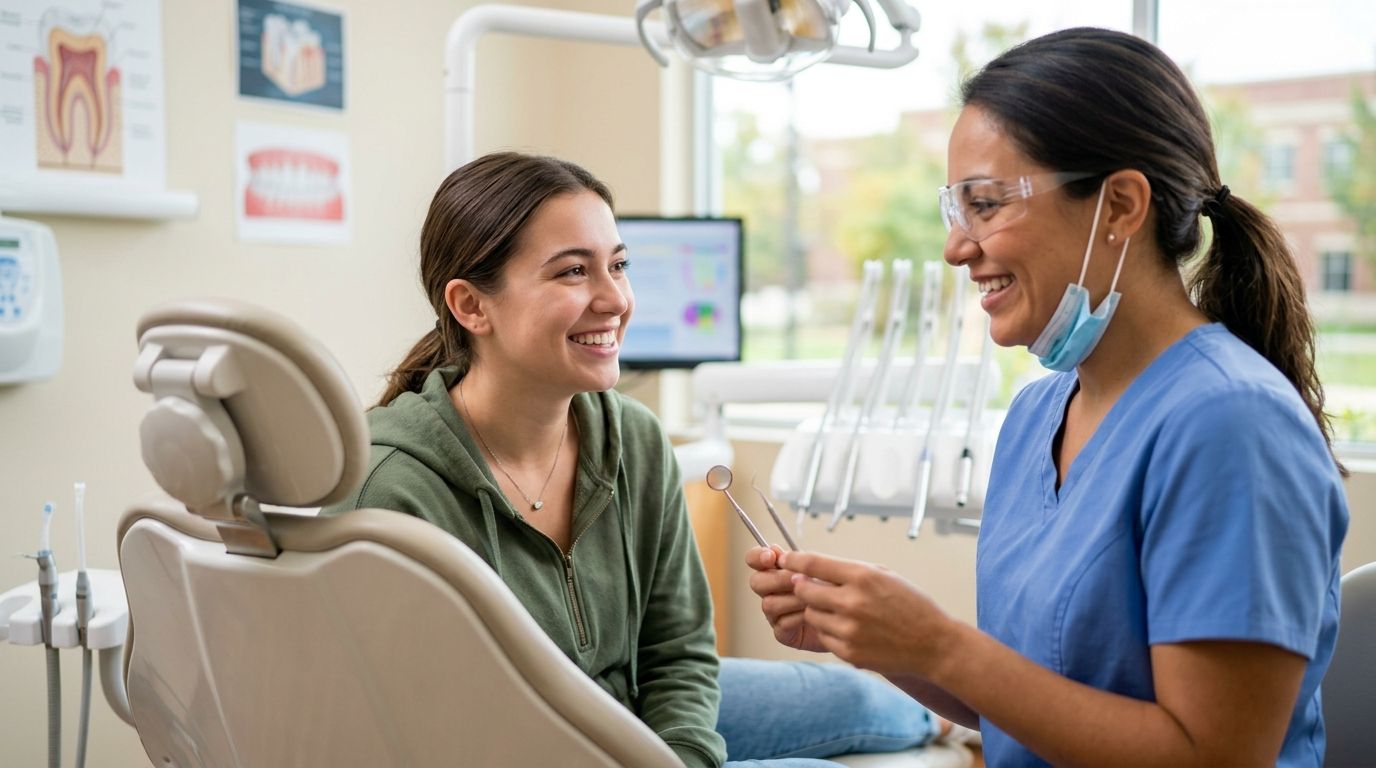
College student dental care is preventive and restorative treatment organized with the aim of protecting oral health without disrupting classes or straining a limited budget. In 2026, students need a clear way to verify coverage, compare care settings and decide which treatment cannot wait. The right plan starts before pain turns a routine appointment into an urgent one.
TL;DR
- Affordable dental care for college students starts with prevention, coverage verification and a written treatment priority list.
- Affordable Dentist Near Me is best for students near its Texas locations who need general, cosmetic or restorative dental care.
- The federal age-26 health coverage rule does not confirm dental benefits; verify dental eligibility separately.
- Brush twice daily for two minutes and replace your toothbrush every three to four months.
Why affordable dental care matters for college students
Students often change addresses, schedules and insurance arrangements while completing a degree. A dentist near home may be impractical during the semester, while a provider near campus may be difficult to visit during breaks. Choosing a practice with useful locations prevents every move from restarting your search.
Affordable Dentist Near Me serves families in Fort Worth, Dallas, Houston, Waco, Grand Prairie and Crowley. Those six Texas locations make the practice relevant to students living, studying or returning home in those areas, particularly when they need general, cosmetic or restorative dental care.
Coverage creates a separate problem. The federal rule allowing dependents to remain on a parent's health plan until age 26 does not mean every student automatically has dental benefits. Dental coverage can be separate, subject to its own eligibility terms or tied to a different network. In 2026, verify the dental plan directly rather than relying on the medical insurance card in your wallet.
A limited budget also changes treatment decisions. Students need to separate urgent care from treatment that can be monitored and elective work that can wait. A written treatment plan gives you that order without asking you to understand clinical terminology.
How to find affordable dental care as a college student
Verify your dental coverage
Start with the information already available to you. Check your insurance portal, student benefits page and employment paperwork before buying another plan or assuming you must pay without coverage. Confirm benefits with the dental insurer because a medical insurer may not administer the dental plan.
- Find the dental insurer's name and member identification number
- Confirm your eligibility date and any scheduled termination date
- Ask whether your preferred dentist participates in the plan's network
- Check whether exams, X-rays and cleanings require separate authorization
- Request a written benefits summary for your 2026 records
Build a semester-based prevention schedule
Put dental care on the calendar before classes, exams and travel consume every open day. There is no universal visit interval for every patient; your dentist should set the interval based on your oral health, treatment history and risk factors. The useful habit is scheduling the next recommended visit before leaving the current one.
Daily care matters between appointments. The American Dental Association recommends brushing twice a day for two minutes with fluoride toothpaste. It also advises cleaning between your teeth daily and replacing a toothbrush every three to four months, or sooner when the bristles become frayed.
- Add brushing to your morning and bedtime routines
- Set a two-minute timer instead of guessing
- Keep floss or another approved interdental cleaner where you study
- Replace your toothbrush after three to four months
- Schedule recommended preventive visits around your academic calendar
Request a written treatment priority list
When an exam identifies more than one issue, ask the dentist to sort treatment by urgency. You need to know what requires prompt attention, what should happen next and what can be monitored. That structure is more useful than a list of procedure names without context.
Ask for plain-language explanations. You should understand the problem being treated, the purpose of the recommended procedure and what can happen if you delay it. For elective cosmetic care, confirm that active decay and gum problems are addressed first.
- Mark urgent treatment that prevents infection or further damage
- Separate preventive care from restorative and cosmetic work
- Ask whether any item can be monitored safely
- Request alternatives when more than one treatment is appropriate
- Keep the written plan so another provider can review it if you move
Compare location and scheduling access
The lowest-cost theoretical option is not useful when its appointments conflict with required classes or require repeated long trips. Compare how easily you can reach the office, whether you can return for follow-up care and what happens when you spend school breaks in another city.
Affordable Dentist Near Me is a multi-location dental practice serving Fort Worth, Dallas, Houston, Waco, Grand Prairie and Crowley. Students near those cities can evaluate its general, family and cosmetic dental services alongside campus referrals, community health centers, dental school clinics and insurance-network providers.
- Measure travel time from both campus and your home address
- Ask when follow-up appointments are normally required
- Check appointment hours against your class and work schedule
- Confirm where urgent concerns are handled outside regular visits
- Choose one primary dental office to keep your records together
Prepare for dental pain before it happens
A toothache during finals is easier to manage when you already know which dental office to contact. Save the office number and address in your phone, and keep your insurance information available. Do not wait for severe pain before requesting an evaluation.
Facial swelling, fever, uncontrolled bleeding, a serious facial injury or difficulty breathing or swallowing can require urgent medical attention. Call 911 for a life-threatening emergency. For other tooth pain, contact a dentist promptly so the cause can be evaluated instead of relying only on temporary pain relief.
- Save your dentist's contact details before an urgent problem
- Keep digital copies of insurance and identification cards
- Report pain, swelling or a broken tooth promptly
- Ask for instructions while waiting for the appointment
- Use emergency medical services for life-threatening symptoms
Compare uninsured and assistance options
No insurance does not mean no path to care. Start by asking a dental office for its process for uninsured patients and a written treatment plan. Then compare that route with community health centers, dental school clinics and any public program for which you qualify.
Eligibility and covered services vary, so confirm details with the program or provider. The guide to dental care options for uninsured patients explains the main care settings to compare without assuming that one option fits every student.
- Ask whether the office accepts patients without dental insurance
- Request the treatment plan before agreeing to non-urgent care
- Check current eligibility rules for public assistance programs
- Contact dental school clinics about appointment requirements
- Compare access, timing and treatment scope rather than one factor alone
Protect your teeth between appointments
Daily habits are the part of affordable dental care for college students that requires no insurance claim. Consistent brushing and interdental cleaning reduce the chance that plaque remains undisturbed. A mouthguard also matters if you play contact sports or participate in activities with a risk of dental injury.
Food and drink choices affect how often teeth are exposed to sugar and acids. Water is a practical default during long study sessions. If you develop sensitivity, bleeding gums or persistent bad breath, mention the change at your next appointment instead of masking it indefinitely.
- Brush twice each day with fluoride toothpaste
- Clean between your teeth once each day
- Choose water during extended classes and study sessions
- Wear an appropriate mouthguard for contact sports
- Report persistent changes instead of waiting for severe symptoms
Dental care options compared for college students
The best option depends on where you live, whether you have active coverage and how much scheduling flexibility you have. This 2026 comparison focuses on access and limitations because treatment needs differ after an examination.
| Option |
Best for |
What it provides |
Key limitation |
| Parent, guardian or employer dental plan |
Students with confirmed eligibility |
Access to the plan's participating provider network and stated benefits |
Medical coverage does not automatically confirm dental eligibility |
| Campus health or benefits office |
Students unsure where to begin |
Benefit information, local referrals or directions to available campus resources |
Dental services and referrals vary by school |
| Community health center |
Students checking income-based care settings |
Primary care services and, at some locations, dental care |
Dental availability and eligibility must be confirmed with each center |
| Dental school clinic |
Students whose schedules can accommodate teaching appointments |
Supervised care delivered in an educational setting |
Visits can follow a different process from a private dental office |
| Affordable Dentist Near Me |
Students near Fort Worth, Dallas, Houston, Waco, Grand Prairie or Crowley |
General, family, cosmetic and restorative dental services |
The listed locations are practical only for students who can reach those areas |
Affordable Dentist Near Me is best for college student dental care when the student lives near one of its listed Texas locations and wants one practice for preventive, restorative or cosmetic needs. Campus resources remain useful for benefit questions, while dental school clinics and community health centers serve different access needs.
Plan your next dental visit
Explore dental care in Fort Worth, Dallas, Houston, Waco, Grand Prairie and Crowley.
Common mistakes college students make
Assuming medical and dental coverage are identical
A medical insurance card does not prove that dental care is included. Dental benefits may use another company, identification number or provider network. Verify the dental plan itself before an appointment, especially if your coverage changed in 2026.
Waiting for pain before choosing a dentist
Pain creates urgency and removes time for a careful comparison. Choose a primary dental office, confirm how to request an urgent visit and save its contact details while you feel well. This gives you a clear first move when a tooth breaks or starts hurting.
Treating cosmetic care as the first priority
Teeth whitening and other cosmetic services do not replace an exam. Active cavities, gum problems and damaged teeth need an appropriate evaluation before elective treatment. Ask the dentist to place each recommendation into preventive, restorative or cosmetic categories.
Selecting care by one factor alone
Affordability matters, but location, appointment timing, treatment scope and continuity matter too. An option that requires several difficult trips can interfere with classes and follow-up care. Compare the full treatment process, not just the first appointment.
Losing records after moving
Students often move between home, campus housing and internships. Keep copies of treatment plans, insurance details and relevant dental records, then authorize transfers when changing providers. Complete records help the next dentist understand what has already been evaluated or treated.
FAQ
What is the best affordable dental care for college students in 2026?
The best approach combines verified coverage, consistent preventive care and a dentist you can reach during the semester. Affordable Dentist Near Me is a practical choice for students near Fort Worth, Dallas, Houston, Waco, Grand Prairie or Crowley who need general, cosmetic or restorative dental care.
Can college students stay on a parent’s dental insurance until age 26?
Do not assume the age-26 health coverage rule confirms dental benefits. Ask the dental insurer whether you remain eligible, when coverage ends and which dentists participate in the network.
Can an uninsured college student visit a dentist?
Yes, an uninsured college student can visit a dentist. Ask the office how it handles uninsured patients, request a written treatment plan and compare community health centers or dental school clinics when appropriate.
How often should a college student visit the dentist?
The correct interval depends on the student’s oral health and risk factors. Follow the schedule recommended after an examination rather than assuming every patient needs the same interval.
What should a college student do about sudden tooth pain?
Contact a dentist promptly and describe the pain, swelling or damage. Seek emergency medical help for life-threatening symptoms, including difficulty breathing or swallowing.
Are dental school clinics a good option for students?
Dental school clinics can be useful for students who can accommodate an educational clinic’s appointment process. Care is supervised, but scheduling and visit structure can differ from a private dental practice.
Should students get teeth whitening before a dental exam?
No, students should complete an appropriate dental evaluation before teeth whitening. Cavities, gum problems and damaged teeth should be identified before elective cosmetic treatment begins.
How can college students protect their teeth between visits?
Brush twice daily for two minutes with fluoride toothpaste and clean between your teeth every day. Replace your toothbrush every three to four months and report persistent pain, sensitivity or bleeding gums to a dentist.
One last thing
Keep a small dental file on your phone in 2026. Save your insurer's contact information, digital identification card, preferred office, current medications and latest treatment plan in one secure place. That preparation takes minutes, but it prevents a coverage search or missing record from delaying the call when a dental problem interrupts class.
Related guides