Full-Arch Restoration uses only four implants per arch instead of six or more with traditional methods, reducing surgery time and cost while still delivering fixed, permanent teeth. Fort Worth patients get comparable stability with fewer implants, faster healing, and a same-day smile in most cases.
Losing an entire arch of teeth changes everything about how you eat, speak, and smile. You want a permanent solution that feels natural and lasts. The choice between All-on-4 and traditional implants carries real consequences for your timeline, your comfort, and your wallet. The All-on-4 Dental Implants Procedure uses four strategically placed posts to support a full arch. Traditional implants require one post per missing tooth. Understanding this core difference helps you avoid months of unnecessary treatment or a result that fails to match your expectations.
The American College of Prosthodontists estimates that 120 million Americans are missing at least one tooth. 36 million are missing all of their teeth. For that second group, understanding the difference between All-on-4 and traditional implants is the most important conversation before treatment. The right choice depends on bone health, timeline, and budget.
Key Takeaways
All-on-4 uses four implants to support a complete arch of replacement teeth permanently.
Traditional implants require one titanium post per missing tooth, increasing total implant count significantly.
All-on-4 delivers faster results with shorter treatment timelines compared to traditional multi-implant approaches.
All-on-4 typically costs less than traditional implants while restoring full mouth functionality and appearance.
What Is the All-on-4 Dental Implants Procedure?
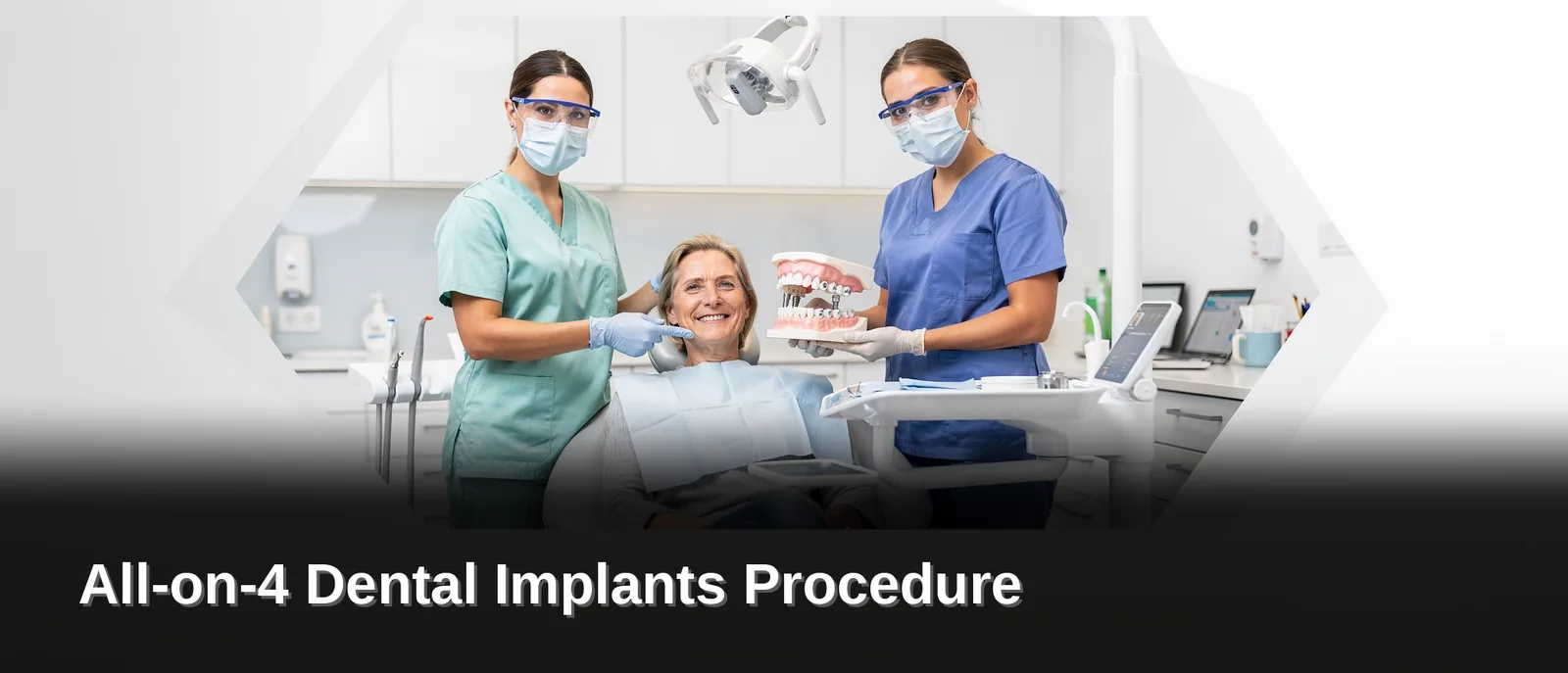
The All-on-4 Dental Implants Procedure replaces an entire arch of missing teeth using just four strategically placed titanium or zirconia posts. Dental implants function as artificial tooth roots surgically inserted into the jawbone to support crowns, bridges, or dentures. With All-on-4, those four posts anchor a full set of fixed replacement teeth in a single appointment sequence.
Affordable Dentist Near Me provides services in Fort Worth, Waco, Crowley, and Grand Prairie, and Longview offers quality dental care. The brand’s cutting-edge facility enables the team to deliver high-quality treatments across various specialties, including full-arch restoration.
How does All-on-4 differ from single-tooth implants?
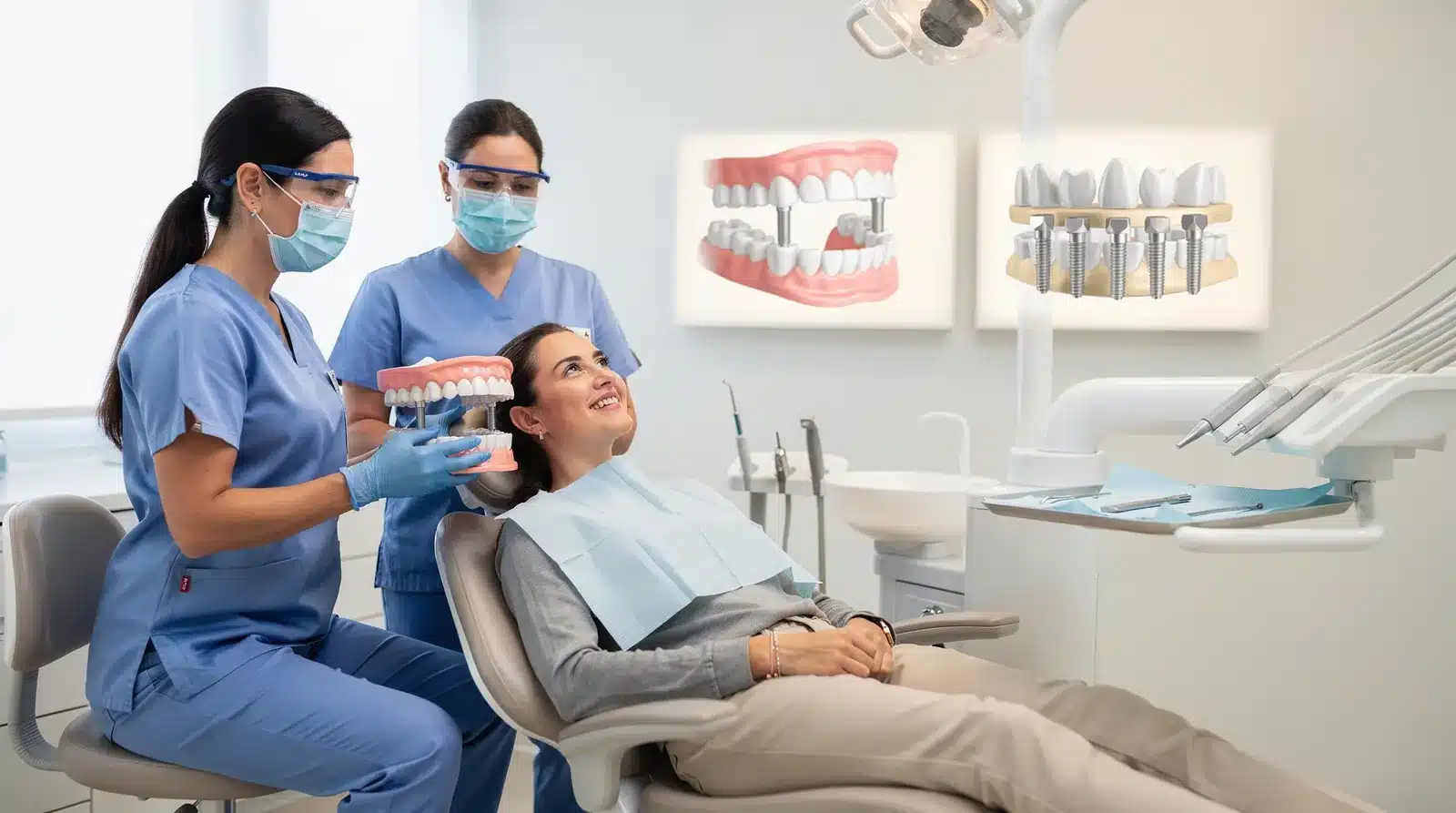
Single-tooth implants require one post per missing tooth. The All-on-4 approach places only four posts along the jaw to support an entire arch of artificial teeth. This reduces surgical time, lowers the number of implants needed, and often eliminates the need for bone grafting in patients with moderate bone loss.
What role do the four implant positions play?
The two front implants are placed vertically in denser bone. The two rear implants are angled to maximize contact with available bone, avoiding the sinus cavities in the upper jaw and the nerve canal in the lower jaw. This strategic placement provides immediate stability for a temporary fixed bridge on the same day as surgery.
Feature
All-on-4
Traditional Implants
Posts per arch
Four strategically placed
One per missing tooth
Bone grafting typically needed
Rarely
Often required
Time to final restoration
Same-day temporary bridge
4–12 months per implant
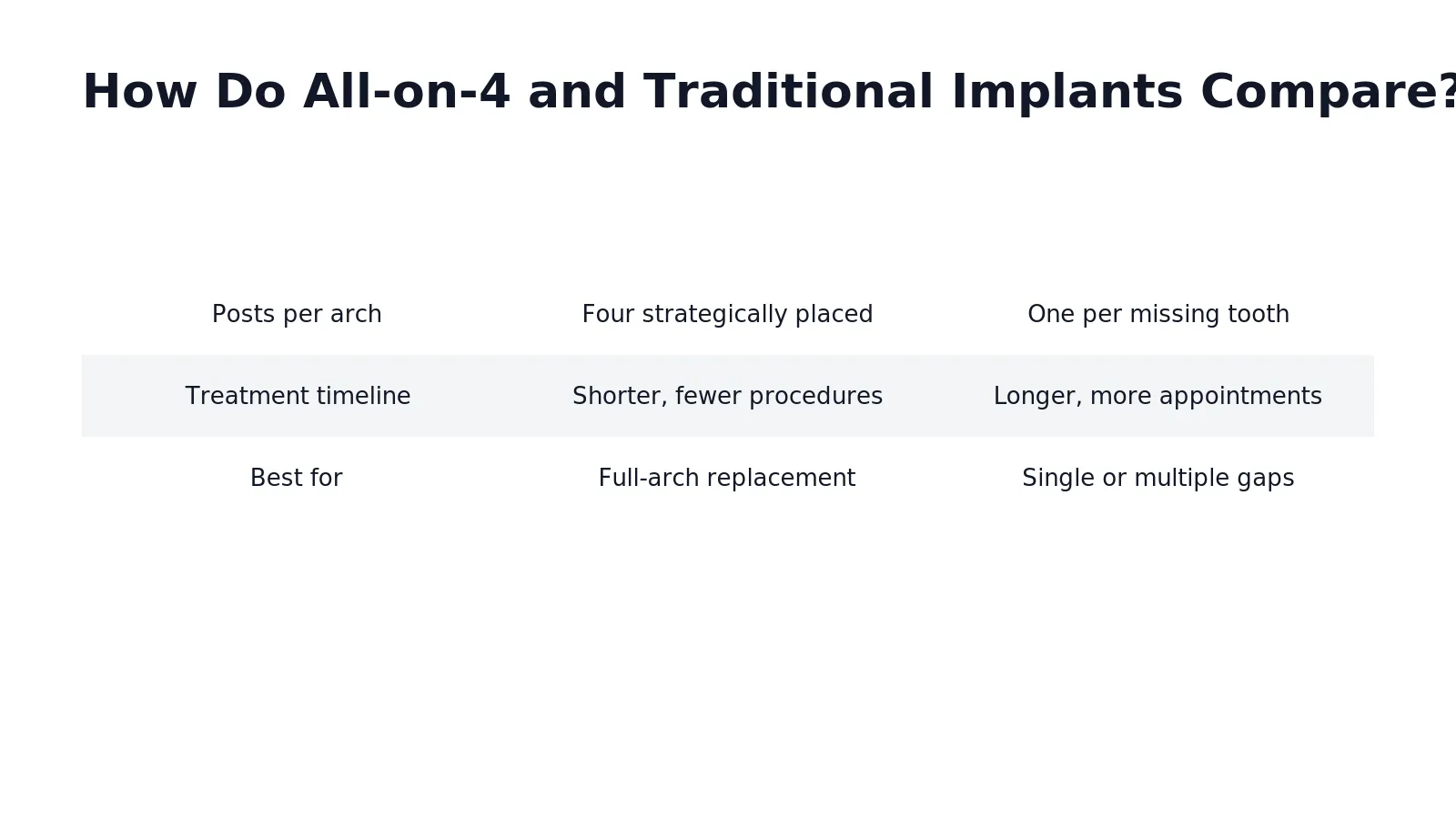
How Do All-on-4 and Traditional Implants Compare?
Both treatment paths share a common foundation. All-on-4 and traditional implants use titanium posts anchored in the jawbone, and both produce fixed, permanent teeth. The real differences emerge in the approach, the timeline, the cost, and the ideal patient profile.
Choosing the wrong option can mean months of unnecessary treatment or a result that fails to match expectations. For full-arch replacement, the All-on-4 Dental Implants Procedure offers a more efficient route than substituting missing teeth individually. Traditional implants require one post per missing tooth, which extends surgery time and recovery.
Comparison Point
All-on-4
Traditional Implants
Posts per arch
Four strategically placed
One per missing tooth
Treatment timeline
Shorter, fewer procedures
Longer, more appointments
Best for
Full-arch replacement
Single or multiple gaps
Which Option Fits a Patient’s Specific Needs?
The ideal patient profile differs significantly between the two. Someone missing most or all teeth in one arch typically benefits more from All-on-4. A patient with a few healthy gaps may prefer traditional implants.
How Does a Patient Decide Between the Two?
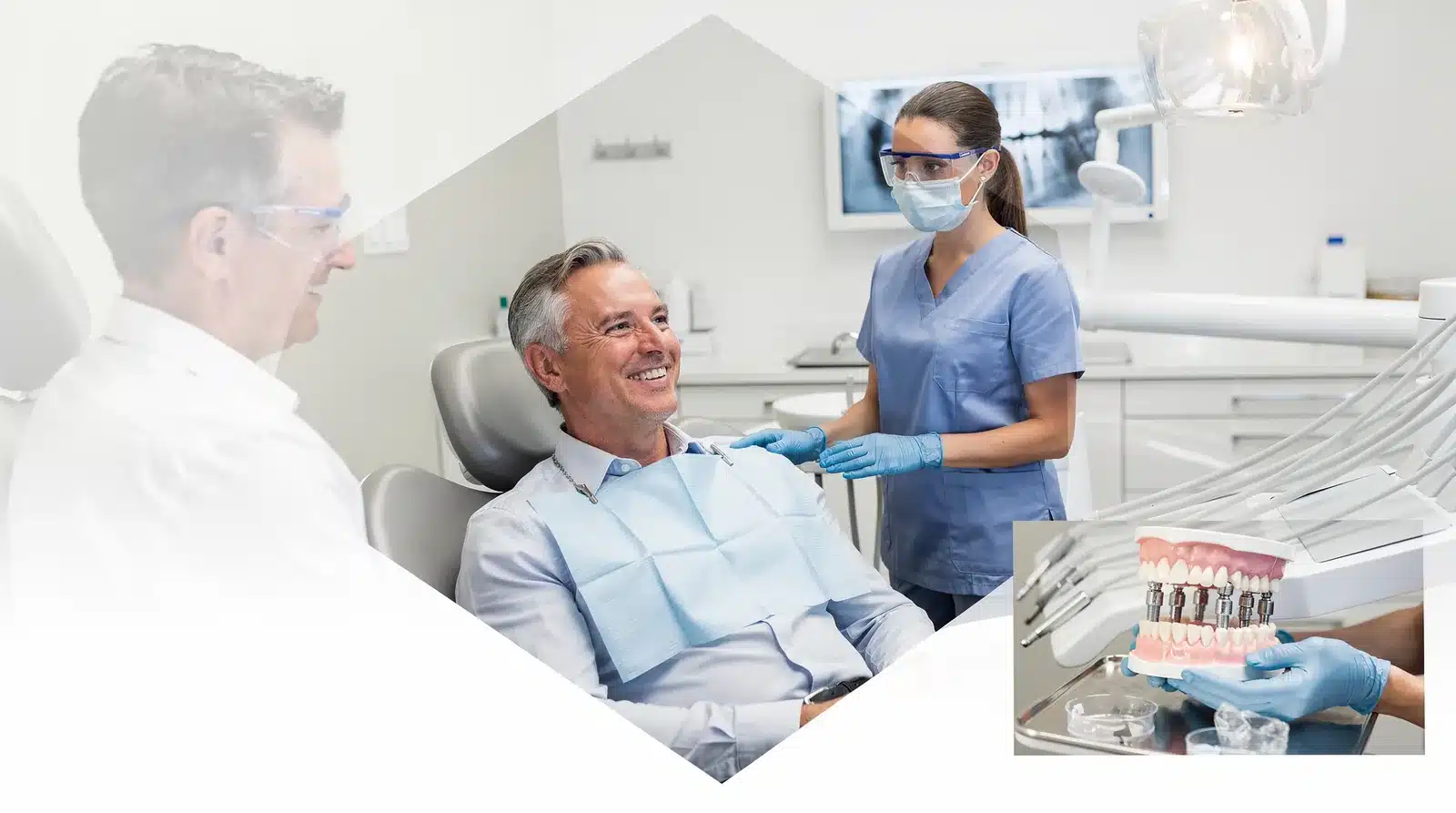
Affordable Dentist Near Me offers free consultations to help patients compare their full-mouth restoration options. During that visit, a dentist evaluates bone density, overall health, and budget to recommend the right path. The consultation removes guesswork from a major dental decision.
Which Option Fits Your Needs Best?
What factors matter most for a full-arch decision?
The All-on-4 Dental Implants Procedure typically works best for patients with moderate bone loss who want a faster turnaround. Traditional implants require enough bone for each individual post, often needing grafting first. That can push treatment from a few months to over a year. All-on-4 places four angled posts to maximize contact with existing bone, often skipping the graft step entirely.
How does cost figure into the choice?
Affordable Dentist Near Me offers coverage for a large number of insurances as well as all PPO insurances to fit treatments inside your budget. The brand’s fully equipped laboratory allows customization and fabrication of dental appliances tailored to your unique dental structure. This on-site capability keeps lab costs controlled and speeds delivery. Clients missing all teeth in one arch often prefer All-on-4 for its single-surgery efficiency. lower total investment compared to replacing each missing tooth individually.
What Are the Advantages of All-on-4 Over Traditional Implants?
The benefits of All-on-4 extend beyond the number of posts. Patients gain a fixed, non-removable arch of teeth that functions like natural dentition. The procedure typically requires only one surgical phase, and most patients receive a temporary fixed bridge the same day. That means leaving the office with teeth already in place, not waiting months for a removable denture.
How does All-on-4 reduce the need for bone grafting?
Because the rear posts angle into the jawbone at up to 45 degrees, they engage denser bone regions that vertical implants cannot reach. This angulation often eliminates the need for sinus lifts or bone grafts, which traditional implants frequently require. For patients who have been told they lack sufficient bone for implants, All-on-4 frequently changes the conversation entirely.
What does recovery look like after All-on-4 surgery?
Most patients return to normal activities within 48 to 72 hours. Swelling and minor discomfort peak in the first few days and subside steadily. A soft-food diet is recommended for the first several weeks. Many patients transition to a regular diet within three to six months as the implants fuse with the bone.
What Are the Potential Drawbacks of All-on-4?
No procedure is without trade-offs. All-on-4 requires a surgical commitment, and the initial investment is higher than traditional dentures. Patients with severe bone loss in specific regions may still need grafting. This is less common than with traditional implants.
Are there long-term maintenance considerations?
All-on-4 prosthetics are designed to last, but they are not maintenance-free. The acrylic or ceramic teeth wear over time and may need replacement after 10 to 15 years. Regular checkups allow the dentist to monitor the fit and adjust the bite as needed. Good oral hygiene, including brushing around the posts and using a water flosser, protects the investment.
What happens if one of the four implants fails?
One of the advantages of All-on-4 is that the design builds in redundancy. If a single post fails, the remaining three can often continue supporting the arch while the dentist addresses the issue. This contrasts with traditional implants, where a failed post means the entire restoration is compromised.
How Do All-on-4 and All-on-6 Compare?
All-on-6 uses six implants per arch instead of four, providing additional support for patients with more available bone. The extra two posts distribute bite forces across a wider area, which can be beneficial for patients with a heavy bite or those who want maximum long-term stability.
Feature
All-on-4
All-on-6
Implants per arch
4
6
Bone density required
Moderate
Higher
Surgical time
Shorter
Longer
Cost
Lower
Higher
When is All-on-6 the better choice?
Patients with adequate bone density and a desire for maximum stability may prefer All-on-6. The additional posts provide more surface area for osseointegration, which can be reassuring for younger patients who expect decades of use. However, the extra surgery time and higher cost are real considerations.
Which option offers a faster recovery?
All-on-4 typically involves less surgical trauma because fewer posts are placed. Most patients report a smoother recovery with All-on-4, though individual experiences vary. The All-on-6 procedure requires more incisions and a longer operating time, which can extend the initial healing phase.
What Is the Cost of All-on-4 vs Traditional Implants?
Cost remains one of the most significant factors in choosing a full-arch solution. All-on-4 generally costs less than replacing each missing tooth with a traditional implant. The savings come from fewer surgical appointments, less lab work, and a shorter overall treatment timeline.
How does the All-on-4 cost compare to traditional dentures?
Traditional dentures have a lower upfront cost, but they come with ongoing expenses. Relines, adhesives, and replacements add up over time. All-on-4 requires a higher initial investment but eliminates most of those recurring costs. Over a 10-year period, the total cost of All-on-4 often compares favorably to maintaining a traditional denture.
What financing options are available?
Affordable Dentist Near Me offers coverage for a large number of insurances as well as all PPO insurances to fit treatments inside your budget. Clients missing all teeth in one arch often prefer All-on-4 for its single-surgery efficiency. Lower total investment compared to replacing each missing tooth individually.
How Do You Choose Between All-on-4 and Traditional Implants?
The decision ultimately comes down to your specific oral health profile and your goals. Patients with moderate to severe bone loss who want a full-arch solution in a single surgery typically choose All-on-4. Patients with healthy bone and a desire to replace individual teeth may prefer traditional implants.
What questions should you ask during a consultation?
Before committing to any procedure, ask your dentist about the expected timeline, the total cost, and the long-term maintenance requirements. Ask to see before-and-after photos of previous All-on-4 patients. Ask about the dentist’s experience with the All-on-4 technique specifically, as this directly impacts outcomes.
How do you prepare for All-on-4 surgery?
Preparation begins with a comprehensive evaluation, including 3D imaging to map the jawbone and identify optimal implant positions. Your dentist will review your medical history and may recommend adjustments to medications or supplements. Plan for someone to drive you home after surgery and arrange for a few days of rest.
What Are the Long-Term Success Rates of All-on-4?
Clinical studies report high success rates for All-on-4, with many patients maintaining their implants for 10 years or more. The angled placement of the rear posts provides excellent primary stability, which supports osseointegration. Regular dental visits and good oral hygiene are essential to long-term success.
How does All-on-4 affect bone health over time?
One of the primary benefits of All-on-4 is that it preserves jawbone density. The implants stimulate the bone, preventing the resorption that occurs with missing teeth or traditional dentures. This stimulation keeps the facial structure intact and prevents the sunken appearance associated with tooth loss.
What happens if you need a replacement prosthetic?
The prosthetic teeth attached to All-on-4 implants will eventually need replacement, typically after 10 to 15 years of normal use. The implants themselves are designed to last a lifetime. When the prosthetic wears out, your dentist can fabricate a new one and attach it to the existing posts.
Why Choose Affordable Dentist Near Me for All-on-4?
Affordable Dentist Near Me provides services in Fort Worth, Waco, Crowley, and Grand Prairie, and Longview offers quality dental care. Patients benefit from a fully equipped laboratory that allows customization. Fabrication of dental appliances tailored to their unique dental structure.
What makes the All-on-4 procedure at this practice different?
The team at Affordable Dentist Near Me focuses on patient education and personalized care. Every treatment plan starts with a free consultation to evaluate your specific needs. The on-site lab means faster turnaround times and lower costs, which translates directly to savings for you.
How do you schedule a consultation?
Scheduling a consultation is the first step toward a restored smile. The team will walk you through the All-on-4 process, answer your questions, and provide a clear cost estimate. With coverage for a large number of insurances as well as all PPO insurances, the practice works to fit treatments inside your budget.
What Are the Risks and Complications of All-on-4?
As with any surgical procedure, All-on-4 carries some risks. These include infection, implant failure, nerve damage, and sinus issues. However, serious complications are rare when the procedure is performed by an experienced dentist. Following post-operative instructions significantly reduces the risk of complications.
How do you minimize the risk of implant failure?
Choosing an experienced provider is the single most important factor in implant success. Follow all pre- and post-operative instructions, including taking prescribed medications and attending follow-up appointments. Avoid smoking, as it impairs healing and increases the risk of implant failure.
What does the recovery timeline look like?
Most patients experience swelling and discomfort for the first few days after surgery. Pain is typically managed with over-the-counter or prescribed medications. A soft-food diet is recommended for the first several weeks. Most patients return to work within a week and resume normal eating within three to six months.
How Do All-on-4 Implants Compare to Traditional Dentures?
Traditional dentures rest on the gums and rely on suction or adhesive for stability. All-on-4 implants are fixed in place and function like natural teeth. This difference affects everything from comfort to confidence.
Feature
All-on-4
Traditional Dentures
Stability
Fixed, no movement
Can slip or click
Bone preservation
Stimulates bone
Accelerates bone loss
Eating ability
Near-natural
Limited by adhesive
Maintenance
Brush like natural teeth
Requires soaking and adhesive
Why do denture wearers switch to All-on-4?
Many patients who switch to All-on-4 cite the frustration of denture adhesives, the embarrassment of slipping, and the inability to eat certain foods. All-on-4 eliminates these issues by providing a fixed, stable solution. The confidence that comes from having permanent teeth is often life-changing.
How does All-on-4 improve quality of life?
Patients with All-on-4 report improved self-esteem, better nutrition, and a more active social life. The ability to eat a wide variety of foods without worry is a significant quality-of-life improvement. Many patients say they forget they have implants at all.
What Is the All-on-4 Procedure Timeline?
The All-on-4 procedure is designed to be completed in a single day for most patients. The process begins with a consultation and imaging, followed by the surgical placement of the four implants. A temporary fixed bridge is attached the same day, so you leave with teeth in place.
How long does the entire All-on-4 process take?
The surgical portion typically takes two to three hours per arch. The temporary bridge is attached immediately, and the implants are given time to fuse with the bone. After four to six months, the permanent bridge is fabricated and attached. The total timeline is typically four to six months from start to finish.
What happens during the All-on-4 surgery?
The procedure begins with the administration of sedation or general anesthesia. The dentist makes small incisions in the gum tissue and places the four implants at precise angles. The temporary bridge is then attached, and the incisions are closed. Most patients experience minimal discomfort and are able to go home the same day.
How Do You Care for All-on-4 Implants?
Caring for All-on-4 implants is similar to caring for natural teeth. Brush twice a day, floss around the posts, and use an antibacterial mouthwash. Regular dental checkups are essential to monitor the health of the implants and the surrounding tissue.
What tools are recommended for cleaning All-on-4?
A soft-bristled toothbrush and a water flosser are the most effective tools for cleaning around All-on-4 implants. Interdental brushes can help clean the spaces between the prosthetic teeth and the gum line. Your dentist can recommend specific products that work best for your restoration.
How often should you visit the dentist with All-on-4?
Most patients should visit the dentist every six months for a professional cleaning and examination. These visits allow the dentist to check the stability of the implants, assess the fit of the prosthetic, and address any issues before they become problems.
What Are the Alternatives to All-on-4?
All-on-4 is not the only full-arch solution available. Traditional implants, All-on-6, and removable dentures are all viable options depending on your needs. Your dentist can help you weigh the pros and cons of each approach.
How does All-on-4 compare to All-on-6?
All-on-6 uses two additional implants for increased stability. This option is best for patients with adequate bone density who want maximum support. The trade-off is a longer surgery and a higher cost. All-on-4 is a more efficient solution for patients with moderate bone loss.
What about traditional dentures as an alternative?
Traditional dentures remain the most affordable upfront option. However, they come with significant drawbacks, including bone loss, discomfort, and the need for adhesives. For many patients, the long-term benefits of All-on-4 outweigh the higher initial cost.
How Do You Know If You’re a Candidate for All-on-4?
Most patients with missing teeth or failing teeth are candidates for All-on-4. The procedure is designed to work with limited bone, which makes it an option for patients who have been told they need bone grafting. A consultation with an experienced dentist is the best way to determine your candidacy.
What disqualifies a patient from All-on-4?
Patients with uncontrolled medical conditions, such as diabetes or heart disease, may not be ideal candidates. Heavy smokers and patients with certain medications may also be disqualified. A thorough medical evaluation is essential before proceeding with surgery.
How does bone density affect candidacy?
All-on-4 is specifically designed to work with limited bone. The angled placement of the rear posts maximizes contact with available bone, which often eliminates the need for grafting. However, patients with severe bone loss may still require additional procedures.
What Should You Expect During the All-on-4 Consultation?
The consultation is your opportunity to ask questions and understand the process. Your dentist will perform a comprehensive examination, take 3D images, and discuss your goals. You will receive a personalized treatment plan and a clear cost estimate.
What questions should you bring to the consultation?
Bring a list of questions about the procedure, the recovery, and the cost. Ask about the dentist’s experience with All-on-4 and request to see before-and-after photos. Ask about financing options and what your insurance covers.
How do you prepare for the consultation?
Gather your medical history, including a list of medications and supplements. Bring your dental records if you have them. Be prepared to discuss your goals and expectations for the procedure.
What Is the Cost of All-on-4 at Affordable Dentist Near Me?
The cost of All-on-4 varies based on the complexity of your case and the materials used. ### How does the on-site lab reduce costs?
The on-site lab eliminates the need for third-party fabrication, which reduces costs and speeds delivery. This capability allows the practice to offer competitive pricing without compromising quality. Patients benefit from faster turnaround times and lower overall expenses.
What financing options are available?
Affordable Dentist Near Me works with patients to make treatment affordable. The practice accepts a large number of insurances as well as all PPO insurances. Flexible payment plans are available to help spread the cost of treatment over time.
How Do You Get Started with All-on-4?
Getting started with All-on-4 begins with scheduling a consultation. During this visit, the dentist will evaluate your oral health, discuss your goals, and create a personalized treatment plan. You will leave with a clear understanding of the procedure, the timeline, and the cost.
What is the first step in the All-on-4 process?
The first step is a comprehensive examination, including 3D imaging to map your jawbone. This imaging allows the dentist to plan the exact placement of the four implants. You will also discuss your medical history and any medications you are taking.
How soon can you receive your All-on-4 implants?
In most cases, the implants are placed during a single surgical appointment. A temporary bridge is attached the same day, so you leave with teeth in place. The permanent bridge is attached after the implants have fused with the bone, typically four to six months later.
What Are the Final Thoughts on All-on-4 vs Traditional Implants?
Choosing between All-on-4 and traditional implants is a significant decision that affects your oral health, your budget, and your quality of life. All-on-4 offers a faster, more efficient solution for full-arch replacement. Traditional implants provide a more individualized approach for single or multiple missing teeth.
Why do patients choose All-on-4?
Patients choose All-on-4 for its efficiency, its ability to work with limited bone, and its natural-looking results. The procedure restores full-arch function in a single day, which is a major advantage for patients who want to avoid months of treatment.
How do you make the right choice for your smile?
The right choice depends on your specific needs, your bone health, and your budget. A consultation with an experienced dentist is the best way to determine which option is right for you. With the right provider, you can achieve a healthy, beautiful smile that lasts a lifetime.
Frequently Asked Questions
How long do All-on-4 implants last?
All-on-4 implants are designed to last a lifetime with proper care. The prosthetic teeth typically need replacement after 10 to 15 years, but the implants themselves are permanent.
Is the All-on-4 procedure painful?
Most patients report minimal discomfort during and after the procedure. Sedation ensures you are comfortable during surgery, and pain is managed with medication during recovery.
Can All-on-4 be done in one day?
Yes, the All-on-4 procedure is designed to be completed in a single day. A temporary bridge is attached immediately, so you leave with teeth in place.
How much does All-on-4 cost?
The cost of All-on-4 varies based on your specific needs and the materials used. ### Am I a candidate for All-on-4?
Most patients with missing or failing teeth are candidates for All-on-4. The procedure is designed to work with limited bone, making it an option for patients who have been told they need bone grafting.
How do I schedule a consultation?
Contact Affordable Dentist Near Me to book your free consultation and learn more about the All-on-4 Dental Implants Procedure.
Conclusion
In closing, all-on-4 implants represent a transformative advancement for patients seeking a complete smile restoration with fewer surgical interventions than traditional approaches. While conventional options remain viable for specific situations, all-on-4 technology delivers efficiency, reduced recovery time, and immediate functional results that align with modern patient expectations. The choice ultimately depends on individual anatomy, bone density, and personal goals, factors our team evaluates thoroughly to guide you toward the solution that restores both your confidence and quality of life.