By Affordable Dentist Near Me – Mansfield Editorial Team · Updated 2026-08-31
Diabetes and osteoporosis do not automatically disqualify candidates from dental implants; controlled blood sugar and stable bone density support strong outcomes, reflected in research covering over 5,500 implants placed in diabetic patients. Affordable Dentist Near Me – Mansfield reviews each patient’s medical history before recommending implant treatment plans t
Key Takeaways
Diabetes increases periodontitis risk due to high blood sugar levels promoting tooth structure inflammation.
Diabetic patients require special requirements and a healthy, inflammation-free mouth before implant insertion.
Dental implant failure rates rise in diabetic patients compared to non-diabetic populations significantly.
Osteoporosis and diabetes both affect bone density, requiring careful evaluation before implant placement.
Can Diabetes or Osteoporosis Stop You from Getting Implants?
Diabetes and osteoporosis do not automatically disqualify a person from receiving dental implants. Many patients with these chronic conditions successfully undergo implant placement every year. The deciding factor is not the diagnosis itself, but how well the condition is managed at the time of surgery.
How does diabetes affect [dental implant success](https://affordabledentistnearme.com/the-role-of-a-single-tooth-dental-implant-in-oral-health/)?
Uncontrolled high blood sugar creates real obstacles for implant healing. Elevated glucose levels promote inflammation of the tooth structure, which increases the risk of periodontitis—a serious gum infection. Since implants require a healthy, inflammation-free mouth to fuse properly with the jawbone, active gum disease can compromise the healing process and lead to implant loss.
Can osteoporosis weaken implant stability?
Osteoporosis directly influences bone quality, and dental implants depend on solid bone for stability. The condition reduces bone density, which can affect both primary stability (the initial grip of the implant) and secondary stability (the long-term fusion with bone). However, bone density varies widely among individuals with osteoporosis, and many retain sufficient jawbone for successful placement.
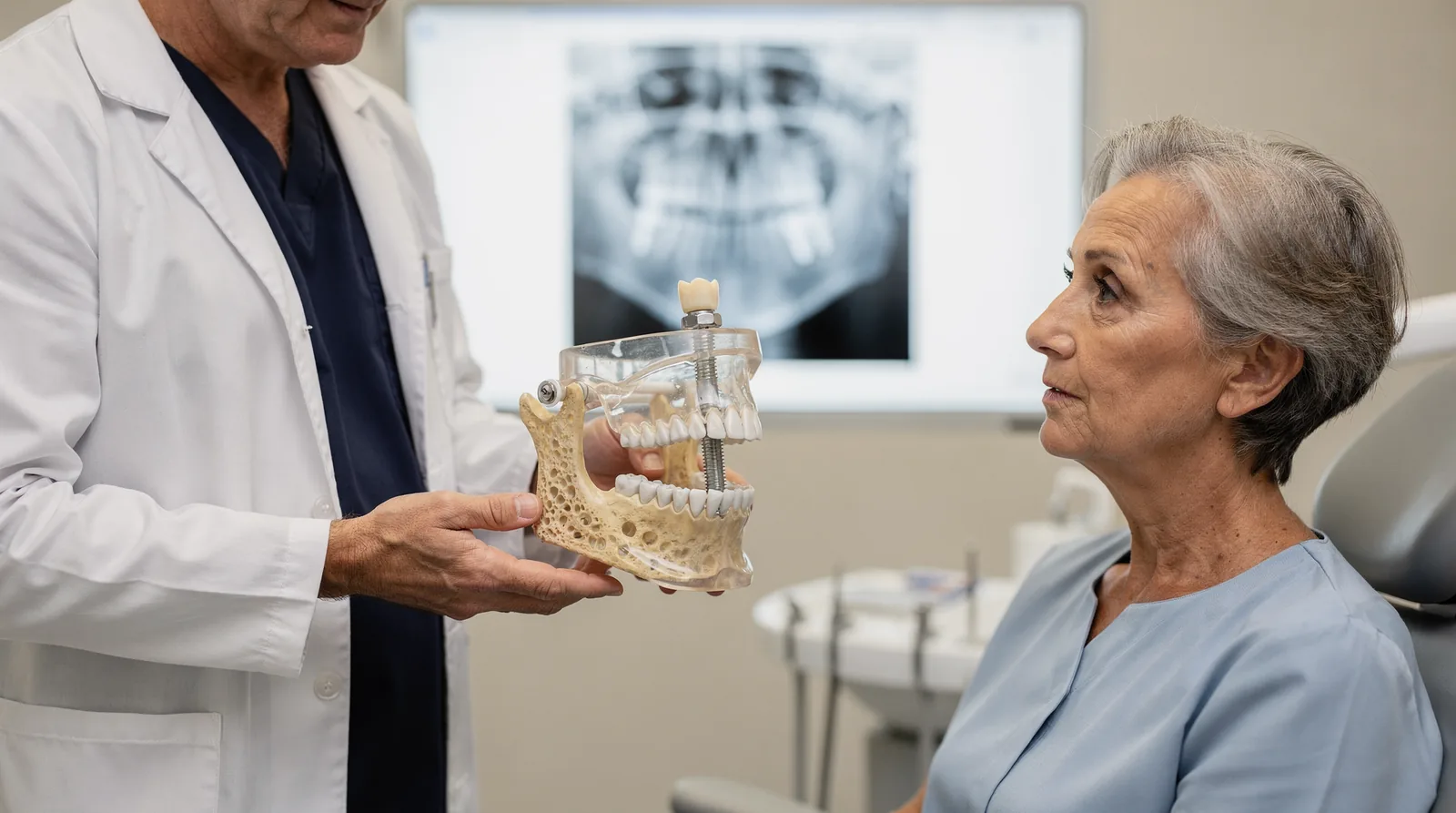
A thorough consultation with a dentist assesses suitability based on individual health status and bone density measurements. The evaluation considers:
Current blood sugar control (HbA1c levels)
Severity of bone loss in the jaw
Overall healing capacity
Medication regimens that may affect bone metabolism
Patients with well-managed diabetes or mild osteoporosis often proceed with implants without complications. Those with poorly controlled conditions may need to stabilize their health first. The dentist develops a tailored plan that addresses each patient’s specific risk factors before any surgical procedure begins.
What Are the Risks for Diabetic Patients?
Diabetic patients face a measurably higher risk of dental implant failure compared to non-diabetic patients. A systematic review and meta-analysis of 89 publications, covering 5,510 implants in diabetic patients and 62,780 in non-diabetic patients, found the failure odds ratio stands at 1.777 (p < 0.001). That number means a diabetic patient is nearly a notable share more likely to lose an implant than someone without the condition.
Why Does Type 1 Diabetes Carry More Risk Than Type 2?
The same meta-analysis revealed a striking difference between diabetes types. Implant failures occur significantly more often in type 1 diabetes patients than in type 2 diabetes patients, with an odds ratio of 4.477 (p = 0.032). Type 1 patients face more than four times the failure risk of type 2 patients, a statistically significant gap that clinicians weigh carefully during candidacy evaluations.
How Does Blood Sugar Control Affect Healing?
Poorly controlled or undiagnosed diabetes disrupts the body’s metabolic processes. Highly fluctuating sugar levels interfere with normal healing pathways, which directly impacts how well the jawbone fuses with the implant. Unstable glucose also contributes to long-term organ damage, including harm to the kidneys and the retina of the eye, signaling systemic inflammation that complicates recovery.
A healthy, inflammation-free mouth is a non-negotiable prerequisite before implant placement. Diabetic patients with active gum disease or poor glycemic control risk improper healing and eventual implant loss. The clinical protocol at Affordable Dentist Near Me – Mansfield follows this standard: patients must demonstrate stable blood sugar and resolve any oral inflammation before proceeding.
Key risk factors for diabetic implant candidates include:
Uncontrolled blood glucose levels at the time of surgery
Active periodontal disease or untreated gum inflammation
Type 1 diabetes as opposed to type 2
Fluctuating sugar levels that impair metabolic healing processes
The takeaway is straightforward: diabetes does not automatically disqualify a patient from implants, but it demands disciplined management. Patients who stabilize their glucose and achieve a healthy oral environment significantly improve their odds of long-term implant success.
How Does Osteoporosis Affect Implant Success?
Osteoporosis directly threatens dental implant success by compromising the bone quality and healing capacity required for stable implant placement. This condition reduces bone density, which undermines both primary stability—the initial mechanical hold achieved immediately after insertion—and secondary stability, the biological integration that follows over time. Without adequate bone structure, implants face higher risks of loosening or failure.
What Is Primary Stability and Why Does It Matter?
Primary stability depends heavily on bone density and quality at the implant site. In osteoporosis patients, diminished bone mass means the implant may not achieve the tight mechanical grip needed during the first weeks of healing. This initial weakness increases the likelihood of micromovement, which disrupts osseointegration—the process where bone fuses to the implant surface.
Can Dental Implants Still Work for Osteoporosis Patients?
Dental implants offer a critical advantage for those with bone loss conditions: they preserve existing bone structure and prevent the facial sagging that occurs when missing teeth accelerate bone resorption. A consultation determines whether sufficient bone density remains for placement. When natural bone is inadequate, bone grafting procedures can rebuild the foundation, making implant candidacy possible for many osteoporosis patients.
Key factors that influence implant success with osteoporosis:
Bone density assessment — A CT scan or 3D imaging evaluates whether the jawbone can support an implant
Primary stability — The initial mechanical hold, compromised by low bone density, requires careful surgical technique
Healing capacity — Osteoporosis slows bone remodeling, extending the timeline for secondary stability to develop
Bone grafting — Adding bone material to deficient areas creates a stronger foundation for implant placement
Patients with well-managed osteoporosis and adequate bone density often proceed successfully with implants. The practice evaluates each case individually, tailoring the treatment plan to the patient’s specific bone health profile.
Are There Specific Health Conditions That Can Prevent Me From Getting Dental Implants?
Certain health conditions do create barriers to dental implant candidacy, but these barriers are rarely absolute. Uncontrolled diabetes and severe osteoporosis represent the two most common conditions that may prevent implant placement without proper medical management. High blood sugar levels in unmanaged diabetes promote inflammation. Impair healing, increasing the risk that an implant will fail to integrate with the jawbone. Severe osteoporosis weakens bone density, which compromises the primary stability an implant needs immediately after placement. The key distinction is control — well-managed diabetes and treated osteoporosis often allow patients to proceed safely.
How does the practice evaluate health conditions before implant surgery?
The practice begins with a free new-patient exam to assess each individual’s oral health and systemic suitability for implants. This exam allows the dental team to review medical history, current medications, and any chronic conditions that might affect healing. Treatment plans are tailored to individual needs, with step-by-step guidance and upfront costs provided before any procedure begins. Patients with health concerns receive clear explanations of what precautions or referrals might be necessary.
What makes the practice suitable for patients with complex health needs?
Comprehensive services under one roof minimize referrals and delays for patients managing health conditions alongside implant treatment
The same team handles everything from the initial evaluation through final restoration, reducing coordination burdens
Transparent communication about candidacy risks and success rates helps patients make informed decisions
Patients with diabetes or osteoporosis should not assume implants are impossible. A thorough evaluation determines whether the condition is stable enough for surgery and what additional steps — such as antibiotic protocols or bone grafting — might improve outcomes.
What Steps Should You Take Before Getting Implants?
A free new-patient exam at the Mansfield practice gives clients the first clear picture of their oral health and implant options. Dr. Elvis Le, DDS, uses that visit to evaluate the jawbone, gums, and overall condition before any treatment plan takes shape. Skipping this evaluation leaves too many unknowns about candidacy and healing potential.
How Does the Initial Consultation Work?
The consultation centers on comprehensive oral health and clear communication. Dr. Le explains each finding in plain terms, so clients understand exactly where they stand. The exam also opens the door to asking about diabetes, osteoporosis, or other conditions that might affect implant success.
What Financial Questions Should Clients Ask?
Transparent pricing with itemized treatment plans removes guesswork from the decision. Clients receive a written breakdown of every procedure and cost before committing. Multiple payment options, including a notable share financing, make the path more manageable for most budgets.
Request the itemized treatment plan in writing
Ask about a notable share financing and other payment structures
Confirm which steps the free exam covers
Same-day appointments and walk-in availability let clients start this process without rearranging their week. A busy schedule should not delay a decision that affects long-term oral health. The practice keeps the door open for urgent needs and spontaneous visits alike.
FAQ
Do diabetes and osteoporosis automatically disqualify patients from dental implants?
No. Controlled blood sugar and stable bone density support strong outcomes, and Affordable Dentist Near Me. Mansfield reviews each patient’s medical history before recommending an implant treatment plan.
How does uncontrolled diabetes affect implant healing?
Elevated glucose levels promote inflammation of the tooth structure, increasing periodontitis risk. Since implants require a healthy, inflammation-free mouth to fuse with the jawbone, active gum disease compromises healing and raises the risk of implant loss.
What factors determine implant candidacy for these patients?
A thorough consultation assesses blood sugar control, severity of jaw bone loss, overall healing capacity, and medication regimens affecting bone metabolism. Patients with well-managed diabetes or mild osteoporosis often proceed without complications.
Conclusion
In closing, managing dental implants with diabetes and osteoporosis requires a thoughtful, individualized approach that balances your systemic health with your oral restoration goals. Working with a dentist who understands these conditions—and who takes time to discuss your medical history, bone density, and healing capacity—makes all the difference in achieving successful outcomes. At Affordable Dentist Near Me – Mansfield, we’re committed to transparent communication and personalized treatment planning that honors both your dental and overall health needs.