Comparing the Lifespan and Care of Dental Implants, Bridges, and Dentures: Your Complete Guide to Tooth Replacement Options in Longview
Replacing missing teeth is a major decision that affects oral health, chewing function, facial structure, and long-term costs, so understanding the differences among dental implants, bridges, and dentures is essential before choosing a path forward. This guide explains what each restorative option is, how it works biologically, and why lifespan and day-to-day care directly influence outcomes for adults in Longview weighing durability, comfort, and budget. You will learn how implants preserve bone through osseointegration, how bridges rely on abutment teeth and periodic maintenance, and how removable dentures require relining and adaptation to changing anatomy. The article maps expected longevity ranges, step-by-step daily hygiene routines, pros and cons, cost- and financing-considerations specific to the Longview context, and a decision checklist to help you prepare for a professional consultation. Throughout, semantic clarity links entities (implant post, abutment, crown) to attributes (longevity, maintenance needs, bone impact) so you can compare options side-by-side and arrive at an informed choice that suits your oral health and lifestyle priorities.
What Are Dental Implants and How Do They Work?
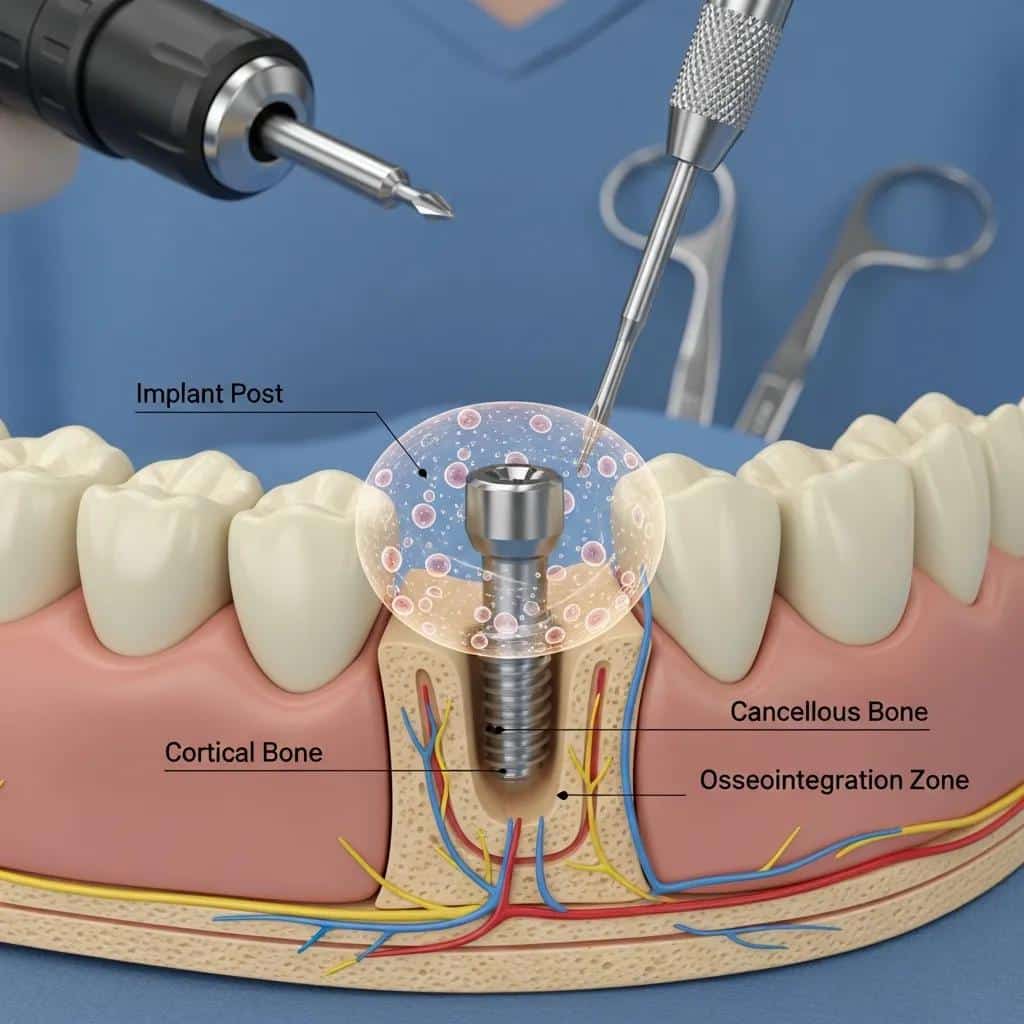
Dental implants are a type of dental prosthesis designed to replace missing teeth by integrating a titanium or zirconia post into jawbone, restoring function and preserving bone through a process called osseointegration. Osseointegration is the biological fusion of bone to the implant surface, which transmits chewing forces to bone and maintains bone density and facial form. Implants differ from bridges and dentures because they replace the root structure as well as the crown, offering improved chewing efficiency and stability compared with removable options. Clinically, implants serve as anchors for single-tooth restorations, implant-supported bridges, or implant-supported dentures, enabling a range of restorative designs matched to patient anatomy and needs. Understanding the implant components and the mechanism of bone preservation sets the stage for comparing longevity and care against bridges and dentures in later sections.
What Components Make Up a Dental Implant?
A dental implant system has three primary components: the implant post, the abutment, and the prosthetic crown, each with specific materials and functions that together recreate a natural tooth. The implant post, typically made of titanium or increasingly of zirconia, acts as the artificial root and is surgically placed into the jawbone; titanium integrates reliably with bone while zirconia offers a metal-free alternative. The abutment connects the post to the crown and transmits functional loads; abutments can be stock or custom and may be made from titanium or ceramic depending on esthetic and biomechanical needs. The crown is the visible prosthetic tooth, made from porcelain, metal-ceramic, or zirconia, and it is designed to match adjacent teeth for form and function. Knowing these parts clarifies why implant maintenance sometimes separates prosthetic replacement (crown wear) from implant survival (post osseointegration), which is important when projecting long-term costs and care.
How Does the Dental Implant Procedure Preserve Bone Health?
When a natural tooth is lost, the absence of root-driven mechanical stimulus leads to progressive bone resorption; implants restore that stimulus by transmitting occlusal loads to bone, which maintains bone remodeling and density. The implant-to-bone relationship—the osseointegration process—creates stable biomechanical coupling so that functional forces are distributed through bone rather than concentrated on adjacent teeth, which reduces the risk of neighboring tooth overload and subsequent loss. Bone preservation with implants helps maintain alveolar ridge height and facial support, decreasing the degree of soft-tissue collapse and preserving long-term esthetics and prosthetic fit. In cases with insufficient bone density, clinicians may perform bone grafting to reestablish a reliable foundation for osseointegration, so preserving bone health often begins with careful preoperative assessment. Understanding how implants protect bone leads directly into considerations of expected lifespan and how biological and behavioral factors influence long-term success.
What Is the Expected Lifespan of Dental Implants, Bridges, and Dentures?
Lifespan estimates for tooth replacement options vary by prosthesis type, patient biology, materials, and maintenance; clear ranges help set realistic expectations and plan follow-up care. Dental implants are commonly described as having the potential to last 20 years or longer and, with proper care and favorable biology, they can function for the remainder of a patient’s life, although crowns and abutments may need periodic replacement. Fixed dental bridges typically last approximately 5–15 years depending on abutment tooth health, occlusal forces, and material choice, while removable partial or full dentures often require relining or replacement every 5–8 years as anatomy changes and prosthetic materials wear. Factors that modify these ranges include smoking, uncontrolled systemic disease (such as diabetes), oral hygiene quality, bruxism, and the need for bone grafting or periodontal maintenance; addressing these variables actively can extend the functional life of any prosthesis. The table below clarifies these lifespan ranges and the primary factors that influence them so you can see where maintenance and patient behavior play a role.
While many factors influence the longevity of restorations, research suggests that age itself may not be a primary determinant for the survival of fixed prostheses.
Age Impact on Fixed Prosthesis Survival
Although the majority of studies did not show any effect of age on the survival of fixed prostheses, there was some evidence that age might not be considered as a risk factor for the survival of fixed prostheses.
The influence of age on tooth supported fixed prosthetic restoration longevity. A systematic review, HP Petridis, 2010
Prosthesis
Average Lifespan
Key Factors Influencing Lifespan
Dental implant (post + restoration)
20+ years; often lifelong for the post
Bone quality, smoking status, peri-implant health, occlusal load, maintenance
Fixed dental bridge
5–15 years
Abutment tooth decay or fracture, cement failure, oral hygiene, material fatigue
Denture (partial/full)
5–8 years
Alveolar ridge resorption, denture base wear, fit, daily care and relining
This lifespan summary demonstrates how implants prioritize root replacement and bone preservation, while bridges and dentures are more dependent on neighboring anatomy and require scheduled adjustments; recognizing these dependencies leads directly to practical care routines that maximize longevity.
How Long Do Dental Implants Typically Last?
Dental implants typically show long-term survival rates that translate into expected lifespans of two decades or more for the implant post, with many patients maintaining stable implants for the rest of their lives when risk factors are managed. The implant post is the component most likely to endure long-term because osseointegration creates a durable interface with bone, but prosthetic components such as crowns may require replacement every 10–15 years due to wear, chipping, or esthetic updates. Implant survival depends on peri-implant tissue health; peri-implantitis and poor oral hygiene are primary threats, while smoking and uncontrolled systemic conditions significantly reduce long-term success rates. Careful surgical planning, appropriate implant materials, and consistent professional maintenance—combined with patient-level habits—help ensure that implants deliver their expected longevity and functional benefits. Understanding the distinction between implant post longevity and crown or abutment replacement clarifies long-term budgeting and maintenance planning for implant-supported restorations.
Recent research further supports the long-term durability of dental implants, providing specific data on their expected lifespan.
Dental Implant Lifespan & Success Factors
This study aimed to analyze factors influencing the success and failure of implant prostheses and to estimate the lifespan of prostheses using standardized evaluation criteria. An online survey platform was utilized to efficiently gather large samples from multiple institutions. The number of patients involved in this study was 485, with a total of 841 prostheses evaluated. The median survival was estimated to be 16 years with a 95% confidence interval.
Prediction of lifespan and assessing risk factors of large-sample implant prostheses: a multicenter study, 2024
What Is the Durability Range for Dental Bridges and Dentures?
Fixed bridges and removable dentures present different durability profiles: bridges trade surgical complexity for reliance on abutment teeth, and dentures trade invasiveness for adjustability and lower initial cost, producing distinct maintenance patterns. Fixed bridges commonly last five to fifteen years; failures often result from caries or fracture of abutment teeth, loss of cement retention, or framework fatigue, and bridge longevity improves when abutment teeth are healthy and occlusion is balanced. Dentures—both partial and full—typically wear or misfit within five to eight years as alveolar ridge resorbs and prosthetic teeth abrade; routine relines and occasional rebasing preserve fit and function but do not halt bone loss in edentulous areas. Material choices, such as porcelain fused to metal for bridges or high-quality acrylic and denture teeth options for dentures, influence fracture resistance and esthetics, but maintenance patterns and biological consequences ultimately shape their long-term durability. Recognizing these durability ranges informs expectations about repair frequency and the trade-offs between up-front cost and cumulative maintenance.
The rate of residual ridge resorption, a key factor in denture longevity and fit, can also be influenced by how frequently dentures are worn.
Denture Use & Ridge Resorption Rate
Peltola et al. (3) reported that the frequency of denture wearing has an impact on the rate of residual ridge resorption.
Denture relining as an indicator of residual ridge resorption, J Kranjčić, 2013
How Should You Care for Dental Implants, Bridges, and Dentures?
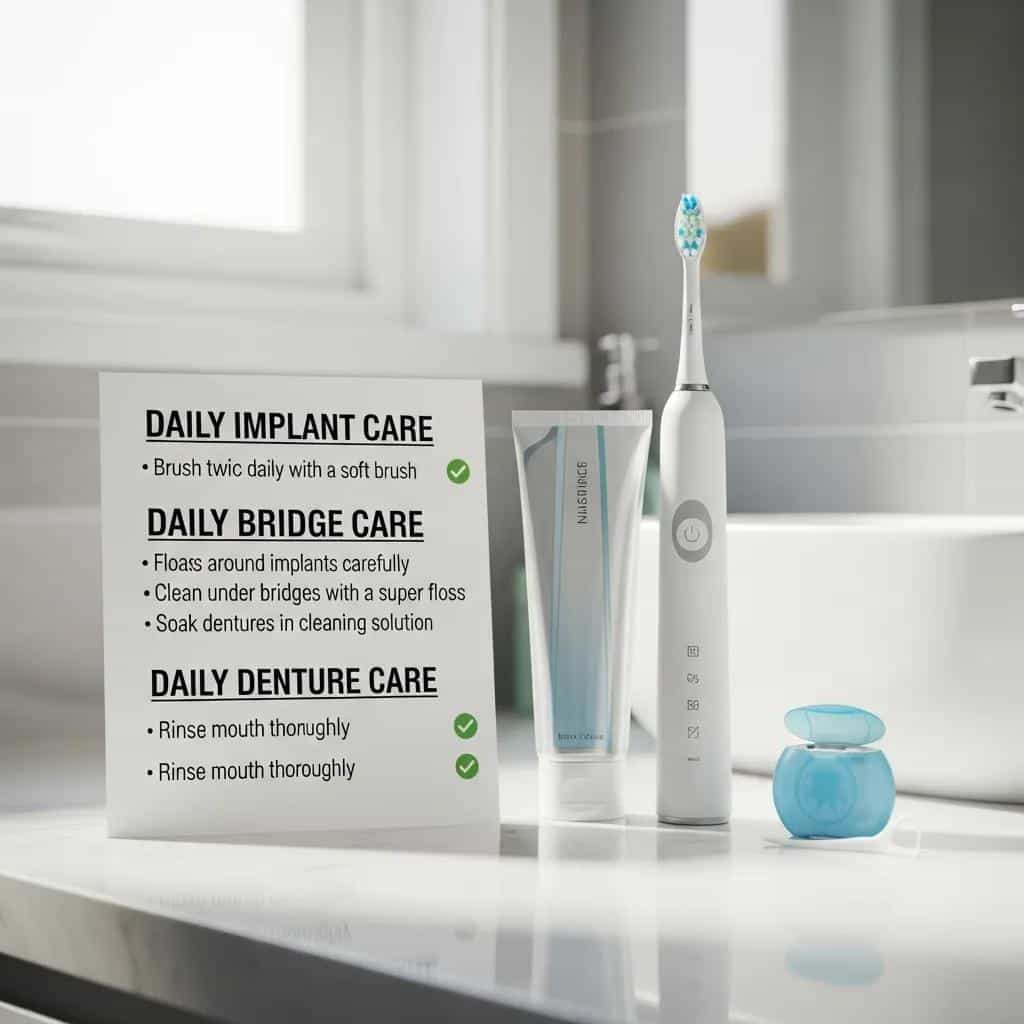
Proper daily hygiene and periodic professional maintenance are essential across all prosthetic categories to extend service life and protect oral health; tailored routines differ by device type but share common preventive principles. For implants, preventing plaque accumulation around the implant–abutment interface is critical because bacterial biofilm can lead to peri-implant mucositis and peri-implantitis, jeopardizing osseointegration. Bridges require meticulous cleaning of the pontic underside and careful monitoring of abutment tooth integrity to prevent recurrent decay and failure; water flossers and floss threaders are practical tools to keep these areas clean. Dentures benefit from nightly cleaning, soaking in appropriate denture cleaners, and routine relines to maintain fit as the ridge remodels, while avoiding abrasive household cleaners that can damage denture surfaces. The following checklist provides daily and periodic care steps for each prosthesis, enabling you to integrate best practices into a practical regimen.
Dental prosthesis care checklist:
Daily plaque control: Brush twice daily with a soft toothbrush and low-abrasion toothpaste to remove biofilm from teeth and prostheses.
Interproximal cleaning: Use interdental brushes, floss threaders, or water flossers to clean under bridges and around implant abutments.
Professional checks: Schedule regular dental exams and cleanings to monitor prosthesis fit, detect early complications, and perform adjustments.
Nighttime denture care: Remove dentures nightly for cleaning and soaking, and inspect for wear or cracks.
Following those steps consistently reduces biological risk and extends prosthesis life; the next subsection outlines implant-specific daily hygiene practices for peri-implant tissue protection.
What Daily Hygiene Practices Are Essential for Dental Implant Care?
Daily implant care centers on controlling plaque at the peri-implant margin with gentle mechanical cleaning, interdental aids, and periodic antimicrobial adjuncts when recommended by a clinician. Patients should brush implants twice daily using a soft-bristled brush and a nonabrasive toothpaste, and they should use interdental brushes sized to fit the embrasure spaces around implant crowns to disrupt biofilm effectively. Flossing with implant-specific floss or using a floss threader under fixed prostheses helps prevent accumulation between teeth and restorations, while antiseptic mouth rinses may be used short term to control inflammation under clinician guidance. Professional maintenance visits should include evaluation of peri-implant tissues, probing where appropriate, and removal of calculus with instruments designed for implant surfaces to avoid scratching; these visits are critical for early detection of problematic tissue changes. Consistent peri-implant care protects osseointegration and reduces the risk of peri-implantitis, which preserves both function and long-term implant prognosis.
How Do You Maintain Dental Bridges and Prevent Damage?
Maintaining a fixed dental bridge requires meticulous cleaning under the pontic, monitoring the health of abutment teeth, and avoiding behaviors that stress the restoration, such as chewing extremely hard items. Floss threaders allow you to pass floss beneath the pontic to remove trapped food and biofilm, and water flossers can be an effective adjunct for patients who find threaders difficult to use. Regular examinations should include evaluation of the cement seal and the integrity of abutment teeth because recurrent decay under a bridge is a common mode of failure; prompt attention to marginal staining or sensitivity helps avoid extensive restorative work. Patients should also practice dietary caution with very hard or sticky foods to reduce risk of fracture or debonding, and they should report any looseness or discomfort promptly for repair. Proactive maintenance of bridges protects abutment tooth health and prolongs the functional service of the restoration.
What Are the Pros and Cons of Dental Implants, Bridges, and Dentures?
Choosing among implants, bridges, and dentures involves trade-offs across longevity, invasiveness, comfort, cost, and impact on surrounding oral structures, so an objective listing of benefits and drawbacks aids decision-making. Dental implants offer superior stability, improved chewing efficiency, and bone preservation, but they require surgery, sufficient bone volume, and adherence to rigorous hygiene and follow-up schedules. Bridges can deliver fixed restorations without implant surgery and offer good esthetics and function for limited gaps, yet they depend on abutment teeth and may accelerate wear or require alteration of healthy teeth. Dentures are less invasive and typically less expensive up front while being adjustable over time, but they can reduce chewing efficiency, require relines, and do not prevent alveolar bone resorption in edentulous areas. Below are succinct pros and cons for each option to help you weigh priorities relevant to your oral health goals.
Dental implants: Durable and bone-preserving but require surgery and ongoing peri-implant maintenance.
Fixed bridges: Immediate fixed solution without implants but rely on abutment teeth and may reduce their longevity.
Dentures: Non-surgical and cost-effective initially but require adaptation and periodic relining with potential dietary limitations.
Understanding these trade-offs clarifies which attributes—stability, invasiveness, or affordability—matter most to you and leads into a more detailed consideration of implant risks and how bridges and dentures compare in comfort.
What Are the Benefits and Risks of Dental Implants?
Dental implants provide major benefits including superior chewing efficiency, improved speech, and preservation of alveolar bone through osseointegration, which supports facial structure and long-term oral function. Because the implant post replaces root function, implants often prevent adjacent tooth shifting and reduce the progression of bone resorption that follows tooth loss, making them a preferred option for long-term rehabilitation when anatomy and health permit. However, implants carry surgical risks such as infection, nerve injury in rare cases, and the possibility of peri-implantitis if plaque control is inadequate; these risks increase with smoking and certain systemic conditions. Prosthetic components can require maintenance or replacement, and treatment timelines may be longer because of healing phases and potential grafting, but modern implant protocols and materials have improved predictability. Recognizing both benefits and risks helps patients make informed choices and prepares them to commit to the maintenance required for lasting success.
How Do Dental Bridges and Dentures Compare in Comfort and Function?
Comfort and function differ substantially between fixed and removable options: bridges generally feel more natural than dentures because they are fixed in place, whereas dentures require an adaptation period and may impact taste, speech, or chewing in the early months. Fixed bridges provide stable occlusion and allow more efficient mastication compared with removable dentures, but they shift some functional load to abutment teeth and may alter the long-term prognosis of those teeth. Dentures offer flexibility and are easier to modify as anatomy changes, providing a practical solution for extensive tooth loss, although they may reduce bite force and require adhesives or relines for consistent retention. Typical adaptation timelines vary—patients often adapt to bridges within days to weeks, while denture adaptation can take weeks to months—and targeted adjustments such as soft liners or relines can improve comfort during the adaptation period. Evaluating comfort and function in light of daily habits and nutritional needs helps determine which option aligns with a patient’s lifestyle.
How Do Cost and Financing Options Compare for Dental Implants, Bridges, and Dentures in Longview?
Cost is a major consideration when selecting a tooth replacement, and realistic budgeting requires understanding typical ranges, which depend on case complexity, materials, and adjunctive procedures such as bone grafting. In Longview, conservative cost ranges reflect variability across providers and case needs: implants generally have higher up-front costs due to surgical placement and prosthetic components, bridges sit in a mid-range depending on the number of units and materials, and dentures usually represent the lowest initial investment though they can incur replacement and reline expenses over time. Financing options commonly include third-party finance plans, in-house payment arrangements, and insurance contributions when applicable; patients should request itemized treatment plans and compare long-term costs, not just initial fees. The table below provides a practical cost-range snapshot for Longview with neutral notes about financing availability so you can begin financial planning while confirming specifics directly with local providers.
Prosthesis
Typical Cost Range (Longview)
Financing Options / Notes
Dental implant (single tooth)
Moderate to higher range depending on grafting
Flexible financing often available; confirm itemized estimate with clinic
Fixed dental bridge (per unit)
Mid-range; varies with materials
Many practices offer payment plans and can discuss insurance coordination
Denture (partial/full)
Lower initial cost; variability by materials
In-house financing and third-party lenders commonly used; verify terms locally
Affordable Dentist Near Me of Longview provides restorative dentistry services that include dental implants, dental bridges, and dental dentures, and the practice emphasizes affordability and flexible financing options as part of its service offerings. The clinic highlights everyday low fees and available financing per local listings, and patients in Longview are encouraged to contact the Longview location for specific financing details and personalized estimates. This factual mention is intended to guide readers toward confirming precise costs and financing terms directly with the practice rather than substituting for a personalized consultation.
What Are the Typical Cost Ranges for Each Tooth Replacement Option?
Typical cost ranges depend on the extent of work required, the need for preparatory procedures, and material choices, so conservative estimates help set expectations before obtaining a tailored quote from a clinician. Single-tooth implants generally incur higher costs due to surgical placement, the implant post, abutment, and crown; additional procedures such as bone grafting or sinus lift increase overall expense. Fixed bridges cost less than implants in many cases when no surgery is required, but multi-unit bridges increase cost with material selection such as porcelain-fused-to-metal or full-ceramic options. Dentures are the most variable; economy acrylic dentures are less expensive while premium, customized dentures increase costs, and ongoing relines represent periodic expenses. Requesting an itemized treatment plan and comparing total long-term costs—including maintenance, repairs, and potential replacements—helps patients make financially informed choices.
What Flexible Financing Solutions Does Affordable Dentist Near Me of Longview Offer?
Affordable Dentist Near Me of Longview lists flexible financing and an emphasis on affordability among its patient-facing value points, indicating that payment arrangements are available to support comprehensive restorative treatment. The practice publicly notes everyday low fees and financing options in its service descriptions, and prospective patients should contact the Longview location to discuss specific plans, eligibility, and payment timelines for implants, bridges, or dentures. This neutral summary reflects the clinic’s stated approach to making restorative dentistry accessible without asserting unverified plan specifics; a direct consultation will clarify what financing solutions best match individual budgets and treatment plans. Understanding financing availability helps patients align clinical goals with realistic payment strategies before beginning treatment.
Which Tooth Replacement Option Is Best for You in Longview?
Selecting the best tooth replacement depends on clinical factors, personal priorities, and lifestyle—no single option fits every patient, so a structured checklist helps narrow choices before professional evaluation. Key factors include the number and location of missing teeth, bone density and the need for grafting, adjacent tooth condition, overall health and smoking status, budget, and willingness to undergo surgery and recovery. Prioritizing these factors clarifies whether longevity and bone preservation (favoring implants), minimal surgical intervention (favoring bridges), or lower initial cost and adaptability (favoring dentures) matter most to you. Below is a decision checklist to guide preliminary thinking and prepare questions for your dental consultation in Longview, so your conversation with a clinician will be efficient and focused on your priorities.
Decision checklist for choosing a tooth replacement:
Assess bone quality: Determine whether you have sufficient bone for implants or need grafting.
Evaluate adjacent teeth: Consider if healthy neighbors would be compromised by a bridge.
Prioritize longevity vs. cost: Decide whether lifetime durability or lower initial expense is the priority.
Consider medical factors: Review systemic health, smoking status, and healing capacity.
Lifestyle and function: Think about dietary needs, speech concerns, and desired esthetic outcomes.
Using this checklist prepares you for a productive consultation and helps clarify which attributes matter most when comparing options; the following paragraph explains how a professional consultation translates this checklist into a personalized plan.
What Factors Should Influence Your Choice Between Implants, Bridges, and Dentures?
Clinical and lifestyle factors jointly determine suitability: bone density and the likely need for grafting, the number and location of missing teeth, the condition of neighboring teeth, and the patient’s overall medical profile weigh heavily in the decision process. For example, patients with robust bone and a desire for long-term stability typically lean toward single-tooth implants or implant-supported restorations, whereas patients with multiple missing teeth and limited bone might consider implant-supported dentures or conventional dentures depending on budget and medical constraints. A patient who prioritizes a non-surgical pathway and has healthy abutment teeth might find a fixed bridge reasonable for a limited span, but sacrificing healthy tooth structure should be carefully weighed. Smoking, diabetes, and immune-compromising conditions alter healing potential and thus influence candidacy for implants versus less invasive prosthetics. Evaluating these factors in sequence clarifies trade-offs and helps frame treatment goals before the clinician develops a final plan.
How Can a Professional Consultation Help Determine Your Ideal Solution?
A professional consultation provides diagnostic imaging, a clinical exam, and a personalized treatment plan that converts the decision checklist into actionable steps with timelines and cost estimates tailored to your oral anatomy. During consultation, a clinician will assess bone quantity and quality, evaluate periodontal health and abutment tooth status, and review medical history to identify risks such as impaired healing or contraindications to surgery. Imaging, including X-rays or more advanced scans when indicated, informs whether grafting is necessary and how implant placement would affect adjacent structures; this diagnostic phase ensures predictable outcomes. A comprehensive consultation also outlines staged timelines, prosthetic design options, and maintenance expectations so you can weigh short- and long-term implications. Preparing a list of priorities and questions in advance helps you make the most of the consultation and supports a collaborative selection of your ideal tooth replacement.
How Do Dental Implants, Bridges, and Dentures Compare in a Side-by-Side Overview?
A side-by-side comparison clarifies trade-offs in lifespan, daily care complexity, maintenance intervals, impact on bone health, procedure time, and typical cost tiers so that practical differences become easy to weigh. The table below condenses these dimensions into a concise EAV-style comparison to facilitate direct evaluation for typical clinical scenarios and common patient goals such as long-term durability or minimal upfront cost.
Restoration Type
Typical Lifespan
Daily Care & Maintenance Interval
Bone Health Impact
Procedure Time
Typical Cost Tier
Dental implant (single)
20+ years; post often lifelong
Daily cleaning; professional checks every 3–12 months
Preserves bone via osseointegration
Several months with healing
Higher up-front cost
Fixed bridge
5–15 years
Daily flossing under pontic; check-ups every 6 months
Neutral; may stress abutment teeth
Weeks to months
Mid-range cost
Denture (partial/full)
5–8 years
Daily cleaning; relines every 1–3 years
Does not prevent ridge resorption
Weeks (no surgery)
Lower initial cost
What Are the Key Differences in Lifespan, Care, and Cost?
Quick comparative bullets make the practical distinctions clear for patients deciding among options, by focusing on quantitative lifespan ranges, relative care burden, and typical cost tiers for straightforward cases. Implants generally offer the longest lifespan and highest functional performance but require surgical placement and higher initial investment, while crowns attached to implants tend to require replacement occasionally, separating prosthetic upkeep from implant survival. Bridges require careful maintenance of abutment teeth and periodic replacement and usually occupy a mid-level cost position but can affect the long-term prognosis of the teeth that support them. Dentures have the shortest functional lifespan relative to implants and bridges and demand regular relines and replacement as bony anatomy changes, yet they remain the most accessible option for extensive tooth loss. Recognizing these core differences allows patients to align choices with clinical realities and personal priorities.
How Does Each Option Impact Oral Health and Lifestyle?
Each restoration type influences oral health and daily living differently: implants protect bone and often enable near-natural diet choices, bridges maintain adjacent occlusion but risk compromising supporting teeth, and dentures allow restoration of appearance and basic function but may limit hard-food consumption and require adaptation. Bone preservation with implants supports long-term facial aesthetics and prosthetic stability, whereas dentures, unless implant-retained, do not prevent progressive ridge resorption, which can change denture fit and facial support over time. Lifestyle impacts include differences in cleaning routines—implants demand implant-specific interdental care, bridges require targeted flossing under pontics, and dentures need nightly removal and soaking—which influence daily habits and time spent on oral care. Social and psychological effects also vary; many patients report higher confidence with fixed solutions, while others prefer the non-surgical pathway and removable versatility of dentures. These lifestyle considerations are central to selecting the option that best supports your daily needs and self-image.
What Are Common Patient Questions About Dental Implants, Bridges, and Dentures?
Patients frequently ask concise, practical questions that reflect priorities about durability, sequencing of treatments, and whether one option can follow another; clear, direct answers help set expectations and next steps. The FAQ-style pairs below provide brief, actionable responses designed to be used as preparation for a consultation or to guide follow-up questions with your clinician. This Q&A approach targets common decision points so you can quickly compare likely outcomes and required commitments for each option.
Which Lasts Longer: Implants, Bridges, or Dentures?
Dental implants typically last the longest, with implant posts often functioning beyond 20 years and sometimes for a lifetime when peri-implant health is maintained, while bridges generally last five to fifteen years and dentures five to eight years depending on fit and wear. The key qualifiers are that implant crowns may need periodic replacement even when the post remains stable, and that bridges rely on the ongoing health of abutment teeth which can shorten overall service life. Denture lifespan is highly influenced by changes in jawbone and tissue, requiring relines and occasional adjustments that affect longevity. Proper hygiene, cessation of smoking, control of systemic health issues, and regular professional maintenance are primary behaviors that extend the life of any prosthesis.
Can You Get a Dental Bridge After an Implant?
Yes, there are clinical scenarios where a bridge can be used in conjunction with implants—either as an implant-supported bridge spanning multiple missing teeth or, in some cases, a conventional bridge can be placed in areas not suitable for implants; however, individualized assessment is required. An implant-supported bridge uses implant posts as abutments rather than natural teeth, combining the advantages of osseointegration with multi-unit restorations to avoid sacrificing healthy adjacent teeth. Conversely, a conventional bridge might be selected when implant surgery is contraindicated or when patients prefer a non-surgical alternative, provided abutment teeth are strong and free of disease. Treatment sequencing and technical design depend on bone volume, occlusion, and long-term planning, so a clinician will evaluate these variables and discuss implant-supported versus tooth-supported bridge options during consultation.
Affordable Dentist Near Me of Longview is available as a local resource for patients in Longview seeking personalized evaluation of implants, bridges, and dentures; scheduling a professional consultation there can help translate the decision checklist into a specific treatment plan. The practice provides restorative dentistry services including implant and denture options and notes flexible financing and patient comfort features in its service descriptions. Contact the Longview location to arrange an exam, diagnostic imaging, and a treatment estimate tailored to your situation.