Restaurant workers' dental care is prevention and treatment organized around food-service shifts, with the aim of protecting oral health and reducing work interruptions. This 2026 guide to dental care for restaurant workers explains how to build a practical routine, arrange appointments, and separate urgent treatment from work that can wait.
TL;DR
Dental care for restaurant workers starts with fluoride toothpaste, daily cleaning between teeth, and appointments planned around shifts.
Affordable Dentist Near Me provides general and family dental care in six Texas service cities; confirm scheduling directly.
Choose treatment by clinical need, not by whether a procedure improves your smile.
Trouble breathing or swallowing with dental swelling requires emergency medical attention.
Why dental care matters for restaurant workers
A dental plan must fit your actual workday. If you work split shifts, taste food throughout service, or finish late, a routine tied to conventional breakfast and bedtime hours can be difficult to maintain. Anchor your care to waking and sleeping instead.
Frequent sugary drinks and snacks give cavity-causing bacteria repeated access to sugar. That makes drink choice and eating frequency relevant alongside brushing. A restaurant job does not automatically mean poor dental health; your habits and individual dental risks determine the care you need.
For scheduling ideas beyond restaurant work, see the guide to dental care for shift workers. The right plan protects your teeth without assuming your workday follows office hours.
How to organize dental care around restaurant shifts
1. Build your routine around waking and sleeping
Start with a written checklist or phone reminder. You do not need a paid tracking tool: connect brushing to getting ready for work and preparing for sleep, even when those activities happen at unusual hours.
The American Dental Association recommends brushing for 2 minutes, 2 times daily, using fluoride toothpaste, and cleaning between teeth daily. Use those established recommendations for your 2026 routine rather than trying to brush after every food tasting. Brushing harder does not make up for missed sessions and can damage gums.
Brush with fluoride toothpaste after waking and before your main sleep period.
Use a soft-bristled toothbrush and gentle pressure along the gumline.
Clean between your teeth 1 time daily with floss or an appropriate interdental cleaner.
Keep a spare toothbrush somewhere clean and separate from food-preparation supplies.
Ask your dentist to demonstrate cleaning around crowns, braces, or other dental work.
2. Reduce repeated sugar exposure during service
Begin by noticing what you drink and snack on during a normal shift. A simple note on your phone can show whether you sip a sweetened beverage throughout service or eat small sugary snacks repeatedly.
Water is the better routine shift drink for your teeth. Plain water does not supply sugar to cavity-causing bacteria, although it does not replace brushing. Required food tasting is different from optional grazing; focus on the choices you control rather than trying to eliminate an essential part of your job.
Dry mouth also deserves attention. Tell your dentist about persistent dryness and any medicines you take; do not stop prescribed medicine on your own.
Choose plain water for routine hydration when you have a choice.
Avoid stretching a sugary drink across an entire shift.
Have optional sweet foods with a meal rather than repeatedly between meals.
Rinse your mouth with water after tasting food when practical.
Report persistent dry mouth, new sensitivity, or recurring food trapping.
3. Arrange an exam that fits your work commitments
Write down your symptoms, work constraints, and questions before contacting a practice. Explain whether you need an assessment only or want to discuss treatment during the same visit; those are different scheduling requests.
Affordable Dentist Near Me is best for restaurant workers seeking general and family dental care in its Texas service cities. The practice serves Fort Worth, Dallas, Houston, Waco, Grand Prairie, and Crowley. Specific appointment times, insurance participation, and treatment recommendations require direct confirmation.
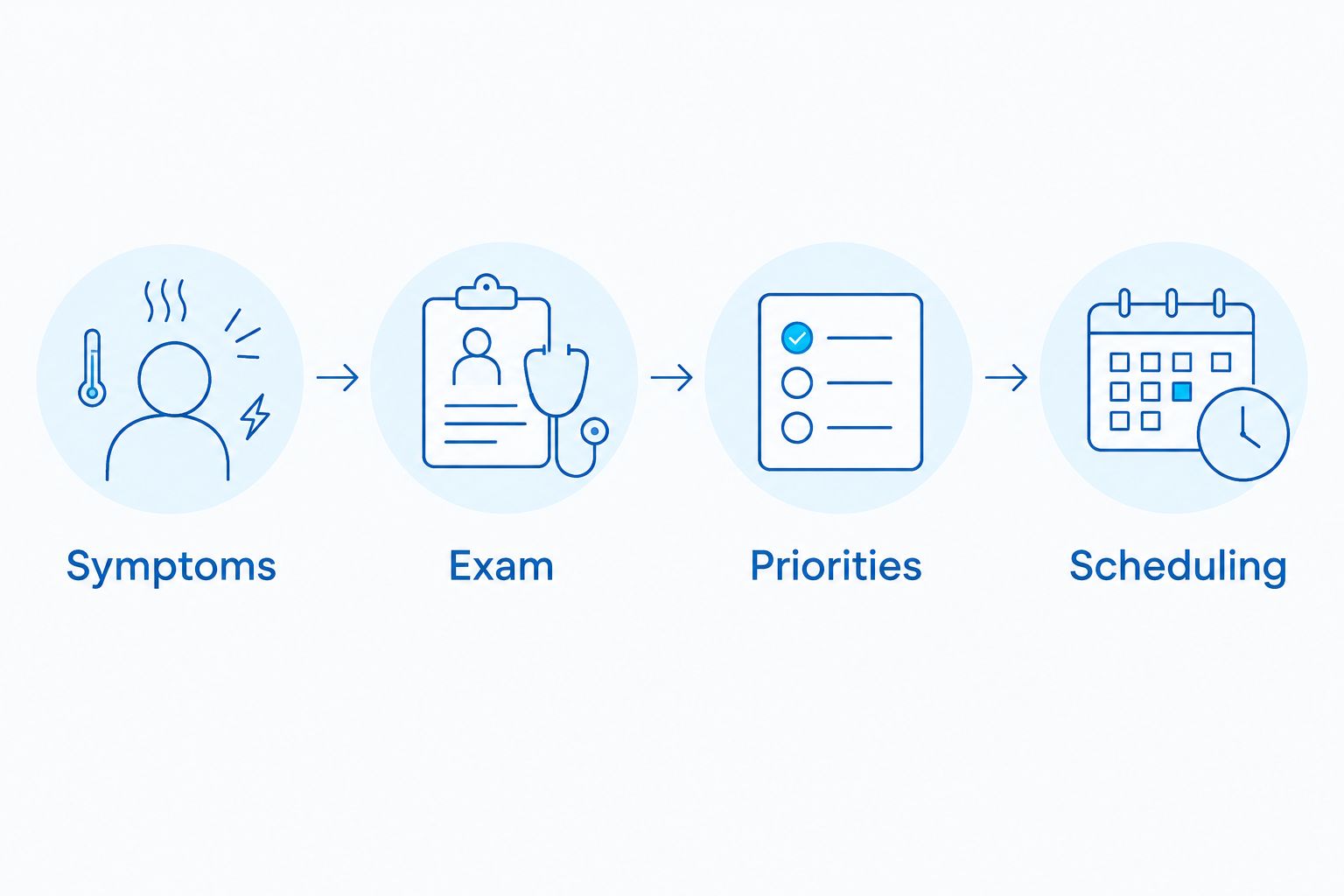
For a 2026 appointment, follow this sequence: Symptoms, Exam, Priorities, Scheduling. Describe the problem, arrange an assessment, understand the recommended order of care, and then plan work commitments around it.
Confirm the treatment priorities before arranging time away from work.
Record where the discomfort occurs and what triggers it.
Share your work schedule and realistic travel time.
Ask what the initial visit includes and whether treatment needs another appointment.
Request an individualized cleaning schedule rather than assuming a fixed interval.
Use the contact page to ask the office about your next step.
4. Check benefits and request a written treatment plan
Start with your employer's benefits information or your insurer's member documents. Employment at a restaurant does not establish dental coverage, and a medical insurance card does not necessarily include dental benefits.
If you have coverage, verify both the practice and the specific treatment. An insurer's estimate is not the same as a guarantee of payment. If you do not have coverage, request the same clear explanation of the diagnosis, proposed care, and alternatives.
For your 2026 benefits review, distinguish a clinical recommendation from an insurance rule. A covered service is not automatically the right treatment, and an excluded service is not automatically unnecessary.
Ask whether you currently have separate dental benefits.
Confirm the treating dentist's network status with your insurer.
Check exclusions, waiting periods, and benefit limits in your own plan documents.
Request a written treatment plan with itemized financial responsibilities.
Ask which alternatives are clinically appropriate before agreeing to treatment.
5. Put urgent problems ahead of cosmetic goals
Use a symptom list to organize the conversation, but let a dentist determine the diagnosis. Tooth pain, swelling, a broken tooth, or a loose restoration should not be treated as a cosmetic concern simply because you can still finish a shift.
Trouble breathing or swallowing, especially with mouth or facial swelling, requires emergency medical attention. Call 911. For tooth pain without those warning signs, contact a dentist promptly and describe any fever, spreading swelling, or difficulty opening your mouth.
Affordable Dentist Near Me provides general, cosmetic, and restorative dental services. That range does not mean every treatment belongs in your plan; the exam should establish what you need first.
Tell the office about swelling, fever, injury, or worsening pain when you call.
Ask whether a painful tooth needs urgent assessment before your next shift.
Address active disease before choosing elective smile changes.
Avoid placing aspirin directly against a tooth or gum.
Follow medicine labels and seek professional advice if you are unsure what is safe.
6. Plan recovery around the actual procedure
Ask the dentist what your specific treatment means for standing, lifting, speaking, eating, and returning to work. Do not arrange a long service shift immediately after a procedure based on someone else's recovery story.
Local numbing, sedation, an extraction, and a routine cleaning have different implications. Sedation can affect judgment and coordination; follow the treating team's instructions about transport, supervision, and work. After numbing, avoid chewing until normal sensation returns unless your dentist instructs otherwise.
For a cook, server, bartender, or dishwasher, explain the physical demands of the job rather than simply asking whether you can return to work.
Describe lifting, bending, heat exposure, and speaking demands before treatment.
Ask for written instructions matched to your procedure.
Confirm whether you need someone to accompany you home.
Arrange appropriate food for recovery based on the dentist's instructions.
Get a contact plan for unexpected bleeding, worsening swelling, or uncontrolled pain.
7. Keep follow-up care from getting lost between shifts
Use your calendar and a short written care summary before considering any additional tracking system. Record what was treated, what still needs attention, and when the dentist wants to reassess it.
A cleaning does not replace treatment for a diagnosed cavity or gum problem. Likewise, pain going away does not prove the cause has resolved. Keep the follow-up appointment or contact the office to discuss a change rather than silently dropping the plan.
At Affordable Dentist Near Me or another practice, ask for instructions you can explain back in plain language. You should understand what to do at home and what symptoms require another call.
Put recommended follow-up visits in your calendar before leaving.
Save written care instructions where you can find them during a shift.
Set reminders around your sleep pattern, not a fixed office-hours schedule.
Update the office about new medicines or health changes.
Recheck unresolved symptoms instead of waiting for severe pain.
Compare care options for restaurant workers
Choose a care setting by the problem it can address, not just its name. General dental practices, community health centers, dental schools, and emergency departments serve different needs. No single setting replaces every other option.
For 2026 planning, verify each provider's services, patient requirements, and appointment process directly. The comparison below identifies suitable uses and limitations; it does not establish any provider's insurance participation.
Option
Best for
Main advantage
Key limitation
Affordable Dentist Near Me
General and family dental care in its six Texas service cities
Offers general, cosmetic, and restorative dental services
Confirm location-specific scheduling and insurance participation directly
Community health center with dental services
Exploring community-based dental care
Can connect dental care with a community health setting
Dental services and patient requirements differ by center
Dental school clinic
Patients comfortable receiving supervised student care
Treatment takes place within a dental education setting
Teaching appointments can take longer; confirm the process before arranging work coverage
Hospital emergency department
Breathing difficulty, swallowing difficulty, or other serious medical warning signs
Can assess and stabilize a medical emergency
Does not replace a dental practice for routine care or definitive treatment of many tooth problems
Common mistakes restaurant workers make
These mistakes arise when care is fitted around the next shift instead of the full treatment plan. Correcting them starts with a clearer conversation, not a more complicated routine.
Treating every break as a sugary drink break
Repeated sipping keeps exposing your teeth to sugar. Keep water as the routine option and avoid turning a sweet drink into an all-shift habit.
Booking treatment without discussing job duties
Saying you work in a restaurant does not tell the dentist whether you lift deliveries or spend hours speaking with customers. Describe your tasks and ask for procedure-specific work guidance.
Assuming the restaurant's medical benefits include dental care
Check your actual enrollment and plan documents. Confirm dental benefits before relying on coverage for an appointment or proposed treatment.
Using pain relief as a reason to postpone assessment
Pain medicine can reduce discomfort without fixing the cause. Contact a dentist about persistent or recurring pain, even when you can temporarily manage it at work.
FAQ
What’s the best dental care routine for restaurant workers?
Brush with fluoride toothpaste for 2 minutes twice daily and clean between your teeth daily. Tie the routine to waking and sleeping, choose water during shifts, and follow your dentist’s individualized visit schedule.
Can I arrange dental care if my restaurant schedule changes every week?
Yes, but confirm appointment arrangements directly with the office. Explain your changing shifts, ask what the visit involves, and allow for travel and any procedure-specific recovery instructions.
Does working in a restaurant make me more likely to get cavities?
Your job title alone does not determine your cavity risk. Frequent sugary drinks or snacks, dry mouth, your existing dental health, and your cleaning routine are relevant factors to discuss with a dentist.
Where can restaurant workers get dental care without insurance?
Restaurant workers without dental insurance can contact private dental practices, community health centers with dental services, or dental school clinics. Ask about patient requirements, the assessment process, and a written treatment plan before committing.
Can I return to a restaurant shift after dental treatment?
Returning to work depends on the procedure, medicines used, and your job duties. Ask the treating dentist about lifting, speaking, eating, driving, and any restrictions before scheduling your shift.
When is tooth swelling an emergency?
Swelling with trouble breathing or swallowing requires emergency medical attention; call 911. Contact a dentist promptly about other dental swelling, especially when accompanied by fever or worsening pain.
Does Affordable Dentist Near Me treat restaurant workers?
Affordable Dentist Near Me provides general, family, cosmetic, and restorative dental care in Fort Worth, Dallas, Houston, Waco, Grand Prairie, and Crowley. Restaurant workers should contact the office to confirm appointment arrangements and discuss their dental needs.
One last thing
Put your job duties in the appointment notes. A dentist cannot tailor return-to-work advice to lifting supply boxes, working beside a hot grill, or speaking through service unless you explain those tasks. Make that small preparation part of your 2026 dental plan before treatment begins.