Mini Dental Implants: Benefits, Procedure, and What to Expect
If loose dentures or missing teeth are affecting your confidence or comfort, mini dental implants may be a practical, less invasive option. Designed to stabilize dentures and support oral health, mini implants can improve chewing, speech, and overall quality of life. Below, we explain how they work, the typical procedure, the benefits compared with traditional implants, and what costs and financing options you can expect. Our goal is to help you decide whether mini implants are a good fit for your needs.
What Are Mini Dental Implants and How Do They Work?
Mini dental implants are smaller versions of traditional implants — usually about 1.8 to 3.3 millimeters in diameter, often half the size or less. Each implant is a titanium post placed into the jawbone to anchor dentures or individual crowns. Over time the bone bonds to the titanium in a process called osseointegration, which secures the implant and helps preserve the jawbone where teeth are missing.
What Defines a Mini Dental Implant Compared to Traditional Implants?
The main differences are size and design. Mini implants are narrower and usually come as a single-piece unit, which makes them a good option for patients with limited bone volume who might otherwise need bonegrafting for a traditional implant. Their simpler design also often means a shorter, less invasive procedure and a quicker recovery for many people.
How Does the One-Piece Titanium Design Benefit Patients?
The one-piece titanium construction streamlines the treatment. With fewer parts to assemble, surgery can be quicker and less complex, which often reduces discomfort and chair time. Titanium is well tolerated by the body, encourages strong bone integration, and lowers the chance of certain complications.
What Are the Key Benefits of Mini Dental Implants?
Mini dental implants offer several advantages that make them attractive for many patients: a less invasive procedure, often faster healing, and lower overall cost compared with traditional implants.
How Do Mini Implants Offer Less Invasive and Faster Healing?
Because mini implants are smaller and generally placed with a minimally invasive technique, they cause less tissue trauma. That typically means less swelling and pain after the procedure and a quicker return to normal activities. Many people notice improved denture stability and comfort shortly after placement.
In What Ways Do Mini Implants Stabilize Dentures and Preserve Jawbone?
Mini implants act as anchors for dentures, stopping slipping and movement when you eat or speak. That improved stability restores confidence and comfort. By transmitting forces to the jawbone, implants also help maintain bone volume over time—an important factor in preserving facial shape and preventing further dental problems.
Who Is an Ideal Candidate for Mini Dental Implants?
Mini implants aren’t right for everyone, but they suit many patients who need denture stabilization or replacement teeth with a less invasive approach. Good general health and sufficient bone where the implants are placed are important factors.
What Conditions Make Patients Suitable for Mini Dental Implants?
Patients missing teeth who still have adequate jawbone where the implant will go are often good candidates. People who have experienced some bone loss but retain enough structure to support a narrow implant may also qualify. A careful clinical exam and imaging help confirm whether mini implants are appropriate for you.
Can Mini Implants Be Used Without BoneGrafting Procedures?
One advantage of mini implants is that they frequently can be placed without bonegrafting. For patients with moderate bone loss, this avoids additional surgeries and shortens the treatment timeline. Your dentist will evaluate your bone and recommend the safest, most effective plan.
How Does the Mini Dental Implant Procedure Work?
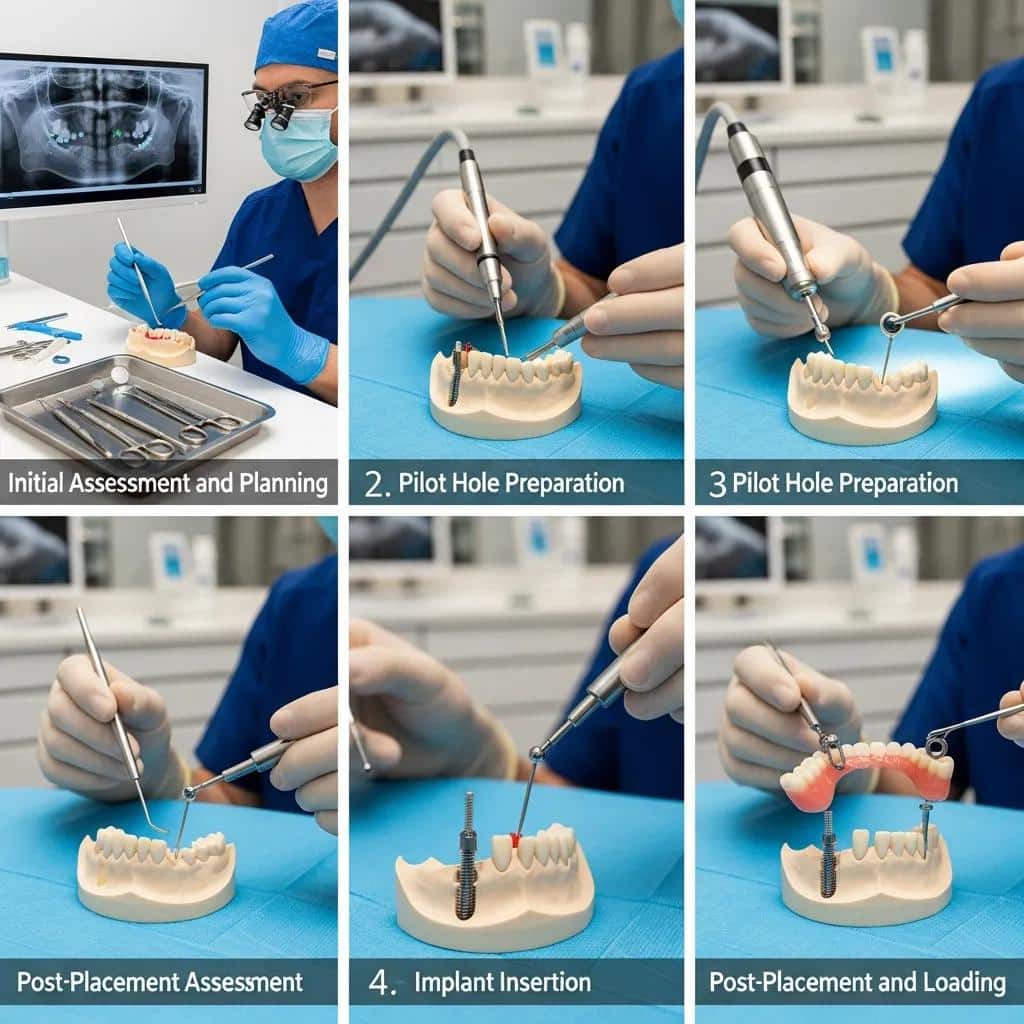
The placement process for mini dental implants is straightforward and can often be completed in a single visit. Below are the typical steps patients can expect.
What Are the Step-by-Step Stages of Mini Implant Placement?
Initial Consultation: We begin with a full exam, X‑rays, and a review of your dental history to confirm suitability and create a treatment plan.
Surgical Placement: The mini implant is inserted into the jawbone using a minimally invasive technique—usually under local anesthesia—keeping the procedure comfortable and efficient.
Healing Period: Over several weeks the bone integrates with the implant. Healing time varies by patient, but many experience a smooth recovery.
Attachment of Denture or Crown: Because mini implants are often one-piece, dentures or crowns can frequently be attached immediately or soon after placement, sometimes even the same day.
Final Restoration: We fine-tune the fit and function of your denture or crown so you can eat, speak, and smile with confidence.
What Is the Typical Recovery Time and Aftercare for Patients?
Recovery is usually quick; many people return to normal activities within a few days. Keep the area clean, follow any soft-food recommendations during the early healing phase, and attend scheduled follow-ups so we can monitor integration and make any necessary adjustments.
How Do Mini Dental Implants Compare to Traditional Dental Implants?
Choosing between mini and traditional implants depends on factors like bone volume, budget, and long-term goals. Here’s a clear comparison to help you weigh the options.
What Are the Differences in Size, Cost, and Longevity?
Mini implants are smaller and typically cost less than traditional implants because the surgery is simpler and recovery time is often shorter. Traditional implants have a long track record of lasting many decades when well cared for; mini implants can also last many years, though longevity may vary based on location, oral hygiene, and individual health. Your dentist can discuss realistic expectations for your situation.
When Should Patients Choose Mini Implants Over Traditional Ones?
Consider mini implants if you have limited bone and want a less invasive option, need a quicker recovery, or prefer to avoid bonegrafting. If you’re seeking the most durable, long-term solution and have sufficient bone, traditional implants may be recommended. A consultation with your dental team will identify the best path forward.
What Is the Cost of Mini Dental Implants and Are Financing Options Available?
Cost is an important part of planning treatment. Mini implants are generally more affordable than traditional implants, but exact pricing depends on your treatment plan and number of implants needed.
How Affordable Are Mini Dental Implants Compared to Traditional Implants?
Because placement is often less complicated and requires fewer visits, mini implants typically come with a lower price tag than traditional implants. This cost advantage makes them an accessible option for many people seeking improved denture stability or tooth replacement.
What Financing and Free Consultation Options Does Affordable Dentist Near Me Offer?
Affordable Dentist Near Me offers flexible financing solutions and a free consultation to review your needs and options. We’ll work with you to create a plan that balances clinical results with your budget so cost doesn’t stand between you and better oral function.
How Do Mini Dental Implants Improve Denture Stability and Patient Comfort?
Mini implants transform how dentures fit and feel for many patients. Their stability reduces slipping and improves comfort during everyday activities.
What Are the Advantages of Using Mini Implants for Loose Dentures?
Mini implants secure dentures in place, preventing movement while you eat or speak. That stability boosts confidence, reduces sore spots, and eliminates the need for messy adhesives—so you can enjoy meals and conversations without interruption.
How Do Mini Implants Enhance Chewing and Speech Functions?
With a stable denture foundation, chewing efficiency improves and speech becomes clearer. Patients often report being able to eat a wider variety of foods and speak more naturally after implant-supported restorations.
What Do Patients Say About Their Experience with Mini Dental Implants?
Hearing from other patients can help you understand what to expect. Many people share similar, positive takeaways about mini implant treatment.
What Are Common Patient Testimonials and Success Stories?
Patients frequently report improved denture stability, faster recovery than expected, and a regained sense of normalcy—eating favorite foods and smiling in public without worry. These success stories often highlight both the clinical benefits and the boost in everyday confidence.
How Does the Experienced Dental Team Support Patient Care?
Our Fort Worth team guides you through every step—from the initial exam to follow-up care. We focus on clear communication, comfortable treatment, and personalized plans so you feel supported from consultation to the finished restoration.
Frequently Asked Questions
What is the lifespan of mini dental implants compared to traditional implants?
Lifespan varies by patient, oral hygiene, bone quality, and the implant’s location. Traditional implants have a long history of lasting decades with proper care. Mini implants can last many years as well—often 5 to 10 years or longer—when maintained with good oral hygiene and regular dental checkups.
Are there any risks or complications associated with mini dental implants?
As with any surgery, potential risks include infection, implant failure, or nerve irritation. Because mini implants are less invasive, some risks are reduced, but it’s important to discuss your medical history and concerns with your dentist so we can minimize risk and plan safely.
How do I care for mini dental implants after the procedure?
Care includes gentle brushing, careful flossing around the implant sites, and avoiding very hard or sticky foods during early healing. Attend follow-up visits so your dentist can check integration and make adjustments as needed. We’ll give you detailed, personalized aftercare instructions after your procedure.
Can mini dental implants be removed if necessary?
Yes—if an implant fails or complications arise, a dental professional can remove it. Removal is usually straightforward, and your dentist will discuss replacement options or alternative treatments if needed.
What should I expect during the initial consultation for mini dental implants?
In the consultation, we’ll review your medical and dental history, take X‑rays, and evaluate your jawbone and oral condition. We’ll explain benefits, risks, timelines, and costs, and answer your questions so you can make an informed decision.
Are mini dental implants suitable for everyone?
Mini implants are a good option for many, but not everyone. Ideal candidates have adequate bone at the implant site and are in generally good health. Certain medical conditions or tobacco use may require additional evaluation. A thorough exam will determine whether mini implants are right for you.
Ready to Learn More?
Mini dental implants provide a practical, cost-conscious way to improve denture stability and regain comfort. Their simpler procedure and quicker recovery make them a solid option for many patients. To find out if mini implants are right for you, schedule a free consultation with our experienced Fort Worth team and let us build a treatment plan that fits your goals.