The Pros and Cons of Dental Implants Compared to Dentures and Bridges: Your Complete Tooth Replacement Guide in Dallas
Dental implants, dentures, and bridges are the primary ways dentistry replaces missing teeth, and each option—root-replacing implants, removable prostheses, and fixed restorative bridges—carries distinct benefits and trade-offs for function, comfort, and long-term oral health. This guide explains how each treatment works, how stability, durability, jawbone health, procedure invasiveness, and cost compare, and which factors matter most for Dallas patients aged 40–60. Readers will learn the mechanics of osseointegration, the practical realities of daily wear and maintenance, realistic lifespan expectations, and a decision framework to weigh short-term affordability against long-term value. The article maps the main options and then drills into stability and comfort, longevity and durability, oral-health impacts, procedural timelines, Dallas-specific cost context, and a practical recommendation checklist to help you choose. After the clinical explanation, we describe how to explore options locally, including what to expect at a Free Dental Consult and how a Dallas clinic can help you evaluate implants, dentures, and bridges.
What Are the Main Tooth Replacement Options: Dental Implants, Dentures, and Bridges?
Dental implants, dentures, and bridges are three different categories of tooth replacement that vary by whether they replace the root, are removable, or rely on adjacent teeth for support. Implants replace the tooth root with an anchored fixture that integrates with bone, dentures replace multiple teeth with a removable prosthesis that sits on the gums, and bridges span a gap using crowns on adjacent teeth as abutments to support a pontic. Each approach targets different clinical scenarios—single missing teeth, several missing teeth, or full-arch replacement—and the choice depends on bone health, the number of missing teeth, patient priorities, and medical factors. Understanding these functional differences sets the stage for comparing stability, long-term outcomes, and costs in the sections that follow. After defining each option in more detail, we’ll compare comfort and durability so you can weigh immediate needs against future oral-health consequences.
What Are Dental Implants and How Do They Work?
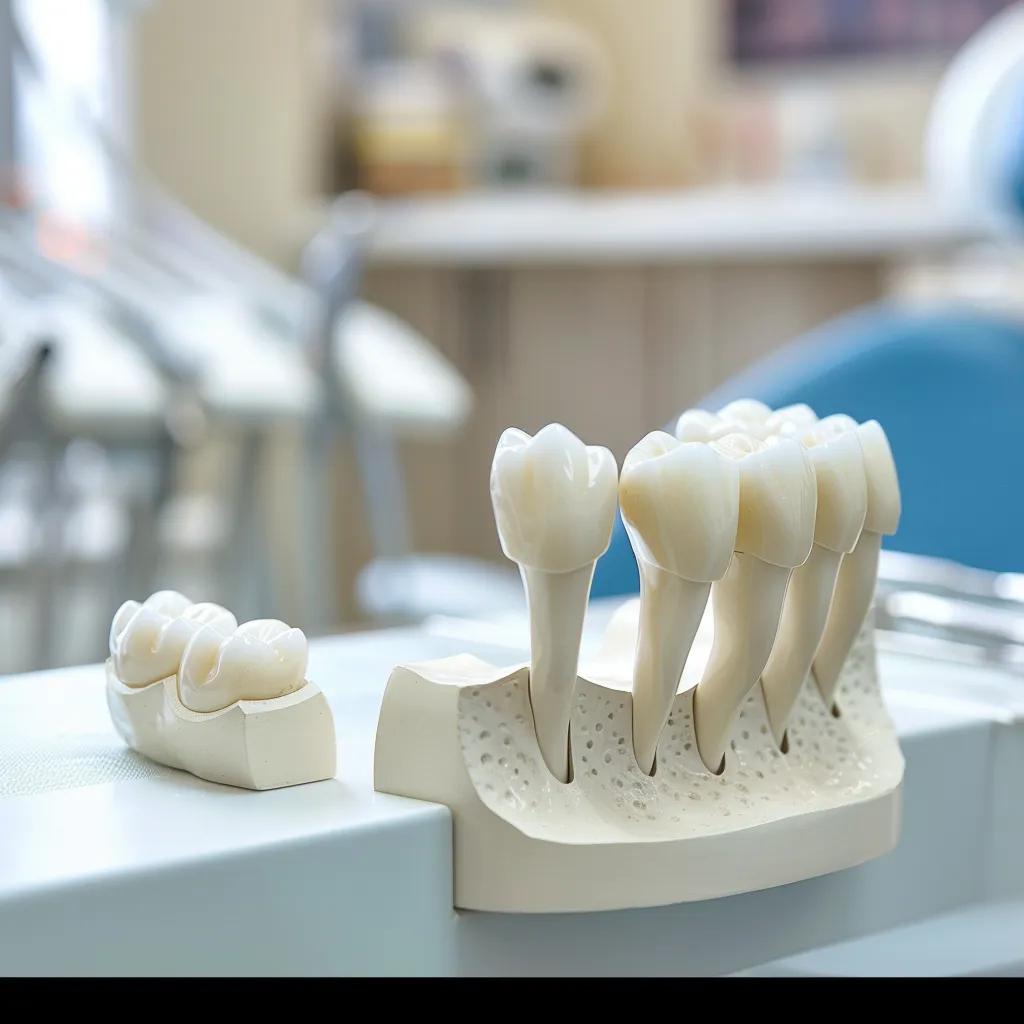
Dental implants consist of three principal parts: the implant fixture that is placed into the jawbone, an abutment that connects the fixture to a prosthetic crown, and the crown or prosthesis that restores chewing function and appearance. The implant fixture, commonly titanium or another biocompatible material, undergoes osseointegration—the biological process where bone cells attach to the implant surface—so the implant functions like a natural tooth root and transmits chewing forces into bone. This root replacement preserves alveolar bone by providing mechanical stimulation that slows resorption and supports adjacent structures, enhancing long-term facial support and prosthetic stability. Implants are used for single-tooth replacement, implant-supported bridges, and full-arch restorations, with success dependent on surgical planning, bone volume, and patient health. A clear grasp of implant mechanics leads naturally to comparing implants with removable alternatives in terms of comfort and daily function.
Research on Dental Implants and Osseointegration
Research on implants and osseointegration
What Are Dentures and What Types Are Available?
Dentures are removable prostheses that replace missing teeth and surrounding tissues, and they come in several varieties including full (complete) dentures that replace an entire arch, partial dentures that fill gaps between natural teeth, and immediate dentures placed at the time of extraction. Materials range from acrylic denture bases and denture teeth to more advanced implant-retained frameworks; implant-supported dentures use implants for anchorage while still allowing removal in many designs. Dentures restore appearance and basic chewing ability with a relatively low upfront cost, but they rely on mucosal support and can require adhesives, frequent relines, and adaptation periods for comfort and speech. Because dentures do not replace tooth roots, they do not prevent jawbone resorption; this effect influences long-term fit and the need for adjustments. Knowing denture types and limitations informs realistic expectations about maintenance and when implant stabilization might be preferable.
What Are Dental Bridges and How Do They Replace Missing Teeth?
Dental bridges are fixed restorations that replace one or more missing teeth by anchoring a pontic (the replacement tooth) to crowns on adjacent abutment teeth or to a supporting structure like an implant; common types include traditional bridges, Maryland bridges, and cantilever bridges. Traditional bridges require preparation of the adjacent teeth to receive crowns that support the pontic, which creates a fixed, non-removable solution that restores function and esthetics without replacing the root. Bridges are often indicated for one to three consecutive missing teeth when adjacent teeth are healthy enough to serve as abutments, offering immediate stability but sometimes at the cost of removing healthy tooth structure. Maintenance includes careful hygiene under and around the pontic and periodic evaluation of abutment tooth health, since bridge longevity depends on the integrity of supporting teeth. Understanding bridge mechanics helps when comparing fixed solutions versus root-replacing implants for preserving jawbone and adjacent tooth structure.
How Do Dental Implants, Dentures, and Bridges Compare in Stability and Comfort?
Implants, dentures, and bridges differ markedly in how they deliver stability and patient comfort, primarily because implants are anchored in bone while dentures rely on soft tissue support and bridges rely on adjacent teeth. Implants provide root-level anchorage that restores occlusal force distribution similar to natural teeth, creating the most stable chewing surface and the least disruption to speech and eating. Dentures can shift, cause sore spots, and require adhesive or relines to manage fit; implant-supported dentures reduce these problems by using implants for retention. Bridges provide fixed stability without movement but can feel bulkier and complicate flossing, and they transfer load to abutment teeth rather than to bone. Recognizing these trade-offs clarifies why many patients prioritize implants for function while selecting dentures for lower upfront cost or bridges when implants are not viable.
Why Are Dental Implants Considered the Most Stable Option?
Dental implants are considered the most stable option because the implant fixture osseointegrates with the jawbone, creating a rigid anchor that resists displacement under chewing forces and closely mimics a natural root. This mechanical anchorage allows occlusal forces to distribute through bone rather than solely through the soft tissues, reducing denture-like rocking or movement and preserving chewing efficiency and bite force. For full-arch restorations, multiple implants can support fixed prostheses or retention systems for overdentures, dramatically improving stability compared with conventional removable prostheses. High patient satisfaction and functional metrics are often reported for implant restorations due to their permanence and predictability when placed in healthy bone and with sound surgical planning. The implications for comfort and nutrition therefore point us to practical considerations and typical complaints associated with removable and tooth-supported options.
Bone Buttress Theory and Osseointegration of Dental Implants
The bone buttress theory: The effect of the mechanical loading of bone on the osseointegration of dental implants
What Comfort Challenges Do Dentures and Bridges Present?
Removable dentures commonly cause comfort problems such as sore spots, mucosal irritation, reduced chewing efficiency, and speech adaptation challenges because they rest on gum tissue and rely on suction or adhesives for retention. Over time, denture fit deteriorates due to alveolar bone resorption, worsening stability and increasing the need for relines, adjustments, or replacement to maintain comfort. Bridges, while fixed and stable, can create sensitivity in abutment teeth after preparation, pose hygiene challenges beneath pontics, and feel bulky to some patients until they adapt to the restoration’s contours. Practical mitigation strategies include precise tissue conditioning, relines, implant stabilization for dentures, and meticulous oral hygiene techniques for bridges; understanding these comfort issues informs the decision between removable and fixed approaches and leads directly into lifespan and durability comparisons.
What Are the Longevity and Durability Differences Between Implants, Dentures, and Bridges?
Longevity and durability vary significantly: implants are designed to be a long-term or permanent solution when well cared for, bridges often last one to two decades depending on abutment tooth health, and dentures commonly require relines or replacement every several years. Implant longevity depends on osseointegration success, peri-implant tissue health, and patient factors such as smoking or uncontrolled systemic disease; when maintained with good hygiene and regular checkups, implants can function for decades. Bridges are limited by the durability of the abutment teeth and cement interface; abutment decay or root failure often precipitate bridge replacement. Dentures endure wear of acrylic and teeth, changes to jawbone shape, and material fatigue, making periodic adjustments and replacements part of expected maintenance. These durability profiles inform cost-effectiveness calculations and patient choices between higher upfront investment and lower ongoing replacement expenses.
How Long Do Dental Implants Typically Last?
Dental implants typically demonstrate high long-term survival rates—often reported in clinical literature as above 90% over ten years when placed and maintained appropriately—making them a durable choice for many patients. Lifespan is influenced by implant design, surgical technique, bone quality, oral hygiene, and the presence of systemic conditions or smoking that increase risk of peri-implantitis and implant loss. Routine maintenance includes professional cleanings, home care to control plaque, and periodic radiographic evaluation to monitor bone levels and prosthetic fit; these steps substantially reduce complications and prolong implant function. While individual outcomes vary, implants are commonly described as a long-term investment that can often outlast bridges and dentures when biological and behavioral conditions are favorable. Understanding typical implant longevity leads us to examine expected lifespans of bridges and dentures for a full cost-value picture.
Osseointegration of Dental Implants: A Contemporary Review
Contemporary concepts in osseointegration of dental implants: a review
What Is the Expected Lifespan of Dentures and Bridges?
Conventional full or partial dentures typically require relining, adjustment, or replacement every five to eight years due to normal wear and progressive bone resorption that alters fit, while bridges commonly last about 10–15 years depending on abutment tooth health and oral hygiene practices. Denture teeth and acrylic wear, and changes in ridge anatomy reduce retention and function over time, making periodic maintenance unavoidable for comfort and chewing performance. Bridges depend on the structural integrity of adjacent abutment teeth—decay, fracture, or periodontal disease of those teeth are the usual failure modes necessitating bridge replacement. Recognizing these typical replacement frequencies and causes supports a long-term financial and clinical comparison that we will explore in the cost section.
Restoration
Typical Lifespan
Replacement Frequency
Long-term Cost Consideration
Dental Implants
Decades with proper care
Rare; component maintenance possible
Higher upfront cost offset by long service life
Dental Bridges
10–15 years
Replaced when abutments fail
Moderate upfront cost; dependent on adjacent tooth health
How Do Dental Implants, Dentures, and Bridges Affect Oral Health and Jawbone?
The physiological impact on the jawbone and adjacent teeth is a fundamental distinction among implants, dentures, and bridges, because implants replace the root and stimulate bone while dentures and bridges do not directly replace root function. Implants preserve alveolar bone by providing mechanical load to bone, maintaining ridge height and supporting facial structure; this helps prevent the progressive resorption that complicates denture fit and facial support. Bridges, while fixed and often esthetic, require preparation of adjacent teeth that can compromise their structure and potentially increase susceptibility to decay or periodontal problems if hygiene is inadequate. Removable dentures rest on soft tissue and accelerate ridge resorption over long periods, which in turn affects nutrition, denture stability, and the potential need for more complex restorative solutions later. Understanding these biological differences clarifies why implants are frequently recommended when the goal is long-term oral health preservation and why bone volume assessment is central to treatment planning.
How Do Dental Implants Help Prevent Bone Loss?
Dental implants prevent bone loss by serving as a root substitute that transmits functional load to the alveolar bone, triggering the remodeling stimulus bone needs to maintain density and volume through Wolff’s law mechanisms. When an implant osseointegrates, it forms a stable bone–to–implant interface that preserves peri–implant bone and helps maintain adjacent soft–tissue contours, which supports both function and esthetics. Preventing resorption reduces the risk of “facial collapse” and the progressive reduction in denture retention that plagues long-term denture wearers, and it preserves options for future restorative work. Clinically, this biological advantage underpins why implants are recommended for patients prioritizing long-term chewing function, facial support, and minimization of future reconstructive needs. With this bone–preserving benefit in mind, it’s important to contrast why dentures and many bridges cannot offer the same physiological protection.
Why Don’t Dentures and Bridges Preserve Jawbone Health?
Dentures and traditional tooth–supported bridges do not preserve jawbone health because neither replaces the tooth root or restores direct mechanical stimulation to the alveolar bone; dentures distribute forces across mucosa and bridges transmit load to adjacent teeth rather than bone. Over time, lack of root stimulation leads to progressive resorption of the alveolar ridge beneath removable prostheses, creating fit problems and altering facial support. Bridges require preparation of abutment teeth, which can accelerate structural compromise of those teeth if caries, endodontic problems, or periodontal disease develop, thereby reducing the overall oral–health capital that supports long–term restorations. Recognizing these limitations highlights why bone grafting and implant strategies are often part of comprehensive planning for durable, health–preserving tooth replacement.
What Are the Procedure Differences and Invasiveness Levels for Each Tooth Replacement Option?
Procedure complexity, invasiveness, and recovery time differ substantially between implants, dentures, and bridges; implants require surgery and healing time, dentures often involve non–surgical impressions and adjustments, and bridges require tooth preparation with a shorter surgical profile. Implant therapy generally begins with consultation and imaging, may include bone grafting if necessary, and involves surgical placement followed by a healing interval for osseointegration before final restoration—this process can take several months but results in a root–level restoration. Denture fabrication involves impressions, try–ins, and adjustments with minimal surgical need unless extractions are involved, and immediate dentures may be provided when extractions occur. Bridge treatment involves conservative surgical exposure only as needed, but requires multiple restorative appointments to prepare abutment teeth and to fabricate and cement the final prosthesis. Understanding these differing timelines and invasiveness levels helps patients plan for recovery time, temporary solutions, and sequencing of care.
What Does the Dental Implant Procedure Involve?
The dental implant procedure typically follows a sequence: thorough consultation and CBCT imaging for planning, surgical placement of the implant fixture into bone, a healing period for osseointegration that usually lasts several weeks to months, placement of an abutment, and then delivery of the final crown or prosthesis with follow–up maintenance visits. When bone volume is insufficient, bone grafting or sinus augmentation may be performed either before or at the time of implant placement to create a stable foundation; such grafting extends the timeline but improves long–term predictability. Local anesthesia and sedation options manage surgical discomfort, and most patients experience routine postoperative healing with short–term soreness, controlled by standard analgesia and care. Clear expectations for timelines and staging during the consultation are essential to avoid surprises and to coordinate interim prosthetic solutions if immediate esthetics are needed.
How Are Dentures and Bridges Fitted and Placed?
Denture fabrication typically begins with diagnostic impressions, bite registration, try–in appointments to verify fit and esthetics, and delivery followed by relines as tissues change; immediate dentures are processed to replace teeth on the day of extraction when needed. Bridge fabrication involves preparing adjacent teeth to receive crowns, taking impressions for laboratory fabrication, fitting a temporary restoration, and later cementing the final bridge once the fit and occlusion are confirmed. Neither dentures nor bridges usually require invasive bone surgery as implants do, but both demand careful occlusal adjustment and hygiene instruction—bridges require meticulous cleaning under the pontic using floss threaders or interdental brushes to prevent secondary decay of abutments. Understanding the non–surgical nature and the maintenance requirements of these restorations helps patients compare short–term convenience against long–term biological consequences described earlier.
Implant pathway: consultation, imaging, possible grafting, surgical placement, healing/osseointegration, abutment and final restoration.
Denture pathway: impressions, try–ins, delivery, adjustment, periodic relines or remakes.
How Do the Costs of Dental Implants, Dentures, and Bridges Compare in Dallas?
Costs vary by complexity, materials, and additional procedures such as bone grafting; in Dallas the market shows wide ranges depending on whether a single implant, implant–supported full arch, conventional bridge, or complete denture is required. Upfront costs typically reflect surgical time, laboratory fees for custom prosthetics, and any adjunctive procedures; implants carry higher initial investment but often lower long–term replacement frequency, while dentures have lower upfront cost but predictable recurring maintenance. Insurance coverage differs by plan and procedure category—some insurance plans contribute to replacement restorations or to the restorative portion of bridges and dentures but may limit surgical implant coverage—while many practices offer financing, discount plans, and free consultations to help patients evaluate realistic out–of–pocket expectations. For personalized pricing and to understand insurance and financing options available locally, it is advisable to schedule a Free Dental Consult with a Dallas provider who can assess your clinical needs and provide an individualized estimate. Get Patient to schedule an appointment for a Free Dental Consult.
What Are the Typical Upfront Costs for Each Option in Dallas?
Below is a clear, localized cost comparison intended as a starting point for Dallas patients; actual prices vary based on case complexity, necessary grafting, and prosthetic choices, so use these ranges as directional rather than definitive. Single–tooth implant restoration in the Dallas market typically involves implant placement plus a crown and may be in a higher price band than a traditional bridge for a single missing tooth; full–arch implant solutions (implant–supported fixed prostheses) represent the top tier of investment but offer durability and stability. Conventional full and partial dentures usually present the lowest upfront cost but should be budgeted for relines and future remakes. For the most accurate cost estimate and to explore financing or discount options, schedule a Free Dental Consult to receive a tailored plan and cost breakdown from a local clinician. Get Patient to schedule an appointment for a Free Dental Consult.
Restoration
Typical Upfront Cost Range (Dallas)
Potential Additional Costs
Financing/Insurance Notes
Single dental implant + crown
Higher per–tooth; varies by implant system and crown material
Bone grafting, sinus lift, temporary crown
May require financing; some plans cover restorative crown portion
Implant–supported denture / full arch
High (depends on number of implants and prosthesis type)
Multi–stage surgery, lab fee for full–arch prosthesis
Financing commonly available; ask about discount plans
Fixed dental bridge (3–unit)
Moderate (crown prep + lab bridge cost)
Possible endodontic or abutment treatment later
Often partially covered by restorative insurance
Full or partial denture
Lower upfront
Relines, repairs, periodic remakes
May be covered under prosthetic benefits
How Do Long-Term Value and Replacement Costs Affect Overall Affordability?
When evaluating affordability, compare not just upfront fees but lifetime costs including repairs, relines, replacement prostheses, and the non–monetary value of improved nutrition, comfort, and confidence that stable restorations provide. For example, dentures requiring replacement every five to eight years may accumulate comparable costs over decades to a single implant that functions for many years, especially when accounting for the quality–of–life benefits implants provide. Bridges may seem cost–effective initially but can become expensive if adjacent abutment teeth fail and require additional treatment. Many Dallas practices emphasize affordable pricing options, accept various insurance plans, and offer dental discount plans or financing to spread costs; for a personalized affordability analysis that incorporates your insurance and clinical needs, schedule a Free Dental Consult to review payment options and an itemized estimate. Get Patient to schedule an appointment for a Free Dental Consult.
Which Tooth Replacement Option Is Right for You? Factors to Consider for Dallas Patients Aged 40–60
Deciding between implants, dentures, and bridges involves evaluating bone density, the number and location of missing teeth, lifestyle priorities (such as desire for permanence versus lower upfront cost), and medical factors like smoking or diabetes that influence healing and implant success. Patients aged 40–60 commonly face early bone loss, wear patterns, and medical comorbidities that require individualized assessment: single missing teeth are often well served by implants if bone allows, multiple adjacent missing teeth may be treated with implant–supported bridges or partial dentures, and full–arch edentulism may be best solved with implant overdentures or fixed implant prostheses for longevity. A structured decision framework weighing clinical candidacy, functional goals, and budget helps match the right option to patient priorities. After reviewing these factors, the next subsection provides practical clinician recommendations and a checklist to bring to your consultation so you can translate preferences into a treatment plan.
How Do Bone Density, Number of Missing Teeth, and Lifestyle Influence Your Choice?
Bone density determines whether implants can be placed immediately or if grafting is required; adequate alveolar bone enables predictable osseointegration while deficient bone may be rebuilt with grafting to allow implant placement. The number and location of missing teeth direct restorative choices—single implants for isolated tooth loss, implant–supported bridges or partials for multiple adjacent losses, and implant–retained or implant–fixed solutions for full–arch needs. Lifestyle factors such as tobacco use, bruxism, and expectations for permanence influence clinical recommendations: smokers and patients with uncontrolled systemic conditions face higher implant failure risk and may need additional medical management before implant therapy. Considering these elements together produces a rational recommendation that an experienced clinician can refine during a clinical exam and imaging review.
Bring recent dental records and a list of current medical conditions and medications.
Note your chief functional concerns: chewing, speech, esthetics, or cost.
Identify whether you prefer removable vs. fixed solutions and your tolerance for surgery.
Be prepared to discuss smoking history and chronic health issues that may affect healing.
What Recommendations Do Dallas Dentists Offer for Your Specific Needs?
Clinicians typically recommend implants for single–tooth replacement when bone volume and systemic health permit, because implants preserve bone and deliver long–term function; bridges are recommended when adjacent teeth already require crowns or when implants are contraindicated. Dentures are often recommended for patients prioritizing minimal surgery or lower initial cost, with a plan to reassess fit and bone volume over time; implant–supported dentures are the recommended hybrid for patients seeking improved stability without a full fixed prosthesis. Dallas dentists will tailor these recommendations based on CBCT imaging, periodontal status, and the patient’s financial constraints, often presenting multiple staged options with financing or discount plans to make care accessible. For an individualized recommendation grounded in clinical exam and diagnostic imaging, Get Patient to schedule an appointment for a Free Dental Consult.
How Can You Schedule a Free Dental Consult in Dallas to Explore Your Tooth Replacement Options?
A Free Dental Consult typically includes a focused exam, discussion of goals and medical history, and diagnostic imaging as needed to plan appropriate options; this visit is the place to gather personalized costs, assess bone, and map a staged treatment pathway. During the consult, the dentist evaluates oral health, reviews imaging to measure bone volume and identify pathology, discusses candidate options (implant, bridge, denture), and outlines possible adjunctive procedures such as bone grafting or extractions. Scheduling steps generally include contacting the practice to request a consultation, preparing your medical and dental history for the visit, and bringing insurance information so the team can review coverage and financing options. Affordable Dentist Near Me of Dallas provides Free Dental Implant Consult and Free Denture Consultation offers, emphasizes affordable pricing and everyday low fees, accepts many insurance plans, and offers a dental discount plan to help patients explore options with transparent cost guidance; the clinic is located at 6301 Abrams Rd Ste 125, Dallas, Texas 75231.
What to Expect During Your Free Dental Implant or Denture Consultation?
During a Free Dental Consult you can expect a clinician to take your medical and dental history, perform an oral exam, and obtain necessary imaging—often including periapical films or CBCT scans—to evaluate bone and plan restoratively. The dentist will assess periodontal health, check adjacent teeth, and discuss occlusion and esthetic goals, then explain the realistic options for implants, bridges, or dentures including timelines, potential need for grafting, and aftercare requirements. The consult typically concludes with a discussion of estimated costs, financing options, and follow–up scheduling for definitive treatment planning; bringing insurance cards and a list of questions helps maximize the value of this appointment. This expectation setting ensures patients know the next steps and are prepared to make informed decisions based on clinical findings.
Why Choose Affordable Dentist Near Me of Dallas for Your Tooth Replacement?
Affordable Dentist Near Me of Dallas provides a full range of services including dental implants, dentures, and dental bridges and offers Free Dental Implant Consult and Free Denture Consultation to help patients make informed choices without initial financial commitment. The practice emphasizes affordable pricing options, everyday low fees, acceptance of various insurance plans, and availability of a dental discount plan to improve access to restorative care while maintaining focus on clinical quality. Located at 6301 Abrams Rd Ste 125, Dallas, Texas 75231 and staffed by clinicians including Dr. Mike Pham, the clinic offers convenient scheduling and emergency services, making it straightforward to move from consultation to treatment when you are ready. For patients seeking clarity on candidacy, financing, and a step–by–step plan, a Free Dental Consult provides the individualized assessment needed to choose the right tooth replacement.
Prepare: Gather medical history and insurance details before the consult.
Assess: Expect an exam, imaging, and candidacy discussion at the visit.
Plan: Receive an individualized recommendation and itemized estimate.
Decide: Use financing or discount options if needed to move forward.
Option
What the Consult Evaluates
Practical Outcome
Implant candidacy
Bone volume, medical history, periodontal health
Treatment plan with staging and cost estimate
Bridge suitability
Abutment tooth health and need for crown prep
Fixed restorative plan and hygiene guidance
Denture planning
Ridge anatomy, occlusion, esthetic goals
Immediate vs staged denture path and maintenance plan
Bring documentation: Insurance card and any recent dental records improve accuracy.
Ask about financing: Inquire about payment plans and discount options during your visit.
Request imaging: A CBCT or panoramic image clarifies bone needs for implants.
Clarify timelines: Discuss staging so you understand duration from consult to final restoration.