Teeth whitening can show visible results during an in-office visit, while at-home whitening produces a gradual change over the treatment course. The method, the cause of the discoloration, and your teeth’s condition determine how quickly you see a difference—not a universal countdown. Temporary sensitivity and a mismatch between natural teeth and existing crowns or fillings are important limits to discuss before starting.
TL;DR
How long does teeth whitening take to work? In-office treatment can show results during the visit; home whitening works gradually.
Compare teeth whitening methods by stain type, treatment directions, and sensitivity—not speed alone.
Affordable Dentist Near Me provides teeth whitening alongside general and restorative dental care.
Whitening changes natural tooth color; crowns, veneers, and fillings do not whiten the same way.
Why this matters
If you want a brighter smile for an event in 2026, your deadline should shape the conversation with your dentist—not push you to use whitening products more often than directed. A fast color change is not useful if you develop discomfort or discover that a visible crown no longer matches the surrounding teeth.
How long does teeth whitening take to show results?
In-office whitening can produce a visible change during the appointment; at-home whitening requires repeated use according to the product or dentist’s directions. First visible improvement and the completed result are different milestones. Seeing an early change does not mean you should stop a prescribed course or extend it without advice.
The American Dental Association’s MouthHealthy patient guidance distinguishes peroxide-based bleaching from products that mainly remove surface stains. That distinction matters when planning treatment in 2026: products described as whitening do not all change tooth color in the same way.
Method
When to assess progress
Best for
Main advantage
Main limitation
In-office whitening
During treatment and at the dentist’s recommended review
People who want supervised treatment and a faster visible change
The dental team applies treatment and monitors your response
Sensitivity can occur; the result depends on the discoloration
Dentist-directed home whitening
Across the prescribed course
People who want gradual whitening with dental guidance
Your dentist can tailor instructions to your teeth
You must follow the schedule consistently
Over-the-counter whitening strips or gels
Across the labeled treatment course
People whose teeth and gums are suitable for the chosen product
You can apply treatment at home
Fit, application, and suitability need attention
Whitening toothpaste
With regular use for surface-stain removal
People managing external staining
Fits into your brushing routine
Does not provide the same bleaching effect as peroxide treatment
Do not compare these methods by the first photograph alone. Differences in lighting, moisture, and camera settings can make a small change appear larger or smaller than it is.
First visible improvement is not the finished result
Whitening is a process, not simply a before-and-after moment. A treatment can begin changing tooth color before you reach the endpoint recommended by your dentist or the manufacturer.
Ask when to assess the result and what should prompt you to pause. The treatment instructions—not impatience—set the limit on how often and how long you use whitening gel.
In-office whitening: visible change during the visit
In-office whitening is best for people who want dental supervision and a faster visible change than a gradual home routine. The dentist can examine your teeth, discuss your target shade, and explain which stains are likely to respond before treatment begins.
The advantage is control. Your dental team can protect the surrounding soft tissues and monitor treatment instead of leaving you to decide whether discomfort is normal.
The limitation is that an appointment does not guarantee a particular shade. Deep discoloration, exposed roots, and existing dental work can affect the appearance of the finished smile. Temporary sensitivity can also occur.
For an event in 2026, tell the dentist the date before choosing treatment. Ask when the result should be reviewed and whether your smile includes restorations that could create a color mismatch. Do not make the event date a reason to accept treatment without an examination.
Dentist-directed home whitening: gradual progress
Dentist-directed home whitening is best for people who prefer a gradual process with professional instructions. The dentist determines whether whitening is appropriate and explains the application schedule, wear time, and response to sensitivity.
The advantage is guidance outside the office. You have a treatment plan rather than a self-selected combination of products.
The limitation is the need for consistent use. Skipping applications changes the treatment course, while wearing trays longer than directed increases exposure without establishing a better result.
Ask your dentist to explain the difference between expected sensitivity and symptoms that need attention. If the trays irritate your gums or the gel spreads beyond the intended area, contact the office rather than changing the fit yourself.
Follow the prescribed course; do not borrow another person’s schedule. Different products and individual dental conditions call for different instructions.
Whitening strips and gels: follow the labeled course
Over-the-counter strips and gels are best for people whose teeth and gums are suitable for the selected product and who can follow its directions. Peroxide-based products bleach natural teeth, but application and fit affect how the product contacts the tooth surface.
Their advantage is home use without an office application. Their limitation is that the package cannot examine your mouth, identify a cavity, or explain why a particular tooth is darker than the others.
For your 2026 whitening plan, read the instructions before starting—not after sensitivity appears. Check the labeled application time, treatment course, and warnings. Avoid combining strips, gels, and trays to speed up the result unless your dentist specifically directs that combination.
A darker tooth, a painful tooth, or a sudden color change deserves an examination. Whitening is not a substitute for identifying the cause.
Whitening toothpaste: surface stains, not the same bleaching effect
Whitening toothpaste is best for managing surface staining as part of regular brushing. Its role differs from a peroxide-based whitening course: removing stains from the outside of teeth is not the same as bleaching their underlying color.
The advantage is simplicity. You use toothpaste within your usual oral-care routine rather than adding a separate treatment session.
The limitation is the type of change you can expect. If your goal is to change natural tooth color rather than remove external stains, toothpaste alone does not serve the same purpose as bleaching.
Do not brush harder to make a whitening toothpaste work faster. Choose a suitable fluoride toothpaste, use a gentle technique, and ask your dentist whether surface staining is actually the reason your teeth look darker.
Why teeth whitening speed varies
Whitening timelines differ because the teeth, discoloration, and treatment are not identical. These factors explain why another person’s result is not a reliable deadline for your smile:
Treatment method: In-office application, dentist-directed trays, strips, and toothpaste have different purposes and instructions.
Cause of discoloration: External stains and discoloration within a tooth do not respond in the same way.
Starting tooth color: Your natural shade affects both the visible change and the result you consider satisfactory.
Consistency: Home treatment depends on following the recommended application schedule.
Sensitivity and gum irritation: Symptoms can require a pause or a change directed by your dentist.
Existing dental work: Crowns, veneers, and fillings retain their color instead of whitening alongside natural teeth.
A lack of immediate improvement is not a reason to increase exposure. First confirm that the product suits the problem and that you are using it correctly.
How should I plan whitening before an event?
Arrange a dental assessment before committing to a whitening deadline. You need to know whether your mouth is ready, which method fits your goal, and when the dentist wants you to judge the result.
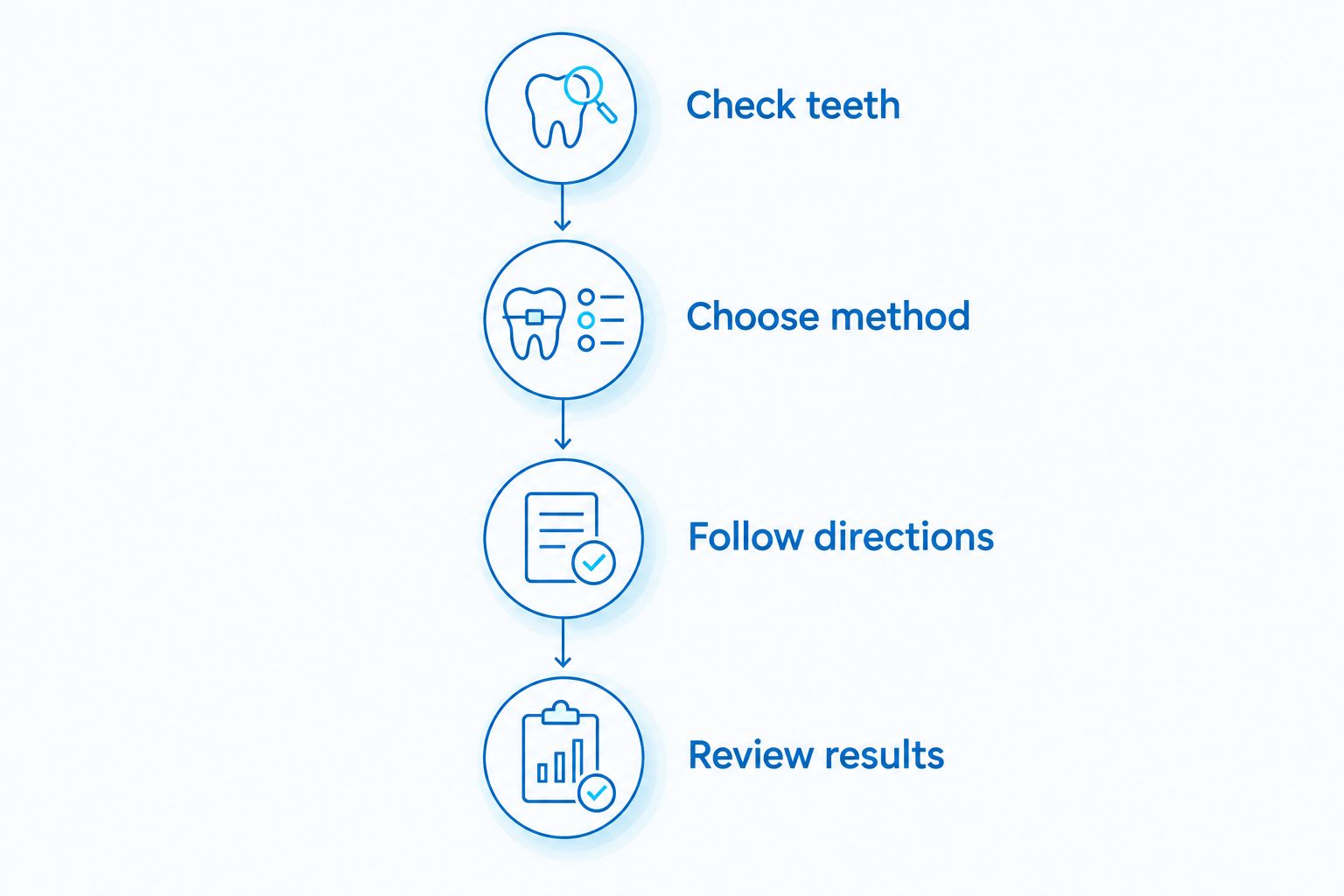
Use this sequence when planning a wedding, graduation, interview, or family photographs in 2026:
Check teeth. Explain any pain, sensitivity, gum bleeding, or tooth that has changed color. Tell the dentist about visible crowns, fillings, or veneers.
Choose method. Compare supervised treatment with a home course. Discuss your deadline without assuming the fastest option is the right option.
Follow directions. Use only the recommended amount and application schedule. Keep the instructions available throughout treatment.
Review results. Assess the change under consistent lighting and at the recommended point. Ask before extending treatment or adding another product.
This sequence keeps the focus on a suitable result rather than maximum exposure. It also gives you a clear next step if your teeth become uncomfortable or the color does not change as expected.
Check your teeth before choosing a whitening schedule.
Can I make teeth whitening work faster?
Do not shorten a whitening course by increasing the amount, frequency, or wear time beyond the instructions. More exposure can increase sensitivity and gum irritation without delivering the result you want.
Avoid stacking products because each seems mild on its own. Your dentist needs to know everything you are using, including strips, gels, trays, and whitening toothpaste.
If progress is disappointing, review the cause of the discoloration rather than adding treatment. A stain that does not respond to bleaching needs a different conversation, not an increasingly aggressive home routine.
Will whitening work on crowns, veneers, or fillings?
Whitening does not change the color of crowns, veneers, or fillings the way it changes natural teeth. Your surrounding teeth can become lighter while the restoration stays the same shade.
That mismatch matters most when the dental work is visible when you smile. Tell your dentist which restorations you have before choosing a target shade.
If you are planning both whitening and new cosmetic dental work in 2026, ask the dentist to coordinate the sequence. Choosing the restoration shade and choosing the whitening endpoint belong in the same treatment discussion.
When should I pause whitening and contact a dentist?
Pause treatment and seek dental advice if you develop significant sensitivity, gum irritation, or tooth pain. Do not try to overcome discomfort by changing the product concentration or adding a different whitening method.
Pain centered on a particular tooth deserves attention. A cavity, crack, exposed root, or another dental problem can require treatment rather than whitening.
Affordable Dentist Near Me is a fit for Texas families seeking teeth whitening alongside general and restorative dental care. The practice serves Fort Worth, Dallas, Houston, Waco, Grand Prairie, and Crowley; individual whitening suitability still requires a dental assessment.
You can contact Affordable Dentist Near Me to discuss your whitening goal and any sensitivity or existing dental work. Ask which method is appropriate, when to assess progress, and what symptoms should stop treatment.
Discuss your whitening timeline
Ask which whitening method fits your teeth, existing dental work, and event plans.
In-office whitening can show a visible change during the appointment, while home whitening works gradually over the recommended course. The method, cause of discoloration, and condition of your teeth determine when you see improvement.
Will my teeth look whiter after my first treatment?
Your teeth can look whiter after an in-office treatment, but a particular shade change is not guaranteed. Home treatments should be assessed across their recommended course rather than judged only after the first application.
Is in-office whitening better than whitening strips?
In-office whitening is better suited to people who want professional supervision and a faster visible change. Strips offer home application, but suitability, correct use, and the cause of staining still matter.
Should I keep whitening if my teeth become sensitive?
Pause whitening and ask your dentist for advice if sensitivity becomes significant or you develop tooth pain or gum irritation. Do not extend wear time or add another product to compensate for interrupted treatment.
Can whitening toothpaste give me the same result as bleaching?
Whitening toothpaste does not provide the same effect as peroxide-based bleaching. It primarily helps remove surface stains rather than changing the underlying color in the same way.
Will teeth whitening change the color of my crown?
Teeth whitening does not bleach a crown the way it bleaches natural teeth. Discuss visible crowns, veneers, and fillings before treatment because the surrounding teeth can lighten and create a mismatch.
Can Affordable Dentist Near Me help me choose a whitening method?
Affordable Dentist Near Me provides teeth whitening alongside general, cosmetic, and restorative dental services. Contact the practice to discuss your goals, dental condition, and appropriate treatment options.
One last thing
Do not use sensitivity as proof that whitening is working. Discomfort is a side effect to manage, not a target to reach.
Before starting, ask your dentist to record your starting shade and explain when to compare the result. That gives you a useful reference without relying on a bathroom mirror, a changed light bulb, or an edited photograph.