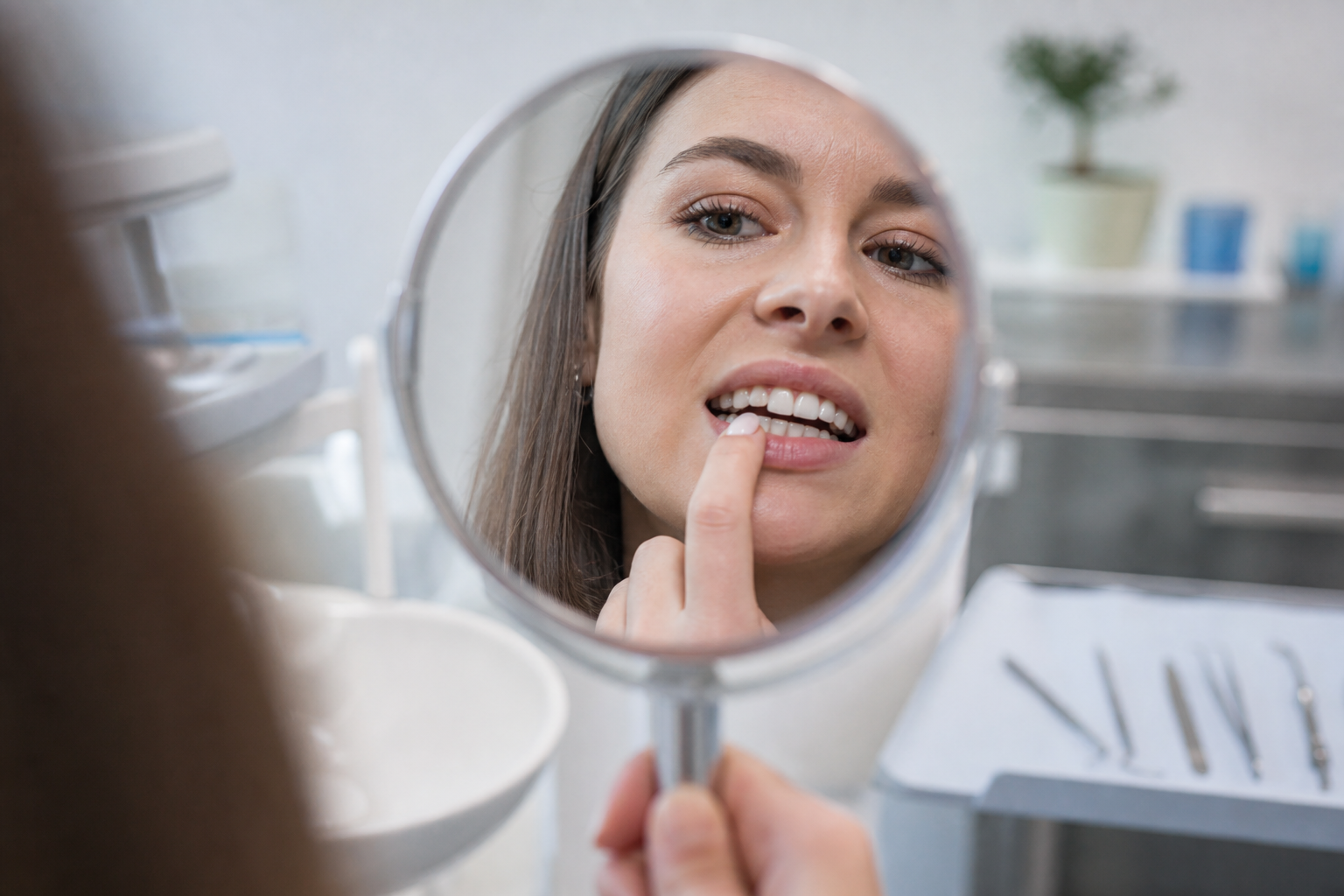
A chipped tooth will not heal on its own. Depending on how much enamel is lost, a dentist can fix it with dental bonding (one visit, minor chips), a veneer (cosmetic chips on front teeth), or a crown (large breaks or molar damage). Costs and visit counts vary by method, and same-day care is available at many Texas dental offices. This guide walks you through what to do in the next hour, how to judge the severity of your chip, and which repair option fits your situation in Texas.
What to Do Right Now: First Aid for a Chipped Tooth
Before you reach a dentist, a few simple steps can reduce pain, prevent further damage, and protect your tooth. These are temporary measures only, not a substitute for professional care. Call a dentist as soon as possible.
- Rinse with warm salt water. This clears debris and reduces the risk of infection around the chipped area.
- Apply sterile gauze to stop any bleeding. Hold gentle pressure for several minutes. If bleeding does not slow, that is a sign you need same-day care.
- Reduce swelling with a cold compress on your cheek. Apply it for 10 to 20 minutes at a time. Do not place ice directly on the tooth.
- Take over-the-counter pain medication for discomfort. Follow the package directions. Ibuprofen also helps with swelling.
- Cover sharp enamel edges with dental wax or sugarless gum. A jagged edge can cut your tongue, cheek, or lip. Dental wax from any pharmacy works well here.
- Store any broken tooth fragments in milk. Milk preserves the fragment better than water if a dentist might be able to reattach it.
A few things to avoid while you wait: do not bite down hard on the chipped side, and skip very hot, cold, or sweet foods and drinks, since exposed dentin is sensitive to all three. Do not try to file down a sharp edge yourself. A painless chip is not necessarily harmless. Some fractures reach the inner pulp without causing immediate pain.
If you have a dental emergency such as severe pain, swelling, or a tooth broken at the gum line, seek care the same day rather than waiting for a scheduled appointment.
Is Your Chipped Tooth a Dental Emergency or a Cosmetic Fix?
Not every chip needs same-day attention, but some do. Knowing the difference helps you decide how fast to act.
Minor chips involve only the outer enamel layer. The tooth looks uneven or feels rough, but there is no pain, no bleeding from the tooth itself, and no sensitivity to temperature. These are cosmetic in nature. You can schedule a routine visit within a few days without risk.
Moderate chips remove enough enamel to expose the dentin, the softer layer beneath. You may notice sharp sensitivity to cold drinks or sweet foods. The tooth is not in immediate danger, but dentin exposure makes decay more likely the longer you wait. Book an appointment within 24 to 48 hours.
Severe fractures are a different situation. Signs that your chip is a dental emergency include:
- Visible pink or red tissue inside the tooth, which indicates pulp exposure
- Persistent, throbbing pain that does not ease with over-the-counter medication
- A tooth broken at or below the gum line
- Swelling in the jaw or gum near the chip
- A loose tooth after the break
Pulp exposure means bacteria can reach the nerve quickly. Without same-day treatment, infection can spread and a root canal or extraction may become necessary. If you see any of those signs, treat it as an emergency.
One question that comes up often: is it normal for a wisdom tooth to chip off without causing pain? It can be. Wisdom teeth are harder to clean, which makes them more prone to decay and hidden fractures. Because they sit far back in the mouth, the nerve may not register pain right away. A painless chip on a wisdom tooth still warrants an exam, since decay underneath the chip can progress silently.
The NIH reports that tooth fractures affect as many as 58.6% of individuals with permanent teeth during their lifetime. That figure underscores how common chips are across all age groups, not just older adults. Whether your chip feels urgent or minor, a dentist is the only person who can confirm what is actually happening beneath the surface.
How Do Dentists Fix a Chipped Front Tooth? Repair Options Explained
The right repair depends on how much tooth structure remains, where the chip is, and what result you want. Here are the four main options your dentist will consider.
Dental Bonding for a Chipped Tooth
Dental bonding is the most common fix for minor to moderate chips, especially on front teeth. The dentist applies a tooth-colored composite resin directly to the damaged area, shapes it to match the surrounding tooth, and hardens it with a curing light. The whole process typically takes 30 to 60 minutes and requires no anesthetic unless the chip is close to the nerve.
Bonding works well when the chip is small and the remaining tooth structure is solid. It is the fastest and most affordable path for a chipped front tooth. The trade-off is durability: composite resin is not as hard as natural enamel or porcelain, so it can chip again or stain over time. Most bonding lasts five to ten years with good care before it needs touching up.
Tooth Filler (Composite Fill)
A tooth filler uses the same composite material as bonding, but fills a cavity-like void rather than rebuilding a broken edge. The dentist cleans the area, removes any decay, and fills the space with composite that matches your natural tooth color. It is completed in a single visit. For small chips on back teeth where cosmetics matter less, a composite fill is often the most practical choice.
Porcelain Veneers
A dental veneer is a thin porcelain shell bonded to the front surface of the tooth. Veneers are best suited for chips on front teeth where appearance is the priority, especially when the chip is large enough that bonding would look uneven or wear quickly. The process usually takes two visits: one to prepare the tooth and take impressions, and a second to bond the finished veneer in place. Porcelain resists staining better than composite and typically lasts 10 to 20 years.
Veneers are a cosmetic solution. They work best when the underlying tooth is structurally sound. If the chip has weakened the tooth significantly, a crown is the stronger choice.
Dental Crowns
A dental crown caps the entire visible tooth. Dentists recommend crowns when a chip removes a large portion of the tooth, when the tooth has a crack that extends toward the root, or when a back molar is broken and needs to withstand chewing pressure. The process takes two visits in most cases: the first to shape the tooth and place a temporary crown, the second to fit the permanent one. Same-day crowns using in-office milling technology are available at some practices.
Crowns are the most protective option for a severely damaged tooth. If the chip has also raised questions about replacing the tooth entirely, the guide to tooth replacement options covers implants, bridges, and other restorative paths.
The table below summarizes how these options compare at a glance.
| Repair option |
Best for |
Visits needed |
Durability |
| Dental bonding |
Minor to moderate chips, front teeth |
1 |
5 to 10 years |
| Porcelain veneer |
Cosmetic chips on front teeth, larger surface damage |
2 |
10 to 20 years |
| Dental crown |
Large breaks, cracked molars, structural damage |
2 (or 1 with same-day milling) |
15 to 30 years |
| Tooth filler (composite fill) |
Small chips with decay, back teeth |
1 |
5 to 7 years |
Which Repair Option Lasts Longer: Composite Bonding or Porcelain?
Composite bonding and porcelain restorations both fix chipped teeth, but they behave differently over time. Understanding that gap in longevity helps you weigh a lower upfront cost against the likelihood of returning for repairs.
Composite bonding uses resin that bonds directly to your enamel. It is softer than porcelain, which means it absorbs more wear from chewing, grinding, and acidic foods. Front teeth repaired with bonding typically hold up for five to ten years before the resin chips, stains, or loses its polish. Back teeth face heavier biting forces, so bonding on molars tends to wear faster. The good news is that repairs are simple: a dentist can add more composite in a single visit without removing the original work.
Porcelain veneers and crowns are harder and more stain-resistant. A veneer bonded to a front tooth can last 10 to 20 years with normal care. A porcelain or ceramic crown on a molar, where forces are greatest, commonly lasts 15 to 30 years. Porcelain does not stain from coffee or tea the way composite does, and it holds its surface gloss longer. The trade-off is that porcelain cannot be patched if it chips. A damaged veneer or crown usually needs full replacement.
| Factor |
Composite bonding |
Porcelain veneer or crown |
| Typical lifespan |
5 to 10 years |
10 to 30 years |
| Stain resistance |
Moderate |
High |
| Repairability |
Easy, same visit |
Requires full replacement |
| Best location |
Front teeth, minor chips |
Front or back, larger damage |
| Maintenance |
Avoid hard foods, biting nails |
Same, plus avoid grinding |
For both options, daily brushing, flossing, and regular cleanings extend the life of the repair. If you grind your teeth at night, a night guard protects bonding and porcelain alike. Your dentist can tell you which material makes more sense given your bite, chip size, and budget.
How Much Does It Cost to Fix a Chipped Tooth in Texas?
Chipped tooth repair costs vary widely depending on which method your dentist recommends and how much tooth structure needs to be rebuilt. No single price covers every situation, but knowing what drives the differences helps you plan before your appointment.
Dental bonding is the most affordable option. It uses less material, takes one visit, and requires no lab work. A single tooth costs less than a veneer or crown in almost every case. Larger chips that need more resin and more shaping time push the price up.
Composite tooth fillers fall in a similar range to bonding. The cost depends on how many surfaces of the tooth are involved and whether any decay needs to be removed first.
Porcelain veneers cost more because they are custom-made in a dental lab between your two visits. Front teeth in visible positions drive demand for high-quality materials, which adds to the fee. The chipped front tooth repair cost for a veneer is typically several times higher than bonding for the same tooth.
Dental crowns sit at the higher end of the range. They cover the entire tooth and require more preparation time, more material, and often two appointments. Same-day crowns milled in-office can reduce the total visit time but do not always reduce the fee.
Several factors shift the final number. The material matters: all-porcelain costs more than porcelain-fused-to-metal for both crowns and veneers. Whether you have dental insurance, and what your plan covers for restorative versus cosmetic work, changes your out-of-pocket amount significantly.
If cost is a concern, ask for a written treatment plan with exact fees before any work begins. Many Texas dental offices, including those that accept Medicaid and CHIP, offer financing options that spread payments over time so you do not have to delay care.
My Tooth Chipped Off for No Reason, What Causes That?
A tooth that chips without an obvious cause usually has an underlying reason, even if nothing was visible beforehand.
Enamel erosion is one of the most common culprits. Acidic foods and drinks, acid reflux, and frequent vomiting gradually thin the enamel until a tooth becomes brittle enough to crack under normal biting pressure.
Teeth grinding (bruxism) wears down enamel over months and years. Many people grind at night without knowing it. The NIH reports that tooth fractures affect as many as 58.6% of individuals with permanent teeth during their lifetime, and grinding is a significant contributor to that figure.
Hidden decay weakens a tooth from the inside. A cavity that has not been treated hollows out the structure beneath the surface, leaving a shell that can fracture without warning.
Age-related wear also plays a role. A study in the Journal of Endodontics found that nearly two-thirds of patients with cracked teeth were aged 50 or older, which points to cumulative wear as a major factor rather than a single traumatic event.
After your chip is repaired, ask your dentist whether grinding, enamel erosion, or hidden decay caused it, and what preventive steps apply to your situation. A night guard, dietary changes, or more frequent cleanings can each reduce the risk of a repeat fracture.
Where Can Texans Get a Chipped Tooth Fixed Quickly?
Affordable Dentist Near Me (ADNM) is an independent, Texas-owned dental group with 17 offices across the Dallas, Fort Worth Metroplex, East Texas, and Central Texas. Same-day appointments are available for new patients and dental emergencies.
FAQs
Does a chipped tooth heal on its own?
No. Tooth enamel has no living cells, so it cannot regenerate. A chip will not close or smooth over on its own. Small chips may not cause pain, but the exposed area is vulnerable to decay, sensitivity, and further fracture. Even a minor chip should be evaluated by a dentist so you know whether bonding, a filling, or a more involved repair is the right next step.
Can I eat after chipped tooth repair?
It depends on the repair. After dental bonding or a composite fill, the resin is hardened in the chair, so you can eat fairly soon, but dentists typically advise avoiding hard, sticky, or very hot foods for at least 24 hours. After a crown placement, wait until any anesthetic wears off before eating so you do not accidentally bite your cheek. Your dentist will give you specific instructions based on what was done.
My 2-year-old has a chipped front tooth, should I be worried?
A chipped baby tooth warrants a call to a pediatric dentist, even if your child is not in pain. The main concerns are a sharp edge that can cut the tongue or lip, pulp exposure if the chip is deep, and whether the underlying permanent tooth bud could be affected. Most small chips on baby teeth are monitored rather than treated aggressively, but a dentist needs to examine it to rule out anything more serious.
Is it normal for a wisdom tooth to chip off without causing pain?
Yes, it can happen. Wisdom teeth sit far back in the mouth and are difficult to clean, making them prone to decay and hidden fractures. Because of their position, the nerve may not register pain immediately even when a chip exposes dentin or pulp. A painless chip on a wisdom tooth still needs an exam. Decay beneath the surface can progress silently, and a dentist can tell you whether a repair or extraction makes more sense.
Can a dentist reattach a broken tooth fragment?
Sometimes. If the fragment is large, clean, and stored properly, a dentist may be able to bond it back in place. Store the piece in milk rather than water or a dry container, since milk preserves the cells and structure best. Reattachment is not always possible or durable, so the dentist will assess whether bonding the original fragment or using fresh composite resin is the better repair. Bring the fragment to your appointment regardless, and let the dentist decide.
Conclusion
A chipped tooth will not fix itself, but the repair is usually straightforward once you know the severity. Minor chips on front teeth often need just one visit for bonding or a composite fill. Larger breaks, cracks near the root, or damaged molars call for a crown. Porcelain lasts longer than composite but costs more upfront, and the right choice depends on chip size, tooth location, and your budget.
Your next step is to get an exam so a dentist can tell you exactly what you are dealing with. If you are in Texas, look for an office that offers a free new-patient exam and a written fee estimate before any work starts. That way you know the cost before you commit, and you can ask about financing if you need it.