By Dentist in Denton – Dentures and Dental Implants Editorial Team · Updated 2026-08-25
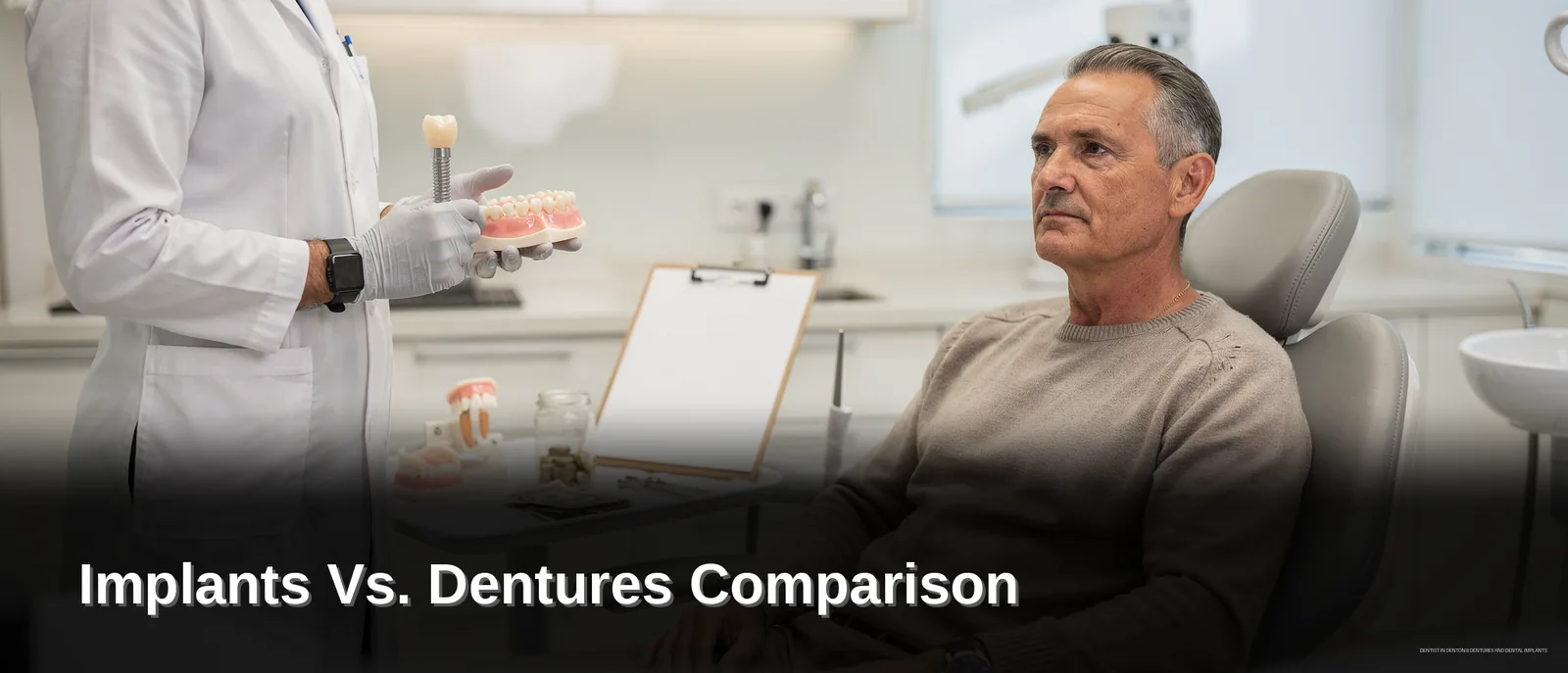
For Implants vs. Dentures Comparison, dental implants at Dentist in Denton fuse with the jawbone, offering long-term durability, improved chewing strength, and better oral health. Traditional dentures cost less upfront and deliver a faster fix. Implant-supported dentures combine both benefits: stability plus affordability. Budget, bone health, and lifestyle needs determine which tooth-replacement option fits best.
Key Takeaways
Dental implants provide superior long-term durability and comfort compared to traditional dentures for tooth replacement.
Dentures offer a more affordable initial solution, making them accessible for patients with budget constraints.
Implants preserve jawbone health and prevent bone deterioration that occurs with denture wear over time.
Dentures require daily removal and maintenance, while implants function like natural teeth with minimal upkeep.
What do implants and dentures actually cost?
Cost represents one of the most significant differences in any Implants vs. Dentures Comparison. Dentures are generally more affordable upfront than implants, making them a popular choice for those on a budget. Dental implants, by contrast, involve surgical placement and a multi-step process that typically spans several months, driving the total investment substantially higher. The final price for either option depends on the number of teeth replaced, the need for preparatory procedures, and the materials selected.
How does the Denton practice help patients manage these costs?
The Denton office addresses affordability through several structured programs. The practice provides transparent treatment plans, so clients see the full scope of costs before committing to any procedure. Flexible financing options allow patients to spread payments over time, reducing the immediate financial burden. For individuals without dental insurance, the practice offers a Dental Discount Plan, which provides reduced rates on services.
Does the clinic accept insurance for implant or denture treatment?
Yes. The clinic accepts most major insurance plans, including Medicaid, to help make care more affordable. Patients with coverage can apply their benefits toward restorative treatments, potentially lowering out-of-pocket expenses for both dentures and implants. The administrative team assists with verifying benefits and explaining coverage details before treatment begins.
Cost Factor
Dentures
Dental Implants
Upfront expense
Generally lower
Higher due to surgery and components
Insurance coverage
Accepted by most major plans, including Medicaid
Accepted by most major plans, including Medicaid
Payment assistance
Flexible financing and Dental Discount Plan available
Flexible financing and Dental Discount Plan available
How long do implants last compared to dentures?
Dental implants typically last many years, often a lifetime with proper care. Traditional dentures require replacement every 5 to 10 years. This longevity difference represents one of the most significant factors in the Implants vs. Dentures Comparison. Implants fuse directly with the jawbone, creating a permanent foundation that resists the bone loss that causes dentures to loosen over time. Dentures, by contrast, rest on the gums and accelerate bone resorption, leading to poor fit and the need for relines or replacements.
What makes implants more durable than dentures?
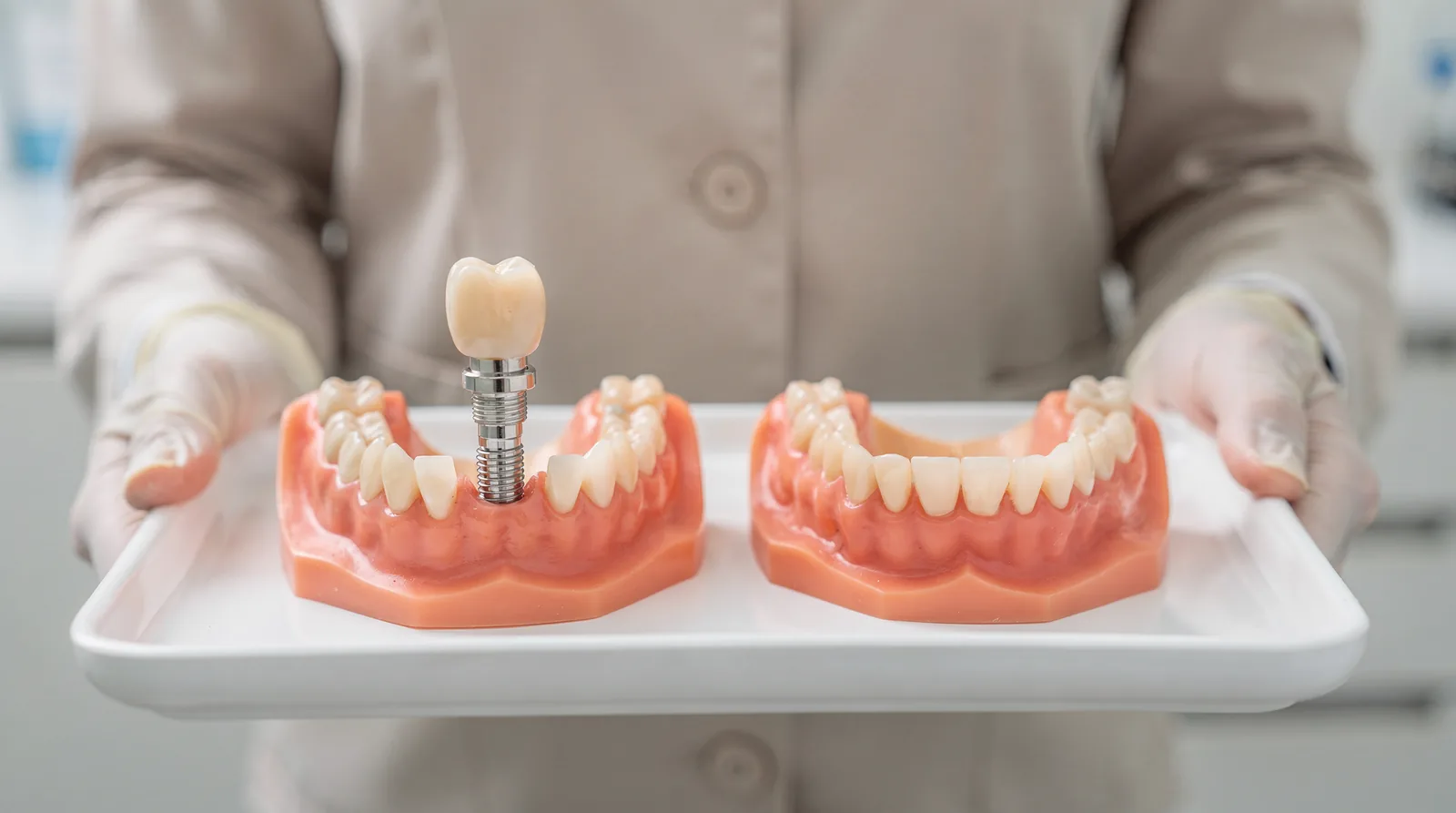
Dental implants provide a natural-looking and natural-feeling replacement for a missing tooth that lasts for many years. The titanium post integrates with the jawbone through osseointegration, mimicking a natural tooth root. This biological bond preserves bone density and facial structure. Traditional dentures lack this root replacement. The jawbone beneath them shrinks gradually, causing the denture to slip and require periodic adjustments.
Can implant-supported dentures last longer than standard dentures?
Patients who seek long-term durability, comfort, and improved oral health find that dental implant-supported dentures offer a superior solution. These hybrid restorations combine the stability of implants with the affordability of dentures. The on-site dental lab at the Denton practice accelerates turnaround for dentures, crowns, and custom appliances, often enabling same-day solutions for patients choosing this option. Implant-supported dentures typically last 15 to 20 years before the denture portion needs replacement. The implants themselves remain functional for decades.
Restoration Type
Typical Lifespan
Replacement Frequency
Traditional dentures
5–10 years
Every 5–10 years
Implant-supported dentures
15–20 years (denture portion)
Implants last decades
Single dental implants
20+ years to lifetime
Crown replacement every 10–15 years
Which option feels more natural and stable?
Dental implants provide a natural-looking and natural-feeling replacement for a missing tooth. The implant post fuses directly with the jawbone, creating a stable foundation that mimics a natural tooth root. This integration allows the replacement tooth to feel solid and secure during eating and speaking. Traditional dentures, by contrast, rest on top of the gums and rely on suction or adhesive for hold, which can feel less stable over time.
How does stability affect daily function?
Dentures and implants ultimately serve the same purposes: they help patients chew foods, support facial muscles, and improve speech. However, the stability difference between the two options changes how comfortably a person performs these daily tasks. An implant-supported tooth stays firmly in place, allowing a person to bite into an apple or chew steak without worrying about movement. A denture may shift or click during eating, especially with sticky or hard foods, which can reduce confidence at the dinner table.
What role does the on-site lab play in fit?
The practice offers custom full and partial dentures supported by an on-site lab for a better fit. A precisely fitted denture base reduces slipping and improves comfort. It still cannot match the bone-anchored stability of an implant. Patients who prioritize a secure, worry-free feel during everyday activities often find implants the more natural choice. Those seeking a non-surgical, more affordable option can still achieve a comfortable fit through custom-crafted dentures made in the same building.
Feature
Dental Implants
Traditional Dentures
Feel in the mouth
Like a natural tooth root fused to bone
Rest on gum tissue
Stability during eating
Secure and stable
May shift or click
Bone preservation
Stimulates jawbone
Does not prevent bone loss
Who is a good candidate for each option?
Traditional dentures suit a broader range of patients, including those who may not qualify for surgery. Individuals with significant bone loss often need bone grafting before implant placement, a procedure that extends the treatment timeline. For patients who prefer a non-surgical solution or cannot undergo oral surgery, dentures provide a viable path to restoring function and appearance. The practice accepts walk-ins and accommodates same-day emergencies, making denture fittings accessible for those needing immediate care.
What health conditions disqualify a patient from implants?
Certain health conditions make implant surgery unsuitable. Uncontrolled diabetes, autoimmune disorders, or conditions that impair healing increase surgical risks. Patients undergoing radiation therapy to the jaw or those who smoke heavily may also face complications. For these individuals, traditional dentures offer a safer alternative without surgical intervention.
How does sedation dentistry help nervous candidates?
The practice offers sedation dentistry to help patients feel comfortable during procedures. This option benefits individuals who experience dental anxiety or require extensive treatment. Sedation allows candidates who might otherwise avoid care to receive necessary tooth replacement, whether dentures or implants, in a relaxed state.
How do I choose between implants and dentures?
Choosing between dentures vs implants depends on several factors, including budget, oral health, lifestyle, and personal preferences. The right choice varies for each patient because these two solutions serve different needs and timelines. A free consultation at the Denton practice helps patients explore their options and make an informed decision.
What factors matter most in the decision?
[Implants vs. Dentures Comparison](https://affordabledentistnearme.com/evaluating-dentures-against-implants-for-dental-solutions/) starts with two primary questions: upfront cost versus long-term value. If affordability and a quick solution are primary concerns, traditional dentures may be the better option. Dentures require no surgery and can be fabricated in weeks rather than months. However, patients who seek long-term durability, comfort, and improved oral health often find dental implants the ideal choice. Implants preserve jawbone density and feel more natural, but the process takes longer and costs more initially.
How does the Denton practice help patients decide?
The clinic, led by Dr. Charles Kim, DDS, maintains a 4.9-star rating across numerous Google reviews. This reputation reflects the team’s commitment to transparent guidance. During a free consultation, patients receive a clear breakdown of each option’s timeline, cost, and expected outcomes. The practice accepts most major insurance plans, including Medicaid, and offers flexible financing and a Dental Discount Plan for uninsured patients.
Factor
Traditional Dentures
Dental Implants
Upfront cost
Lower
Higher
Treatment timeline
Weeks
6-12 months
Bone preservation
No
Yes
Long-term durability
Moderate (replace every 5-10 years)
20+ years with care
The Denton team evaluates each patient’s oral health, bone density, and lifestyle to recommend the most suitable path. Patients with significant bone loss may need grafting before implants, which extends the timeline. Those prioritizing speed and lower initial cost often choose dentures first, then upgrade to implants later.
FAQ
Which option costs less upfront?
Dentures cost less upfront than dental implants, making them accessible for patients on a budget. Implants involve surgical placement and a multi-step process that spans several months, driving the total investment higher.
How long does each option last?
Dental implants last many years, often a lifetime with proper care. Traditional dentures require replacement every 5 to 10 years. Implants fuse with the jawbone, resisting the bone loss that loosens dentures.
Does Dentist in Denton offer financing for these treatments?
Dentist in Denton provides transparent treatment plans, flexible financing, and a Dental Discount Plan for uninsured patients. The practice also accepts most major insurance plans, including Medicaid, for dentures and implants.
Conclusion
In closing, the choice between implants and dentures depends on your lifestyle, budget, and long-term oral health goals. Implants offer permanence and natural function, while dentures provide an accessible, non-surgical solution. Both restore your smile and confidence when properly maintained. The Denton team works with you to evaluate your unique situation. Recommend the approach that best fits your needs, ensuring you receive personalized care every step of the way.