Your emergency dentist cost without insurance depends on the examination, any necessary X-rays, and the treatment your tooth needs; there is no single visit total that fits every dental emergency. An examination quote does not necessarily include a filling, root canal, extraction, or later crown. For a 2026 visit, ask for a written, itemized estimate that separates diagnosis, immediate treatment, and follow-up care before you authorize treatment.
TL;DR
Emergency dentist cost without insurance depends on diagnosis and treatment, not just the appointment fee.
Ask whether the emergency exam, dental X-rays, and treatment are quoted separately.
Compare complete treatment plans, including follow-up care, rather than examination fees alone.
Affordable Dentist Near Me serves Texas families seeking general and restorative dental care.
Trouble breathing or swallowing with dental swelling requires immediate emergency medical care.
Why this matters
When a tooth hurts, an advertised visit fee can look like the answer to your budget problem. But finding the cause and treating it are different services. The useful number is the total for the recommended treatment—not just the fee to examine your tooth.
Affordable Dentist Near Me provides general, cosmetic, and restorative dental services for families in Fort Worth, Dallas, Houston, Waco, Grand Prairie, and Crowley. Contact the office directly to discuss your symptoms and request an estimate; a general description of services does not establish what your particular visit will include.
How much does an emergency dentist visit cost without insurance?
An uninsured emergency dental visit has a diagnosis portion and, when treatment is needed, a treatment portion. Your total depends on what the dentist finds and what you agree to have done. Ask for the examination charge separately from the complete treatment estimate.
Use this breakdown when requesting a 2026 estimate. Each line should be marked as included, separately charged, or unnecessary for your situation.
Part of the visit
What it covers
What to ask
Emergency examination
Assessment of the painful, injured, or damaged area
Does the quoted visit fee cover the examination only?
Necessary X-rays
Images used to investigate the problem
Are images included, and which are needed?
Immediate treatment
The procedure recommended to address the diagnosed problem
What treatment is included in today's estimate?
Medicines
Prescribed medicine when clinically appropriate
Will a pharmacy purchase be separate?
Final repair
A permanent restoration when needed after initial treatment
Does the estimate include the final repair?
Follow-up care
Review or additional treatment recommended by the dentist
Which return visits are included?
An estimate before examination is not the same as a confirmed treatment plan. Describe your symptoms when you call, then ask the dentist to explain any changes after examining your tooth. You should understand both the reason for the change and its effect on your total.
Examination only: useful for diagnosis, not a complete repair
An emergency examination helps identify why your tooth hurts or what an injury has damaged. The dentist assesses the area and determines whether imaging or treatment is needed. An examination alone does not restore a broken tooth or remove the source of every toothache.
Best for: Establishing a diagnosis before choosing treatment. The benefit is a clearer decision; the limitation is that treatment can require a separate charge or appointment.
Ask what the examination includes before you attend. Afterward, request an explanation of the diagnosis in plain language, including whether the tooth needs immediate treatment and which recommended work can safely wait.
Tooth repair: match the procedure to the damage
A damaged tooth does not automatically need the same repair as another damaged tooth. A small chip, a lost filling, and a deeply cracked tooth involve different decisions. The dentist needs to assess how much healthy tooth remains and whether the inside of the tooth is affected.
Best for: Repairing a tooth the dentist considers restorable. The benefit is preserving usable tooth structure; the limitation is that a repair does not address every cause of pain or infection.
Ask whether the proposed repair is temporary or final. If it is temporary, request the next step in writing so you do not mistake short-term protection for completed treatment.
Root canal treatment: include the final restoration
Root canal treatment addresses damaged or infected tissue inside a tooth that can be saved. The treatment plan can also involve restoring and protecting the tooth afterward. That final restoration deserves its own place in your estimate.
Best for: Keeping a tooth when the dentist determines root canal treatment is appropriate. The benefit is retaining the tooth; the limitation is that the initial procedure does not always complete the entire restoration plan.
Ask whether the estimate includes the root canal, any buildup needed to support the repair, and the final restoration. Also ask whether another clinician will perform any part of the treatment. A referral can mean a separate estimate and bill.
Extraction: include the consequences of removing the tooth
Extraction removes a tooth that the dentist recommends taking out. The procedure depends on the tooth's condition and position, including whether surgical treatment is necessary. Do not assume every extraction involves the same work.
Best for: A tooth the dentist determines should be removed. Extraction removes the tooth, but it also leaves a gap; replacing that tooth is a separate treatment decision.
Ask what the extraction estimate includes and what follow-up care is recommended. Discuss replacement when relevant, but keep immediate treatment and elective future work separate so you can see each decision clearly.
How the treatment choices differ
These treatments are not interchangeable ways to purchase the same result. Your diagnosis determines which options are clinically appropriate.
Option
Best for
Main benefit
Main limitation
Examination
Identifying the cause of symptoms
Supports an informed treatment decision
Does not itself repair the problem
Filling or other repair
A restorable area of damage
Repairs suitable tooth damage
Cannot treat every deep crack or infection
Root canal and restoration
A tooth that needs internal treatment and can be saved
Retains the tooth
Requires a complete restoration plan
Extraction
A tooth recommended for removal
Removes the affected tooth
Leaves a gap and raises a separate replacement decision
Choose among medically appropriate options, not among procedure names alone. Ask the dentist why each option applies—or does not apply—to your tooth.
Why emergency dental costs vary
Your emergency dental estimate reflects the work required, not simply the fact that the visit is urgent. These factors explain why two people with tooth pain can receive different treatment plans:
Diagnosis: A damaged filling and an infection inside a tooth require different care.
Imaging: The dentist selects images based on what needs investigation.
Treatment complexity: A straightforward repair differs from a procedure involving more extensive damage.
Final restoration: Initial treatment and a permanent repair are not always the same service.
Referrals: Treatment performed by another clinician can generate a separate estimate.
Follow-up needs: Additional visits or procedures change the scope of the complete plan.
For a 2026 estimate, compare the same scope of care between offices. An examination-only quote and a quote that includes treatment are not directly comparable. Ask each office to identify exactly what its estimate covers.
How to get a clear estimate before agreeing to treatment
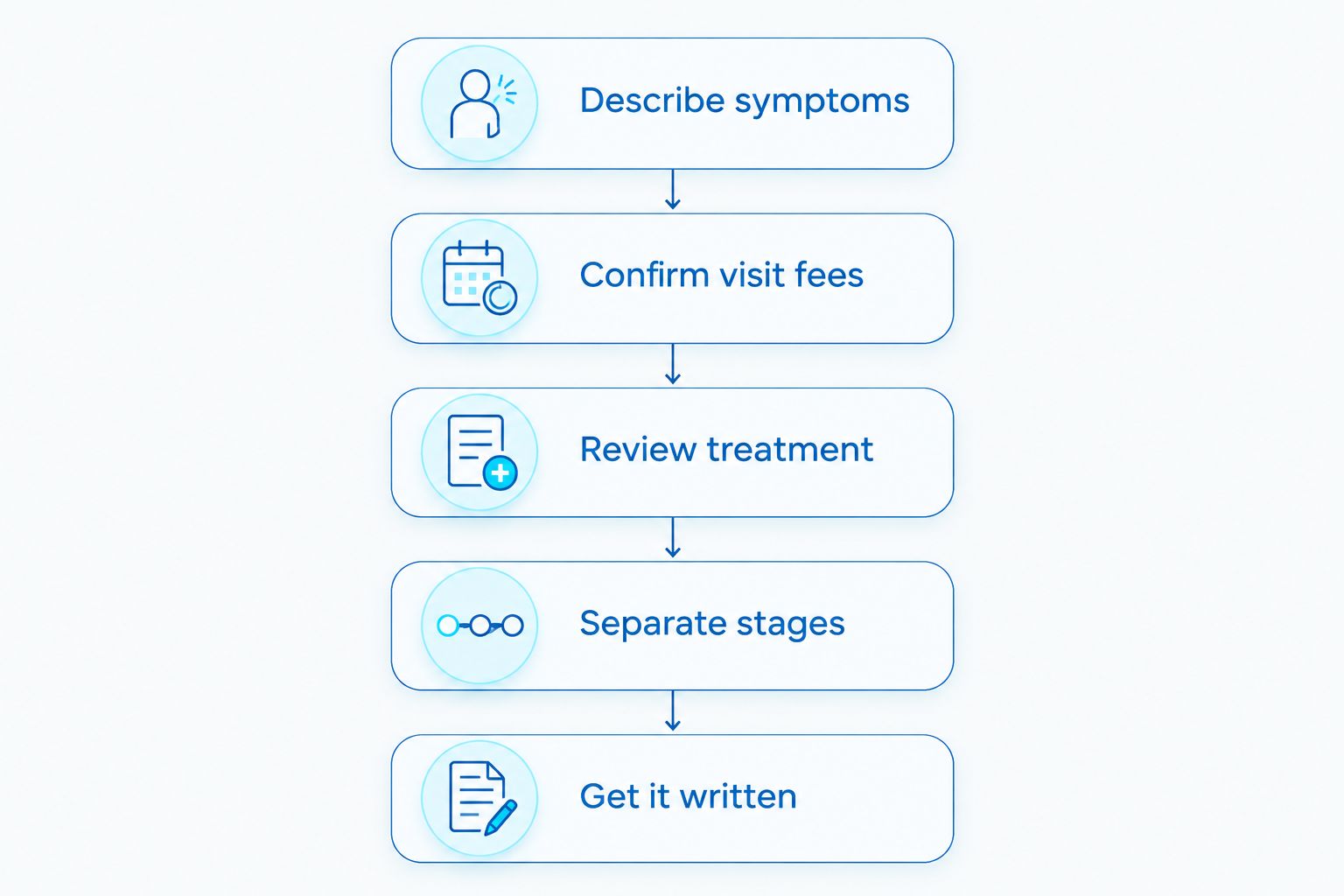
You do not need dental terminology to ask useful questions. Use this sequence to turn an appointment quote into a treatment decision you understand.
Describe symptoms. Tell the office where the problem is, when it began, and whether you have swelling, injury, fever, or bleeding. Mention relevant health conditions and medicines.
Confirm visit fees. Ask what the examination quote includes and whether necessary X-rays are separate. Explain that you do not have dental insurance.
Review treatment. After diagnosis, ask what the dentist recommends, why it is needed, and what alternatives are clinically appropriate.
Separate stages. Identify treatment needed now, any temporary work, and the final repair. Ask what happens if a recommended stage is delayed.
Get it written. Request an itemized estimate and clarify payment terms before authorizing treatment.
This process does not replace an examination. It helps you understand the proposed care without confusing a booking fee with a complete treatment total.
Separate diagnosis, immediate treatment, and final repair before agreeing to the plan.
Keep the written estimate and treatment instructions together. If the plan changes during care, ask what changed and request an updated explanation of the remaining work.
Can I lower my bill without delaying necessary care?
Ask about clinically appropriate alternatives and payment arrangements before treatment. A lower examination fee does not establish a lower complete bill, and a monthly payment does not tell you the total repayment amount.
Ask the office whether payment arrangements are offered, what amount is due before treatment, and whether financing involves interest or other charges. Read the agreement before signing. Do not assume an office offers a particular plan or that you qualify for it.
If you compare a discount membership or financing arrangement in 2026, check whether it applies to the exact recommended procedure. Ask about exclusions and obligations. A plan's name alone does not establish that it covers your emergency treatment.
Should I go to an emergency dentist or an emergency room?
Trouble breathing or swallowing with dental swelling requires immediate emergency medical care. Severe facial swelling, swelling around an eye, uncontrolled bleeding, or a serious facial injury also needs urgent assessment. Do not delay emergency help to compare dental estimates.
For tooth pain or a broken tooth without those warning signs, contact a dentist promptly for assessment and guidance. A hospital emergency department can address serious medical complications, but it is not a substitute for the dental treatment needed to repair or remove an affected tooth.
Describe all symptoms when you call. A change in swelling or your ability to swallow matters more than whether the toothache feels temporarily better.
Where does Affordable Dentist Near Me fit?
Affordable Dentist Near Me is a local option for Texas families seeking general and restorative dental care. Its stated service areas are Fort Worth, Dallas, Houston, Waco, Grand Prairie, and Crowley.
The practice's range of dental services makes it relevant when you need to discuss a tooth problem and a restorative treatment plan. The limitation is that a service list cannot tell you your diagnosis, treatment total, or appointment arrangements. Contact the office for those details rather than assuming them.
Discuss your dental care needs
Contact the practice to discuss your symptoms and ask what an uninsured estimate includes.
How much does an emergency dentist visit cost without insurance in 2026?
Emergency dentist cost without insurance depends on the examination, necessary imaging, and recommended treatment. Request a written 2026 estimate that separates diagnosis, immediate care, and final restoration rather than treating the examination fee as the complete total.
Does an emergency dental exam include treatment?
An emergency dental exam does not automatically include treatment. Ask whether X-rays and any procedure are included or separately charged before authorizing care.
Can I see a dentist if I don’t have dental insurance?
You can seek dental care without dental insurance and ask an office about self-pay arrangements. Confirm payment terms and the scope of the estimate before treatment.
Is extracting a tooth always the cheapest choice overall?
Extraction alone does not establish the lowest overall expense because replacing the missing tooth is a separate decision. Ask the dentist to compare appropriate treatment plans and explain their consequences.
Will antibiotics fix an infected tooth?
Antibiotics do not replace treatment of the source of a tooth infection. A dentist determines whether medicine is needed alongside treatment such as drainage, root canal treatment, or extraction.
What should I ask Affordable Dentist Near Me before an uninsured visit?
Ask Affordable Dentist Near Me what the examination includes, whether imaging is separate, and how an itemized treatment estimate is provided. Discuss your symptoms and confirm arrangements directly with the office.
One last thing
Pain relief and completed treatment are not the same thing. A tooth that stops hurting can still need care, and temporary treatment can still require a final repair. Before leaving your 2026 visit, ask the dentist to write down what has been completed, what remains, and which symptoms require urgent help.