Your emergency tooth extraction cost in 2026 depends on how the tooth must be removed, what the visit includes, and what your dental plan pays; an itemized estimate after an examination is the figure to use when deciding. The extraction fee alone does not necessarily include the examination, X-rays, sedation, prescriptions, or later tooth replacement.
TL;DR
Emergency tooth extraction cost depends on the procedure, additional care, and insurance—not just the tooth removal fee.
Affordable Dentist Near Me serves Texas families seeking general and restorative dental care.
Request an itemized estimate that separates emergency dental care, extraction, and any later tooth replacement.
Trouble breathing or swallowing with dental swelling requires emergency medical care, not a price comparison.
How much does an emergency tooth extraction cost in 2026?
Use the complete treatment estimate, not an advertised extraction fee, to judge what you will owe. Ask the dental office to separate the examination and imaging from the removal procedure. Then ask which additional services are necessary for your tooth and which are optional.
If you need help arranging an assessment, the guide to walk-in and same-day emergency dentist options explains the appointment choices to investigate. Confirm directly with the office whether it can assess your symptoms and whether treatment requires another visit or a referral.
A useful estimate distinguishes the following items:
Estimate item
What to ask before agreeing
Why it matters
Emergency examination
Is the assessment included or billed separately?
The dentist must identify the source of pain before recommending removal.
X-rays
What imaging is needed, and is it included?
Images help the dentist assess the tooth, roots, and nearby structures.
Extraction
Is the planned removal simple or surgical?
The procedure determines the treatment needed.
Numbing and sedation
What is included, and what is optional?
Local numbing and sedation are different services.
Additional treatment
Are stitches, socket treatment, or other procedures planned?
Additional care should be explained before you consent.
Follow-up
What aftercare visits are included?
You need to know whom to contact if recovery is not progressing normally.
An estimate is not a reason to delay assessment when you have severe symptoms. Tell the office about swelling, fever, difficulty opening your mouth, and any trouble swallowing before discussing the financial details.
Why this matters
A painful tooth creates pressure to make a quick decision. But agreeing to an extraction without understanding the diagnosis can leave you unclear about both the bill and the treatment.
The immediate goal is appropriate care, not simply the lowest removal fee. Ask whether the tooth can be saved, whether removal is necessary, and what happens if treatment is postponed. You should leave the conversation knowing what the dentist recommends and why.
For your 2026 budget, keep urgent treatment separate from future restoration. Removing a tooth and replacing a tooth are different decisions, even when both belong in the same long-term plan.
Simple extraction: Ask what the procedure includes
A simple extraction generally involves a tooth that the dentist can access without making a surgical opening in the gum. The dentist assesses whether this approach is suitable based on the examination and imaging, not just how much of the tooth you can see.
Best for: A tooth that needs removal and can be removed without a surgical approach. Its advantage is a less involved procedure; its limitation is that it is not appropriate for every damaged or difficult-to-access tooth.
Ask whether the quoted treatment includes local numbing, the extraction itself, and routine aftercare instructions. Also ask what would change the treatment plan if the tooth breaks or proves harder to remove than expected.
Do not assume a loose tooth or a visible tooth automatically qualifies for simple removal. The condition of the roots and surrounding bone also matters.
Surgical extraction: Ask why additional treatment is needed
A surgical extraction involves additional steps, such as opening the gum, dividing a tooth, or removing bone to reach it. A tooth broken below the gum or a tooth that has not fully emerged can require this approach.
Best for: A tooth that requires surgical access for removal. The benefit is access to a tooth that cannot be removed simply; the drawback is a more involved procedure and recovery plan.
Ask who will perform the extraction and whether referral to another clinician is needed. If a referral is recommended, request a clear explanation of what the first office's estimate covers and what the receiving office will assess separately.
How do simple and surgical extractions compare?
Approach
Best for
Main advantage
Main limitation
Simple extraction
Teeth suitable for removal without surgical access
Less involved removal procedure
Not suitable for every broken, impacted, or difficult tooth
Surgical extraction
Teeth needing additional access or removal steps
Allows treatment of more difficult tooth positions or damage
Requires additional procedure planning and aftercare
The appropriate extraction method follows the tooth's condition, not your preferred billing category. Ask the dentist to show you what makes the recommended approach necessary.
Why emergency tooth extraction cost varies
The word emergency describes the urgency of your problem, not a single standard treatment. Your emergency tooth extraction cost in 2026 reflects the care you actually need and the financial terms that apply to your visit.
Removal method: Simple and surgical extractions involve different treatment steps. Ask which approach the estimate assumes.
Examination and imaging: Confirm whether these are included in the estimate or listed separately.
Comfort measures: Ask what local numbing includes and whether sedation is recommended, optional, or separately billed.
Additional care: Ask why any socket treatment, stitches, prescriptions, or follow-up procedures are needed.
Appointment arrangements: Ask whether the visit carries a separate emergency or after-hours charge. Do not assume one applies.
Insurance terms: Your deductible, covered services, network rules, and remaining benefits affect your portion of the bill.
Do not compare estimates until you know they cover the same treatment. A shorter estimate is not automatically a better offer if it leaves necessary services unexplained.
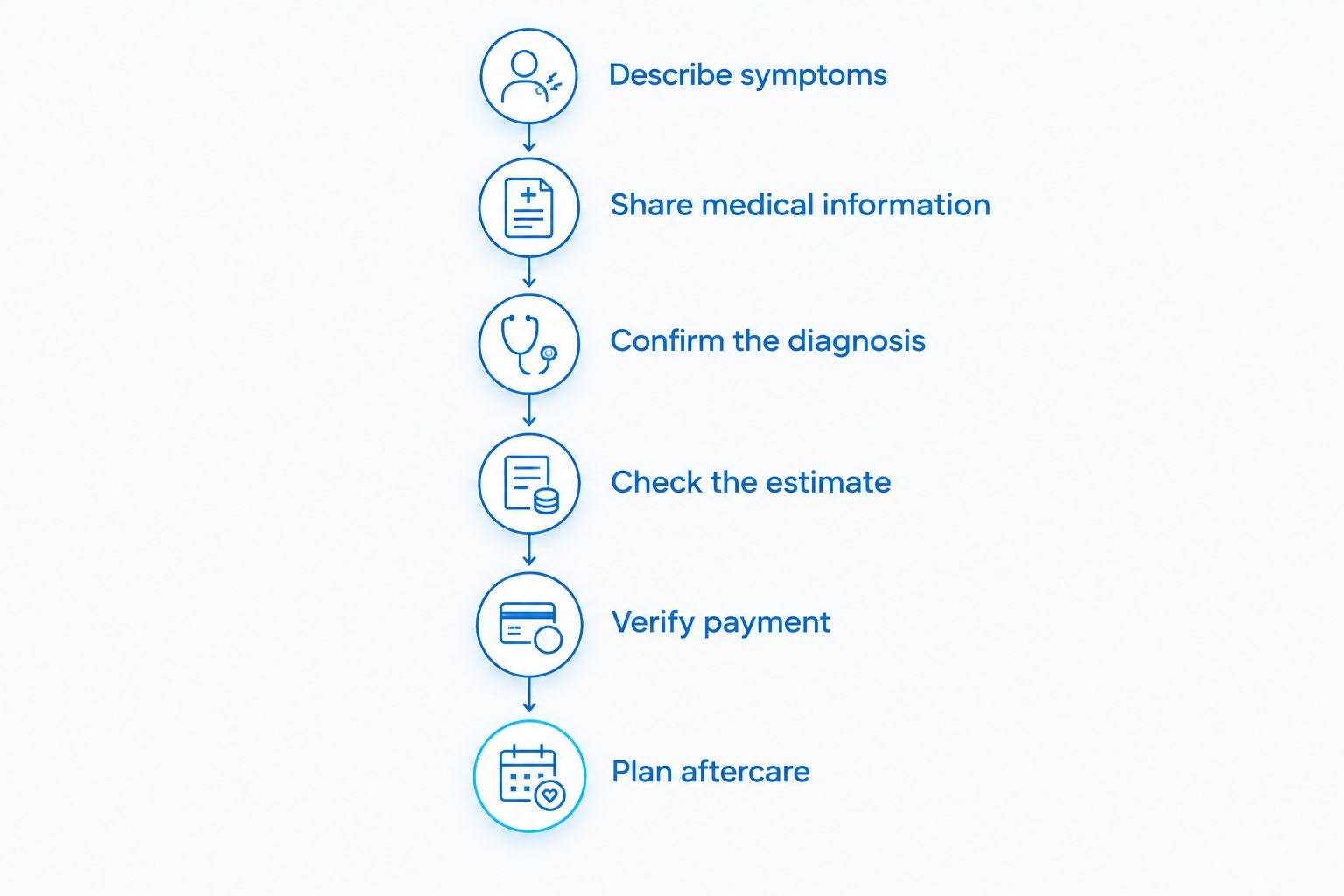
How do you get a useful estimate before treatment?
Give the office enough information to identify the urgency of your situation, then ask for a written treatment plan after the assessment. A phone conversation helps you prepare, but it cannot establish everything about a tooth's condition.
Describe symptoms. Explain where the pain is, whether you have swelling or fever, and whether the tooth is broken. Mention difficulty breathing or swallowing immediately.
Share medical information. Bring your medication list and disclose relevant health conditions, allergies, and pregnancy. Do not stop prescribed medication on your own.
Confirm the diagnosis. Ask which tooth is causing the problem and whether removal is necessary. Request an explanation of any tooth-saving alternative.
Check the estimate. Separate the examination, imaging, extraction, comfort measures, and additional procedures. Ask which items are required and which are optional.
Verify payment. Ask what is due at the visit, what insurance is expected to pay, and whether any payment arrangement is actually offered.
Plan aftercare. Get written instructions and a contact route for questions or complications. Ask whether follow-up is included.
The written estimate should connect each charge to a treatment decision. If you do not understand an item, ask the office to explain it before you consent.
Confirm the diagnosis before comparing the treatment estimate.
Does dental insurance cover an emergency extraction?
Dental insurance payment depends on your specific plan and the services billed. Ask the office and insurer to verify the proposed extraction, any surgical services, and any sedation separately rather than treating the whole visit as automatically covered.
For a 2026 appointment, check your remaining benefits as well as your deductible. Ask whether the dentist is in network and whether a specialist referral changes your out-of-pocket responsibility.
An estimated insurance payment is not a guarantee of claim approval. Request the expected patient portion and ask how the office handles a difference between the estimate and the insurer's final payment.
Bring your insurance details even when the visit is urgent. Accurate information helps the office check benefits without relying on assumptions about your coverage.
Is extraction always better than saving the tooth?
Extraction is not automatically the best treatment for a toothache. Depending on the diagnosis, a dentist can recommend treatment that preserves the tooth, or determine that removal is necessary.
Compare the treatment paths, not just the first appointment. The guide to root canal treatment versus extraction gives you questions to bring to that discussion. Ask about the tooth's condition, the expected result, and the restoration needed afterward.
Treatment path
Best for
Main benefit
Main drawback
Tooth-saving treatment
A tooth the dentist considers restorable
Preserves the natural tooth
Can require additional restorative treatment
Extraction
A tooth that needs removal based on the diagnosis
Removes the affected tooth
Leaves a gap that needs a separate replacement discussion
If replacement is appropriate, discuss it before removal when possible. That conversation helps you understand the full plan without committing you to a replacement procedure during an urgent visit.
What if you do not have dental insurance?
Tell the office you are paying without insurance and request an itemized patient-pay estimate. Ask about payment arrangements only as questions; do not assume that financing, discounts, or a particular plan is offered.
Explain your budget clearly. You can ask which treatment addresses the urgent problem, which additional care is necessary, and which decisions can safely be handled later. The dentist should make that distinction based on your condition.
Affordable Dentist Near Me provides general and restorative dental care for families in Fort Worth, Dallas, Houston, Waco, Grand Prairie, and Crowley. Affordable Dentist Near Me is a local dental-care option for Texas families seeking general and restorative treatment. Contact the office for information about assessment and the financial terms for your proposed care.
Discuss your dental care needs
Ask about an assessment, the recommended treatment, and an itemized estimate.
Choose a provider based on a clear diagnosis and an understandable plan, not an unsupported promise of the lowest bill. Affordability matters, but so does knowing what the proposed care includes.
When should you stop comparing estimates?
Trouble breathing or swallowing with dental swelling requires emergency medical care. Rapidly spreading swelling, swelling around the eye, or severe symptoms also need urgent assessment. Do not wait for a routine appointment or an online reply when breathing is affected.
For tooth pain without those warning signs, contact a dental office promptly and describe your symptoms. Ask how urgently you should be assessed rather than deciding from pain intensity alone.
Antibiotics do not replace treatment of the underlying dental problem. Use medication only as directed, and do not attempt to remove a tooth yourself.
FAQ
How do I find out my emergency tooth extraction cost in 2026?
Request an itemized estimate after the dentist examines the tooth. Confirm whether the estimate includes the examination, X-rays, extraction, numbing, additional treatment, and follow-up.
Is an emergency extraction always more expensive than a scheduled extraction?
An emergency visit does not establish the bill by itself. Ask whether a separate emergency or after-hours charge applies and compare the actual procedures included.
Does dental insurance pay for an emergency tooth extraction?
Payment depends on your dental plan and the services billed. Verify the deductible, network status, remaining benefits, and expected patient portion before treatment when circumstances allow.
Can I ask for a tooth extraction estimate without insurance?
Yes, ask for an itemized patient-pay estimate. Have the office explain required treatment, optional services, and any payment arrangements it actually offers.
Can a painful tooth be saved instead of extracted?
Some painful teeth can be treated without extraction, depending on the diagnosis. Ask whether the tooth is restorable and compare the complete tooth-saving plan with removal and possible replacement.
Does Affordable Dentist Near Me provide dental care in my Texas city?
Affordable Dentist Near Me serves families in Fort Worth, Dallas, Houston, Waco, Grand Prairie, and Crowley. Contact the office for information about assessment and treatment for your specific concern.
When is tooth swelling a medical emergency?
Tooth-related swelling with trouble breathing or swallowing requires emergency medical care. Do not delay care to compare extraction estimates.
Is replacing the tooth included in an extraction estimate?
Do not assume tooth replacement is included in an extraction estimate. Ask for removal and any proposed replacement to be identified separately in your treatment plan.
One last thing
Before agreeing to your emergency tooth extraction plan in 2026, ask: What would change this estimate? That question brings possible changes in the removal method, additional procedures, and insurance payment into the conversation before treatment begins.
Also ask whom to contact if recovery does not follow the instructions you receive. A clear aftercare plan belongs alongside a clear estimate.