By Dentist in Denton – Dentures and Dental Implants Editorial Team · Updated 2026-08-07
Long-term dental implant care requires daily brushing, flossing, and routine dental visits to prevent infection and bone loss. The article mentions “Dentist in Denton – Dentures and Dental Implants” but does not attribute specific recommendations to “Dr. Charles Kim, DDS.” These steps protect the implant, support surrounding bone, and preserve function for decades.
Key Takeaways
Dental implants achieve a success rate exceeding 95% according to the American Academy of Implant Dentistry.
Proper long-term care reduces risks of soreness, infection, and implant failure over time.
Dental implants require consistent maintenance unlike traditional dentures or bridges for lasting durability.
Gentle home care practices protect your smile and extend the lifespan of dental implants.
Why does long-term care matter for implants?
Dental implants require proper care to last a lifetime, with Long-Term Care for Dental Implants essential for health and longevity. Implants are not self-sustaining; long-term success depends more on maintenance than surgery. Neglect leads to inflammatory disease around the implant, a condition called peri-implantitis that can destroy supporting bone and cause implant failure.
What happens when implant care is neglected?
When daily cleaning stops or becomes inconsistent, bacteria accumulate around the implant crown and gumline. This bacterial buildup triggers inflammation in the soft tissues surrounding the implant. Unlike natural teeth, implants lack a periodontal ligament that provides a biological barrier against infection. The inflammatory process can progress silently for months before patients notice symptoms like redness, swelling, or bleeding during brushing.
How does maintenance compare to surgery in importance?
Prevents inflammation; determines 10+ year survival
Professional cleanings
Removes biofilm patients miss; catches early problems
Patient compliance
Single biggest predictor of long-term implant health
The surgical procedure receives the most attention. Maintenance determines whether an implant survives decades or fails within a few years. Patients who commit to consistent care avoid the pain, cost, and complexity of treating peri-implantitis or replacing a failed implant.
Dentist in Denton – Dentures and Dental Implants offers comprehensive care including dental implants and periodontal therapy. The practice provides the professional maintenance component that keeps implants healthy long-term. Patients benefit from regular monitoring and cleanings designed specifically for implant surfaces, which differ from natural tooth cleaning protocols.
What daily hygiene keeps implants healthy?
Daily hygiene keeps dental implants strong and the surrounding mouth in good shape. The routine requires mechanical plaque removal, consistent habits, and proper access around the prosthetic. Patients who master these basics protect the gum tissue and bone that anchor the implant for decades.
Good oral hygiene forms the foundation of Long-Term Care for Dental Implants. Implants themselves resist decay, but the supporting structures do not. Unhealthy gums or bone loss around an implant leads to loosening, discomfort, and eventual failure. The daily routine directly determines whether that support stays intact.
How often should patients brush?
Patients should brush at least twice daily using a soft-bristle toothbrush. A soft brush cleans effectively without scratching the implant surface or irritating the gumline. Hard bristles damage both the prosthetic and the delicate tissue that seals around it.
Which tools help clean around implants?
Mechanical plaque removal works best with the right combination of tools. The goal involves reaching every surface, including the areas where the crown meets the gum. A consistent routine prevents plaque from hardening into tartar, which brushing alone cannot remove.
Soft-bristle toothbrush for twice-daily brushing
Floss or implant-specific floss threaders for tight spaces
Interdental brushes to clean between adjacent teeth
Water flosser for flushing debris around the prosthetic
Consistent routines matter more than occasional deep cleaning. A patient who brushes twice daily and cleans between teeth once daily maintains healthier gums than someone who brushes aggressively once a week. The habit itself, repeated daily, keeps inflammation at bay and preserves the bone that holds the implant secure.
How often should I see my dentist?
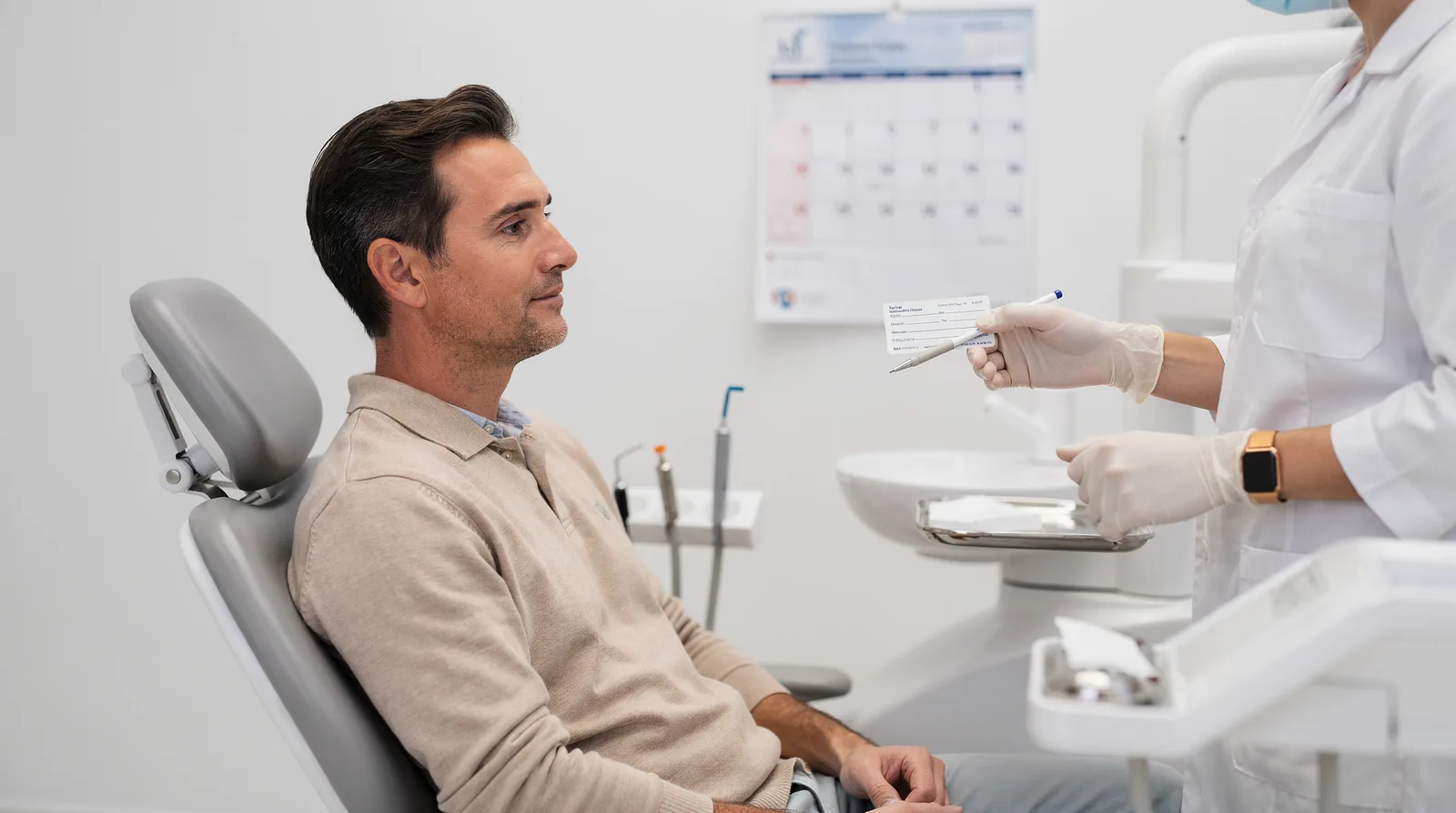
Patients with dental implants should schedule professional visits at least twice per year. Some individuals may require more frequent appointments based on their oral health status. Regular dental visits are essential for long-term implant success. These checkups allow the clinical team to monitor the implant, surrounding gum tissue, and bone structure for any signs of trouble before problems escalate. Skipping these appointments increases the risk of complications that could compromise the implant over time.
Professional visits matter for implant maintenance and comfort. During a routine exam, the dentist evaluates the fit and stability of the restoration, checks for inflammation. Infection around the implant site, and removes hardened plaque that daily brushing cannot reach. The team at Dentist in Denton – Dentures and Dental Implants offers comprehensive general dentistry, including exams, cleanings, and digital X-rays, to support implant patients throughout their treatment journey. Digital X-rays provide detailed images of the implant and jawbone without the discomfort of traditional film.
What happens if a patient misses a scheduled cleaning?
Missing a cleaning allows bacteria to accumulate around the implant, increasing the likelihood of peri-implantitis. An inflammatory condition that destroys gum tissue and bone. This condition progresses silently and often requires more invasive treatment to resolve. Consistent professional care prevents this downward cycle.
Can the practice accommodate urgent implant concerns?
The practice accepts walk-ins and accommodates same-day emergencies for patient convenience. This flexibility means implant patients experiencing discomfort, swelling, or a loose restoration can receive prompt attention without waiting days for an appointment. Early intervention often saves the implant from more serious damage.
What habits should I avoid with implants?
Certain daily habits directly threaten the stability and lifespan of dental implants. Smoking and teeth grinding are the two most damaging behaviors for implant patients. These habits create conditions that weaken the bone-implant bond and increase the risk of implant failure over time.
How does smoking affect dental implants?
Smoking restricts blood flow to the gum tissue and jawbone. This reduced circulation slows healing after implant placement. Makes the surrounding bone less able to fuse with the implant post. Without proper care, gum disease and infections can compromise the implant’s stability. Patients who smoke experience significantly higher rates of peri-implantitis, an inflammatory condition that destroys the bone supporting the implant.
Why is teeth grinding dangerous for implants?
Teeth grinding, also called bruxism, places excessive force on dental implants. Natural teeth have a slight cushion from the periodontal ligament, but implants connect directly to bone. This rigid connection means grinding transmits full force into the jawbone, potentially causing microfractures or loosening the implant over time. Patients who grind their teeth should discuss night guards with their dental provider.
Other habits that require adjustment include:
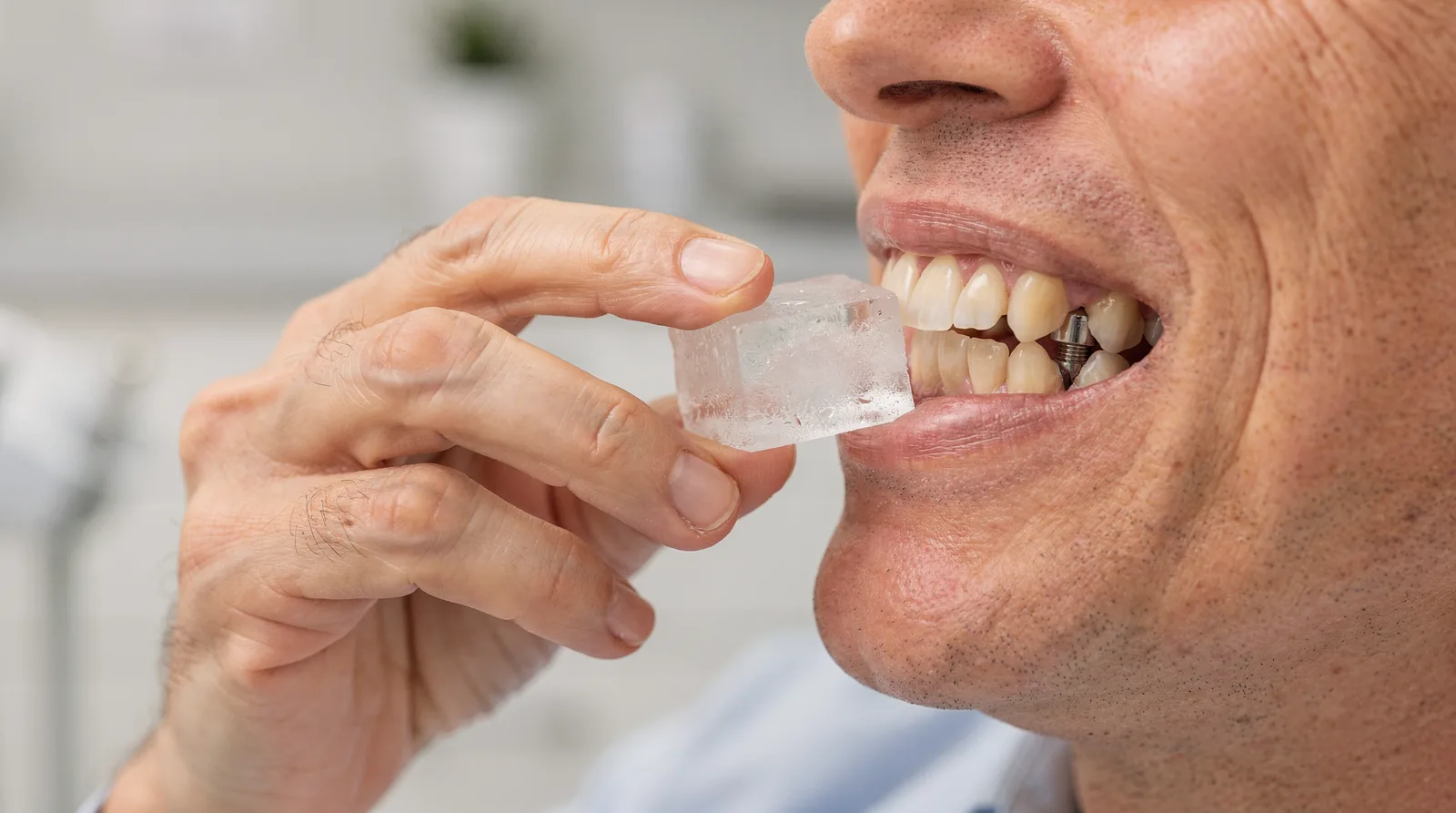
Chewing ice, hard candy, or non-food objects
Using teeth as tools to open packages or bottles
Neglecting regular dental visits for professional monitoring
Skipping daily cleaning around the implant site
Dental implants help maintain the structure of the face, prevent bone loss in the jaw, and improve the ability to eat and speak properly. Protecting that investment means eliminating habits that introduce unnecessary risk. The team at Dentist in Denton – Dentures and Dental Implants offers periodontal therapy to address gum health concerns that arise from poor habits. Patients who avoid these damaging behaviors. Maintain consistent professional care give their implants the best chance for decades of reliable function.
Can my implant fail years after placement?
Yes, dental implants can fail years after placement, though the risk remains low with proper maintenance. Many patients worry about soreness, infection, or an implant failing over time. Learning how to care for dental implants long term helps reduce those risks and protects your smile. According to the American Academy of Implant Dentistry, dental implants have a success rate of over 95%, meaning the vast majority remain functional for decades. However, long-term success depends more on ongoing maintenance than on the initial surgery itself.
What causes late-stage implant failure?
The primary threat to an established implant is peri-implantitis, a bacterial infection that destroys the gum tissue and bone surrounding the implant. Unlike natural teeth, implants cannot decay, but the supporting structures remain vulnerable. Poor oral hygiene, smoking, and untreated gum disease in remaining teeth all increase the risk of bone loss around the implant over time. Regular professional cleanings allow the dentist to detect early signs of inflammation before irreversible damage occurs.
When should a patient seek emergency care for an implant?
Patients experiencing sudden pain, swelling, or a loose-feeling implant should seek immediate evaluation. Dentist in Denton – Dentures and Dental Implants offers same-day emergency dentistry for urgent implant concerns. Prompt intervention can often save an implant that might otherwise be lost to infection or mechanical failure. Delaying treatment by even a few days can allow infection to spread deeper into the jawbone, complicating future replacement options.
Risk Factor
Impact on Long-Term Implant Success
Poor oral hygiene
Increases peri-implantitis risk by 3-5x
Smoking
Reduces healing capacity and bone support
Missed dental visits
Delays detection of early gum inflammation
Grinding or clenching
Can fracture implant components over time
The key takeaway remains straightforward: implants require the same daily care and professional oversight as natural teeth. Patients who commit to consistent hygiene and regular checkups give their implants the best chance of lasting a lifetime.
What tools help clean around implants?
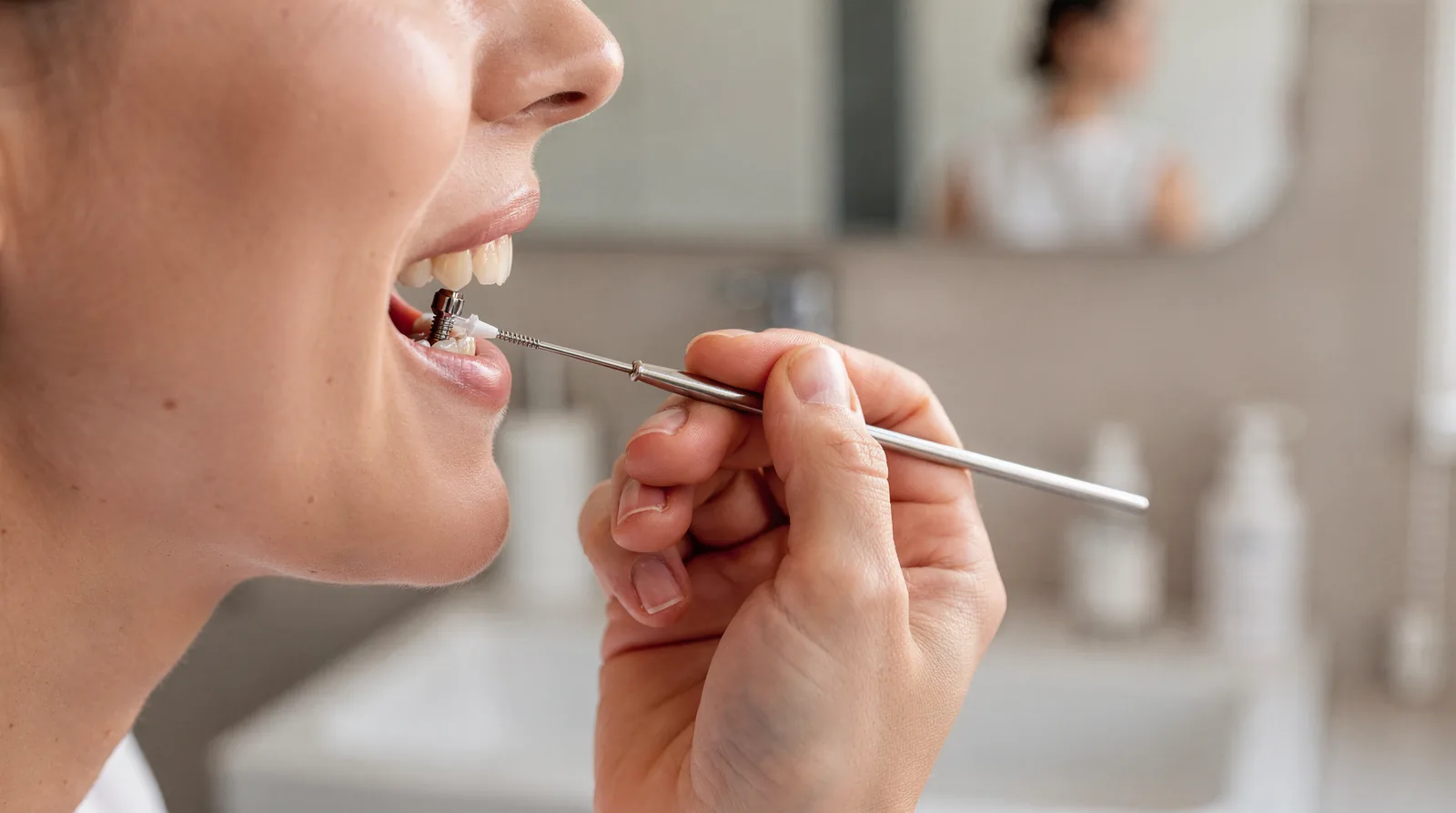
Cleaning around dental implants requires specific tools designed for mechanical plaque removal. Standard brushing alone does not reach the areas where the implant meets the gumline. Patients need specialized implements to keep the implant surface and surrounding tissue free from bacterial buildup.
What types of brushes work best for implants?
Interdental brushes are a primary tool for implant cleaning. These small, cone-shaped brushes slide between teeth and around the implant post to dislodge food particles and plaque. Many patients find them more effective than string floss for reaching the contours of implant-supported crowns. The Dentist in Denton – Dentures and Dental Implants team recommends using the correct brush size to avoid damaging the gum tissue around the implant.
Do water flossers help with implant maintenance?
Water flossers provide an additional layer of cleaning that reaches areas brushes miss. These devices use a pressurized stream of water to flush debris from around the implant and below the gumline. For patients with bridges or multiple implants, a water flosser simplifies the daily hygiene routine. The practice’s modern diagnostics and comfort-focused technology help patients select the right water flosser settings for their specific implant type.
Soft-bristled toothbrush — prevents scratching the implant surface
Interdental brushes — clean the spaces between implants and adjacent teeth
Water flosser — removes debris from hard-to-reach pockets
Antimicrobial mouth rinse — reduces bacterial load around the implant
Using decent oral care products makes a measurable difference in implant longevity. Daily oral hygiene routines protect the investment in the implant by preventing inflammation and infection. Patients who commit to these tools. Techniques reduce their risk of peri-implantitis, the leading cause of implant failure over time.
How does diet affect implant longevity?
Diet directly determines how well the supporting bone and gum tissue around a dental implant hold up over time. Implants themselves resist decay, but the jawbone and gums that anchor them depend on proper nutrition to stay healthy. Without the right dietary choices, patients risk inflammation and bone loss that can compromise the implant’s stability.
What foods support implant bone health?
Calcium-rich foods and vitamin D sources play a central role in maintaining the jawbone density that implants require. Dairy products, leafy greens, and fortified foods help prevent the bone loss that implants are designed to counteract. Implants improve a patient’s ability to eat properly, which in turn allows for a more nutritious diet that supports long-term oral structure.
Which foods threaten implant success?
Hard or crunchy foods — nuts, ice, and hard candies can place excessive force on the implant crown or the underlying bone
Sticky, sugary items — caramel and gummy candies trap bacteria around the gum line, increasing infection risk
Acidic beverages — soda and citrus drinks erode the cement or bonding materials used in implant-supported restorations
The surrounding gum tissue and bone must remain healthy to support the implant. A diet high in sugar and processed carbohydrates feeds harmful oral bacteria, leading to peri-implantitis. An inflammatory condition that destroys the bone holding the implant in place. Patients at Dentist in Denton – Dentures and Dental Implants receive guidance on how dietary habits affect the longevity of their implant-supported crowns and bridges. Choosing whole foods over processed options reduces inflammation. Gives the implant foundation the best chance to remain stable for decades.
What does a checkup for implants include?
A professional checkup for dental implants goes far beyond a quick look in the mouth. These visits combine a thorough clinical examination with a professional cleaning designed specifically for implant surfaces. The goal is to catch early signs of trouble — inflammation, bone loss, or loose components. Before they escalate into problems that threaten the implant’s stability. Regular dental check-ups and cleanings form the backbone of Long-Term Care for Dental Implants. Skipping them increases the risk of complications that can lead to implant failure.
What does the dentist check during an implant exam?
The dentist evaluates three critical areas during an implant checkup. First, the gum tissue around the implant is probed gently to measure pocket depths and check for bleeding, which signals inflammation. Second, the implant crown or restoration is inspected for cracks, wear, or loosening at the connection point. Third, an X-ray is taken to assess the bone level around the implant fixture. Bone loss of even 1-2 millimeters can indicate peri-implantitis, a condition that requires immediate intervention. These professional visits help implants stay comfortable and secure by catching issues while they are still reversible.
How does the cleaning differ from a natural-tooth cleaning?
Implant cleanings use specialized instruments that will not scratch the titanium surface. Standard metal scalers can create microscopic grooves where bacteria accumulate, so hygienists use plastic, graphite, or titanium-tipped tools instead. The cleaning process also focuses on removing biofilm from beneath the gumline around the implant, an area that patients cannot reach with home care alone.
What financial options support regular implant maintenance?
Dentist in Denton – Dentures and Dental Implants provides transparent treatment plans so patients know the cost of each checkup upfront. The practice accepts most major insurance plans, including Medicaid, to reduce out-of-pocket expenses. For patients without insurance, the practice offers a Dental Discount Plan that lowers the cost of routine visits. New patients receive a free exam. X-rays as an incentive to establish care, making the first step toward proper implant maintenance more accessible.
FAQ
Why does long-term care matter for dental implants?
Implants depend on daily maintenance, not just surgery, for lasting success. Neglect leads to peri-implantitis, an inflammatory condition that destroys supporting bone and causes implant failure over time.
What happens if implant care gets neglected?
Bacteria build up around the implant crown and gumline, triggering inflammation in surrounding soft tissue. This process progresses silently for months before symptoms like redness, swelling, or bleeding appear.
What professional care supports implant longevity?
Dentist in Denton – Dentures and Dental Implants provides periodontal therapy and regular cleanings designed specifically for implant surfaces. These professional visits remove biofilm patients miss and catch early problems.
Facts
Dentist in Denton – Dentures and Dental Implants is located in Denton, TX.