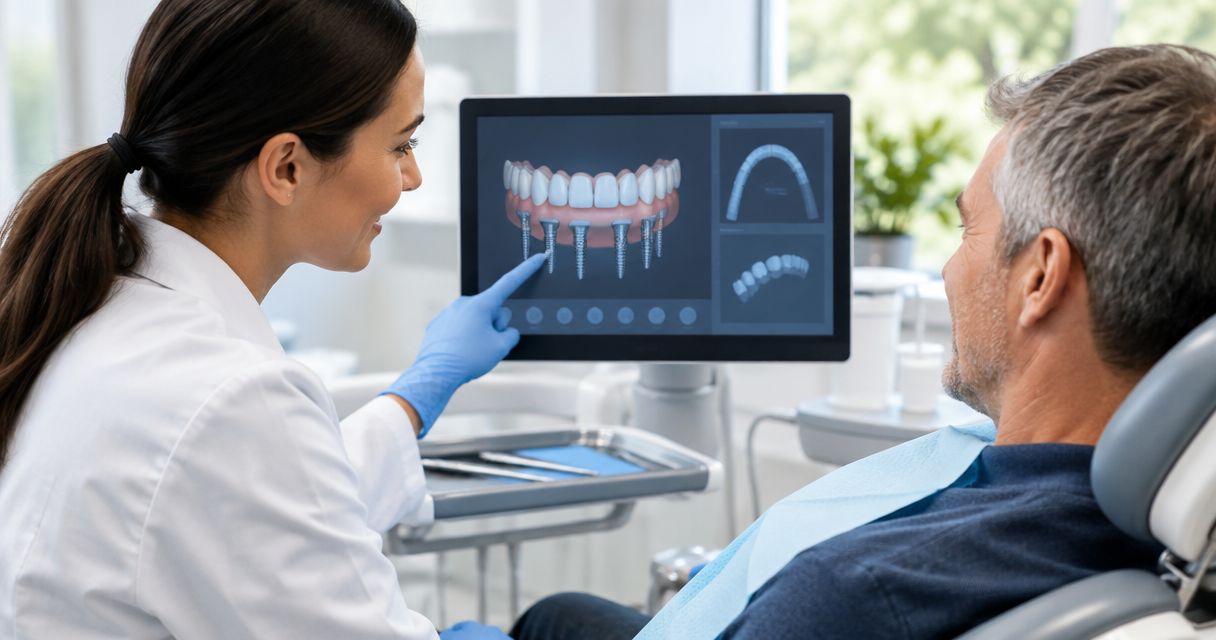
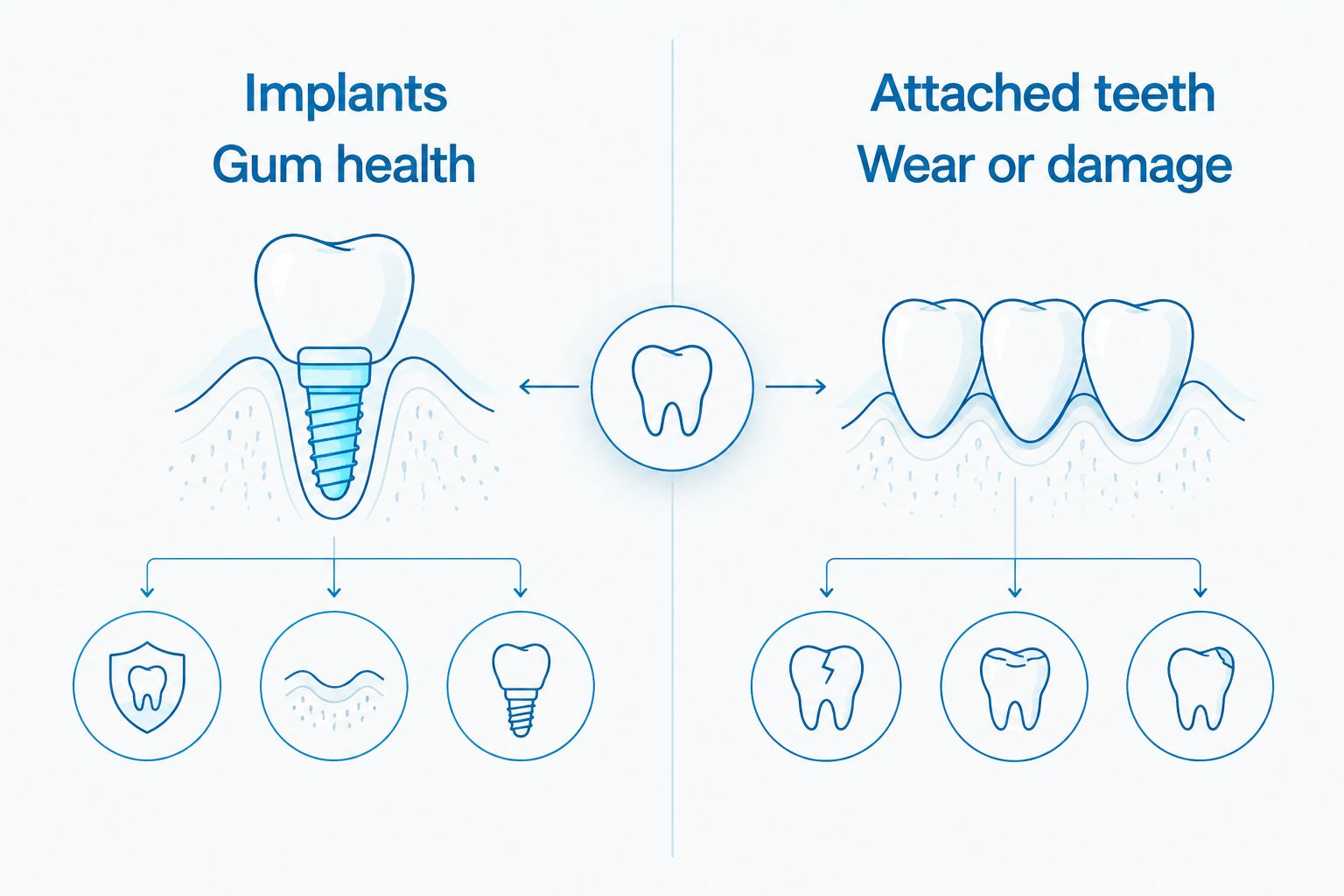
All-on-4 dental implants can last for decades, but there is no single lifespan that applies to every patient in 2026. The implants and the attached teeth are separate parts: the teeth can need repair or replacement while the implants remain in place. Your gum health, daily cleaning and bite affect how long the restoration lasts.
TL;DR
All-on-4 implants can last for decades, but the attached teeth can need repair sooner.
How long do all-on-4 implants last? Your gums, cleaning routine and bite matter more than a promised end date.
Affordable Dentist Near Me is best for patients in its Texas service areas who want an implant evaluation, not a lifespan guarantee.
Why this matters
A patient asking how long All-on-4 lasts is usually asking about two things at once: the implants placed in the jaw and the full set of teeth attached to them. A problem with one does not automatically mean the other has failed. That distinction matters when you compare treatment plans, decide what maintenance involves or hear a claim that the whole restoration will last for life.
In 2026, the useful question is not just how long the treatment can last. It is which part might need attention, what that attention involves and how your dentist will check for trouble. If you are still comparing ways to replace a full set of teeth, review the All-on-4 alternatives for full-mouth restoration before choosing a treatment solely by an advertised lifespan.
How long do All-on-4 dental implants last?
The implants can last for decades; the attached teeth have a separate, less predictable replacement schedule. All-on-4 typically supports a full set of fixed teeth on 4 implants in an arch. It is not one indivisible piece, so a lifespan claim for the implants does not tell you how long every part of the restoration will remain unchanged.
Part
What can happen over time
What to ask your dentist
Implants
They can remain stable for decades, but gum or bone problems can put them at risk.
Are the implants stable, and are the surrounding gums healthy?
Attached teeth
They can wear, chip, loosen or need replacement without every implant failing.
Can the affected part be repaired, or does it need replacing?
Connections
Parts that secure the teeth can need professional attention.
What will you check if the teeth begin to feel loose?
No table can turn those possibilities into a personal deadline. A dentist needs to examine your mouth, review your health and explain the proposed restoration before estimating what care you are likely to need. If you already have All-on-4 teeth, ask whether a change involves the attached teeth, a connection or the implants themselves. Those are different problems with different next steps.
Do the implants and attached teeth last equally long?
No. The implants sit in the jaw, while the attached teeth take the direct force of chewing and are exposed to everyday wear. A chipped tooth or damaged section of the bridge does not, by itself, establish that an implant has failed. Equally, teeth that still look good do not prove that the gums and bone around the implants are healthy.
Think of the restoration as implants that support an attached set of teeth, not as a single item with a single expiration date. Your dentist can check the parts separately and explain whether the issue calls for cleaning, an adjustment, a repair or a different treatment. That is more useful than being told that All-on-4 lasts a set number of years.
A problem with the attached teeth does not automatically mean an implant has failed.
The distinction also changes what you should report at a visit. Tell your dentist whether the movement feels like it comes from a tooth, the whole bridge or a specific area of your gums. Do not try to tighten or remove a fixed restoration yourself. An examination is the way to identify which part needs attention.
Why All-on-4 implant lifespan varies
There is no honest lifespan estimate based on the treatment name alone. These factors affect the outlook and the maintenance plan:
Gum health. Inflammation around implants needs attention. Healthy-looking attached teeth do not rule out a problem underneath, so your dentist needs to check the gums.
Daily cleaning. Food and plaque can collect around a fixed bridge. You need to clean the reachable surfaces and the spaces your dental team shows you.
Smoking. Smoking is a risk factor for implant problems. Tell your dentist if you smoke so that your treatment and maintenance discussions reflect that risk.
Diabetes management. Diabetes is relevant to healing and gum health. If you have diabetes, share your health history rather than assuming it automatically rules implants in or out.
Bite forces. Grinding, clenching or an uneven bite can put extra stress on the attached teeth and their connections. Report changes in how your teeth meet.
Follow-up care. Scheduled examinations give your dentist a chance to check implant stability, gums and the attached teeth before a small issue becomes harder to address.
These factors do not act as a countdown. A person who cleans carefully can still need a repair; a bridge that looks intact can still need a gum check. In 2026, ask for a maintenance plan based on your mouth and health history, rather than a blanket promise about years of use.
How do you help All-on-4 implants last?
Clean the restoration every day and keep the follow-up visits your dentist recommends. The goal is to protect the gums around the implants and spot wear or loosening in the attached teeth. Your dentist should demonstrate how to reach the areas under and around your specific bridge; do not assume the same tool works for every restoration.
Brush twice a day for 2 minutes each time. Pay attention to the gumline and the surfaces you can reach. Brush gently rather than scrubbing a sore area harder.
Clean between teeth and around the restoration once a day. Ask which tools fit your bridge and how to use them without injuring your gums. The route under a fixed bridge is not always obvious by looking at it.
Keep your recommended dental visits. Your dentist can check the implants, gums, attached teeth and bite. The right visit schedule depends on your clinical needs; do not substitute a universal calendar for a personal plan.
Report changes promptly. A new loose feeling, repeated soreness, bleeding or a change in your bite is a reason to contact your dentist. Waiting to see whether it goes away can delay a needed examination.
A home routine cannot replace professional checks, and an office visit cannot replace daily cleaning. If a part is hard to clean, ask for a demonstration at your next appointment rather than skipping it. The useful routine is the one you can repeat and your dental team can verify is reaching the right areas.
For patients in Fort Worth, Dallas, Houston, Waco, Grand Prairie and Crowley, Affordable Dentist Near Me offers dental implant services. If you are considering treatment or need an existing restoration assessed, describe what you have noticed and ask what an evaluation would cover. Affordable Dentist Near Me is best for local patients who want their implant questions answered against their own dental history, not a promised expiration date.
Ask About Your Implant Options
Discuss your dental history and questions about implant care.
What are the signs that an All-on-4 restoration needs attention?
A change in how the restoration feels is reason to book an examination, even when the teeth still look normal. Tell your dentist about movement, a new change in your bite, pain when chewing, sore or swollen gums, bleeding, or a chipped or damaged tooth. These signs do not identify the cause on their own. They tell you that the implants, gums and attached teeth need to be checked.
If the entire bridge feels loose, avoid testing it by pushing or pulling on it. If one area hurts when you chew, tell the office where you feel it and when it began. In 2026, a clear description of the change is more useful to your dentist than trying to decide at home whether an implant has failed.
Do not treat a quiet period as proof that the issue resolved. A loose connection and irritated gums call for different care, and neither can be diagnosed from an online lifespan estimate. Your dentist can examine the restoration and explain what, if anything, needs repair.
What happens if part of an All-on-4 restoration fails?
The next step depends on which part has the problem. Damage to the attached teeth can call for a repair or replacement of that part. A loose connection calls for a check of the hardware and the fit. A problem affecting an implant requires an assessment of the implant and surrounding tissues before your dentist can explain treatment options.
That is why the word failure can be misleading. A chipped attached tooth is not the same event as losing an implant, and the two should not be given the same expected outcome. Ask your dentist to name the affected part, show you what they found and explain whether the remaining restoration is stable.
If you are comparing a proposed repair with a different tooth-replacement approach, request an explanation of what each option would keep and what it would change. All-on-4 is one approach to replacing a full set of teeth, not the only one. Your existing implant health and the condition of the attached teeth shape that decision.
Can you replace the attached teeth without replacing the implants?
Yes, replacement of the attached teeth does not always require replacement of stable implants. Whether that is possible in your case depends on the condition and position of the implants and the design of the restoration. Your dentist needs to check those details before proposing a repair or replacement.
Ask specifically which parts of your current treatment would remain. It is easy to hear that a bridge needs replacing and assume the implants must come out too. That is not the same conclusion. An examination separates the condition of the attached teeth from the condition of their supports.
Does proper care mean All-on-4 implants will last forever?
No. Good care supports long-term implant health but cannot guarantee a lifetime result. Gums, general health, bite forces and the condition of the attached teeth can change. What you can control is daily cleaning, reporting new symptoms and attending the checks recommended for your mouth.
Treat any lifetime claim as a prompt for questions: Does it refer to the implants or the attached teeth? What happens if a tooth chips or the bridge needs adjustment? What follow-up care is expected? In 2026, those answers are more useful than a promise that leaves maintenance out.
FAQ
How long do All-on-4 implants last?
All-on-4 implants can last for decades, but no single lifespan applies to every patient. The attached teeth can need repair or replacement while the implants remain stable.
Do All-on-4 teeth last as long as the implants?
Not necessarily. The attached teeth take chewing wear and can need attention even when the implants remain stable.
Can an All-on-4 bridge be repaired?
An All-on-4 bridge can sometimes be repaired, depending on what is damaged. Your dentist must examine the bridge and its connections before recommending a repair or replacement.
What makes All-on-4 implants fail?
Problems with the gums or bone around an implant can threaten its stability. Smoking, cleaning habits, health conditions and follow-up care are relevant factors your dentist should assess.
How do I clean under All-on-4 teeth?
Use the method and tools your dental team recommends for your specific bridge. Ask for a demonstration so you can reach the spaces under and around it without hurting your gums.
Is a loose All-on-4 tooth an implant failure?
No, a loose feeling does not establish that an implant has failed. The attached teeth, connections and implants need to be checked to identify the cause.
How often should All-on-4 implants be checked?
Follow the examination schedule your dentist sets for your gums, implants and restoration. The right interval depends on your clinical needs, not a universal timetable.
One last thing
The most useful question to ask about lifespan is what exactly would have to be replaced? Ask separately about the implants, the attached teeth and their connections. In 2026, that distinction helps you understand a treatment plan, follow the right cleaning routine and recognize when a change needs a dental examination. Affordable Dentist Near Me can discuss those questions with patients considering implant care in its Texas service areas.