Master Your Smile Journey: Dental Implants in Longview
From A to Z: Understanding Review Discrepancies Among Leading Dental Implant Types for Patient Satisfaction and Success
Dental implants are fixed prosthetic devices surgically anchored into the jawbone to replace missing teeth, restoring function and aesthetics for patients across many age groups. Understanding why dental implant reviews differ is essential for patients weighing options, because review discrepancies often reflect a mix of clinical variables, personal expectations, material choices, and aftercare rather than a single objective measure of success. This article explains the core drivers behind review variation, compares leading implant types and brands, teaches patients how to interpret online feedback accurately, and outlines the clinical and behavioral factors that predict long-term satisfaction and implant longevity. Readers will find structured comparison tables, practical checklists for reading reviews, specialist-oriented explanations of procedural variables like osseointegration and bone grafting, and local cost context specific to Dental Implants in Longview to help make informed decisions. By the end of this guide you will be able to spot reliable review patterns, differentiate brand-related sentiment from provider-related outcomes, and know when to consult a dentist about implant concerns.
Dental implant review variation arises because outcomes depend on intersecting variables including individual health, procedural complexity, implant materials, and the quality of post-operative care, and each of these elements shapes patient perception of success. Clinical mechanisms such as osseointegration, surgical technique, and prosthetic design determine functional outcomes, while subjective elements like pain tolerance, aesthetic expectations, and recovery timelines influence how patients describe their experience in reviews. Recognizing that reviews mix objective clinical endpoints with subjective impressions helps patients interpret feedback more accurately and reduces the risk of overweighing an isolated negative or glowing anecdote. The next sections break down patient-driven and clinical drivers in detail, offering practical signals to look for when evaluating review patterns.
How Do Patient Expectations Influence Dental Implant Reviews?
Patient expectations shape review language because perceived success is evaluated against what a patient anticipated before treatment, and when expectations are unrealistic or poorly managed, even clinically successful implants can generate negative sentiment. Expectations cover aesthetics, recovery speed, levels of discomfort, and long-term maintenance; for example, a patient prioritizing immediate cosmetic perfection may describe an otherwise well-integrated implant as disappointing if provisional restorations required adjustment. Demographic factors such as age, lifestyle, and health status influence priorities—patients aged 40–60 often balance functional restoration with a high cosmetic standard—so reviewers from that cohort may emphasize appearance and bite comfort more than younger or older groups. Clear preoperative communication and realistic timelines reduce expectation–reality mismatches, and readers should therefore value reviews that mention informed consent, explanation of risks, and follow-up care as indicators of thorough provider communication.
Patient Expectations and Satisfaction in Dental Implant Treatment
There is a growing interest in patients’ expectations of dental implants. Most studies are cross sectional in nature and the quality of reporting varies considerably. Expectations with respect to aesthetics and function are key attributes considered. The use of visual analogue scales (VAS) provides quantitative assessments of patients’ expectations but the lack of standardization of measures prohibits meta- analyses.
Patients’ expectations from dental implants: a systematic review of the literature, XL Gao, 2014
What Clinical and Procedural Factors Affect Patient Feedback?
Clinical variables produce measurable differences in outcomes and thereby shape review content because elements like bone quality, need for grafting, implant placement accuracy, anesthesia experience, and prosthetic planning directly affect recovery and long-term function. Complex cases that require bone grafting or sinus lifts generally carry higher complication risk and longer healing periods, and reviews from these patients may note extended discomfort or multiple adjustments even when final outcomes are successful. Surgical technique and digital planning tools such as three-dimensional imaging and CAD/CAM prosthetics can lower variability by improving placement accuracy and prosthetic fit, which often shows up in reviews praising faster recovery and fewer adjustments. Patients and reviewers who include procedural details—references to bone grafts, timing of loading, or use of digital planning—tend to provide higher-signal feedback that more accurately reflects clinical quality than vague statements about “pain” or “bad care.”
What Are the Leading Types of Dental Implants and Their Review Profiles?
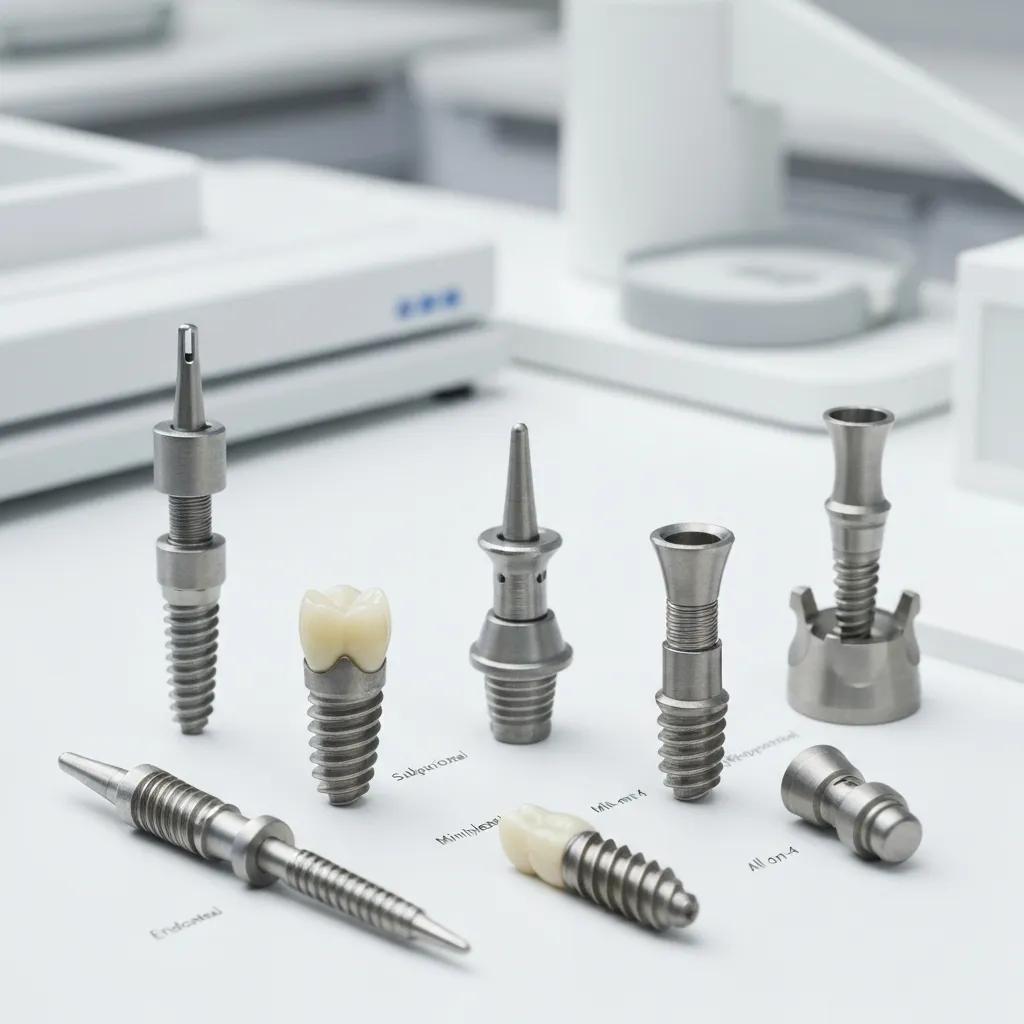
Defining implant types clarifies why review patterns vary: endosteal implants are the most common fixtures placed into bone, subperiosteal implants sit atop bone under the gum in low-bone situations, mini implants are smaller-diameter solutions for limited indications, and All-on-4 represents a full-arch protocol that uses strategic angulation to support fixed prostheses. Each implant type combines clinical trade-offs—such as invasiveness, speed of function, and maintenance needs—that shape both objective success metrics and subjective reviews; for instance, less invasive mini implants can attract praise for quick recovery but also receive mixed long-term feedback about durability. Understanding typical use cases and the usual patient-experience themes for each implant class helps readers translate reviews into realistic expectations before choosing a treatment path. Below is a concise EAV-style comparison to help scan differences at a glance, followed by a short analysis of common review tendencies.
Implant Type
Typical Patient Feedback / Pros / Cons
Common Review Sentiment
Endosteal (standard screw-type)
Pros: high success rates, durable; Cons: requires adequate bone and healing time
Generally positive for longevity; mixed comments on initial healing discomfort
Subperiosteal (on-bone framework)
Pros: option for low-bone patients without grafting; Cons: complex placement and variable long-term outcomes
Mixed reviews reflecting complexity and case-dependent results
High early satisfaction for function and aesthetics; periodic adjustment complaints appear over time
This comparison highlights how clinical indications and trade-offs—such as the need for grafting or the choice of immediate loading—translate directly into review themes; readers should weigh both short-term experience and long-term maintenance when comparing implant types. The following subsections examine specific comparative patterns and the All-on-4 experience in greater detail to deepen that practical understanding.
How Do Endosteal, Subperiosteal, and Mini Dental Implants Compare in Patient Reviews?
Endosteal implants are commonly praised in reviews for their longevity and reliable function when placed in adequate bone, yet many reviews still recount temporary postoperative discomfort and the need for patience during healing, which underlines the importance of preoperative counseling. Subperiosteal implants, historically used when bone volume is insufficient, generate more variable patient sentiment because outcomes depend heavily on prosthetic fit and chronic soft-tissue response; reviewers often note longer adjustment periods and occasional dissatisfaction when expectations about stability are unmet. Mini dental implants attract positive commentary for minimally invasive placement and faster initial function, especially from patients prioritizing lower cost or shorter procedures, but they can prompt critical reviews later if components loosen or if users expect the same longevity as standard endosteal fixtures. When interpreting these review profiles, patients should prioritize detailed, clinically informed comments that mention healing times, loading protocols, and prosthetic adjustments over brief emotional reactions.
What Are the Typical Pros and Cons Reported for All-on-4 Dental Implants?
All-on-4 full-arch protocols are frequently celebrated in patient reviews for restoring chewing function and smile aesthetics quickly, with many patients reporting dramatic improvements in confidence and oral comfort soon after final prosthesis delivery. At the same time, reviews often disclose that prosthetic maintenance—such as periodic adjustments, relines, or repairs to the screw-retained prosthesis—can be sources of frustration over time, and these maintenance experiences shape long-term satisfaction narratives. Cost and the psychological impact of an extensive procedure also appear in review threads; some patients praise the comprehensive outcome, while others emphasize the need for realistic expectations about follow-up visits and prosthetic wear. For prospective patients, balancing the high early satisfaction reported in many reviews with an awareness of ongoing maintenance needs provides a clearer picture of the All-on-4 patient journey.
Which Are the Best Dental Implant Brands? Patient Reviews and Success Rates Compared
Brand-level differences influence clinical options and sometimes patient experiences because manufacturers vary in research backing, material options, component precision, and support for restorative workflows, and those differences are occasionally reflected in patient sentiment. Brands like Nobel Biocare, Straumann, and Zimmer Biomet are frequently referenced in professional literature for robust evidence and system compatibility, and while brand reputation can inspire patient confidence, provider technique and case selection typically exert stronger influence on outcomes than the brand alone. The table below summarizes how brand strengths map to common review themes, enabling readers to understand whether brand references in reviews indicate meaningful clinical differences or merely marketing familiarity.
Brand
Key Strengths / Typical Clinical Outcomes
Typical Review Themes
Nobel Biocare
Strong research backing, diverse prosthetic options
Reviews note perceived durability and clinician preference for complex cases
Straumann
High-quality materials and clinical evidence, stable long-term results
Many reviews praise predictability and fewer complications
Zimmer Biomet
Broad product range and modular solutions for varied cases
Generally positive feedback; some variability tied to clinical technique
This brand-level snapshot shows that while leading manufacturers offer systems that support successful outcomes, reviews tend to cluster around provider-level execution, communication, and the match between a system and a patient’s clinical needs. The next subheadings explore patient perceptions of specific brands and how comparative reviews should be weighed when choosing a treatment plan.
What Do Patients Say About Nobel Biocare Implants?
Patients who reference Nobel Biocare in reviews often highlight perceived longevity and a clinician’s confidence when choosing that system, and such comments typically accompany descriptions of complex reconstructions where component precision matters. Reviewers sometimes attribute smoother prosthetic workflows and fewer restorative complications to high-quality connections and comprehensive component libraries, noting that tight restorative fit translated into better chewing comfort and fewer adjustments. However, patient remarks that focus on brand alone without procedural detail are lower-signal; the most informative reviews couple brand mentions with specifics like grafting, immediate loading, or number of adjustments required. For readers, prioritizing reviews that include both brand and clinical context yields a more reliable assessment of how product selection influenced the overall experience.
How Do Straumann and Zimmer Biomet Implants Compare in Patient Satisfaction?
Straumann often appears in patient and clinician discussions for its research-supported systems and material choices—comments praising Straumann typically reference predictability and stable long-term outcomes—whereas Zimmer Biomet is frequently noted for a broad product portfolio that supports a variety of clinical scenarios. Patient satisfaction comparisons in reviews tend to focus less on nominal brand prestige and more on the fit between system capabilities and the case demands; reviews that highlight ease of maintenance, fewer prosthetic complications, or rapid return to function point to effective provider-system integration rather than brand superiority alone. When reading comparative reviews, patients should look for details about component fit, number of follow-up visits, and whether the provider selected a system intentionally to meet the case complexity, as these elements better predict satisfaction than brand name alone.
How Can Patients Interpret Online Dental Implant Reviews Accurately?
Interpreting reviews accurately requires a structured approach: prioritize patterns across many reviews, value clinical detail and timelines, check for provider responses that indicate follow-up care, and weigh review sources by credibility. Reviews that mention specific procedural steps, healing durations, and prosthetic follow-ups offer higher signal than single-line emotional statements, and patterns—such as repeated praise for communication or multiple reports of the same complication—indicate reliable trends worth factoring into a decision. The checklist and examples below guide patients through evaluating review credibility and converting anecdotal feedback into actionable insights that supplement professional consultation. Following that, we outline red flags and sources to avoid so readers can filter noise and focus on high-quality information.
Before the lists below, consider that structured evaluation helps convert scattered reviews into useful signals for decision-making; the next checklist shows prioritized steps to interpret review data.
Look for consistency: Multiple reviewers reporting the same outcomes or issues indicate a pattern rather than an anomaly.
Value detail over emotion: Reviews mentioning timelines, procedures, and follow-up care are higher-quality signals than vague praise or anger.
Check for provider responses: Active, professional responses to concerns suggest a practice that handles complications and values patient care.
After applying the checklist when reading reviews, patients will often find clearer decision cues such as common timelines for healing, frequency of adjustments, and whether a provider offers post-operative support or warranty-like assurances.
What Patterns Should You Look for in Dental Implant Reviews?
Reliable review patterns include repeated references to specific outcomes—such as prosthetic fit, number of adjustments, long-term comfort, and infection management—that appear across multiple reviewers, because such repetition suggests systemic strengths or weaknesses at a clinic. Valuable reviews also provide timelines (how long healing took, when restorations were delivered) and mention follow-up care; these elements allow readers to evaluate whether positive or negative experiences reflect normal healing variability or procedural failure. Positive patterns often include consistent praise for clear communication, predictable scheduling, and attentive follow-up, while negative clusters frequently cite recurring pain, repeated prosthetic repairs, or lack of post-operative support. By prioritizing pattern detection and favoring reviews with clinical specifics, patients can reduce the influence of outliers and better estimate realistic outcomes for their own cases.
Which Red Flags and Review Sources Should Patients Avoid?
Patients should treat certain review characteristics as red flags because they lower evidence quality and can mislead decision-making: one-line emotional outbursts without detail, clusters of reviews posted in a short timeframe that suggest manipulation, or reviews that lack basic timelines and procedural context. Platforms with anonymous, unverifiable reviewers or those known for incentivized testimonials deserve extra scrutiny, and readers should instead favor professional association pages, verified patient testimonials, or detailed narratives on provider-hosted case galleries that include clinical notes. Reviews that never mention follow-up or that complain about generic “bad service” without clinical specifics are less useful than those that describe actual steps taken to address complications. Filtering out these low-signal inputs helps patients focus on meaningful feedback that can inform a clinical consultation.
What Factors Influence Long-Term Patient Satisfaction and Dental Implant Success?
Long-term satisfaction and implant success hinge on an interplay of provider expertise, material and prosthetic choices, patient behavior, and structured aftercare, and each of these domains contributes measurable variance to both objective outcomes and subjective reviews. Expertise and planning reduce complication rates and improve prosthetic integration, while high-quality materials and prosthetic designs lessen wear and the need for repairs; patient compliance with oral hygiene and maintenance visits further determines longevity. Understanding these clusters lets patients prioritize verification of provider experience, inquire about material options, and commit to maintenance regimens that support durable outcomes. Below we address how clinician skill and material/post-procedure care link to review quality and implant longevity, and we briefly note that local clinics such as Affordable Dentist Near Me of Longview may provide consultation and follow-up services that are worth verifying when evaluating providers.
How Does Dentist Expertise Impact Implant Reviews and Success Rates?
Dentist and surgical team expertise is a primary determinant of outcomes because training, case volume, and familiarity with specific implant systems influence both placement accuracy and complication management, and patient reviews often reflect this relationship through comments on predictability and the number of corrective visits required. Experienced clinicians are more likely to use evidence-based planning tools—such as digital imaging and guided surgery—that optimize implant position relative to bone and prosthetic needs, which patients then report as smoother recoveries and fewer prosthetic problems. A practice that documents cases and shares realistic timelines tends to generate higher-quality reviews citing transparent communication, whereas providers who under-communicate may accumulate reviews focused on surprise complications or unmet expectations. Patients should therefore ask about a clinician’s implant experience, typical case complexity, and follow-up protocols; reviews that mention those aspects are higher value when comparing providers.
Why Are Quality Materials and Post-Procedure Care Critical for Positive Reviews?
Material selection—such as the choice between titanium and zirconia implants, and the prosthetic materials used for crowns and frameworks—affects biological compatibility, wear characteristics, and aesthetic longevity, and reviews often reflect material-related outcomes when prostheses require fewer repairs or produce better esthetic match. Post-procedure care, including scheduled maintenance visits, professional cleanings, and timely prosthetic adjustments, reduces long-term complications like peri-implantitis and mechanical wear, and patients who adhere to structured recall programs typically report higher satisfaction and fewer emergency visits. Clinics that offer clear maintenance plans and patient education about hygiene and prosthetic care tend to receive reviews praising sustained comfort and function, so prospective patients should prioritize providers who outline maintenance responsibilities and warranty or support options. Local clinics can vary in the level of post-op support they provide, so verifying services with specific practices, such as Affordable Dentist Near Me of Longview, is a practical step to ensure follow-up availability.
Long-Term Patient Satisfaction and Quality of Life After Dental Implants
Implant survival and implant success (freedom of biologic complications) are important factors in assessing the success of implant therapy. However, these factors are not the only determinants. Patients’ satisfaction also plays a very important role in daily practice. Therefore, the aim of this study was to assess patients’ satisfaction regarding function (phonetics, chewing comfort, stability, cleanability) and aesthetics in patients treated with XiVE and Frialite implants in a private periodontal practice ten years after implant placement. Furthermore, oral health-related quality of life (OHRQoL) was evaluated.
Patient satisfaction and oral health-related quality of life 10 years after implant placement, D Bäumer, 2021
When Should Patients Consult Their Dentist About Dental Implant Concerns?
Knowing when to consult a dentist prevents minor issues from escalating into implant failure, and timely assessment for symptoms like persistent pain, mobility, swelling, or drainage often enables conservative interventions that preserve the implant. Early consultation helps identify infection, occlusal overload, or prosthetic misfit, and in many cases prompt adjustment or non-surgical management restores comfort with minimal intervention. The checklist below guides patients on triage priorities and recommended response times, helping convert review insights into practical action steps for safeguarding implant outcomes and improving the personal experience described in reviews.
Urgent (contact dentist within 24–48 hours):Persistent worsening pain beyond expected recovery, visible swelling, fever, or drainage.Noticeable mobility of the implant fixture or prosthesis that alters bite or function.Sudden numbness or altered sensation suggesting nerve involvement.
Prompt (contact within 3–7 days):Persistent soreness or pressure that does not respond to basic analgesics.Progressive redness or gum recession near the implant site.Recurrent prosthetic loosening or repeated need for adjustments.
After following these triage items, patients who receive prompt attention often benefit from less invasive fixes and better long-term outcomes, which in turn tend to generate more favorable reviews and improved satisfaction.
What Common Complaints Signal the Need for Professional Advice?
Common complaints that justify contacting a dentist include persistent or worsening pain beyond the expected recovery window, visible or palpable mobility of an implant or prosthesis, swelling with or without discharge, and notable changes in bite or chewing comfort that indicate occlusal issues. These symptoms may reflect infection, occlusal overload, prosthetic misfit, or mechanical complications, and timely evaluation often reveals addressable causes such as adjustment of the prosthesis, occlusal equilibration, or targeted infection control. Reviews that describe delayed care or ignored symptoms frequently report less favorable outcomes, underscoring the value of early reporting and professional intervention. If any of these signs appear, patients should seek dental assessment promptly to increase the chance of salvage and minimize invasive corrective procedures.
How Can Early Intervention Improve Implant Outcomes and Patient Experience?
Early intervention often allows for conservative management—such as localized infection control, prosthetic realignment, or occlusal modification—rather than invasive corrective surgery, and these timely steps usually preserve implant stability and patient comfort while reducing overall treatment complexity. Illustrative scenarios include addressing early mucosal inflammation with targeted debridement and antibiotics to prevent progression to peri-implantitis, or adjusting a high occlusal contact that would otherwise cause micro-movement and eventual prosthetic failure; such measures often convert a potential negative review into a positive one due to responsive care. Reviews from patients who received prompt and effective interventions frequently highlight both the technical resolution and the provider’s attentiveness, which strongly influences satisfaction. Proactive follow-up and accessible communication channels thus improve both clinical outcomes and the patient experience reflected in online feedback.
For patients in Longview seeking local assessment for implant concerns or routine follow-up, Affordable Dentist Near Me of Longview offers consultation and evaluation services to discuss symptoms, review treatment history, and outline next steps; prospective patients are encouraged to verify available services and scheduling options directly with the practice.
How Do Dental Implant Costs in Longview Affect Patient Reviews and Choices?
Cost influences patient perception of value because pricing components—such as materials, laboratory fees, surgeon and restorative dentist fees, and included follow-up care—determine whether a patient feels satisfied with the outcome relative to expense. Transparent cost breakdowns that specify what’s included (surgery, restoration, follow-up visits, imaging, and potential grafting) reduce surprise and typically correspond with more favorable reviews, while opaque pricing often correlates with complaints about perceived poor value. The table below clarifies common cost components and how each affects perceived value and review patterns in a local context, enabling Longview patients to compare offers more effectively and to weigh upfront price against long-term maintenance implications.
Before the table, note that understanding individual cost drivers helps interpret review narratives: complaints about cost often stem from unmet expectations about included services rather than the absolute price.
Cost Component
What it Covers
How it Affects Perceived Value & Reviews
Implant fixture (material)
The implant body (titanium or zirconia) and proprietary connections
High-quality fixtures often lead to positive long-term reviews; lower-cost fixtures can generate future maintenance complaints
Laboratory/restoration fees
Custom crowns, bridges, or full-arch prostheses fabricated in a dental lab
Precision lab work reduces adjustment visits and enhances satisfaction; cheaper lab work may cause recurring prosthetic issues noted in reviews
Surgeon/restorative fees
Clinical planning, surgery, and prosthetic delivery
Experienced providers may charge more but often produce fewer complications, reflected in better reviews
Follow-up & maintenance
Post-op visits, hygiene appointments, and potential repairs
Inclusive maintenance plans increase perceived value and correlate with higher satisfaction in reviews
This breakdown shows that price alone is an incomplete measure; patients should weigh included services and expected maintenance to judge long-term value accurately. In Longview, patients may find competitive options from local practices that balance materials and included follow-up; patients in Longview may find competitive options at local practices such as Affordable Dentist Near Me of Longview — contact the practice to request an estimate and confirm which services are included in any quoted fee.
What Should Patients Expect Regarding Implant Pricing and Value?
When evaluating pricing, patients should expect detailed quotes that itemize the fixture, abutment, crown/prosthesis, any necessary grafting or sinus procedures, imaging, and a clear description of follow-up visits and adjustments; quotes that bundle these elements without detail are lower-signal. High upfront cost can represent long-term value if it includes superior materials, lab work, and maintenance, whereas low-cost offers may omit warranty-like support or necessary follow-ups and therefore lead to negative reviews when problems occur. A practical approach includes asking providers about expected lifetime costs, warranty or support policies, and scenarios that might increase total cost; reviews that mention these topics usually reflect better-informed patients who can judge perceived value more accurately. By focusing on what the fee covers and how the practice manages complications, patients transform price into an informed investment decision rather than a one-dimensional cost comparison.
Are Affordable Implants Worth Considering Despite Review Variations?
Affordable implant options can be reasonable for appropriately selected cases, particularly when the clinical indication is straightforward and the practice transparently includes essential services like imaging and follow-up care, but caution is warranted when affordability comes at the cost of lower-grade materials or limited postoperative support. Key red flags include vague quotes, omitted maintenance visits, or an absence of restorative planning; these omissions often appear in negative review patterns when patients later experience prosthetic failures or recurring repairs. A balanced evaluation weighs material quality, provider expertise, and included follow-up against upfront savings—if affordable options still deliver documented follow-up care and clear material specifications, they may represent good value for the right patient. For Longview residents, obtaining an itemized estimate and confirming maintenance pathways with local practices like Affordable Dentist Near Me of Longview helps ensure that cost savings do not compromise long-term satisfaction.
What Are the Most Frequently Asked Questions About Dental Implant Reviews?
This FAQ-style section distills earlier content into concise, PAA-optimized answers to the top review-related questions patients ask, focusing on how to reconcile conflicting experiences, how to use reviews in decision-making, and what immediate steps to take when issues arise. These brief, high-signal responses serve as quick references for readers who need succinct guidance before diving into deeper sections or before contacting a provider for a consultation. Each answer emphasizes pattern recognition, clinical detail, and the role of professional assessment as the final arbiter of suitability for a given implant type or brand.
Why Do Some Dental Implant Reviews Show Conflicting Patient Experiences?
Conflicting reviews arise because outcomes depend on multiple interacting factors—individual health and compliance, procedural complexity, material choice, and clinician skill—which means two patients receiving the same implant system from different providers can report divergent experiences. Reviews also vary due to differences in expectations, case complexity (e.g., need for bone grafting), and whether follow-up care was included or pursued; these variables commonly explain why some reviews praise the same approach that others criticize. To interpret conflict, look for patterns across many reviewers and prioritize posts that provide clinical details like timelines, procedures performed, and follow-up actions, as these offer higher-quality signals. Ultimately, reviews are one input among clinical assessment, and conflicting anecdotes should prompt a conversation with a qualified provider rather than a unilateral decision.
How Can Patients Use Reviews to Choose the Right Implant Type and Brand?
Patients should use reviews as an initial filter—seeking patterns, clinical specifics, and descriptions of follow-up care—while reserving final selection of implant type and brand to a clinical consultation that assesses bone, occlusion, and aesthetic needs. A practical stepwise approach includes verifying reviewer credibility, comparing repeated themes across multiple patients, asking potential providers to contextualize reviews with case examples, and seeking second opinions for complex reconstructions; combining review analysis with professional assessment yields a robust decision framework. Reviews that include case complexity and long-term follow-up are especially valuable when comparing brands and protocols, as they reveal how systems perform over time in real-world conditions. By treating reviews as complementary evidence rather than decisive proof, patients integrate public sentiment with clinical guidance to select the implant approach best suited to their needs.
This article has presented structured strategies for interpreting dental implant reviews, compared implant types and brand-level tendencies, outlined clinical and patient factors driving satisfaction, and provided local cost context for Longview patients. Use the tables and checklists above to translate review patterns into practical questions for your consultation so you can make informed, evidence-aware choices about implant care.