Mini Dental Implants vs. Traditional Implants: A Clear, Patient-Focused Guide for Denton, TX
Dental implants have changed how we replace missing teeth — they can restore chewing, speech, and a natural-looking smile. This guide walks through the key differences between mini dental implants and traditional implants so you can weigh the options with confidence. We’ll cover what implants do, how mini implants differ, why traditional implants remain popular, and how to pick the best path for your mouth and lifestyle.
What Are Dental Implants and How Do They Restore Your Smile?
Dental implants act like artificial tooth roots, most often made from titanium or a titanium alloy. They’re placed into the jawbone to anchor crowns, bridges, or dentures. Because implants fuse with bone, they recreate a stable foundation for chewing and speaking while helping keep your jawbone healthy and your smile looking natural.
Implant therapy often includes a planning phase where your dental team evaluates bone volume, gum health, and bite relationships. Imaging (such as X-rays or 3D scans) helps determine where implants should be placed to support the planned restoration. Planning reduces surprises during surgery and improves the predictability of the final result.
What Is the Purpose and Function of Dental Implants?
Implants replace missing teeth with a solution that behaves much like a natural root and tooth. They preserve jawbone by stimulating the area where a tooth was lost, reduce the need to alter adjacent teeth, and make daily oral care and chewing easier and more comfortable.
Beyond function, implants help restore facial contours and confidence. When teeth are missing, bone resorption can change how the lower face looks. By restoring function and bite force with implants, many patients experience improved nutrition, clearer speech, and a more natural facial appearance.
How Do Mini and Traditional Implants Differ in Design?
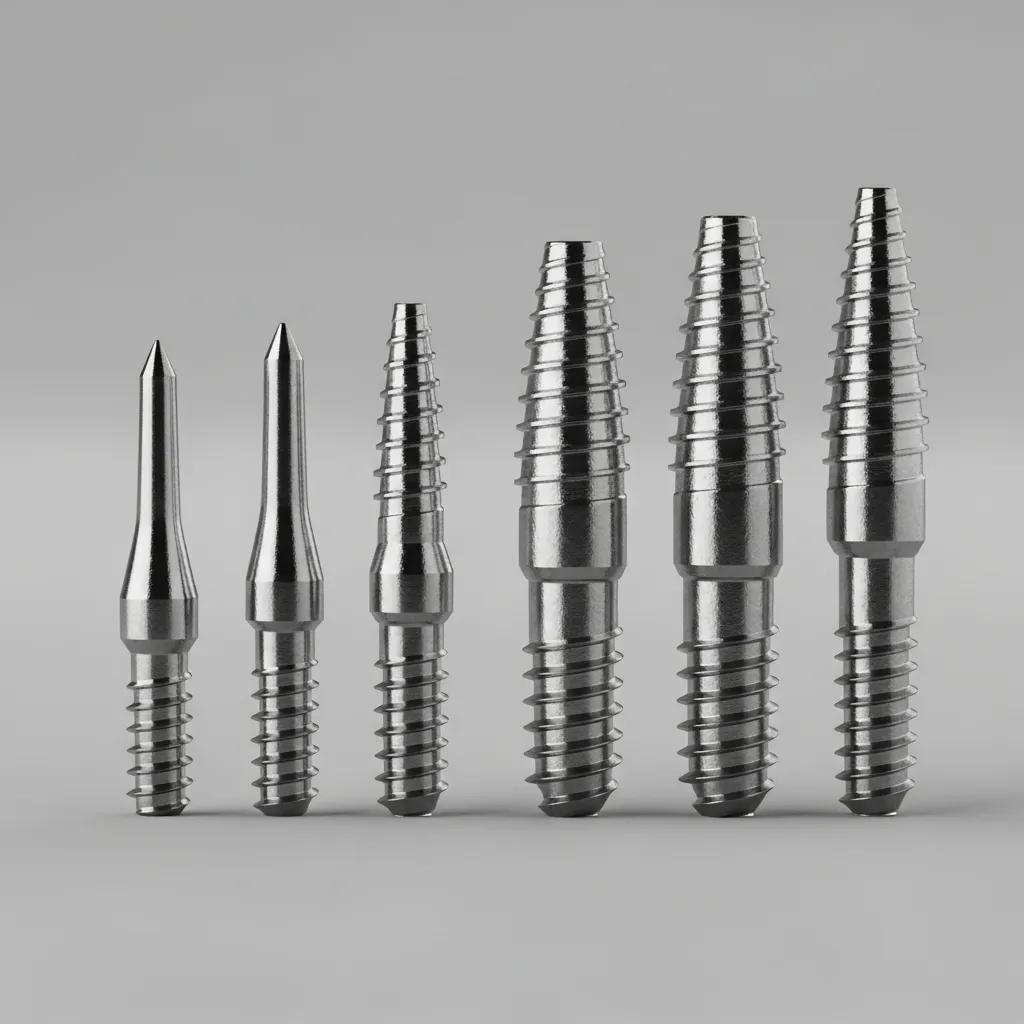
Mini implants are narrower in diameter and often built as a single piece, which can simplify placement. Traditional implants tend to be wider and are typically two-part systems (a post plus an abutment). Those structural differences affect how the implant is placed, how long healing takes, and which cases each type is best suited for.
Because of their construction, mini implants may be used in sites where a standard-diameter implant would require grafting. Traditional implants offer a wider platform for attaching crowns and bridges, which can distribute chewing forces differently. Your dentist will match implant design to the restoration type and the biomechanical demands of your bite.
What Makes Mini Dental Implants Unique?
Mini dental implants appeal to patients who need a less invasive option. Their smaller size allows placement in areas with limited bone without always needing a bone graft, and they can be an efficient way to stabilize dentures or replace small teeth.
Mini implants are often chosen for scenarios such as stabilizing an existing lower denture or replacing a narrow front tooth where cosmetic demands and biting forces are moderate. In denture stabilization cases, several mini implants can secure an overdenture and dramatically reduce movement, improving comfort and chewing.
What Are the Benefits of Mini Dental Implants?
Less invasive procedure: The narrow profile usually means a simpler placement with smaller incisions.
Faster recovery: Many patients feel comfortable sooner and experience less post-op discomfort.
More affordable option: Because the procedure is often quicker and uses fewer components, mini implants can cost less than traditional implants.
Clinical literature supports mini implants as a less invasive alternative in select cases.
Mini Implants: Minimally Invasive Alternative to Conventional Dental Implants
These are perceived as being minimally invasive compared to other implant treatment options, such as conventional diameter implants, four narrow diameter implants or six mini dental implants.
Minimally Invasive Implant Treatment Alternatives for, E Preoteasa, 2015
Practically, a mini implant visit can be shorter: after local anesthesia, placement typically involves precise insertion and immediate attachment of a retention mechanism in denture cases. Pain is usually manageable with over-the-counter medications, and swelling tends to be limited. Your team will provide clear aftercare instructions such as soft-food recommendations and oral hygiene measures tailored to the implant type.
What Are the Potential Drawbacks of Mini Dental Implants?
Lower load tolerance: Mini implants may not withstand the same heavy chewing forces as wider, traditional implants.
Less long-term evidence: While success rates are promising, there is less long-term outcome data compared with conventional implants.
Not ideal for every case: For full-arch restorations or extensive tooth replacement, traditional implants are often the better choice.
Ongoing studies continue to evaluate long-term survival and best-use scenarios for mini implants.
Mini Dental Implants: Long-Term Prosthodontic Solution & Survival Rates
Mini dental implants (MDI) and small diameter implants (SDI) availability as a mean for long term prosthodontics. Our aim is to evaluate various survival rates of MDI and SDI in short and long term.
New approach towards mini dental implants and small-diameter implants: an option for long-term prostheses, A Gleiznys, 2012
Other considerations include the prosthetic options available: certain crown or bridge designs may be more challenging on smaller-diameter implants, and laboratory work can differ from conventional restorations. If an implant is being used to retain a removable denture, the attachment system and maintenance schedule should be planned in advance so you understand the long-term care needed.
Why Are Traditional Dental Implants Considered the Gold Standard?
Traditional implants have a long history of reliable results and are widely used because they offer strength, durability, and versatility. For many patients, they provide the most predictable long-term outcome for replacing one tooth or an entire arch.
Traditional implants are often used when a restorative solution must withstand higher bite forces, or when multiple adjacent teeth are being replaced with a bridge or fixed prosthesis. Their modular design (implant plus abutment plus crown) offers flexibility during restorative steps and allows for more options when shaping the final tooth for aesthetics and function.
What Are the Advantages of Traditional Dental Implants?
Superior strength: They support single crowns, bridges, and full-arch prostheses with confidence.
Long-term durability: With good home care and regular check-ups, traditional implants can last for many years—often decades.
Flexible applications: From single-tooth replacements to complex full-arch reconstructions, traditional implants handle a wide range of needs.
Because traditional implants can support larger prostheses, they are frequently chosen for patients who prioritize a fixed, non-removable final option. When combined with structured treatment planning, they create outcomes that closely mimic natural teeth in both look and performance.
What Considerations Should Patients Know About Traditional Implants?
More invasive placement: Wider implants may require bone grafting or more extensive surgery in some cases.
Longer healing time: Full integration with the jawbone can take several weeks to months.
Higher initial cost: The procedure and components typically cost more than mini implant options.
Planning for traditional implants often includes a consultation with imaging, possible referral for bone grafting, and a staged timeline. While this longer process can be more involved up-front, many patients accept the trade-off for increased stability and a broader set of restorative options.
How Do Mini and Traditional Dental Implants Compare?
To choose wisely, compare size, procedure, recovery, cost, and durability. Below are key differences to help guide your decision.
What Are the Key Differences in Size, Procedure, and Recovery?
Implant Type
Size
Procedure
Recovery Time
Mini Implants
Smaller diameter (typically less than 3mm)
Less invasive
Quicker recovery (days to weeks)
Traditional Implants
Larger diameter (typically 3.4mm to 6mm)
More invasive
Longer recovery (several weeks to months)
These differences shape the patient experience: mini implants often mean a faster, simpler visit, while traditional implants may involve more planning and healing for a very durable result.
To illustrate with practical examples: a single narrow front tooth replaced for cosmetic reasons may be well-suited to a mini implant, while replacing several back teeth for heavy chewers is more commonly handled with traditional implants and larger-diameter components. Your dentist will evaluate forces, aesthetic demands, and the surrounding tissues to select the best option.
How Do Cost, Durability, and Ideal Use Cases Differ?
Implant Type
Cost
Durability
Ideal Use Cases
Mini Implants
Generally lower
Good success rates, but less long-term data
Limited bone density, single tooth replacement, or denture stabilization
Traditional Implants
Higher
Proven long-term durability (10+ years)
Extensive tooth replacement, full arch restorations, heavy chewing needs
Weigh these practical differences with your dentist so the chosen solution matches your oral health goals and budget.
Durability and cost should be considered alongside maintenance commitments: any implant will require ongoing care, and the condition of the opposing dentition and restorations can influence how long a given implant-supported tooth lasts. If you have specific budget constraints, ask your team for phased plans that allow priority treatment now and staged work later.
Who Is a Candidate for Mini vs. Traditional Dental Implants?
Candidacy depends on a few clinical and personal factors: bone quality, general health, treatment goals, and how quickly you want to recover.
What Makes Someone an Ideal Candidate for Mini Dental Implants?
Good candidates for mini implants usually have:
Enough local bone to support a smaller-diameter implant without grafting.
A preference for a less invasive procedure and faster recovery.
Needs such as denture stabilization or replacing small teeth where mini implants are appropriate.
During a consultation, your dentist will review your medical history, any medications that can affect healing, and lifestyle factors such as smoking that can influence implant success. In some cases, poor systemic health or uncontrolled conditions may require stabilization before implant therapy proceeds.
Who Should Consider Traditional Dental Implants?
Traditional implants are typically recommended for people who:
Have adequate bone for wider implants or are open to bone grafting if needed.
Require multiple replacements or a full-arch restoration.
Want the most durable, long-term solution available.
Traditional implant candidates often benefit from detailed planning that includes impressions, bite records, and possibly surgical guides. If your case needs bone grafting, the grafting phase can add time but often leads to more predictable long-term results for larger restorations.
What Are the Cost Differences and Financing Options for Dental Implants in Denton?
Cost is an important part of deciding. Mini implants usually come at a lower price point, but final cost varies with case complexity and the number of implants needed.
How Do Mini Dental Implant Costs Compare to Traditional Implants?
Because mini implants often require less surgical time and fewer parts, they are typically more affordable than traditional implants. Exact pricing depends on your specific treatment plan and the provider’s approach.
When budgeting, consider that implant treatment commonly includes separate items such as the implant fixture, the abutment, the lab-fabricated crown or denture, any imaging or scans, and follow-up visits. For transparency, ask your provider for a written estimate that breaks down these components so you can compare options and plan accordingly.
What Flexible Financing and Insurance Plans Are Available?
Many practices, including Dentist in Denton – Dentures & Dental Implants, offer flexible payment plans and accept several insurance options to help spread costs. Schedule a free consultation to review estimates and financing choices that suit your situation.
Common payment approaches include in-house financing, third-party financing programs, splitting treatment into phases, or combining insurance benefits with payment plans. During your consultation, the administrative team can explain paperwork, estimated out-of-pocket costs, and any preauthorization your insurer may require.
How Can You Make a Personalized Decision About Your Dental Implant Options?
Choosing the right implant starts with a complete exam and a conversation about your health, expectations, and budget. Together, we can map a plan that fits your life.
Why Is a Free Dental Implant Consultation Important?
A free consultation lets us assess your mouth, answer your questions, and give personalized recommendations—so you leave with a clear next step and no pressure.
At the consultation you can expect a review of your medical history, a visual exam, and appropriate imaging. The team will discuss alternatives, risks, and the expected timeline. Bring a list of questions, your current medications, and any recent dental records to make the visit efficient and informative.
What Factors Should Influence Your Implant Choice?
Consider these key points when deciding:
Your oral health and jawbone condition.
Your budget and available financing.
How invasive a procedure you’re comfortable with and how quickly you want to recover.
Also weigh lifestyle factors such as how often you travel, your ability to attend follow-up visits, and whether you prefer a removable or fixed final restoration. Discuss realistic expectations about aesthetics and function so the final plan aligns with your priorities.
What Are the Most Common Questions About Mini and Traditional Dental Implants?
Below are answers to frequent questions we hear from patients considering implants.
Are Mini Dental Implants as Effective as Traditional Implants?
Mini implants work well for certain needs—like stabilizing lower dentures or replacing small teeth—especially when bone is limited. For larger restorations and patients who need maximum chewing strength, traditional implants are usually the better option.
Clinical trials have compared success rates for mini and conventional implants in specific applications such as mandibular overdentures.
Mini vs. Conventional Dental Implants: Comparative Success Rates
the success rate of mini implants for mandibular overdentures, comparing mini dental implant and conventional dental implant, assuming that there is no significant difference between the three groups of implant.
Comparative clinical study of conventional dental implants and mini dental implants for mandibular overdentures: a randomized clinical trial, 2017
How Long Is the Recovery Time for Each Implant Type?
Recovery depends on the procedure. Mini implants often allow you to return to normal activities within days to a couple of weeks. Traditional implants usually need a longer healing period—several weeks to a few months—for full integration with the jawbone.
Recovery also depends on any adjunctive procedures such as bone grafts or sinus lifts. After surgery, following your post-op instructions (including diet modifications, salt-water rinses if recommended, and avoiding smoking) helps reduce complications and supports predictable healing. Your provider will schedule follow-ups to monitor integration before final restorations are attached.
Frequently Asked Questions
What is the lifespan of mini dental implants compared to traditional implants?
Traditional implants have more long-term studies and commonly last many years with good care. Mini implants have shown good short- and mid-term results for appropriate uses, though long-term data is still growing. We’ll review your situation and expectations to estimate likely longevity.
Longevity is affected by oral hygiene, smoking, systemic health (such as uncontrolled diabetes), and how well the final restoration distributes forces. Regular professional maintenance and prompt attention to any gum inflammation or loosening components are essential to extending the life of any implant-supported restoration.
Can mini dental implants be used for full arch restorations?
Generally, mini implants are not the first choice for full-arch restorations because they offer less structural support than wider implants. They are most often used to stabilize dentures or replace single small teeth. For full-arch work, traditional implants are typically recommended for strength and longevity.
What are the maintenance requirements for mini and traditional implants?
Both implant types need daily brushing, flossing, and regular dental exams. Your dentist may recommend specific tools or cleaning techniques depending on the implant type and restoration. Routine professional cleanings and check-ups help extend the life of any implant.
Additional maintenance steps may include using interdental brushes around implant posts, non-abrasive toothpaste on restorations, and professional polishing at regular intervals. If you have an overdenture, attachments will wear over time and need periodic replacement to maintain retention.
Are there any age restrictions for getting dental implants?
There’s no strict age cutoff. Candidates should have finished jaw growth (usually by late adolescence). Older adults who are healthy and have adequate bone can be excellent candidates. A thorough exam and health review determine suitability.
For older adults, overall health, medication use, and bone quality are evaluated. Many healthy seniors enjoy successful implant treatment and improved quality of life after restoration of missing teeth.
How do I choose between mini and traditional dental implants?
Choosing comes down to clinical needs, bone availability, budget, and your recovery goals. A consultation and imaging will clarify which option fits your mouth and lifestyle best.
Ask your dentist about predictable outcomes for similar cases they have treated, request to see before-and-after examples when available, and discuss a clear timeline and cost breakdown. Understanding the trade-offs will help you make an informed decision aligned with your goals.
What should I expect during the dental implant procedure?
Expect an exam and imaging to evaluate bone and plan placement. Traditional implants may require more extensive surgery and possible bone grafting. Mini implants usually involve a simpler, less invasive placement. After surgery you’ll get clear post-op instructions to support healing and success.
On the day of surgery you can expect local anesthesia (and sedation if chosen) to keep you comfortable. The team will provide step-by-step guidance for post-op care, prescribe or recommend analgesics if needed, and schedule check-ups to confirm healing. For denture patients, a temporary adjustment or immediate attachment may be provided so you leave with improved function.
Conclusion
Both mini and traditional implants have clear roles. Mini implants are a less invasive, cost-friendly choice for select cases; traditional implants provide proven strength and long-term durability for more extensive needs. Talk with our team to get a tailored recommendation—schedule a free consultation and we’ll help you choose the best option for your smile.
Choosing an implant solution is a collaborative process that balances clinical realities with your personal goals. With careful planning, good communication, and appropriate aftercare, implant therapy can deliver predictable improvements to function, appearance, and quality of life.