Dental Bridges: Pros & Cons Explained — Your Complete Guide to Types, Benefits, and Patient Insights
Missing a tooth can make eating, talking and smiling feel awkward — and that’s more common than you think. This guide walks you through dental bridges: what they are, the different types, the main benefits and drawbacks, and what patients in Fort Worth have learned along the way. We explain the procedure, costs, aftercare, and how to choose the option that fits your mouth and your budget so you can make a confident decision.
What Is a DentalBridge and How Can It Restore Your Smile?
A dentalbridge is a fixed replacement for one or more missing teeth. It fills the gap by attaching a false tooth (or teeth) to neighboring teeth or dental implants. Bridges restore chewing and speaking ability, help keep your remaining teeth in position, and improve the look of your smile.
Definition and Purpose of Dental Bridges
Bridges replace teeth lost to decay, injury, or other issues. They typically include one or more artificial teeth called pontics, which are held in place by crowns or anchors on adjacent teeth (called abutments). Beyond looks, bridges help protect oral health by preventing nearby teeth from drifting into the gap.
Key Components: Pontic and Abutment Teeth Explained
The pontic is the replacement tooth that fills the empty space. Abutment teeth are the natural teeth next to the gap that support the bridge. Together they create a stable restoration that looks and functions much like your natural teeth.
What Are the Different Types of Dental Bridges and Their Benefits?
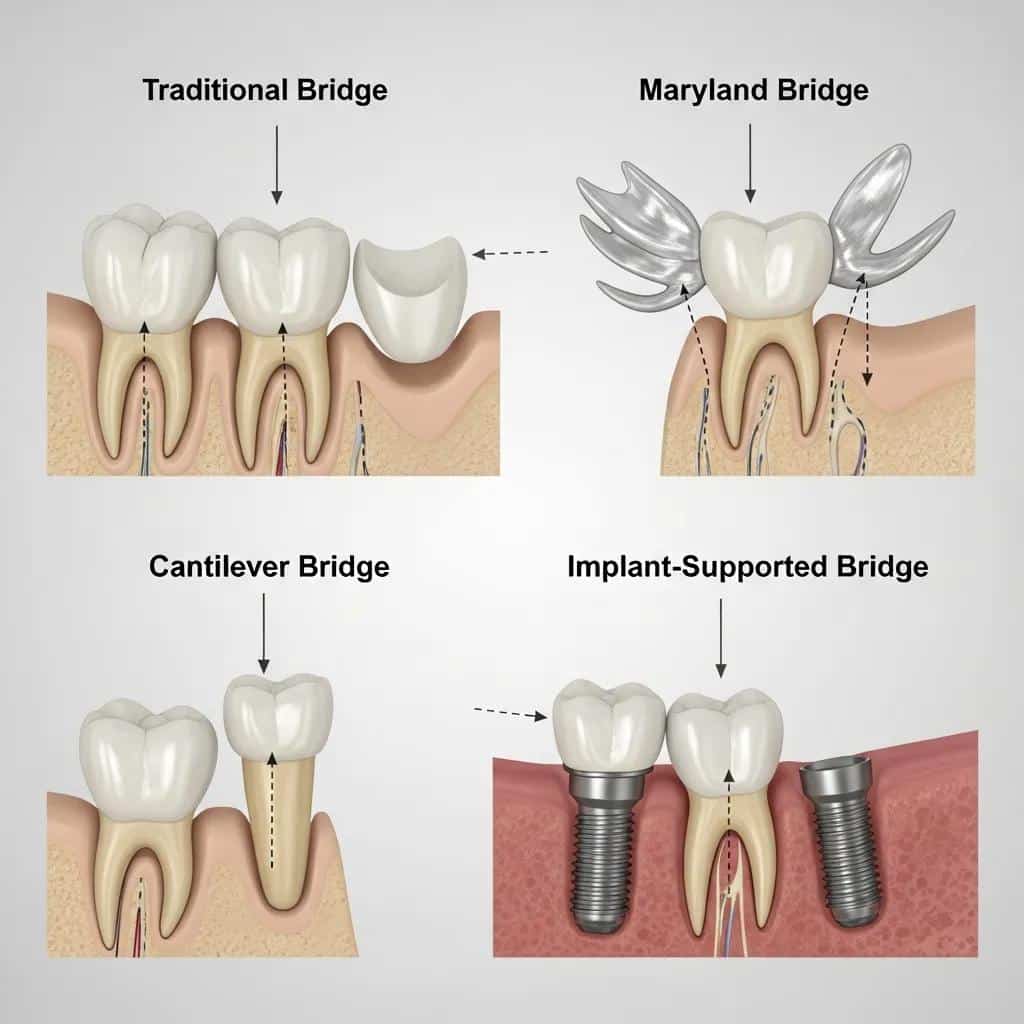
Traditional, Maryland, Cantilever, and Implant-Supported Bridges Compared
Traditional Bridges: The most common choice — a pontic held by crowns on the teeth beside the gap. Best when those neighboring teeth are healthy enough for crowns.
Maryland Bridges: Also called resin-bonded bridges; a pontic is attached with a metal or porcelain framework bonded to the back of the adjacent teeth. Less invasive and preserves more tooth structure.
Cantilever Bridges: Used when there’s only one tooth next to the gap to anchor the pontic. Suitable for specific areas of the mouth with limited support options.
Implant-Supported Bridges: The bridge is anchored to dental implants instead of natural teeth. This is a very stable, long-lasting option for replacing multiple teeth.
Type of Bridge
Support Structure
Ideal Use Case
Traditional Bridge
Crowns on adjacent teeth
Healthy teeth on both sides of gap
Maryland Bridge
Bonded to adjacent teeth
Minimal tooth alteration needed
Cantilever Bridge
Single adjacent tooth
Limited space for support
Implant-Supported Bridge
Dental implants
Multiple missing teeth
How to Choose the Right Type of DentalBridge for You
The best bridge depends on where the missing tooth is, the condition of the teeth next to the gap, your budget, and your long-term goals. We recommend a dental exam and x-rays so your dentist can recommend the option that gives you the best balance of function, appearance, and durability.
What Are the Advantages of Dental Bridges for Tooth Replacement?
Improved Aesthetics and Confidence with Dental Bridges
Bridges close visible gaps and restore a natural-looking smile, which can boost confidence and make social situations more comfortable. Many patients say they smile more freely after treatment.
Restored Chewing Function and Prevention of Tooth Shifting
Replacing missing teeth helps you chew more comfortably and prevents nearby teeth from shifting into the empty space — a common cause of bite problems and future dental work.
What Are the Potential Disadvantages and Considerations of Dental Bridges?
Impact on Adjacent Teeth and Bone Loss Risks
Traditional bridges often require reshaping neighboring teeth to fit crowns, which can make those teeth more sensitive or vulnerable over time. Bridges also don’t replace the tooth root, so the jawbone under the missing tooth may shrink (resorb) over the years.
Lifespan, Durability, and Oral Hygiene Challenges
Bridges usually last between 5 and 15 years, depending on care and materials. Good oral hygiene and regular dental visits are essential — plaque buildup around the abutment teeth can cause decay or gum disease and shorten the bridge’s life.
How Do Dental Bridges Compare to Implants and Dentures?
Cost, Longevity, and Invasiveness: Bridges vs. Implants
Bridges cost less up front than implants, making them an accessible choice for many patients. Implants, however, fuse to the jawbone and generally last longer. Implants require surgery and more healing time, while bridges usually need multiple dental visits but no surgical placement.
Stability and Comfort: Bridges vs. Partial Dentures
Fixed bridges feel more secure than removable partial dentures, which can move while eating or speaking. That said, partial dentures may be a better fit for patients who aren’t candidates for bridges or implants.
What Is the Typical Cost and Lifespan of Dental Bridges at Affordable Dentist Near Me?
Understanding Pricing and Financing Options
Costs vary by bridge type and materials. Expect roughly $500 to $1,200 per tooth for traditional bridges. Implant-supported bridges tend to range from $2,000 to $5,000 or more depending on how many implants and the complexity. We offer financing options to help make treatment manageable.
Expected Longevity and Factors Affecting Durability
With good home care and regular dental check-ups, bridges can last 5 to 15 years — sometimes longer. Material choice, oral hygiene, and the health of supporting teeth all affect how long a bridge will last.
How Is the DentalBridge Procedure Performed at Affordable Dentist Near Me?
Step-by-Step Overview: Consultation to Placement
We start with a consultation and exam to confirm the best treatment. For traditional bridges, adjacent teeth are prepared and impressions are taken to make a custom bridge. A temporary bridge may be placed while your permanent one is made, and final placement usually happens a few weeks later.
Ensuring Patient Comfort with Modern Technology and Sedation
Your comfort matters. We use modern dental tools and offer sedation options when appropriate so the procedure is as comfortable as possible. Our team supports you through each step and answers questions along the way.
How Can You Care for Your DentalBridge to Maximize Its Lifespan?
Daily Maintenance: Brushing and Flossing Techniques
Brush twice daily with a soft-bristled brush and non-abrasive toothpaste. Floss under the pontic using a floss threader or interdental brush to remove plaque from hard-to-reach spots. Good daily care helps prevent decay and gum problems around the bridge.
Regular Check-Ups and Addressing Common Problems
Schedule regular dental visits so we can check the fit and function of your bridge. If you notice discomfort, looseness, or changes in fit, contact your dentist right away — early attention often prevents bigger issues.
What Do Patients Say About Their DentalBridge Experiences in Fort Worth?
Real Patient Testimonials and Success Stories
Many local patients tell us bridges gave them back confidence and made everyday activities like eating and talking more comfortable. Those success stories often highlight the natural look and reliable function of a well-made bridge.
Common Patient Concerns and How They Were Resolved
Some patients mention a short adjustment period or mild sensitivity at first, but most find these issues settle quickly with the right care. Our dentists follow up to make sure you’re comfortable and to address any questions during recovery.
For those seeking quality dental bridge services, our Fort Worth location is ready to assist. We’re committed to clear communication, affordable care, and results that help you smile with confidence.
Frequently Asked Questions
What is the recovery time after getting a dentalbridge?
Recovery varies, but most people have only mild discomfort or sensitivity for a few days. Many return to normal activities within 24–48 hours. Follow your dentist’s aftercare instructions and attend any follow-up visits to ensure a smooth recovery.
Can dental bridges be replaced or repaired if damaged?
Yes. Bridges can often be repaired or re-cemented, depending on the problem. If a bridge is cracked or badly worn, your dentist may recommend a replacement. Regular exams help catch issues early so repairs are simpler.
Are there any dietary restrictions after getting a dentalbridge?
For the first few days, avoid very hard, sticky, or chewy foods while the bridge settles. Start with soft foods and gradually return to your normal diet once your dentist says it’s safe. Ongoing, avoid habits that strain the bridge, like chewing ice or opening packages with your teeth.
How do dental bridges affect speech?
Most people notice little to no long-term change in speech. There may be a brief adjustment period as you get used to the new tooth structure, but many patients find their speech improves once the bridge is in place.
What should I do if my dentalbridge feels loose?
If your bridge feels loose, contact your dentist right away. A loose bridge can lead to damage or infection if it’s not addressed. Your dentist will check the bridge and may re-cement or replace it depending on the situation.
Can I get dental bridges if I have gum disease?
Gum disease needs to be treated before placing a bridge. Your dentist will recommend periodontal treatment — such as deep cleaning — to restore gum health first. Once your gums are stable, you can discuss bridge options safely.
How do I know if I’m a good candidate for a dentalbridge?
A consultation is the best way to find out. Your dentist will evaluate the health of your adjacent teeth, gums, and jawbone. If you have solid support from neighboring teeth or implants and you can commit to good oral hygiene, a bridge may be a strong option.
How Long Do Dental Bridges Last?
With proper care, dental bridges typically last 5 to 15 years. Regular dental check-ups and good daily hygiene can help extend their lifespan.
Are Dental Bridges Painful or Difficult to Maintain?
Most patients experience minimal pain, especially with modern anesthesia and sedation options. Maintenance is straightforward: daily brushing, flossing (with threaders as needed), and regular dental visits — a routine most people find easy to manage.
How Can You Schedule a Free DentalBridge Consultation at Affordable Dentist Near Me?
Booking Your Appointment at the Fort Worth Location
To book an appointment at Affordable Dentist Near Me, call the office or use the online scheduler. If you have recent dental records or x-rays, bring them to your consultation — they help us plan the best treatment for you.
What to Expect During Your Free Consultation
During your free consult, we’ll review your dental history, take any needed x-rays, and discuss options that fit your goals and budget. You’ll leave with a clear recommendation, cost estimate, and answers to any questions you have.
Conclusion
Dental bridges are a reliable way to restore function and appearance after tooth loss. Understanding the types, benefits, trade-offs, and care needs will help you choose the right path for your smile. If you’re considering a bridge, schedule a free consultation at our Fort Worth location — we’ll help you explore the best option and a plan that works for you.