Please ensure Javascript is enabled for purposes of website accessibility
"People Love Us On Google"

1470+ Google reviews

New patients Welcome! Extended hours!

Understand the Cost of Dental Implant Replacement Fees
December 10, 2025  |  Affordable Dentist

Understand the Cost of Dental Implant Replacement Fees

Dental Implant Replacement in Fort Worth: What to Expect, Costs, and Next Steps

Dental implant replacement means removing a failed implant and restoring the tooth or arch with a new implant-supported solution. This guide explains the typical costs, the clinical steps you’ll face, and practical choices that can make treatment more affordable. You’ll find Fort Worth–specific cost ranges for single, multiple, and full-arch replacements, common reasons implants fail, and concrete tips to reduce long-term expense. If you or a family member are weighing options after an implant failure, this article walks through the patient journey — from evaluation to a personalized estimate and final restoration — and highlights prevention strategies to keep future costs lower. Affordable Dentist Near Me offers a Free Dental Implant Consult and everyday low fees so you can get a clear, written estimate at your first visit and avoid surprise costs. Below we cover cost breakdowns and scenarios, why implants fail and how that affects price, a step-by-step replacement timeline with cost checkpoints, financing choices in Fort Worth, implant-type differences, reasons to choose a local provider, what to expect at a no-cost consult, and short FAQs that answer the most common pricing questions. Read on for honest pricing context, practical clinical guidance, and clear next steps.

How Much Does Dental Implant Replacement Cost in Fort Worth?

Calculator and dental tools showing a clear cost breakdown for implant replacement

Costs for dental implant replacement in Fort Worth depend on the situation: replacing a single implant, several adjacent implants, or a full arch all have different base fees and common add-ons. Typical cost components include implant removal, diagnostic imaging, any bone grafting or sinus lift, the new implant fixture, abutment and crown or prosthesis, and anesthesia or sedation when needed. Location and provider experience influence fees, and Fort Worth clinics often offer in-house financing or discount options that can reduce out-of-pocket expense. The table below compares common scenarios and what they usually include so you know what to expect before a personalized estimate at your consult. Understanding these baseline ranges helps you see where costs increase and when staged treatment or alternative prosthetics might be a smarter budget choice.

Different replacement scenarios, typical timelines, common add-ons, and estimated ranges are shown in the table below to give local context and decision checkpoints.

Treatment ScenarioTypical Cost Range (est.)Typical Add-ons & Timeline
Single implant replacement$1,500 – $4,000Removal; possible grafting; new implant + crown; healing 3–6 months
Two-to-three adjacent implants$3,500 – $8,000Multiple fixtures and restorations; grafting more likely; staged timeline 4–8 months
Partial-arch replacement (3–6 implants)$8,000 – $18,000Multi-implant prosthesis; increased lab work; possible sinus lift; 4–9 months
Full-arch (All-on-4 style replacement)$15,000 – $35,000+Full-arch prosthesis; higher lab costs; immediate-load vs staged options; 3–12 months

That table shows single-tooth replacements are usually the lowest cost per tooth, while full-arch solutions consolidate the expense into one comprehensive prosthesis. The next section breaks down average price ranges in realistic scenarios so you can see which add-ons push a quote higher.

What Are the Average Price Ranges for Single and Multiple Implant Replacements?

A straightforward single-implant replacement in Fort Worth — when the jawbone is healthy and no graft is needed — tends to sit at the lower end of the range. For example, an atraumatic removal with timely restoration often stays near $1,500–$2,500. Cases that need surgical removal, bone grafting, and delayed restoration commonly fall into the $3,000–$4,000 band. Multiple adjacent implants scale with the number of fixtures and prosthetic parts: two implants share some lab costs, but each fixture and crown adds to the total; partial-arch solutions introduce frameworks or bars that increase lab work and clinician time. Keep in mind that anesthesia, CBCT imaging, and specialist referrals raise cost, while staged treatment can spread payments across appointments to help with budgeting. For a precise, written estimate for your situation, schedule the Free Dental Implant Consult at Affordable Dentist Near Me — we’ll outline which scenario matches your needs and what add-ons to expect.

Which Factors Influence the Cost of Dental Implant Replacement?

Many clinical and non-clinical factors shape the final replacement fee. Key drivers include the number of implants, implant material, whether bone grafting or soft-tissue work is needed, advanced imaging and lab work, anesthesia choices, and the provider’s experience and approach. Patient-specific issues — a history of periodontal disease, smoking, diabetes, or a fractured/infected implant — affect whether adjunctive procedures are required and therefore the total cost. Geographic location and clinic overhead also set baseline fees. Choosing staged care or different prosthetic options can lower immediate expense. Before your consult, bring prior dental records and insurance details to speed evaluation and help the team give a more accurate estimate at your no-cost appointment.

What Causes Dental Implants to Fail and Require Replacement?

Graphic showing common failure points of dental implants and treatment implications

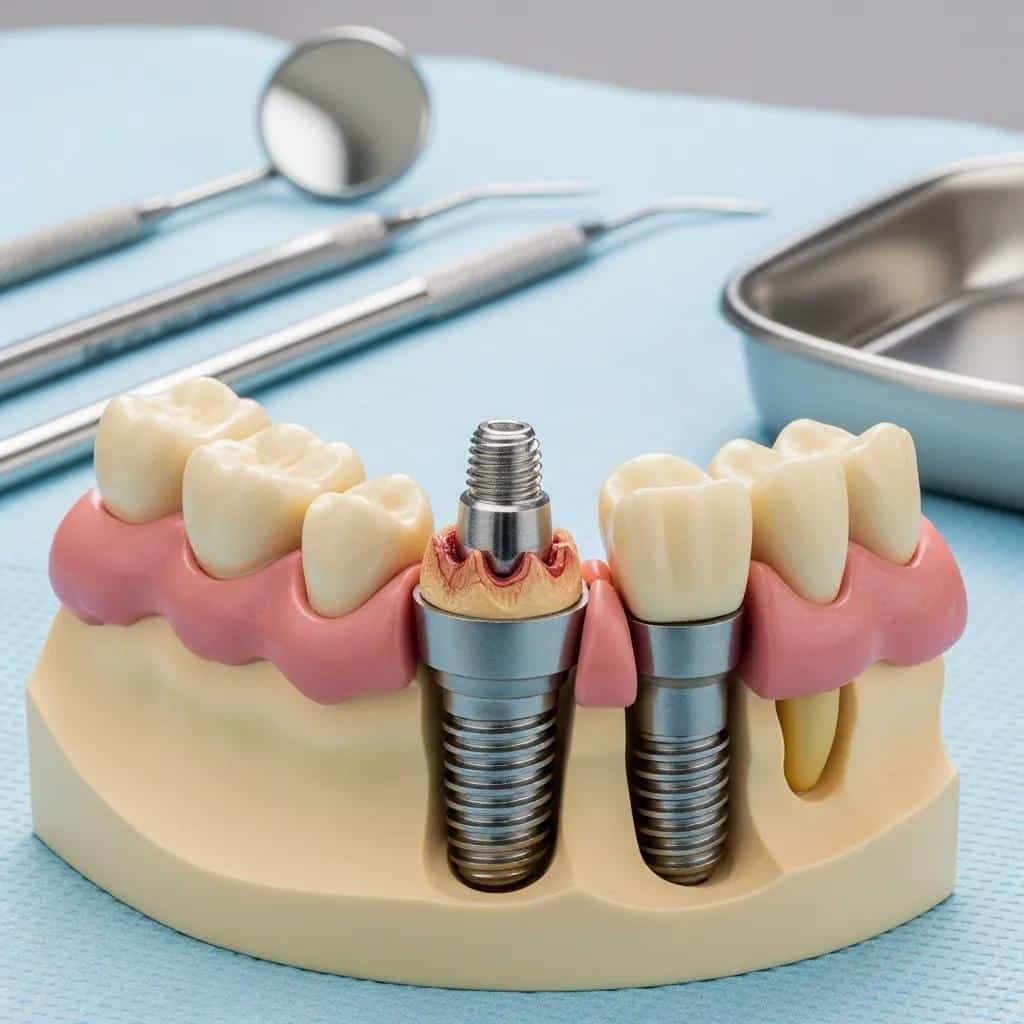
Knowing why implants fail helps you prevent problems and understand the repairs that affect cost. Failures come from biological causes like peri-implantitis or failed osseointegration, mechanical issues such as component fracture, or external trauma that damages the fixture. Biological failures often require removal, infection control, and grafting before re-implantation. Mechanical fractures might be fixed with component replacement when possible, but severe breaks often need full removal and reconstruction. Regular exams and imaging catch problems early, reducing the odds of complex, costly revisions. Below are the main causes and how each changes treatment and cost.

  • Peri-implantitis: Infection and bone loss around the implant require cleaning, antibiotics, and often bone grafting before placing a new implant — a process that adds time and cost.
  • Osseointegration failure: If the implant doesn’t fuse with bone, removal and site assessment determine whether immediate re-implantation is an option or if staged grafting is needed.
  • Mechanical fracture: A broken implant body, abutment, or prosthesis may be repaired if accessible, but major fractures usually require removal and reconstruction.
  • Trauma: External impact can damage bone and soft tissue, sometimes requiring specialist care and more extensive (and costly) repairs.

Getting a prompt clinical assessment when you notice problems can limit escalation to grafting or full-arch reconstruction. The next section lists common clinical signs that should trigger urgent evaluation.

What Are the Common Signs of a Failing Dental Implant?

Spotting problems early shortens the path to repair and can lower replacement costs. Warning signs include ongoing pain near the implant, swollen or bleeding gums, recurring discharge, looseness of the implant or prosthesis, and gum recession that exposes implant parts. Normal post-op soreness should improve within the expected healing window — persistent or worsening symptoms mean you should be evaluated right away. If the implant is mobile, it has lost support and will usually need removal and assessment for bone loss, which often means grafting and staged re-implantation. Seek urgent care for any of these signs to limit infection-related bone loss and avoid larger procedures later.

What Medical Conditions Lead to Implant Failure?

Certain systemic and local conditions raise the risk of implant complications and can make replacement more involved. Uncontrolled diabetes, active periodontal disease, heavy smoking, osteoporosis, and medications that affect bone metabolism (for example, some bisphosphonates) are linked to higher failure rates. These factors affect healing and bone quality, so clinicians typically review medical history and may request medical clearance before elective re-implantation. Addressing modifiable risks — quitting smoking or treating periodontal disease — improves outcomes and lowers the chance of staged, costly procedures. When medical risks are present, expect extra diagnostics and pre-treatment steps that lengthen the timeline and increase fees; your consult will outline how to manage those risks and improve prognosis.

What Is the Step-by-Step Process for Dental Implant Replacement?

Replacement follows a series of clinical stages: diagnostic evaluation and imaging, safe removal of the failed implant, site preparation (which may include grafting or soft-tissue work), implant placement with a healing period for osseointegration, and final restoration with an abutment and crown or prosthesis. Each stage is a potential cost checkpoint and scheduling milestone. The initial consult will tell you which stages are needed and whether immediate replacement is possible — a decision that affects timing and how fees are staged. Below are the usual steps with typical timing and where charges commonly occur.

  1. Diagnostic evaluation and imaging to find the cause of failure and plan reconstruction.
  2. Implant removal, infection control, and site debridement as needed.
  3. Adjunctive procedures (bone grafting, sinus lift, soft-tissue augmentation) when indicated.
  4. Implant placement followed by an osseointegration period (typically several months).
  5. Final restoration with an abutment and crown or a multi-unit prosthesis, plus ongoing maintenance.

This sequence shows when you’ll get estimates and which stages usually require upfront payment. The next section explains removal techniques and immediate-care choices that change recovery and cost.

How Is a Failed Implant Removed and Prepared for Replacement?

Removal focuses on preserving as much surrounding bone as possible. Techniques range from atraumatic screw-out methods to surgical osteotomy for broken or well-integrated fixtures, and each approach has different time and cost implications. Atraumatic removal is less disruptive and may allow immediate grafting or replacement, shortening treatment time and cost. Surgical removal that requires sectioning or bone removal usually calls for staged reconstruction and raises fees. After removal, clinicians assess bone quantity and quality and recommend grafting or healing time. Decisions about immediate versus delayed re-implantation depend on infection control, soft-tissue health, and overall prognosis. Expect follow-up care after removal — any grafting required will add to the estimate but improve the chance of long-term success.

What Are the Additional Procedures Involved, Such as Bone Grafting?

Bone grafts and sinus lifts are common when supporting bone is insufficient for a predictable implant. These procedures affect both timeline and cost because they introduce separate surgical steps and healing intervals. Graft types include autografts, allografts, xenografts, and synthetic options, each with different healing times and cost profiles; clinician preference and clinical need guide the choice. Typical healing after grafting ranges from three to six months before implant placement is safe, and more complex grafts or sinus elevations can extend that timeline and raise lab and surgical fees. Discuss graft options at your consult to compare staged approaches versus alternatives and to plan financing for procedures that most impact total replacement cost.

How Can You Make Dental Implant Replacement More Affordable?

Making replacement more affordable combines realistic expectations, checking insurance and payment resources, and working with a clinic that offers transparent pricing and patient-friendly financing. Affordable Dentist Near Me promotes everyday low fees and a Free Dental Implant Consult to reduce upfront uncertainty and create a staged, cost-aware treatment plan. Practical steps include verifying dental benefits early, comparing material and prosthetic choices for value, staging treatment to spread costs, and asking about in-house payment plans or third-party financing for monthly payments. The table below compares common financing routes and how they typically apply to implant replacement so you can plan next steps.

Payment OptionCoverage LikelihoodTypical Terms & Clinic Availability
Dental insurancePartial coverage possible for removal and restoration; implant bodies often excludedCheck annual maximums and pre-authorization requirements
Dental discount planImmediate percentage savings on services for a membership feeReduces out-of-pocket costs for procedures not covered by insurance
In-house payment planOften available for staged care with monthly installmentsContact clinic to discuss term length and minimums
Third-party dental loanVariable approval; spreads cost over 6–60 monthsUseful for larger full-arch or multi-stage plans

This comparison shows that insurance can help with parts of the bill, but combining a discount plan or in-house payment option often makes monthly payments most manageable. Discuss these choices during the Free Dental Implant Consult so the team can create a written payment plan that fits your budget. The sections that follow explain financing types and how insurance usually applies to replacement fees.

What Financing Options and Payment Plans Are Available in Fort Worth?

In Fort Worth, common financing options include dental insurance (which may cover portions of removal or prosthetic work), dental discount plans that lower fees for members, in-house monthly payment plans from clinics, and third-party medical/dental loans that spread cost over longer terms. Each option has trade-offs: many insurance plans exclude implant fixtures or limit prosthetic coverage; discount plans give immediate savings without claims; in-house plans are flexible and local; third-party loans offer predictable monthly payments but may carry interest. When you come to your consult, bring insurance cards and recent dental records so the care coordinator can outline a combination of options that minimizes out-of-pocket cost and makes staged treatment possible if needed. Discussing these at a no-cost consult helps match clinical needs with a workable payment strategy.

Typical financing checklist to bring to your consult:

  1. Your dental insurance card and benefit summary.
  2. Any prior dental x-rays or treatment notes.
  3. A list of current medications and medical conditions.
  4. Questions about monthly payment preferences and your maximum budget.

After reviewing your options, the clinic can provide a written estimate and payment schedule tailored to your plan so you can budget without surprises.

Does Dental Insurance or Discount Plans Cover Implant Replacement Fees?

Coverage varies widely. Many plans limit payments to parts of the restorative work or exclude implant fixtures entirely, while some will cover removal, crown work, or prosthetic components under restorative or major services. Discount plans work differently by offering negotiated member fees that reduce out-of-pocket cost for services that insurance may not cover. Before treatment, check with your insurer whether removal, bone grafting, implant placement, abutment, and crown or prosthesis have separate benefit codes and whether pre-authorization is needed — that often determines how much you’ll need to finance. Bring your benefit summary to the Free Dental Implant Consult so our team can review likely coverage scenarios and recommend a payment pathway that pairs insurance with in-house plans or discount options to minimize upfront expense.

What Types of Dental Implants Affect Replacement Costs?

Implant type and material affect replacement costs because component price, durability, and special indications vary. Common options include titanium implants, zirconia implants, mini implants, and All-on-4–style systems. Titanium is the long-standing standard with broad clinical data supporting longevity, while zirconia offers aesthetic advantages in some cases at a typically higher material cost. Mini implants are lower-cost options for limited-support needs but have different longevity profiles and indications. All-on-4 and similar full-arch systems change the cost structure by using fewer fixtures while increasing lab and prosthetic fees — often a cost-effective choice for fully edentulous arches over time. The table below compares common implant types, durability, and cost trade-offs so you can see how system choice influences replacement fees.

Implant TypeDurabilityTypical Cost Delta & Best Use-case
Titanium implantHigh long-term dataBaseline cost; reliable for most patients and full-arch frameworks
Zirconia implantMedium–High aesthetic optionHigher material cost; best for metal-free aesthetic zones
Mini implantLower durability for single-tooth or denture stabilizationLower upfront cost; may be appropriate for temporary or limited-support uses
All-on-4 systemHigh prosthetic cost, lower per-tooth fixture countCost-effective for full-arch replacement when immediate function desired

How Do Titanium and Zirconia Implants Differ in Price and Durability?

Titanium implants are the clinical standard because they integrate predictably with bone and have extensive long-term results, which often makes them the cost-effective baseline. Titanium systems also offer a wider range of restorative components, which can simplify later repairs. Zirconia implants are a metal-free option with aesthetic benefits in front-tooth areas and usually cost more because of material and restorative availability; zirconia is chosen for metal sensitivities or when soft-tissue appearance is a priority. Research on zirconia is growing, but titanium remains the benchmark for predictable osseointegration and serviceability in more complex cases. Material choice affects not only initial placement cost but also mid-life repairs, since component availability and compatibility vary. Discuss these trade-offs at your consult to understand long-term cost implications.

What Are Mini Implants and All-on-4 Options for Replacement?

Mini implants are narrow fixtures used for limited-support tasks like denture stabilization or when the ridge is narrow. Their lower component cost can make them an economical short-term or adjunctive solution, but they distribute force differently and generally offer different longevity than standard implants, so they aren’t always the best choice for high-load single-tooth replacements. All-on-4 is a full-arch concept that uses strategic implant angulation to support a fixed prosthesis on fewer fixtures, concentrating cost into one prosthesis with a predictable timeline and often allowing immediate function. While upfront cost is substantial, All-on-4 can be more cost-effective per tooth compared with multiple single implants supporting individual crowns. Suitability depends on bone volume, occlusion, and patient goals; the Free Dental Implant Consult can help you decide whether mini implants, an All-on-4 solution, or conventional implants best balance cost and longevity.

Why Choose Affordable Dentist Near Me Fort Worth for Your Implant Replacement?

Affordable Dentist Near Me in Fort Worth is a local option focused on everyday low fees and a Free Dental Implant Consult to reduce pricing uncertainty and provide a clear path from diagnosis to a written estimate. The practice offers comprehensive services including implant replacement and dentures and is led by Dr. Mike Tri Pham. Together, a locally focused fee structure, a no-cost initial consult, and an experienced team help patients get a realistic plan without surprise bills. Convenient location and Saturday appointments make it easier for working patients to follow multi-stage treatment plans — and staying on schedule can limit total expense. If you’re comparing providers, a free consult lets you meet the team, review timelines, and discuss financing in person.

How Does Dr. Mike Tri Pham’s Expertise Impact Treatment Quality and Cost?

Who leads care matters for outcomes and efficiency. With Dr. Mike Tri Pham overseeing treatment, recommendations come from an experienced clinical perspective that aims to reduce complication-related costs through careful planning and conservative site preparation. Experienced clinicians are better at anticipating adjunctive needs like grafting or soft-tissue management up front, which can prevent mid-course surprises and lower overall fees. While specific credentials aren’t listed here, meeting the clinical lead at the Free Dental Implant Consult gives you a chance to discuss case complexity, prognosis, and contingency plans — all information that helps you plan costs realistically.

What Do Patient Reviews Say About Our Affordable Implant Replacement Services?

Public reviews generally highlight affordability and helpful scheduling. While we don’t reproduce specific quotes here, the overall feedback points to clear pricing and friendly staff as strengths at this location. Prospective patients should check the practice’s public business profile for the latest reviews and bring any concerns to the consult so the team can address them directly. Positive review trends often reflect consistent cost communication, clear scheduling for staged procedures, and accessible financing discussions — operational details that matter for implant replacements because they reduce the chance of surprise fees. If you’re comparison-shopping, reading recent reviews and asking for references can help confirm whether the clinic’s affordability claims match patient experience.

What Should You Expect During Your Free Dental Implant Consultation?

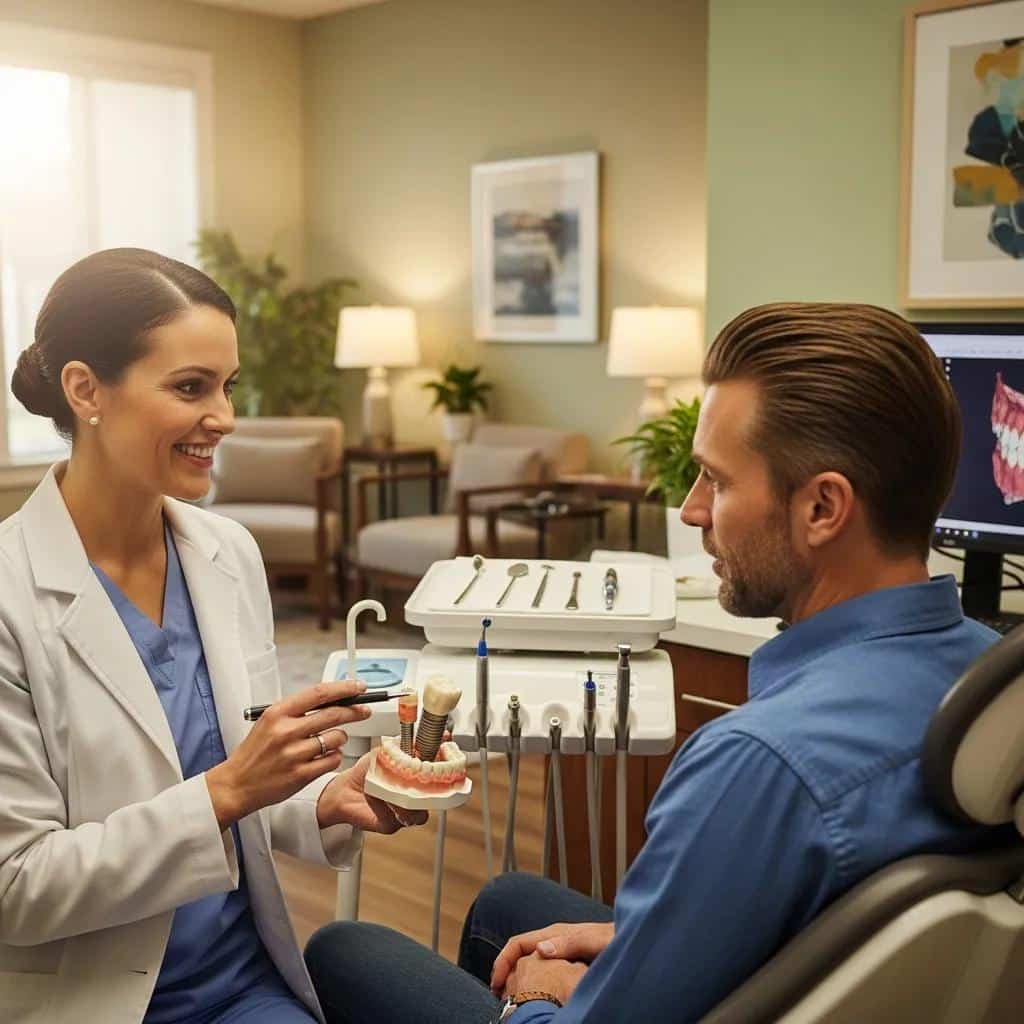
The Free Dental Implant Consult is the first step to turn broad price ranges into a written, personalized estimate. The visit combines a focused dental exam, medical history review, and imaging assessment so the clinician can identify the exact procedures you need. Expect a review of prior records, an intraoral exam, and a discussion of symptoms or the failure history. The consult outlines treatment options, approximate timelines, and preliminary cost ranges, and it explains next steps for diagnostic imaging if required. This appointment reduces uncertainty by clarifying whether removal alone is needed or if grafting and staged insertion will be necessary, and it’s when payment and financing options are presented. Bringing recent x-rays and insurance details speeds the process and helps the team produce a more accurate written estimate at the visit.

How Does the Free Consult Help Estimate Your Replacement Fees?

The Free Dental Implant Consult produces a personalized estimate by combining imaging, clinical findings, and medical history to identify the needed procedures and likely staging. Imaging shows bone volume, implant position, and any pathology that affects whether grafting or specialist care is required. The consult determines if immediate replacement is safe or if a staged approach is better, which influences whether fees are bundled or spread across visits; it also clarifies anesthesia needs and prosthetic choices that change cost. Bringing prior records and insurance information lets staff check coverage scenarios and suggest financing mixes that minimize out-of-pocket expense. The consult ends with a written estimate and a recommended next step plan so you can schedule confidently and avoid surprises.

What Questions Should You Ask During Your Implant Replacement Consultation?

Coming prepared with focused questions helps the consult cover cost, timeline, and the clinical reasoning behind recommendations so you leave with clarity and a written plan. Below is a practical list of suggested questions to bring, grouped to make sure you cover clinical scope, cost details, and payment options.

  1. What is the total estimated cost for my specific replacement scenario, and what does that include?
  2. Which procedures are optional versus required, and how would each affect timeline and price?
  3. How many visits and what timeline should I expect from removal through final restoration?
  4. Does my insurance likely cover any portion of the procedures, and what will you submit for pre-authorization?
  5. What in-house payment plans or discount options do you offer to make treatment manageable?
  6. If grafting is needed, what type will you use and how will that change the estimate?
  7. What implant system and materials do you recommend and why?
  8. What are the long-term maintenance expectations and potential future costs?
  9. What are the contingency steps and costs if the first revision attempt is not successful?

Frequently Asked Questions

What is the typical recovery time after dental implant replacement?

Recovery varies with health and procedure complexity. Generally, expect 3 to 6 months for osseointegration — the phase when the implant fuses to the jawbone. During that period, follow-up visits monitor healing and check for complications. Once healing is complete, the final restoration (crown or prosthesis) can be placed, which may take a few additional weeks. Following post-op care instructions helps support recovery.

Are there any risks associated with dental implant replacement?

Yes. As with any surgery, risks include infection at the implant site, nerve irritation or damage, sinus issues (for upper jaw procedures), and possible implant failure from inadequate bone or poor healing. Health factors like uncontrolled diabetes or smoking increase complication risk. Discuss your full medical history and any concerns during the consult so the team can plan to reduce risks and support a successful outcome.

How can I prepare for my dental implant replacement consultation?

Bring relevant medical and dental records, including previous imaging or treatment notes, and your dental insurance information. Prepare a list of questions about the procedure, costs, and recovery. Be open about medications and medical conditions so the dentist can tailor the plan. Good preparation makes the consult more efficient and informative.

What should I expect during the dental implant replacement procedure?

Expect local anesthesia or sedation for comfort. The failed implant will be carefully removed, and the site assessed for bone grafting or soft-tissue work. After preparation, a new implant is placed and allowed to heal for osseointegration. The in-office portion may take a few hours, and your dentist will give clear post-op instructions to help with recovery and pain control.

Can I finance my dental implant replacement?

Yes. Many practices, including Affordable Dentist Near Me, offer financing options such as in-house payment plans, third-party financing, and dental discount plans. Discuss options during your consult to find a plan that fits your budget. Also check your dental insurance — some plans may cover parts of the procedure and can reduce out-of-pocket costs.

What are the long-term maintenance requirements for dental implants?

Long-term care is important for implant longevity. Regular check-ups and professional cleanings help monitor implant health. Daily oral hygiene — brushing and flossing — prevents peri-implant disease. Addressing issues like teeth grinding (bruxism) with your dentist also protects the implant. Following a maintenance plan extends implant life and reduces the chance of costly revisions.

How Long Do Dental Implants Last Before Replacement Is Needed?

With good oral hygiene and favorable health, dental implants can last many years and often decades. Longevity depends on factors like oral hygiene, systemic health, bruxism, and peri-implant disease. Research shows high long-term survival for well-integrated implants, but smoking, uncontrolled diabetes, and active periodontal disease reduce lifespan and raise the chance of expensive repairs. Routine dental follow-up, professional cleanings, and prompt attention to warning signs help protect your investment and lower the odds of needing replacement. Discuss an individualized maintenance plan at your consult to preserve implant longevity.

Can a Failed Dental Implant Always Be Replaced Successfully?

Many failed implants can be replaced successfully, but success depends on the failure cause, remaining bone volume and quality, soft-tissue condition, and overall health. Often a staged approach with grafting gives a good prognosis. If failure stems from infection or overload, treating the underlying issue and restoring bone support improves the chance of a durable re-implantation. Some cases require alternate prosthetic solutions instead of repeating implants. Your consult evaluates these factors and outlines a realistic prognosis and staged plan to help you budget and plan. For complex cases, the clinic can coordinate with specialists to balance cost and the best clinical outcome.

Negotiating Dental Implant Costs: Patient and Clinician Decision-Making

Dental implant treatment can effectively replace missing teeth, but in many places the procedure is paid for privately and can be costly. Compared with other options like removable dentures, implants are typically more expensive. There is limited research on how dentists decide whether to offer implant treatment and how patients weigh the decision to pay for it.

Paying for treatments? Influences on negotiating clinical need and decision-making for dental implant treatment, CE Exley, 2009

Conclusion

Knowing the costs and steps involved in dental implant replacement in Fort Worth helps you make informed choices about your oral health. Explore financing options, understand the factors that affect fees, and take advantage of a Free Dental Implant Consult at Affordable Dentist Near Me to get a personalized, written estimate and clear next steps. When you’re ready, schedule a consult and take the first step toward restoring your smile and confidence.

×