Navigating the Costs: What You Should Know About Dental Implants vs. Bridges
Missing teeth can be replaced with dental implants or dental bridges — both restore chewing, appearance, and oral health. This guide walks through how each option works, how upfront and long-term costs compare, and what Denton patients typically encounter with insurance and financing. We know many people feel unsure about price, coverage, and whether surgery or a prosthetic bridge better fits their needs and lifestyle. Below we explain the clinical steps, main cost drivers, financing choices, and common scenarios so you can weigh cost against value and make an informed decision. You’ll learn what each treatment includes, which items usually appear on an estimate, how longevity and maintenance affect cost-per-year, and which patient factors—bone health, number of missing teeth, condition of neighboring teeth—tend to favor one option over the other. We also cover typical insurance behaviors in Denton, TX and when a free consult is the best next step to get a patient-specific estimate and benefit check. Read on for clear comparisons, sample price ranges, and practical next steps toward a treatment plan that fits your needs.
What Are Dental Implants and How Do They Work?
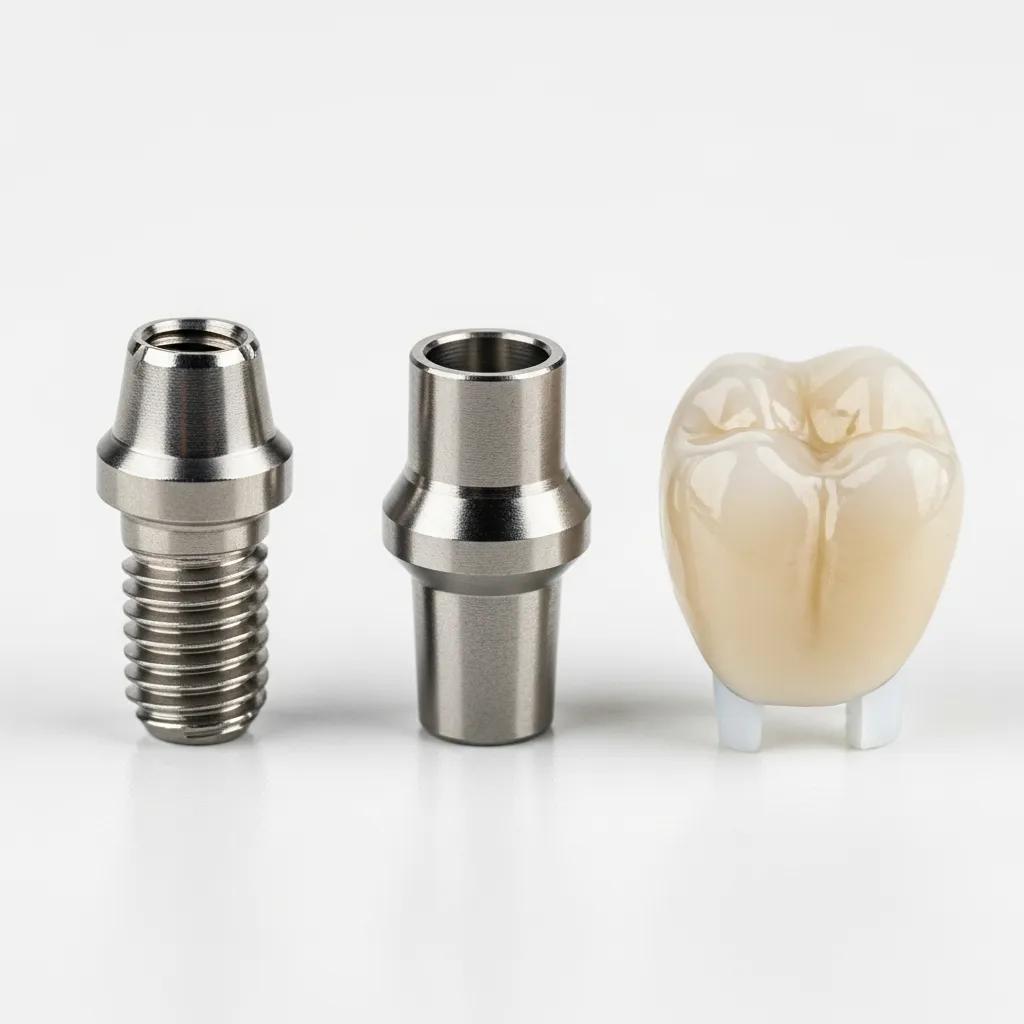
A dental implant replaces a missing tooth by placing a titanium or zirconia post into the jawbone. The post bonds with bone through osseointegration and acts like a natural tooth root, giving stable support for an abutment and a crown. That biological connection helps preserve bone volume, restores chewing function, and supports facial shape. An implant restoration is made up of the implant post (fixture), the abutment, and the crown — each part plays a role in strength and appearance. Implants give long-term function and protect adjacent teeth, but they require surgery, healing time, and sometimes preparatory procedures. Those factors explain why implants usually cost more up front but often need fewer full replacements over time. The sections that follow break down the components and steps so you can see how each piece affects price and recovery.
What Are the Key Components of a Dental Implant?
An implant restoration has three main parts: the implant fixture (the post) that is placed in the jawbone, the abutment that connects the post to the visible tooth, and the crown that restores shape, color, and chewing surface. Fixtures are most often titanium or zirconia — titanium has a long track record for bone integration while zirconia is a metal-free alternative. Crowns may be porcelain, zirconia, or layered ceramic; material choice affects aesthetics and cost. Each component shows up as a separate line item: surgical placement for the fixture, lab and material fees for the crown, and abutment costs that vary if a custom abutment is used. Choosing higher-end materials improves appearance and durability but raises lab and material charges. Knowing these components helps you anticipate what will appear on an estimate and where trade-offs between looks, strength, and price happen.
How Does the Dental Implant Procedure Affect Cost and Healing Time?
Implant treatment typically includes a consultation and imaging, surgical placement of the fixture, a healing phase for osseointegration, abutment connection, and crown fabrication and placement. Each stage has its own cost and recovery window. Preoperative imaging and case planning determine how complex the surgery will be, and additional procedures such as bone grafting or sinus lifts add time and expense. Osseointegration usually takes about 3 to 6 months, so the overall timeline is longer than many bridge workflows. Immediate implant placement or temporary restorations can shorten the process but may add specialized fees. Staged approaches take longer but can be more predictable when bone is compromised. Think of the implant timeline as a series of value choices: faster options can cost more, while staged care may give better long-term results for some patients.
What Are Dental Bridges and What Types Are Available?
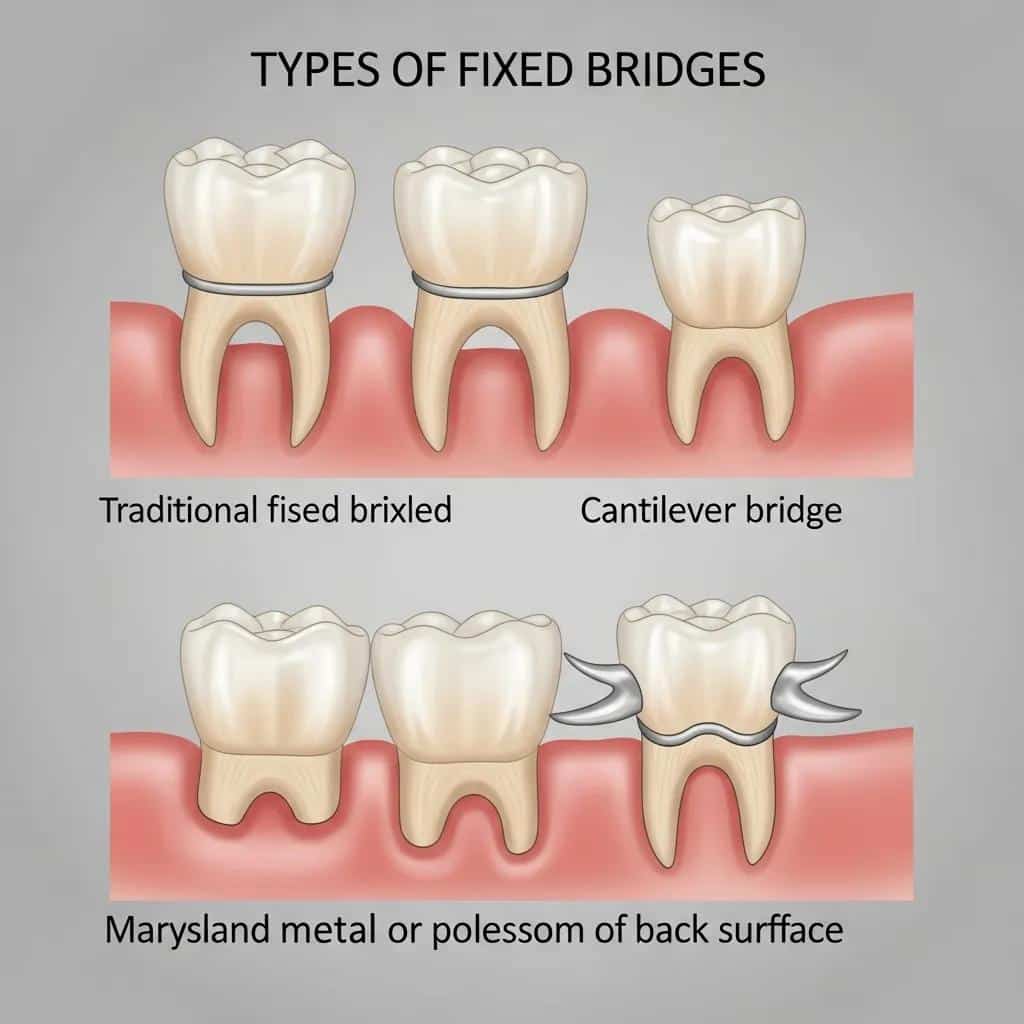
A dental bridge spans a gap by anchoring replacement teeth (pontics) to adjacent natural teeth or to implants, restoring function and appearance without placing fixtures directly into bone. Bridges come in several types — traditional fixed bridges, cantilever bridges, Maryland (resin-bonded) bridges, and implant-supported bridges — each differing by how the prosthesis is supported. Bridges often require less surgery and can be completed faster than implants, but they usually require preparation of abutment teeth, which can affect those teeth long term. The sections below describe common bridge types and explain how tooth preparation affects immediate cost and potential downstream expenses like wear, decay, and future restorations. This helps you weigh speed and upfront savings against long-term effects on neighboring teeth.
What Are the Different Types of Dental Bridges?
Bridges are classified by their support method. A traditional fixed bridge uses crowned abutment teeth on both sides of the gap. A cantilever bridge attaches to a single abutment when space limits a second support. A Maryland bridge uses a resin-bonded framework to conserve tooth structure. An implant-supported bridge uses implants instead of natural teeth for support. Each type has typical use cases: traditional bridges work when abutment teeth already need crowns; cantilevers suit short spans; Maryland bridges are conservative when the adjacent teeth are healthy; implant-supported bridges are preferred for larger gaps or when preserving natural tooth structure is a priority. Lifespan and maintenance vary: traditional bridges often last 5–15 years depending on hygiene and abutment health, while implant-supported bridges combine prosthetic maintenance with implant longevity but include surgical costs. Choosing a bridge depends on abutment condition, span length, and long-term maintenance expectations.
How Does the Dental Bridge Procedure Impact Cost and Adjacent Teeth?
Bridge treatment typically requires preparing one or more adjacent teeth for crowns, which adds chair time and lab fees and can lead to future costs if those abutment teeth develop decay or need root canal therapy. Preparing healthy teeth is a compromise — it replaces natural enamel with restorations that may need replacement down the road, creating possible future expenses like crown replacement, endodontic treatment, or even tooth extraction and implant conversion. Upfront, a simple 3-unit bridge is often less expensive than an implant plus crown, but over decades it can be more costly if abutment teeth fail. Patients should weigh the immediate savings of a bridge against the long-term risks to neighboring teeth; that trade-off is a key reason clinicians consider both current oral health and projected future costs when recommending treatment.
How Do the Upfront Costs of Dental Implants Compare to Bridges?
Upfront cost differences come from distinct line items: implants add surgical fees, imaging, grafting when needed, and a custom crown, while bridges are priced by unit count, crown materials, and lab work. Local market factors and clinician experience also affect prices. In Denton, TX, upfront ranges vary by case complexity, but the main cost drivers remain materials, surgical complexity, and lab work. Implants usually carry higher initial fees because of surgery and implant hardware, while bridges often cost less up front since they avoid an osteotomy and implant components. Below is an itemized table showing common upfront ranges and what each price typically includes to help you compare offers and prepare questions for a free consult.
This table compares common treatments, typical upfront ranges, and the items usually included in those estimates.
Treatment Type
Upfront Cost Range (approx.)
Typical Items Included
Single-tooth implant (fixture + abutment + crown)
$3,000 – $5,000
Surgical placement, implant post, abutment, custom crown, imaging and follow-up
3-unit traditional fixed bridge
$1,500 – $3,000
Tooth preparation, temporary bridge, lab crown units, final bridge placement
Implant-supported bridge (per implant)
$3,500 – $6,000
Implant surgery, component costs per implant, abutments, multi-unit prosthesis
This table shows that implant workflows bundle a surgical fee and implant hardware, while bridge estimates focus more on lab and crown unit pricing. Ask for an itemized estimate so you can compare offers side-by-side. After reviewing these local ranges, many Denton patients clear up their cost questions by scheduling a free consult to get an individualized estimate and a financing review based on their specific needs and insurance coverage.
What Factors Influence the Initial Cost of Dental Implants?
Implant upfront costs include the surgeon’s fee, implant brand and material, imaging and treatment planning, anesthesia or sedation, abutment and crown fabrication, and any bone grafting or sinus lift procedures. Case complexity — for example, deficient bone requiring grafting — raises cost through extra surgical time, graft material, and additional visits. Advanced imaging like CBCT adds diagnostic expense but improves planning. Implant brand and abutment customization affect component pricing, and immediate provisional restorations add prosthetic work. Ask for an itemized breakdown during your consult; seeing how each clinical or prosthetic choice maps to price helps you make informed decisions about materials and timing.
What Factors Affect the Upfront Cost of Dental Bridges?
Bridge cost depends on the number of units, crown material, lab complexity, and the condition of abutment teeth. Preparatory work such as root canals or periodontal treatment adds to the final price. A three-unit porcelain-fused-to-metal or full-ceramic bridge costs more in lab and material fees than a resin-bonded Maryland option. If abutment teeth already need crowns or large restorations, combining treatments can change the quote and sometimes make an implant solution relatively more attractive. Ask whether the bridge estimate includes temporaries, lab remakes, or follow-up adjustments — those items affect the true upfront cost and the patient experience during treatment.
What Are the Long-Term Costs and Maintenance Differences Between Implants and Bridges?
Long-term cost comparisons translate expected lifespan and maintenance into cumulative models, showing that implants often deliver better cost-per-year value because they can last decades while bridges usually need replacement cycles every 5–15 years. Long-term maintenance drivers for both options include routine hygiene, prosthetic repairs, and treatment of complications — peri-implantitis for implants and abutment tooth decay or bridge failure for traditional bridges. The table below models typical long-term cost drivers and gives estimated 10- and 20-year cumulative ranges to illustrate how replacement cycles and maintenance events change the long-term return-on-investment picture.
Keep in mind long-term assessments should account for replacement cycles, likely repairs, and potential surgeries; the table summarizes these drivers and modeled cumulative cost windows.
Treatment Type
Long-Term Cost Drivers
10/20-Year Estimated Cost Range
Single-tooth implant
Routine hygiene, possible abutment/crown replacement, peri-implantitis treatment
These projections show that implants generally need fewer full replacements over two decades, shifting the conversation from sticker price to cost-per-year and the likelihood of secondary procedures. Patients who prioritize lower lifetime cost and bone preservation often find implants offer better long-term value despite higher initial expense. The next section turns longevity into simple per-year math to make the comparison tangible.
How Does Longevity Affect the Overall Cost of Dental Implants vs. Bridges?
Longevity matters because spreading total expected cost over years of service creates a cost-per-year comparison. An implant with a higher upfront cost but a 25+ year lifespan can have a lower annual cost than a bridge that needs replacement every 7–12 years. For example, if an implant requires only occasional crown renewal over 20 years while a bridge is replaced twice in that period, the implant’s annual cost may be lower. Factors that change the math include oral hygiene, teeth grinding, and systemic health issues that affect bone and tooth stability. Looking at lifetime cost helps you match treatment to your priorities — minimizing long-term expense, protecting adjacent teeth, or choosing a faster, lower-initial-cost path.
What Maintenance and Hidden Expenses Should Patients Expect?
Routine implant maintenance includes daily care and periodic professional cleanings focused on implant health; bridges require careful cleaning under the pontic and close monitoring of abutment teeth for decay. Both restorations sometimes need screw or crown adjustments and occasional repairs. Hidden expenses can include treatment for peri-implantitis, root canal therapy for failing abutment teeth, and replacement of crowns or bridge units after wear or fracture. Preventive habits — flossing beneath pontics and using interdental brushes around implants — reduce long-term costs by lowering complication rates. Smoking and uncontrolled diabetes raise maintenance needs and expenses. Knowing likely maintenance tasks and warning signs helps you avoid surprises and compare total costs more clearly.
How Does Insurance Coverage and Financing Affect the Cost of Implants vs. Bridges in Denton, TX?
Dental insurance sometimes covers parts of implant and bridge treatment, but coverage varies by plan and procedure. Many PPO plans offer partial coverage for crowns and bridges and may treat implants inconsistently — implants are often categorized differently or require a rider and pre-authorization. In Denton, most local practices accept many PPO plans and offer flexible financing to reduce the upfront burden. The table below outlines typical payer behaviors and patient out-of-pocket examples to make coverage scenarios concrete for local patients. After reviewing this, schedule a free consult so we can verify your specific benefits and present financing options tied to your clinical plan.
Payer Type
Typical Coverage Level
Patient Out-of-Pocket Example
PPO dental insurance
Partial coverage for crowns/bridges; implants often limited or excluded without rider
Bridge: portion covered; Implant: greater out-of-pocket without implant rider
Flexible financing plans
Monthly payments with variable interest or promotional terms
Spreads implant cost into manageable monthly payments
Self-pay / no insurance
No coverage; patient pays full fee
Full upfront cost for implant or bridge
This table shows insurance rarely covers implants in full and that financing or payment plans commonly bridge the gap. Bring your insurance information to a free consult so we can run benefits and present tailored financing where appropriate.
Which Insurance Plans Commonly Cover Dental Implants and Bridges?
Many PPO plans provide predictable coverage for crowns and bridges but treat implants inconsistently. Some plans cover implant crowns but exclude implant surgery unless a rider is purchased; preauthorization or proof of medical necessity is often required. Two practical steps reduce surprises: request an Explanation of Benefits for similar procedure codes from your insurer, and ask for preauthorization for implant procedures when possible. During a free consult we can verify benefits and explain how your plan’s language maps to treatment codes, so you can compare true out-of-pocket costs for implants versus bridges.
What Flexible Financing Options Are Available for Tooth Replacement?
Common financing options include monthly installment plans with interest, promotional low- or no-interest financing for a set period, and in-house payment arrangements that spread costs across visits. These plans reduce immediate financial barriers and make higher-value treatments like implants more accessible. When evaluating options, compare total repayment, interest after promotional periods, and any fees that change the effective cost. Bring financing questions to the free consult so our team can show specific plans and payment examples tied to your personalized treatment estimate. Clear financing comparisons turn a high sticker price into concrete monthly numbers and reduce uncertainty when choosing the option that fits your budget and goals.
Helpful financing questions to ask at your consult include:
What monthly payment amount covers the total treatment cost under each plan? This clarifies affordability.
Are there promotional 0% interest periods, and what happens after they end? This shows long-term cost.
Does the practice offer in-house plans or work with third-party lenders? This explains payment flexibility.
Having answers to these questions during a free consult helps you compare effective costs, not just headline prices, and prepares you for the patient-specific scenarios that follow.
How Do Patient-Specific Factors Influence the Choice Between Implants and Bridges?
Factors such as bone density, the number and location of missing teeth, the condition of neighboring teeth, medical history, and budget or timeline preferences strongly shape whether implants or bridges are recommended. Bone health is key for implant candidacy because the jaw needs adequate volume for osseointegration. If adjacent teeth are already strong and healthy, a bridge can be a reasonable short-term choice when surgery is not an option. Lifestyle priorities — whether you want a long-term solution or a quicker, lower up-front cost — also matter. Diagnostics performed at a consult (imaging, periodontal check) give the objective data needed for a recommendation. The scenarios below translate these factors into practical guidance for common presentations and include a prompt to schedule a free consult when one fits your situation.
When Are Dental Implants Recommended Based on Bone Health and Tooth Loss?
We often recommend implants when there’s enough jawbone and healthy gums, because the fixture depends on osseointegration for a stable, durable foundation. 3D imaging evaluates bone height, density, and proximity to key anatomical structures. If bone is insufficient, bone grafting or sinus augmentation can create a stable site, though these preparatory steps increase cost and extend treatment time. Clinicians weigh that additional investment against implants’ long-term benefits — bone preservation and less impact on neighboring teeth. Implants are especially useful for single-tooth replacements or restoring long gaps with implant-supported bridges. If you think you may have compromised bone or want to verify candidacy, schedule a free consult for imaging and a personalized plan that accounts for grafting needs and realistic timelines.
When Are Dental Bridges a Suitable Option for Patients?
Bridges are a good choice when adjacent teeth already need crowns, when you want a shorter timeline, or when surgery is contraindicated for medical or personal reasons. Bridges can be a cost-effective, predictable way to replace one or a few adjacent teeth quickly and cosmetically. However, they require removing enamel from abutment teeth and can increase the chance those teeth will need future treatment. For patients with limited bone, systemic health issues that complicate surgery, or an urgent need for replacement, a bridge can be a practical short-term solution while longer-term plans are considered. If that sounds like your situation, schedule a free consult so we can examine your abutment teeth and compare immediate bridge options with staged implant planning.
What Are the Pros and Cons of Dental Implants vs. Bridges?
Core differences many patients weigh:
Longevity vs. up-front cost: Implants tend to last longer but cost more initially.
Effect on adjacent teeth: Bridges usually require abutment preparation; implants typically spare neighboring teeth.
Bone health: Implants help preserve bone by transferring chewing forces; bridges do not stop bone resorption at the missing-tooth site.
These points set up the benefit and limitation lists below and help you think about clinical trade-offs and personal priorities.
What Are the Key Benefits of Dental Implants Over Bridges?
Implants preserve jawbone by transmitting chewing forces into the bone, which helps prevent the resorption that follows tooth loss and supports facial structure. They avoid altering adjacent teeth because they rely on an independent fixture and abutment rather than crowning neighboring teeth. Functionally and aesthetically, implants closely mimic natural teeth in stability and appearance, improving chewing and confidence. While implants require surgery and a longer timeline, their durability and lower frequency of full replacement often make them more cost-effective over decades for patients seeking a lasting solution. These advantages explain why implants are often recommended for those prioritizing long-term oral health and minimal impact on nearby teeth.
What Are the Advantages and Limitations of Dental Bridges?
Bridges offer a faster route to tooth replacement with predictable aesthetics and typically lower initial cost, making them attractive if you need a quicker solution or want to avoid surgery. They’re especially useful when abutment teeth already need crowns. But bridges require preparing adjacent teeth, which can shorten those teeth’s lifespan and create future costs like root canals or replacement crowns. Bridges also don’t prevent bone loss at the missing-tooth site, which can affect facial structure and make later implants more complex. For many patients a bridge is a pragmatic short-term plan that balances immediate needs with future options — its value depends on the health of abutment teeth and your long-term goals.
Why Choose Dentist in Denton for Your Dental Implant or Bridge Treatment?
Dentist in Denton – Dentures & Dental Implants offers education-first care in a one-stop environment, accepts most PPO dental insurance plans, and provides flexible financing so cost is clearer and more manageable. We combine clinical guidance with financial transparency to reduce uncertainty. Our friendly staff and a calming, spa-like atmosphere make treatment easier, and our local clinicians — including Dr. Mike Pham and Dr. Vo — provide the hands-on expertise patients trust. We offer a free dental implant consult so you can move from general price ranges to a personalized estimate. Below we explain what to expect at that consult and how our financial and experience features help you feel confident about your choice.
How Does Our Free Consultation Help You Make an Informed Decision?
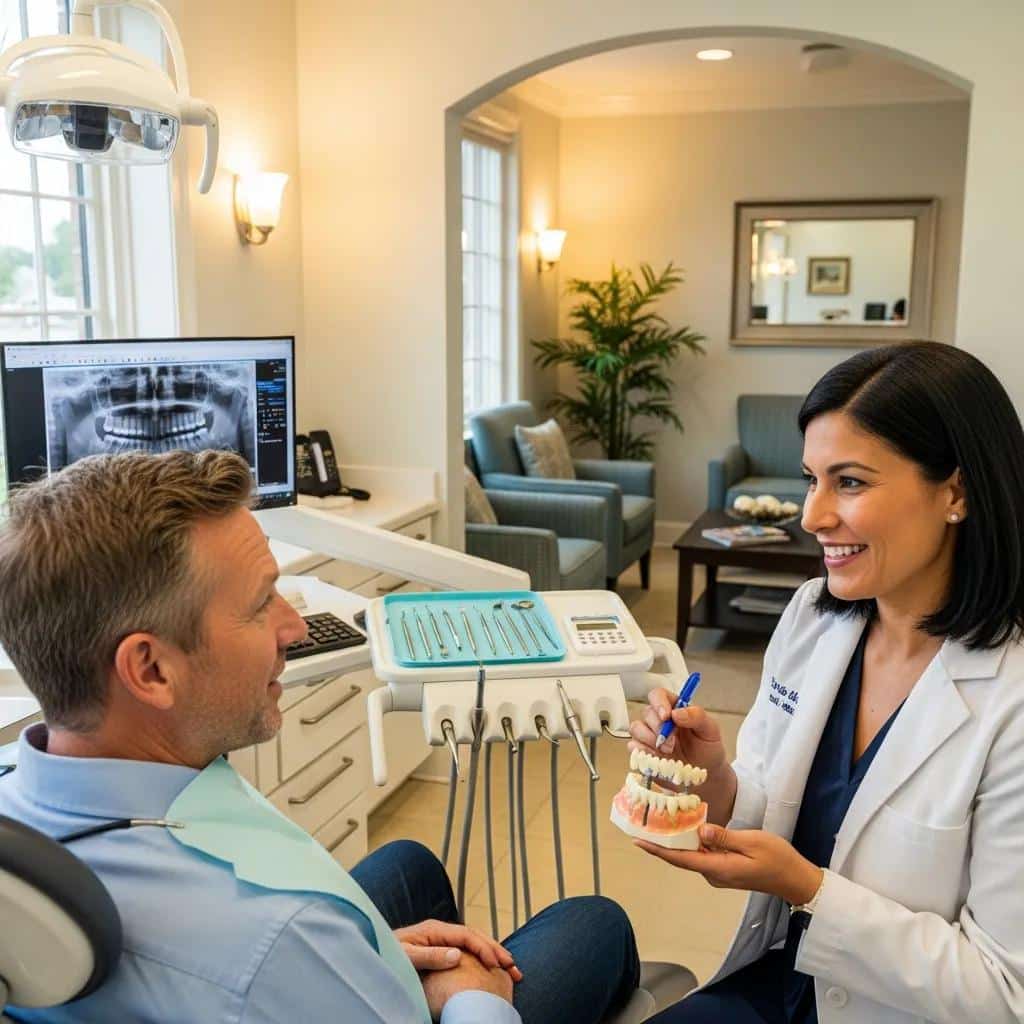
Our free consult starts with a focused conversation about your goals and health history, followed by an oral exam and any needed imaging to evaluate bone, neighboring teeth, and overall candidacy. That diagnostic process clarifies whether implants, bridges, or a staged approach best fits your needs. During the visit the clinician explains options in an education-first, no-pressure way, provides clear cost estimates for each route, and outlines expected timelines, possible adjunctive procedures, and maintenance needs. We’ll also verify benefits and review financing so you can compare out-of-pocket obligations and monthly payment options side-by-side. By turning general costs into a personalized, imaging-based plan, the free consult removes uncertainty and helps you make a confident choice. If you want precise answers for your case, schedule a free consult for a tailored estimate and financing discussion.
What Financial and Patient Experience Benefits Do We Offer?
We accept most PPO plans to simplify benefit coordination and offer flexible financing to spread treatment costs into manageable payments. Our education-based approach walks you through line-by-line estimates and financing options so choices feel transparent, not confusing. The spa-like environment and friendly team reduce anxiety and make the overall experience more comfortable. For many Denton patients, combining benefit verification, flexible payments, and clear clinical education in one visit turns a complex decision into a practical next step. If you’re considering tooth replacement, schedule a free consult to review treatment options, insurance coverage, and financing that match your clinical needs and budget.
Key patient experience and financial features:
Education-first consults: We explain clinical choices and expected outcomes clearly.
PPO acceptance: We work with many plans to streamline benefits coordination.
Flexible financing: We offer options that make higher-value treatments more reachable.
Schedule a Free Consult to See Which Option Is Right for Your Case
If any of the scenarios below apply — concern about bone loss, wanting to avoid altering adjacent teeth, or needing a faster, less invasive option — schedule a free consult to get imaging, a patient-specific treatment plan, and a clear estimate of insurance benefits and financing for your case. A consult is the most reliable way to turn general price ranges into a precise out-of-pocket estimate and to decide whether an implant, bridge, or staged combination best matches your clinical and financial priorities. With our education-based guidance, PPO acceptance, and flexible financing, Dentist in Denton helps patients make evidence-based decisions without pressure. Schedule a free consult to begin and get the personalized information you need to choose the right tooth replacement option.
Next steps to prepare for your consult:
Bring any recent dental records or insurance details to speed benefit verification.
Write down questions about material choices and timelines so the consult focuses on your priorities.
Request an itemized estimate to compare implants and bridges on a like-for-like basis.
Frequently Asked Questions
What is the average lifespan of dental implants compared to bridges?
Dental implants commonly last 10 to 25 years, and many patients keep them for life with proper care. Bridges generally last 5 to 15 years, depending on hygiene and the health of the supporting teeth. Implants tend to be more durable because they integrate with the jawbone, which helps maintain stability and function. Consider these differences when thinking about long-term costs and benefits.
Are there any dietary restrictions after getting dental implants or bridges?
After implant surgery we usually recommend soft foods for the first few days to support healing. Avoid hard or sticky foods during the initial recovery to protect the implant site. For bridges there are no strict long-term dietary limits, but you should be careful with very hard foods that could damage the prosthesis. Good daily oral hygiene is important for both options to ensure long-term success.
How do I choose between dental implants and bridges based on my dental health?
Choose based on your jawbone condition and the state of adjacent teeth. If you have sufficient bone and healthy gums, implants may be a strong long-term option. If your adjacent teeth are already compromised or you need a quicker solution, a bridge might be more appropriate. A dental exam and imaging give the personalized guidance you need — schedule a consult to get a specific recommendation for your situation.
What are the potential complications associated with dental implants?
Implants are safe for most people, but possible complications include infection at the implant site, nerve irritation, or sinus issues with upper-jaw placements. Improper placement can lead to implant failure. Regular follow-ups and good oral hygiene lower these risks. Discuss any concerns with your dentist so you understand how to minimize complications and support a successful outcome.
How does the recovery process differ between implants and bridges?
Implant recovery usually takes longer than bridge treatment. After implant placement, osseointegration commonly requires 3 to 6 months for the implant to fuse with bone. Bridges typically can be completed in a few weeks since they don’t need surgical integration. Follow your dentist’s post-op instructions for a smooth recovery with either option.
Can I get dental implants if I have gum disease?
Gum disease doesn’t automatically rule out implants, but active disease must be treated first. Healthy gums are essential for implant success. Your dentist may recommend periodontal treatment before moving forward. A thorough evaluation will determine the safest timing and best approach for your care.
What financing options are available for dental implants and bridges?
Many practices offer monthly payment plans, low-interest or promotional financing, and in-house arrangements for both implants and bridges. Dental insurance may cover part of the cost for crowns or bridges, but implant coverage is often limited without a rider. Discuss financing during your consult to find a plan that fits your budget and makes treatment more accessible.
Conclusion
Choosing between dental implants and bridges is a decision about long-term value, oral health, and personal priorities. Implants offer durability and bone preservation, while bridges give a quicker, less invasive route to replace teeth. A free consult is the best way to get personalized guidance, imaging-based recommendations, and a clear estimate of insurance benefits and financing. Take the next step toward a healthy, confident smile by arranging a consult — we’ll help you find the option that fits your goals and budget.