Your Guide to Dental Implant Costs in Waco: How to Calculate Total Expenses for Treatment
Dental implants restore function and appearance by replacing missing tooth roots with a titanium or zirconia fixture that supports a crown, bridge, or denture, and they are a common long-term tooth replacement option for adults. This guide explains what dental implants are, how their component parts drive price, and how Waco patients can calculate total treatment expenses including imaging, surgery, grafting, and prosthetic work. Many patients underestimate the extra procedures and laboratory work that create the final cost, so this article maps transparent local cost ranges, step-by-step calculation methods, and practical financing strategies. You will find line-item EAV tables for single and full-arch cases, sample monthly payment scenarios, and an insurance-focused checklist tailored to patients in Waco. Read on for actionable tips to add up every expense, decide between implants and alternatives, and learn how a no-cost, no-obligation dental implant consultation can produce a personalized written estimate.
What Are Dental Implants and How Do They Affect Cost?
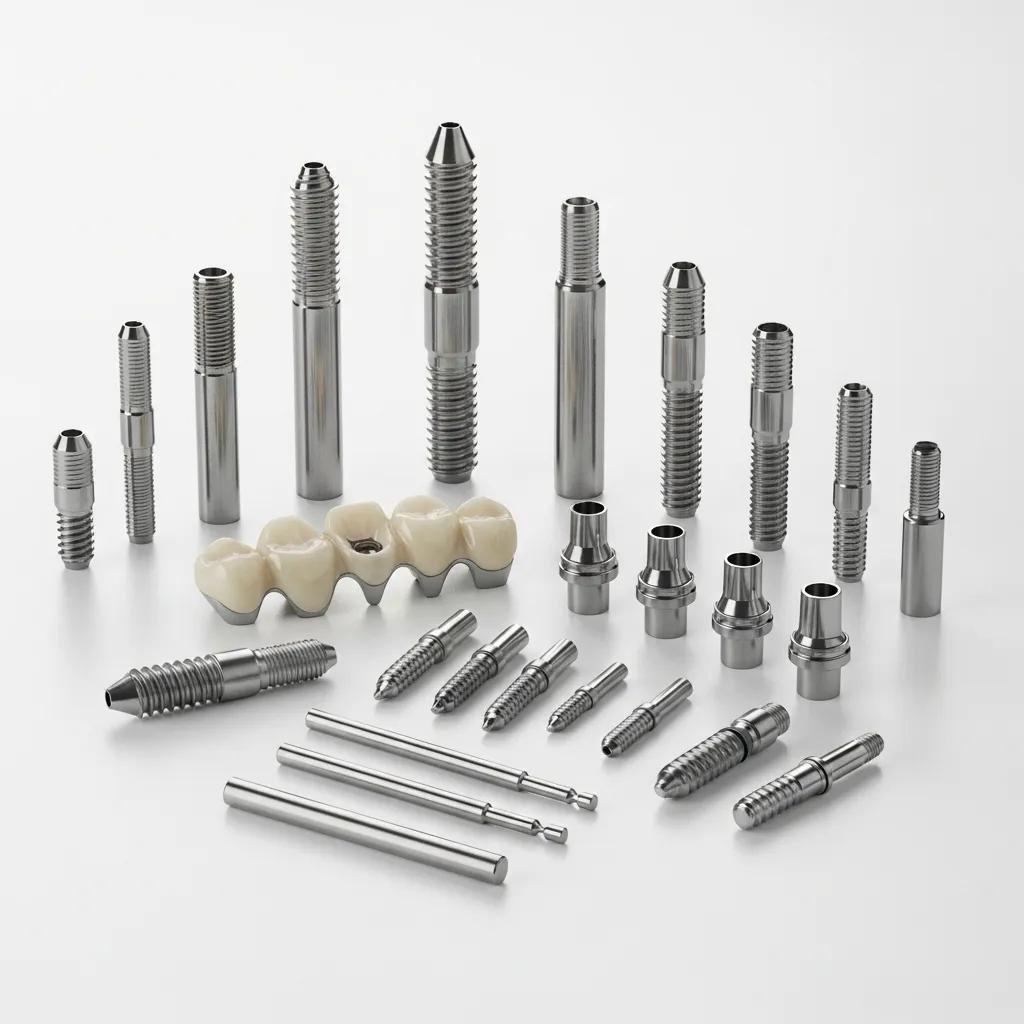
A dental implant is a prosthodontic solution in restorative dentistry consisting of an implant fixture placed in the jawbone that integrates with bone to support an abutment and final crown or prosthesis; this multi-part anatomy is the primary reason implants have multiple cost components. Implant costs reflect separate charges for the surgical implant fixture, restorative abutment, custom crown or denture, laboratory fees, and any required imaging or site preparation such as bone grafts or extractions. The implant’s mechanism—osseointegration—provides long-term stability and preserves bone, which is a clinical benefit that justifies higher upfront cost compared with removable options. Understanding these components helps patients anticipate both one-time surgical fees and follow-up or maintenance costs over the lifespan of the restoration. In the next section we detail clinical benefits and then describe the implant types commonly used in Waco so you can see how type influences total price.
What Is a Dental Implant and What Are Its Benefits?
A dental implant replaces the tooth root with a biocompatible fixture that bonds to bone, restoring chewing function, facial structure, and long-term oral health by preventing bone resorption and adjacent tooth migration. Mechanistically, the implant fixture is surgically placed into the jaw and left to osseointegrate—this bone integration provides the anchorage needed for an abutment and a prosthetic crown or denture, producing chewing efficiency comparable to natural teeth. Clinically, implants offer advantages in durability, aesthetics, and oral health preservation that often make them cost-effective over a decade or more despite higher initial expense. Patients also report improved confidence and dietary options when implants replace missing teeth, which contributes to quality-of-life value. Understanding these benefits leads naturally to the next topic: the different implant types and how each choice impacts pricing and treatment planning.
What Types of Dental Implants Are Available in Waco?
Dental implant options in Waco cover a spectrum from single dental implants for one missing tooth to implant-supported bridges, implant overdentures, All-on-4 or All-on-6 full-arch solutions, and mini dental implants for specific indications, each with distinct clinical indications and price implications. Single implants typically require one fixture, abutment, and crown, while implant-supported bridges replace several adjacent teeth with fewer fixtures; overdentures use multiple implants to retain a removable prosthesis, and full-arch options like All-on-4 replace an entire arch with a fixed prosthesis supported by four or more implants. Mini implants are smaller and may be used for denture stabilization in some cases; they can be less expensive but are suitable only in certain clinical scenarios. Choosing among these hyponyms depends on bone volume, patient goals, and budget, and that choice directly affects the number of fixtures, lab work, and surgical time included in the total cost estimate.
What Is the Average Cost of Dental Implants in Waco?
Average costs in Waco vary by type and complexity, with a typical single dental implant usually falling within a local range that includes the fixture, abutment, and crown plus imaging and minor surgical fees, while full-arch solutions range much higher due to multiple fixtures and custom prosthetics. For many Waco patients, straightforward single-tooth implant cases without grafting represent the lower end of implant pricing, while full-arch All-on-4 or implant-retained overdentures form the higher end; this section provides line-item examples and conservative local ranges so you can see what a complete estimate might include. Below we list a detailed EAV table for single implant components with typical ranges, followed by a comparison table for full-arch options that clarifies what common price bands include and exclude. Reviewing these tables helps readers anticipate variability and prepare for possible add-ons such as CBCT scans, emergency visits, or extensive grafting that raise totals.
Before the table, remember that the specific values here are representative ranges to aid planning; exact figures require a clinical exam and imaging because bone grafting, sinus lifts, or unexpected extractions alter totals significantly.
Component
Description
Typical Cost Range (Waco)
Implant fixture (implant body)
Surgical titanium or zirconia post placed in bone
$1,000 – $2,500
Abutment
Connector between fixture and crown (stock or custom)
$200 – $800
Crown (porcelain/ceramic)
Final prosthetic tooth fabricated by a lab
$800 – $2,000
Laboratory fees
Lab fabrication for crown or prosthesis
$200 – $1,000
Imaging (CBCT/x-ray)
Diagnostic 3D or 2D imaging for planning
$100 – $400
This line-item table illustrates why a single implant total is often the sum of multiple separate charges; combining the median values above yields a realistic single-tooth total that still varies with materials and complexity.
How Much Does a Single Dental Implant Cost?
A single dental implant case typically includes diagnostic imaging, the surgical implant placement, a healing period for osseointegration, abutment placement, and a custom crown, with each step commonly billed separately and contributing to the final price. Using the EAV table above, a conservative single implant example might total between $2,500 and $5,000 in Waco when no grafting or extractions are needed, whereas the need for CBCT imaging, sedation services, or a custom zirconia abutment can increase the figure. Additional variables that raise cost include complex esthetic demands for front teeth, prior root-canal failures, or the use of premium materials. It is important for patients to request an itemized written estimate that lists fixture, abutment, crown, imaging, and lab fees to compare offers meaningfully. Knowing these line items makes it possible to ask targeted questions about alternatives, warranties, and maintenance that influence long-term value.
What Are the Costs for Full Mouth and All-on-4 Dental Implants?
Full-arch solutions such as All-on-4, All-on-6, and implant overdentures present different total cost profiles because they bundle multiple fixtures, surgical phases, and extensive lab work into one treatment plan and often require more complex preoperative work. Typical full-arch price ranges in many markets run from moderate to high depending on whether the prosthesis is immediate-load (temporary fixed prosthesis followed by a definitive prosthesis) and whether bone grafting or extractions are needed; understanding inclusions—such as the number of implants, type of prosthesis, temporary prosthesis, and whether the lab and revisions are included—clarifies price comparisons. The table below compares typical full-arch options with conservative total ranges and notes common exclusions so patients can see how advertised figures may or may not include important elements.
Option
Typical Price Range (Waco)
Typical Inclusions / Exclusions
All-on-4 fixed arch
$18,000 – $35,000 per arch
Usually includes 4 implants and fixed provisional; may exclude final lab fees or grafting
All-on-6 fixed arch
$20,000 – $40,000 per arch
More implants for support; may include higher lab fees for definitive prosthesis
Implant overdenture (bar-retained)
$8,000 – $20,000 per arch
Includes implants and removable overdenture; excludes periodic denture relines
What Factors Influence the Total Cost of Dental Implants?
Several clinical, procedural, and market factors influence implant pricing, including bone quality and quantity, the need for grafting or sinus lifts, the number of implants required, chosen materials, sedation needs, imaging complexity, and local market costs for dental laboratories and surgical facilities. Each of these variables operates as a separate cost node: clinical issues create pre-surgical procedures, materials change restorative fees, and technology such as guided surgery or in-house labs affects both price and expected outcomes. Geographic factors matter because provider fees and lab costs in Waco differ from larger metro areas, and advanced equipment or specialist training can raise fees while potentially improving predictability. Recognizing these drivers helps patients prioritize which factors are negotiable—like elective cosmetic choices—and which are essential for safety and long-term success, such as bone grafting when needed to secure implant stability.
How Do Bone Grafting, Extractions, and Sedation Affect Pricing?
Bone grafting, tooth extractions, and sedation dentistry commonly add separate line items to implant estimates, and each procedure carries its own cost range and sequencing considerations that influence the overall treatment timeline and budget. Bone grafts can be minor socket preservation procedures or major block grafts or sinus lifts; typical ranges vary widely based on extent, and staged grafting increases chair time and may require additional healing visits. Simple extractions are less costly than surgical or impacted extractions and may be bundled with implant placement in some settings but billed separately in others; combining procedures can sometimes reduce total anesthesia fees. Sedation options—from oral sedation to IV sedation—add safety and comfort for complex cases, and sedation fees are frequently listed separately on estimates; patients should ask whether sedation is mandatory or optional and whether combining appointments reduces cumulative sedation costs. Understanding how sequencing and bundling can produce savings leads into the next consideration: how location and technology affect expenses.
How Does Location and Technology Impact Dental Implant Expenses?
Local market conditions and the provider’s technology investments affect implant pricing because advanced diagnostics (CBCT), digital planning, guided surgical guides, and in-house dental labs require capital investment and specialized staff, which can elevate fees but may improve precision and lower the risk of complications. Waco’s market typically has competitive pricing relative to major urban centers, but practices that maintain in-house labs or use guided implant surgery may charge more for the added convenience, faster turnaround, and potentially superior prosthetic fit. Conversely, lower fees may reflect standard outsourcing of lab work or fewer advanced imaging options, which can be suitable for straightforward cases but might necessitate referrals for complex reconstructions. Weighing the trade-offs between cost and expected outcomes helps patients decide which innovations are worth the premium for their clinical situation.
How Can You Finance Dental Implants in Waco?
Financing strategies for dental implants range from in-house payment plans and third-party medical/dental lenders to using dental insurance partial benefits and tax-advantaged accounts such as FSA/HSA; each option has different terms, eligibility rules, and impacts on monthly payments. This section explains common financing vehicles, offers concrete example monthly payments for a representative $15,000 treatment total, and provides an insurance navigation checklist to help Waco patients maximize coverage. Presenting example monthly figures clarifies what patients can expect and helps compare the cost of borrowing versus the clinical value of implants. Below is a table that models typical financing options with example monthly payments for a $15,000 treatment so readers can see concrete scenarios for decision making.
Patients should compare interest rates, promotional periods, and total repayment amounts when evaluating financing choices.
Financing Option
Typical Terms
Example Monthly Payment for $15,000
In-house plan
6–24 months, often interest-free promotional terms
$625 – $2,500 monthly (depending on term)
Third-party lender (medical credit)
12–60 months, variable APR
$275 – $1,350 monthly (depending on APR/term)
Standard personal loan or credit card
12–60 months, market APRs
$275 – $1,350 monthly (depending on APR/term)
What Payment Plans and Financing Options Are Available?
Common options include in-office payment plans that split the cost across a fixed number of months, financing through medical/dental credit companies offering promotional APRs, and traditional personal loans or credit cards; each has trade-offs for interest cost and monthly cash flow. In-house plans may offer interest-free terms for shorter periods and the convenience of one billing relationship, while third-party lenders provide extended terms that lower monthly payments at the cost of interest, and personal loans may require credit qualification but often fund quickly. When evaluating lenders, patients should request the APR, total interest paid over the life of the loan, any deferred interest traps, and whether treatment can begin before full funding is received. Comparing the effective monthly payment and total repayment amount allows patients to choose a plan that balances affordability with minimizing long-term interest expenses.
How Can You Use Dental Insurance to Cover Implant Costs?
Dental insurance commonly covers portions of restorative work like crowns and prosthetics but often excludes the implant fixture itself or caps coverage at annual limits; patients must verify plan language, plan maximums, and waiting periods to understand what portion of implant treatment might be covered. Typical insurance patterns include partial coverage for crowns or prosthetic components, coverage for extractions or certain grafting procedures in some plans, and outright exclusion of implant fixtures in others, so it is critical to obtain pre-treatment estimates and pre-authorization when possible. Patients can maximize benefits by submitting itemized claims, using predetermination processes to clarify coverage, and leveraging FSA/HSA funds to pay tax-advantaged dollars toward out-of-pocket costs. Preparing insurance ID cards and prior claim histories before the consultation will speed benefit verification and reduce surprises when the written estimate is generated.
Why Choose Affordable Dentist Near Me of Waco for Dental Implants?
Affordable Dentist Near Me of Waco provides dental implant and denture services with a focus on affordability, patient comfort, and comprehensive care, pairing access-oriented pricing with advanced technology and an in-office laboratory to streamline restorative workflows. The practice highlights everyday low fees and offers free dental implant consultations as a no-cost path to a personalized written estimate, which reduces the initial financial barrier for patients exploring implant therapy. Patient comfort is supported by sedation dentistry options for anxious patients and a full range of general and cosmetic dental services that simplify coordinated treatment when multiple specialties are required. If you want a locally based estimate after reviewing this guide, scheduling a free consult at the Waco location produces a tailored plan and itemized cost breakdown to inform your financing and clinical choices.
What Makes Our Dental Implant Services Affordable and High Quality?
Affordable Dentist Near Me of Waco emphasizes everyday low fees alongside investments in technology and an in-house laboratory to manage prosthetic quality while controlling costs; this combination enables transparent, itemized pricing and shorter turnaround times for restorations. The practice offers sedation dentistry to enhance patient comfort during implant surgery and coordinates general and specialty care—such as endodontics or periodontics—so patients receive comprehensive treatment planning in one location when appropriate. Free dental implant consultations are available to provide a no-cost, no-obligation exam, imaging review, and a written treatment estimate so patients can compare financing options and make an informed decision. These service elements support predictable outcomes while allowing patients to assess cost versus clinical benefit before committing to treatment.
What Do Patients Say About Their Dental Implant Experience?
Reported patient feedback across locations emphasizes positive themes such as accessible pricing, attentive staff, and comfort during procedures, reflecting general satisfaction with the clinic’s approach to implant and denture care. Paraphrased review themes indicate that patients notice clear explanations of treatment steps and appreciate care options like sedation for anxiety management, which helps reduce barriers to undergoing recommended implant work. While individual experiences vary, consistent positive signals in reviews can reassure prospective patients that the practice delivers both clinical competence and patient-centered service. Combining these reputation indicators with a free consultation that produces a written estimate helps reduce uncertainty and supports confident decision making.
How Do You Calculate Your Total Dental Implant Expenses?
Calculating total implant expenses requires listing every anticipated line-item—from diagnosis and imaging through surgery, prosthetic fabrication, follow-up visits, and anticipated maintenance—and totaling them to produce a realistic out-of-pocket requirement. The formula is straightforward in principle but often complicated in practice because some items are contingent: for example, bone grafts may be needed only after imaging reveals insufficient volume, and sedation needs may change the surgical fee. Below is a step-by-step method to calculate a patient-specific total and a sample calculation to illustrate how the components add up; after this procedure, scheduling a free consultation is the recommended next step to convert estimates into an exact written plan tailored to your oral health.
What Should You Include in Your Dental Implant Cost Calculation?
Create a checklist that enumerates all cost elements so nothing is missed when you compare estimates; include diagnosis, imaging, surgical fees, implant fixture cost, abutment cost, crown or prosthesis fabrication, laboratory fees, sedation, grafting or sinus lift, pre/post-op visits, and possible complications or revisions. Use the following required checklist as a guide to ask providers for itemized pricing and expected sequencing so you can model both base and worst-case scenarios. This checklist also helps you identify which components you may be able to finance or apply FSA/HSA funds toward and which elements insurance might partially cover. Presenting this checklist during a free consult ensures the clinician addresses each item and produces a detailed written estimate that separates essential clinical work from elective cosmetic upgrades.
Diagnostic and planning fees: imaging, CBCT, exam, study models.
Restorative fees: abutment, crown, bridge, or denture, including lab costs.
Ancillary procedures: bone grafting, sinus lift, extractions, follow-ups.
After completing this list, patients should compare itemized estimates and ask about bundling discounts or staged-treatment options that can reduce upfront cash requirements.
How Can a Free Dental Implant Consultation Help You Estimate Costs?
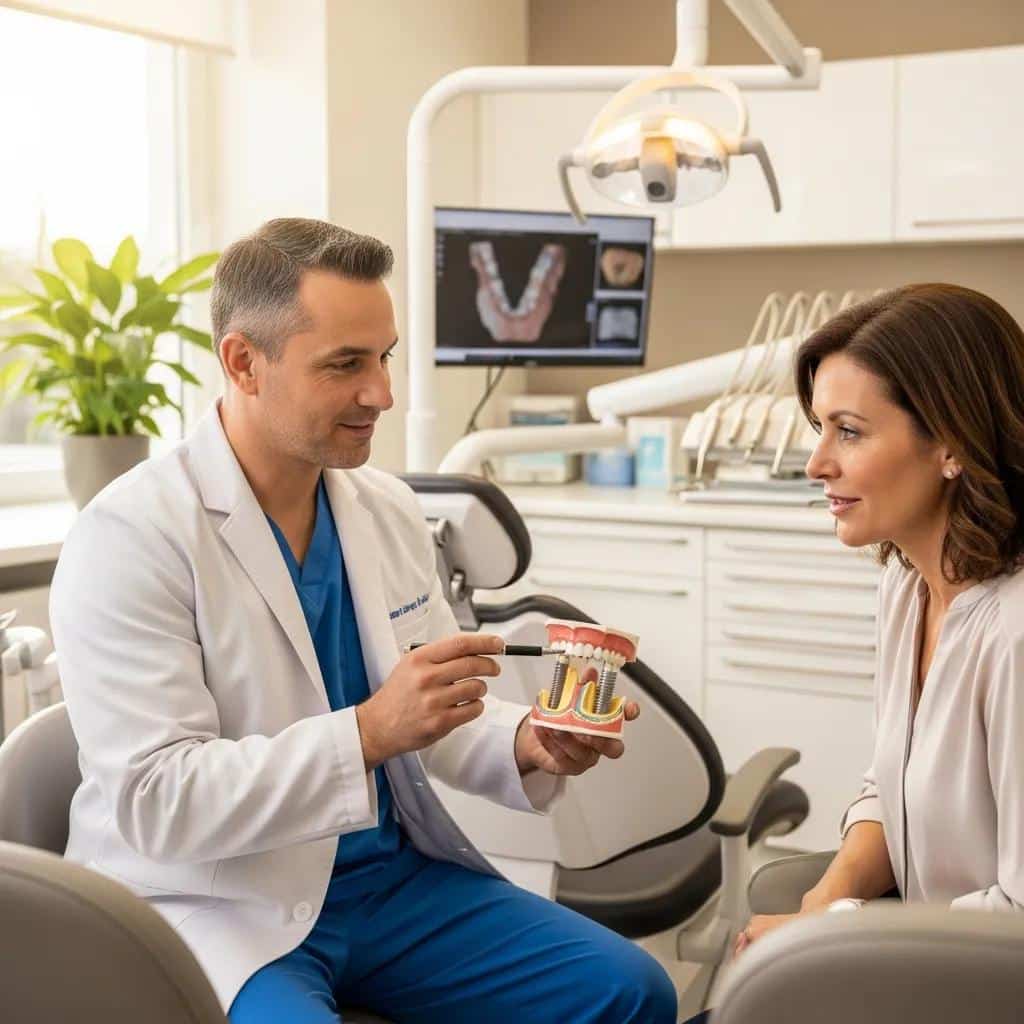
A free dental implant consultation provides a no-cost, no-obligation clinical exam where the clinician reviews oral health, obtains or reviews imaging when appropriate, discusses treatment options, and produces a written, itemized estimate that clarifies fees and sequencing. During the consult, clinicians typically evaluate bone volume, adjacent tooth condition, and overall medical factors that influence implant candidacy, and they can indicate whether grafting or referrals are likely—information that materially changes a cost calculation. Patients should bring insurance information and a list of financial questions so the team can check benefits and explain financing options during the same visit, which streamlines decision making. Because this consult eliminates initial uncertainty and results in a concrete plan and quote, it is the logical next step after you complete a self-calculated estimate.
If you would like a personalized cost estimate in Waco, call Affordable Dentist Near Me of Waco at the phone number on file to schedule a complimentary dental implant consultation at the 4573 Lake Shore Drive location; the free consult will include exam, treatment discussion, and a written cost estimate and is designed to help you compare financing options without obligation.
What Are the Most Common Questions About Dental Implant Costs?
This section answers the most frequently asked, PAA-style cost questions with concise, authoritative responses to help you capture quick-reference answers and decide on next steps such as scheduling a consult. Each answer highlights key variables and directs readers to earlier sections with in-depth explanations and sample calculations for single and full-arch scenarios. Short, precise answers are useful when comparing options or preparing for insurer predeterminations.
How Much Does a Full Set of Dental Implants Cost?
A full set of dental implants—meaning fixed implants replacing all teeth—can range widely, often from the tens of thousands to the high tens of thousands per arch depending on whether the approach uses individual implants for each tooth, All-on-4/All-on-6 protocols, or implant bridges and whether grafting is necessary. Major variables that explain the wide range include the number of implants, prosthesis material and lab fees, required bone grafting or sinus lifts, and whether the treatment is staged or immediate-load. For a patient seeking a full-arch fixed solution, expect to receive a detailed written estimate during the free consult that itemizes the count of fixtures, prosthetic type, and any expected ancillary procedures.
Are Dental Implants Worth the Cost Compared to Alternatives?
Dental implants are often worth the higher upfront cost for patients prioritizing long-term durability, chewing efficiency, and bone preservation because implants typically require less replacement and fewer ongoing adjustments than traditional dentures or bridges over a 10–25 year horizon. A simple cost-over-time comparison will show that while dentures require periodic relines and eventual replacement and bridges may stress adjacent teeth, implants preserve jawbone and reduce future restorative needs, which can make them more cost-effective in the long run for many patients. Alternatives may be appropriate for patients with limited budgets or medical constraints, but implants remain the superior option for function and longevity when clinical conditions allow.
What Special Offers and Discounts Are Available for Dental Implants in Waco?
Special offers and promotional options can reduce upfront costs, and clinics often provide a primary behavioral incentive such as a free dental implant consultation to lower the barrier to evaluation; patients should also ask about seasonal promotions, new-patient discounts, or financing promotions that may apply when scheduling. The most actionable and consistently available offer at the clinic level is the free consult, which provides a written estimate and benefit verification at no charge so you can compare costs and financing without commitment. Because promotions vary and may change, it is advisable to confirm current offers at the time of scheduling to understand eligibility and any terms that apply.
How Does the Free Dental Implant Consultation Work?
The free dental implant consultation typically includes a clinical exam, discussion of medical and dental history, an initial review of imaging or scheduling of CBCT when needed, and a written treatment estimate that lists procedural steps and itemized fees—this no-cost consult is intended to inform your decision without pressuring commitment. During the consult patients can discuss sedation options, ask detailed financing questions, and request benefit verification for any dental insurance they carry; the team can also explain sequencing and timing so you understand the timeline for staged versus combined procedures. Preparing for the consult by bringing insurance information and a list of questions speeds the process and ensures you receive a comprehensive written plan. After the consult, patients have the information needed to compare financing and proceed confidently if they choose to move forward.
Are There Seasonal or Financing Discounts to Lower Costs?
Clinics sometimes offer seasonal promotions, new-patient specials, or financing promotions such as reduced interest or extended terms during promotional periods, but availability and terms vary, so patients should confirm current offers at the time they schedule a consultation. Typical discount types can include limited-time percentage reductions on restorative fees, waived consultation fees, or promotional financing with reduced or deferred interest for qualifying applicants; however, exact terms change by practice and time. The most reliable way to learn about current discounts is to request details during your free consultation, when the team can confirm applicable promotions and how they alter the itemized written estimate.
Seasonal Promotions: Limited-time offers that lower specific fees for a defined period.
New-Patient Specials: Reduced fees for first-time patients on select services.
Financing Promotions: Promotional interest rates or extended terms through partnered lenders.
Confirming promotions during the consult ensures you have accurate, current information for budgeting and financing decisions.