Please ensure Javascript is enabled for purposes of website accessibility
"People Love Us On Google"

1470+ Google reviews

New patients Welcome! Extended hours!

Understanding the Benefits of Dentures in Mansfield: A Guide
October 04, 2025  |  Affordable Dentist

Understanding the Benefits of Dentures in Mansfield: A Guide

Table Of Contents:

Should I Remove All My Teeth and Get Dentures?

Deciding to remove all natural teeth and replace them with dentures involves weighing oral health, function, and quality of life. This guide explains tooth loss causes, denture options in Mansfield, indications for full extraction, step-by-step process, benefits, challenges, and how to make an informed choice—all backed by clinical insights and the offer of a free initial consultation from a dental office providing affordable care with monthly payment options.

Key Takeaways

  • Assess periodontal and restorative prognosis before full-mouth extractions.
  • Compare complete, partial, implant-supported, and overdenture options.
  • Understand the multi-step denture fabrication and adjustment process.
  • Balance benefits like restored function with challenges like bone resorption.
  • Use free initial consultations and monthly payment plans to manage cost.

What is tooth loss and what denture options exist in Mansfield?

a modern dental clinic in mansfield, featuring a welcoming consultation area with sleek furnishings and an attentive dentist engaging with a patient about various denture options, illuminated by bright overhead lighting to emphasize professionalism and care.

Tooth loss occurs when natural teeth are missing due to decay, gum disease, trauma, or congenital absence, and dental dentures are removable prostheses that restore chewing, speech, and aesthetics. In Mansfield, patients can choose from complete dentures, partial dentures, implant-supported dentures, and overdentures, each tailored to remaining bone structure, gum health, and budget constraints.

Complete dentures replace all teeth in an arch, while partial dentures fill gaps between existing teeth. Implant-supported solutions anchor prostheses to titanium fixtures for enhanced stability. Overdentures can be retained by as few as two implants to preserve bone volume. A free initial consultation through local dental clinics helps patients evaluate options without upfront cost.

How do I evaluate whether to remove all natural teeth?

a modern dental office setting showcases a focused prosthodontist examining a digital radiograph on a sleek monitor, with advanced dental instruments arranged meticulously on a soft-lit countertop, emphasizing the clinical approach to evaluating full-mouth extraction options.

Evaluating full-mouth extraction requires assessing periodontal disease severity, remaining tooth prognosis, occlusal function, and patient goals. Severe periodontitis with >70% bone loss or non-restorable teeth with recurring endodontic failures often indicate removal. A 2021 study in the Journal of Prosthodontics showed that patients with non-viable tooth prognosis experienced a 45% improvement in chewing efficiency with complete dentures versus compromised dentition.

Consulting with a prosthodontist and reviewing digital radiographs and periodontal charting helps determine if extraction or conservative therapy is preferable. Factors such as xerostomia, systemic conditions like diabetes, and bruxism that accelerate breakdown influence the decision. The dental office offers a comprehensive exam including periodontal probing, decay assessment, and occlusal analysis.

What denture types and features should I consider?

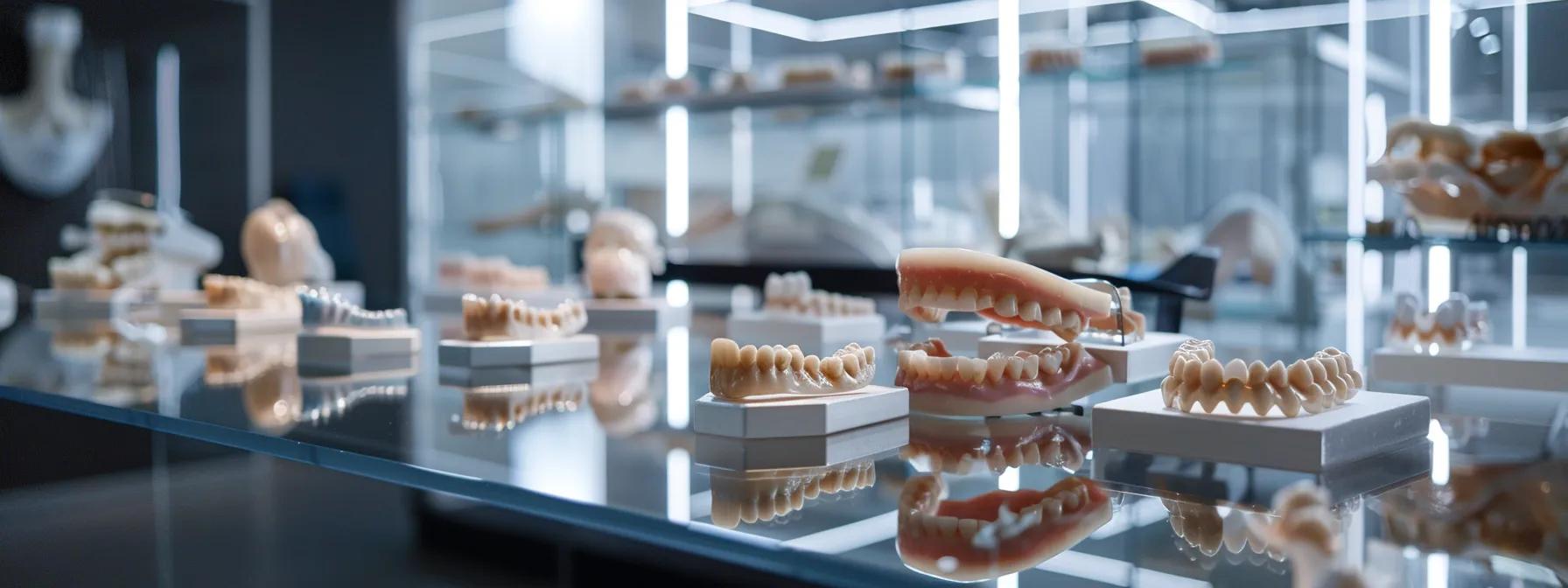
a sleek, modern dental office with a polished treatment area displaying a variety of denture types on a glass table, including complete dentures, partials with metal clasps, and implant-supported options, all under bright, focused lighting that highlights their distinct materials and designs.

Denture types differ by support mechanism, material, and design—key features include acrylic resin base, nylon thermoplastic framework, overlying porcelain teeth, and metal clasps on partials. Complete dentures rest on mucosa and underlying alveolar ridge, while removable partials engage existing teeth with precision attachments or wrought-wire clasps.

Implant-supported dentures use 2–6 titanium implants per arch to secure a bar-retained or ball-retained overdenture, improving retention by up to 80% compared to mucosa-supported prostheses. Flexible denture bases made of nylon can reduce sore spots by distributing stress evenly. Patients may also select cheek plumpers, tongue guards, or precision-milled attachments based on speech and lip support needs.

Table: Denture Types and Key Attributes

Below is a table comparing denture options and their attributes to help clarify choices.

Denture TypeSupportMaterialCost RangeCompany Offer
Complete DentureMucosalAcrylic resin$800–$1,500 per archFree initial consult, monthly payment plans
Partial DentureTooth-borneMetal framework + acrylic$700–$1,200Acrylic options and flexible bases
Implant-SupportedImplant-borneTitanium + acrylic/porcelain$3,500–$7,000+Special pricing packages available
OverdentureImplant & mucosaAcrylic + metal bar$2,000–$5,500Consultation includes 3D imaging

This comparison highlights the varying support mechanisms, materials, and cost considerations alongside the dental office’s free initial consultation and financing solutions.

What does the denture treatment process involve in Mansfield?

a modern dental clinic equipped with advanced technology showcases a dentist consulting with a patient, surrounded by digital screens and dental models, highlighting the professional and systematic denture treatment process.

The denture process starts with a comprehensive exam, followed by digital impressions, treatment planning, extractions if needed, and trial denture fittings—typically spanning 6–10 weeks. After extraction of all remaining teeth, a healing period of 8–12 weeks allows soft tissue maturation before final denture fabrication.

Clinical steps include:

  • Diagnostic casts from intraoral scans for occlusal analysis.
  • Wax try-in appointments to adjust vertical dimension and phonetics.
  • Final denture insertion using a pressure-relieved acrylic base for intimate fit.
  • Follow-up adjustments over 3–4 visits to alleviate sore spots and refine occlusion.

Patients benefit from monthly payment plans and after-delivery care, including free adjustments during the first 90 days. The office also offers digital shade matching and oral hygiene instructions to minimize denture stomatitis risk.

What are the benefits and challenges of full dentures?

a sleek dental office interior showcases a confident patient smiling broadly with their new full dentures, while a modern dental professional discusses the benefits and challenges of prosthetics, emphasizing advanced technology and comfort in a well-lit, professional setting.

Full dentures improve chewing efficiency by up to 60%, restore facial support, enhance speech clarity, and boost self-confidence through a renewed smile. According to an American Dental Association survey, 72% of denture wearers reported improved quality of life after prosthesis delivery at three months.

However, challenges include:

  1. Initial adaptation with altered taste and increased salivary flow.
  2. Bone resorption of 0.1–0.2 mm annually in the mandible, leading to fit changes.
  3. Retention issues in the lower arch due to smaller surface area.
  4. Sore spots from uneven pressure requiring periodic relines.

Despite these challenges, implant-supported overdentures can reduce bone loss by 50% and improve retention, offering a compromise for patients seeking stability without a full fixed bridge.

How can I make an informed decision on removing all teeth and getting dentures?

a focused dental consultation room with a modern dentist's chair, an array of dental models showcasing dentures, and a professional dentist discussing treatment options with a patient, emphasizing a clear dialogue about informed decision-making and aesthetic goals in oral health.

Making an informed decision involves reviewing clinical findings, personal priorities, aesthetic goals, and financial considerations in collaboration with a dentist or prosthodontist. Patients should compare long-term maintenance, potential for future implant placement, and impact on systemic health—since poorly fitting dentures can cause mucosal irritation, epulis fissuratum, and nutritional deficiencies.

Recommended steps:

  • Obtain a second opinion if uncertain about full-mouth extraction.
  • Use trial dentures or immediate dentures to preview function and esthetics.
  • Consider a phased extraction approach maintaining select teeth as overdenture abutments.
  • Discuss financing options, as the dental office offers affordable dental care with monthly payment plans and a free initial consultation to outline all costs upfront.

By aligning clinical data with patient lifestyle and budget, one can balance long-term oral health with immediate functional and aesthetic needs.

Can I eat normally with full dentures?

Yes, most patients regain up to 60% chewing efficiency within three months of adjustment visits.

How long do dentures last before needing replacement?

Typically 5–7 years, depending on wear, bone changes, and material quality.

Will my speech be affected after extraction?

Speech adapts within 2–4 weeks as you practice with the new prosthesis.

How often should I have denture relines?

Every 1–2 years or sooner if fit becomes loose due to bone resorption.

Are implant-supported dentures worth the extra cost?

They improve retention by up to 80% and reduce bone loss by 50%, enhancing comfort.

Deciding to remove all natural teeth and transition to dentures is a significant choice that affects chewing, speech, and appearance. Evaluating periodontal health, tooth prognosis, and personal priorities helps determine eligibility for complete versus partial prostheses. Exploring denture types, understanding treatment steps, and weighing benefits against challenges ensures a tailored solution. A free initial consultation and flexible payment plans in Mansfield facilitate access to quality care and informed decision-making.

×