Your dental crown cost without insurance in 2026 is the full self-pay amount for the treatment your tooth needs, not just the charge for the finished crown. An exam, X-rays, rebuilding the tooth, or root canal treatment can be separate parts of that total. Get a written, itemized estimate before approving treatment so you can compare the same work between offices.
TL;DR
Compare dental crown cost without insurance using complete treatment estimates, not crown-only quotes.
Affordable Dentist Near Me provides general and restorative dental care for families across its Texas locations.
Crown materials and the condition of your tooth shape the treatment plan.
Ask whether exams, X-rays, tooth buildup, temporary crowns, and final adjustments are included.
Why this matters
A crown-only quote and a complete treatment estimate answer different questions. The first describes one part of the restoration; the second tells you what you are agreeing to pay for your care. Compare the complete plan, not an isolated line item.
Affordable Dentist Near Me provides general, cosmetic, and restorative dental services for families in Fort Worth, Dallas, Houston, Waco, Grand Prairie, and Crowley. For an uninsured patient, the useful next step is a dental evaluation followed by a written explanation of the recommended work.
Your 2026 estimate should distinguish treatment that is needed now from optional choices. Ask the dentist to explain the reason for each item rather than treating everything on the page as one unexplained package.
How much does a dental crown cost without insurance in 2026?
The amount you owe depends on the crown selected and the work required to support it. A tooth that needs a crown but has a healthy nerve presents a different treatment problem from a tooth with infection, extensive decay, or a deep crack.
Use this breakdown to check whether an estimate describes your complete treatment. Not every item applies to every tooth, and an item listed here is not automatically a separate charge.
Treatment item
What it covers
What to ask before approving
Examination
Checking the tooth and discussing treatment
Is this included in the estimate?
X-rays
Assessing areas that cannot be seen directly
Which images are needed for this tooth?
Tooth buildup
Replacing missing structure beneath the crown
Does this tooth need a buildup?
Root canal treatment
Treating an infected or damaged nerve inside the tooth
Is this necessary, or is the nerve healthy?
Temporary crown
Protecting a prepared tooth while the final crown is made
Is a temporary crown part of my treatment?
Final crown
Covering and restoring the prepared tooth
What material is recommended, and why?
Fitting and adjustments
Checking contact, comfort, and the bite
Which follow-up adjustments are included?
An itemized estimate is more useful than a headline crown charge. It lets you see whether the dentist is quoting the restoration alone or the work needed to complete it.
Before comparing another office, confirm that both plans address the same tooth, use a comparable material, and include the same supporting treatment. Otherwise, the difference between the totals does not tell you which plan offers better value.
Which crown material should you ask about?
Material selection should follow the tooth's needs, not just appearance. The dentist considers where the tooth sits, how you bite, how much tooth remains, and whether the crown will show when you smile.
A visible tooth needs a natural-looking restoration
Tooth-colored appearance
Strength and preparation requirements depend on the ceramic used
Zirconia
Strength and a tooth-colored appearance both matter
Strong ceramic material
Appearance and handling vary by the type of zirconia
Metal
A back tooth needs a restoration and appearance is less important
Strength; some designs require less tooth removal
Metallic appearance
Porcelain fused to metal
A tooth-colored surface with a metal base is being considered
Combines a metal framework with porcelain
The porcelain can chip, and metal can become visible near the gum
Porcelain-based ceramic: discuss appearance and tooth position
Porcelain-based ceramic is a useful option to discuss when the restored tooth will be visible. Ask how the selected ceramic suits your bite and how the dentist will match nearby teeth.
The limitation is that “porcelain” does not identify one identical material. Request the actual material description on your estimate so you know what is being proposed.
Zirconia: discuss strength and appearance together
Zirconia is a strong ceramic used for dental crowns. It is worth discussing when your dentist needs to balance the forces on the tooth with a tooth-colored result.
Do not assume every zirconia crown looks or performs identically. Ask why the selected type suits your tooth and whether grinding or clenching changes the recommendation.
Metal: discuss function before rejecting the appearance
Metal crowns deserve a discussion for back teeth when visibility is less important. Some metal crown designs preserve more tooth structure during preparation than other designs.
The clear drawback is appearance. If the crown will show when you speak or smile, discuss that concern before choosing it.
Why dental crown treatment varies
The work beneath the crown often explains differences between treatment plans. These factors change what the dentist needs to do, even before the final restoration is fitted.
Remaining tooth structure: A heavily broken or decayed tooth can need a buildup to support the crown.
Nerve health: Infection or damage inside the tooth can require root canal treatment; a crown alone does not treat that problem.
Crack location: The depth and position of a crack affect whether the tooth can be restored.
Crown material: Material choice changes the restoration design and the preparation needed.
Bite and grinding: Heavy biting forces affect material selection and the discussion about protecting the finished crown.
Gum health: Inflamed gums or decay extending below the gum can complicate preparation and fitting.
Ask your dentist to connect each recommended procedure to a finding in your tooth. A clear explanation should tell you what the problem is, what the treatment addresses, and what happens if you leave it untreated.
For your 2026 decision, keep the diagnosis and the payment discussion separate. First establish which treatment is appropriate; then ask how the office handles payment for that plan.
How do you compare crown estimates without insurance?
Request written plans rather than trying to remember details from phone calls. A general phone quote cannot establish whether your tooth needs a buildup, nerve treatment, or another procedure.
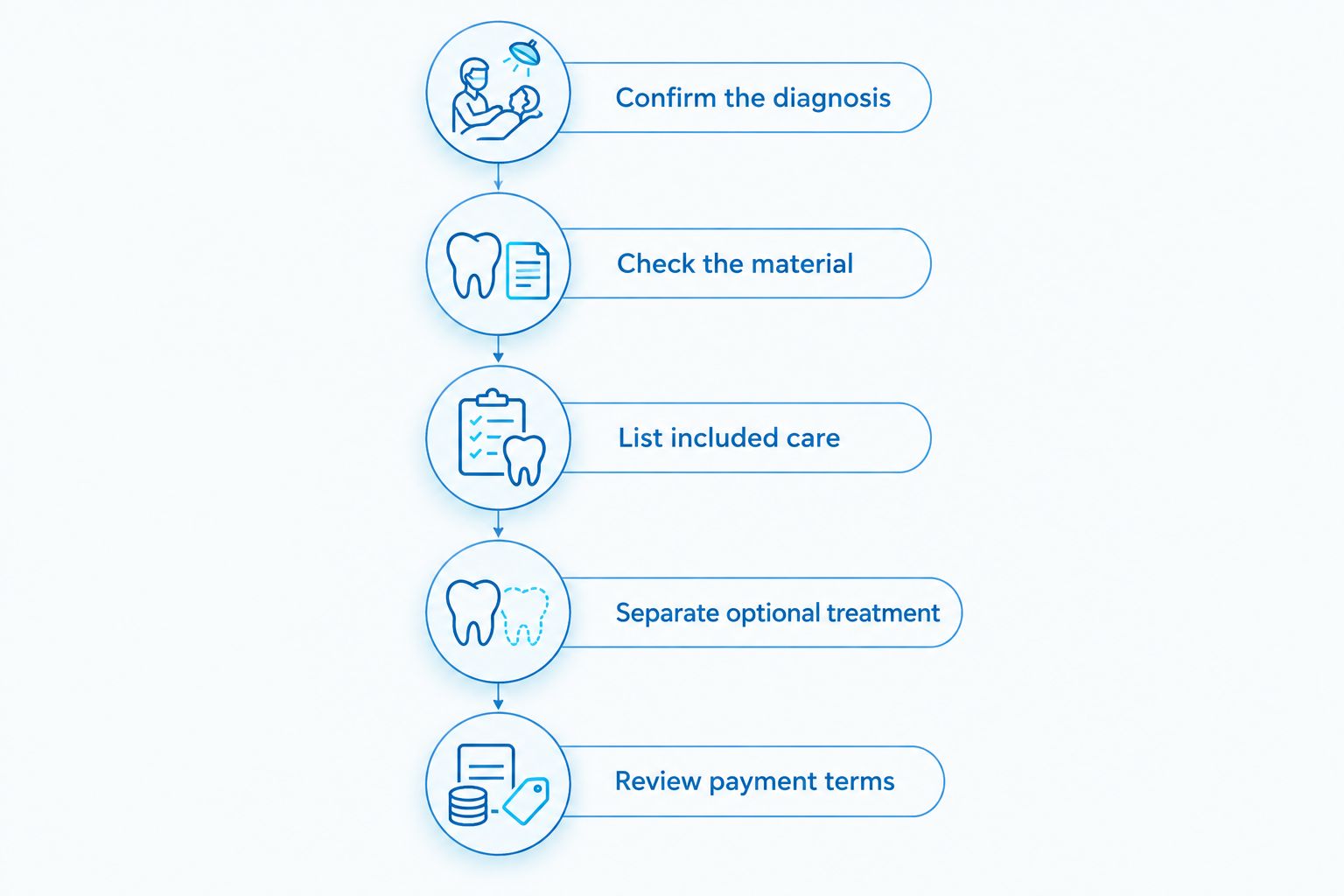
Follow this sequence before choosing an office:
Confirm the diagnosis. Ask why a crown is recommended and whether the tooth is restorable.
Check the material. Record the proposed crown material, not just the word crown.
List included care. Check the exam, imaging, buildup, temporary restoration, fitting, and adjustments.
Separate optional treatment. Ask which items are necessary for this tooth and which are elective.
Review payment terms. Request the amount due at each stage and the written terms of any payment arrangement.
Compare the diagnosis and included care before comparing payment arrangements.
Keep both estimates available when asking follow-up questions. If one dentist recommends root canal treatment and another does not, ask each to explain the clinical reason; do not treat that difference as merely a billing issue.
A second opinion is useful when the diagnosis or treatment choice remains unclear. It is not a substitute for urgent care when you have swelling, fever, or worsening symptoms.
Can you get a crown without a root canal?
Yes, a tooth can receive a crown without root canal treatment when the nerve does not need treatment. A crown restores the outside of the tooth; a root canal addresses the tissue inside it.
A large filling, a broken tooth, or weakened tooth structure can lead to a crown recommendation without an infected nerve. Ask the dentist what the examination and X-rays show about your tooth rather than assuming the procedures always come together.
Is a filling a reasonable alternative to a crown?
A filling is an alternative only when enough healthy tooth remains to support it. It generally replaces a damaged area without covering the tooth as extensively as a crown.
A crown involves more tooth preparation, but it can protect a tooth that a filling would leave vulnerable. Ask what a filling would leave unsupported and why the dentist recommends one restoration over the other.
Can you delay a crown until you have insurance?
The safety of delaying a crown depends on the tooth's condition, not the date your coverage starts. A weakened tooth can fracture further, and infection needs assessment rather than a wait for benefits.
Ask what protection the tooth needs while you decide and which symptoms require prompt attention. New insurance also does not automatically mean the proposed crown will be covered; review the policy's benefits, exclusions, and waiting periods before relying on it.
Choosing local care when you are uninsured
Affordable Dentist Near Me is a relevant local option for Texas families seeking general and restorative dental care. Its stated services include crowns, and its locations serve the communities listed above.
That service match is a reason to ask about your tooth, not proof that one office has the lowest total. You still need a clinical evaluation, an itemized treatment plan, and an explanation of the recommended material.
For a 2026 crown decision, choose an office that explains the diagnosis in plain language and answers questions about the written plan. Contact the office for more information about your treatment needs and payment arrangements; confirm the details before agreeing to care.
Discuss your crown treatment
Ask about your tooth, the recommended crown material, and a written treatment estimate.
A crown does not make the tooth underneath immune to decay. Plaque can collect where the restoration meets the natural tooth, so daily cleaning still matters.
Brush for 2 minutes, 2 times a day, using fluoride toothpaste. Clean between your teeth 1 time a day with floss or another method your dental professional recommends; these are standard American Dental Association home-care recommendations, not a practice-specific promise.
Tell your dentist if the crown feels high when you bite, becomes loose, or develops persistent discomfort. Do not use household glue to secure it, and ask for advice if a temporary or permanent crown comes off.
FAQ
How do I find my dental crown cost without insurance in 2026?
Get a written self-pay estimate after the dentist evaluates your tooth. Check whether it includes imaging, a buildup, a temporary crown, and any necessary root canal treatment.
Does a crown quote include a root canal?
A crown quote does not automatically include root canal treatment. Ask whether the nerve needs treatment and whether that procedure appears separately on the written plan.
What’s the best crown material for a back tooth?
The best crown material for a back tooth depends on your bite, remaining tooth structure, and appearance preferences. Ask the dentist to explain the advantages and limitations of the material recommended for your tooth.
Can I get a dental crown without insurance?
Yes, you can receive a dental crown as a self-pay patient. Ask the office for the complete treatment estimate and payment terms before approving the work.
Does Affordable Dentist Near Me provide crowns?
Affordable Dentist Near Me provides restorative dental services that include crowns. Contact the office serving your area for information about an evaluation and your treatment options.
Is the cheapest crown estimate the best choice?
The lowest total alone does not establish the best choice. Compare the diagnosis, crown material, included procedures, and follow-up care before deciding.
Can a crowned tooth still get a cavity?
Yes, the natural tooth beneath or beside a crown can develop decay. Brush with fluoride toothpaste, clean between your teeth daily, and follow your dentist’s advice about checkups.
One last thing
Ask to see what is happening beneath the proposed crown. A photograph or X-ray, when appropriate, can help the dentist explain the broken area, decay, or existing filling that led to the recommendation.
Before approving your 2026 treatment plan, ask: “What makes a crown necessary for this tooth, and what is included in the complete treatment?” A clear answer gives you a better basis for deciding than a crown-only quote.