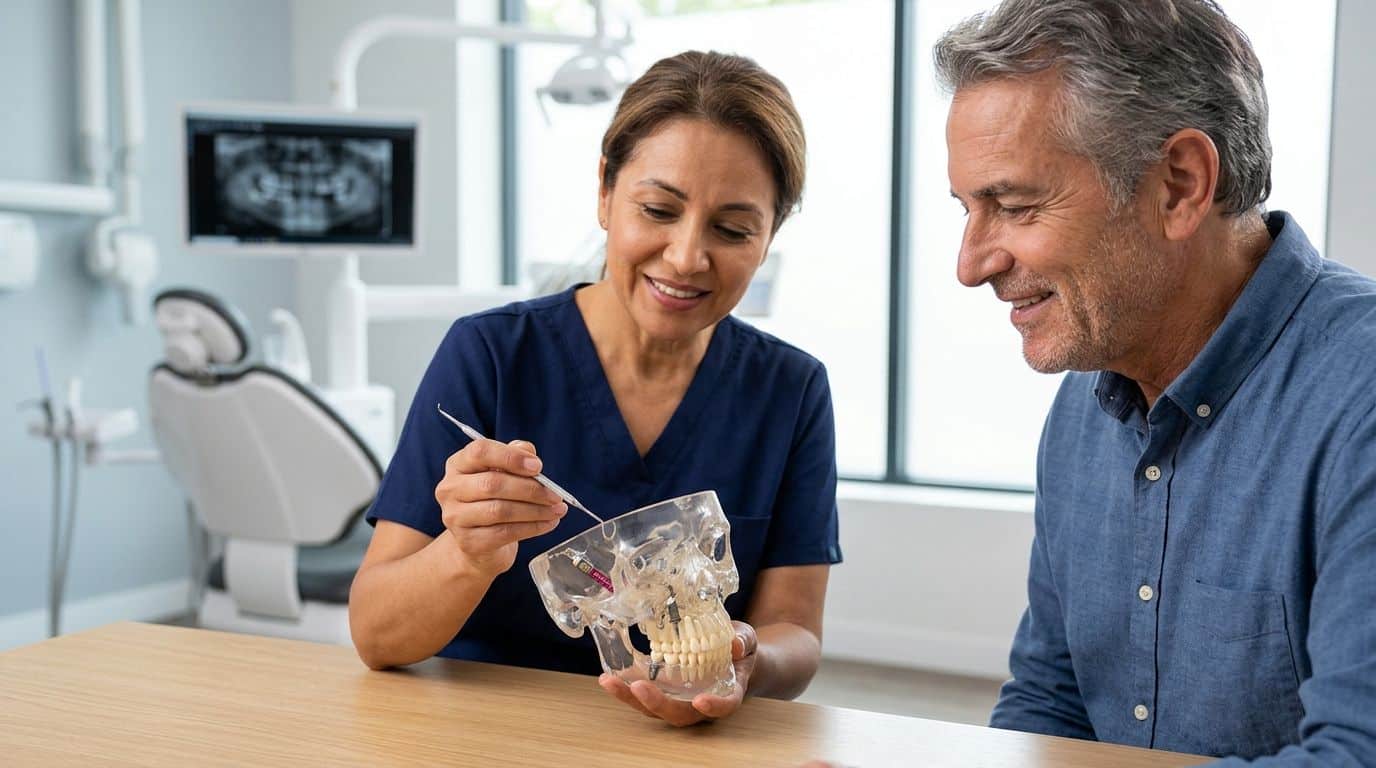
Severe bone loss in the upper jaw used to mean no implants at all. Zygomatic dental implants changed that, but they're not the only fix, and they're not the right fit for every case in 2026.
TL;DR
- Zygomatic dental implants anchor in the cheekbone and skip grafting for severe upper jaw bone loss.
- All-on-4 implants are the best overall pick when enough front jawbone remains to avoid grafting.
- Bone grafting plus traditional implants rebuilds bone but adds months before implants can be placed.
- Mini dental implants and implant-supported dentures cost less and suit patients who can’t handle major surgery.
- The right choice in 2026 depends on remaining bone volume, not which procedure sounds most advanced.
Why this matters
Severe bone loss in the upper jaw stops standard dental implants from anchoring at all. Patients who've worn dentures for years, lost teeth to gum disease, or had a sinus lift fail often hear the same thing from their dentist: not enough bone.
Zygomatic dental implants solve that by skipping the jaw entirely and anchoring in the cheekbone instead. That's not the only path forward, though. Bone grafting, All-on-4, mini implants and implant-supported dentures each rebuild a working bite without the same surgery, and the affordable dental implant options ranked by cost make those tradeoffs easier to see side by side.
Affordable Dentist Near Me sees this exact question from patients across Fort Worth, Dallas, Houston, Waco, Grand Prairie and Crowley every month. The right answer depends on how much bone is actually left, not on picking the newest-sounding procedure.
What makes the best zygomatic implant alternative
- Remaining jawbone volume — how much bone is actually left to anchor an implant
- Need for grafting — whether the option requires a separate bone-building surgery first
- Number of implants placed — fewer implants usually means a faster, cheaper path
- Fixed vs removable — some options support a permanent bridge, others snap in and out
- Surgical stages before teeth — one visit versus staged treatment over several months
- Fit for medically complex patients — smokers, diabetics and older patients don't all qualify for the same procedure
Zygomatic implant alternatives at a glance (2026)
| Option |
Best For |
Standout Feature |
Key Limitation |
| All-on-4 implants |
Moderate bone loss, wants a fixed bridge |
Angled implants avoid grafting |
Needs some viable front jawbone |
| Zygomatic implants |
Severe upper jaw bone loss |
Anchors in the cheekbone, skips the jaw |
Complex surgery, fewer offices offer it |
| Bone grafting + traditional implants |
Patients with time to spare |
Rebuilds bone instead of working around it |
Adds months of healing before implants |
| Mini dental implants |
Stabilizing a loose denture |
Needs less bone width |
Not strong enough for a full fixed bridge |
| Implant-supported dentures |
Extensive bone loss, minimal surgery |
Removable, fewer implants needed |
Less bite strength than a fixed bridge |
1. All-on-4 implants: best full-arch option for moderate bone loss
Four implants placed at an angle across the arch support a full fixed bridge, using the density in the front of the jaw where bone usually holds up best even after some loss. The back implants tilt to avoid the sinus, which is why grafting often isn't needed. Compare it against the full full mouth dental implant options ranked by cost before deciding.
All-on-4 pros:
- Fixed bridge, not removable
- No grafting needed for most candidates
- Full arch restored typically in one surgical phase
- Uses existing bone at an angle instead of adding more
All-on-4 cons:
- Still requires a minimum amount of viable bone in the front jaw
- Not enough for patients with advanced bone loss along the whole arch
- Speech and chewing adjustment period after placement
Best for: patients with moderate bone loss who want a fixed, non-removable result. All-on-4 implants are the strongest first option when front jawbone is still viable, and worth ruling out before considering zygomatic surgery.
2. Zygomatic implants: best for severe upper jaw bone loss
Longer implants anchor directly into the zygoma, the cheekbone, instead of the upper jaw, bypassing bone loss entirely. This is the option built for patients who've already been told they don't have enough jawbone for anything else.
Zygomatic implants pros:
- Works even with severe, long-standing bone loss
- No grafting or bone-building surgery required first
- Teeth can often be placed the same day as surgery
- Avoids the months-long wait grafting requires
Zygomatic implants cons:
- More complex surgery with a steeper learning curve for the surgeon
- Higher surgical risk than standard implants
- Not every dental office offers the procedure
Best for: patients with severe upper jaw bone loss who don't qualify for standard implants. Zygomatic implants are the right call when bone loss rules out every other option on this list.
3. Bone grafting + traditional implants: best for rebuilding bone before standard implants
Bone graft material is added to the jaw first, then the site heals for several months before a standard implant goes in. This rebuilds the jaw itself instead of working around the shortage.
Bone grafting pros:
- Restores bone rather than bypassing it
- Standard implants afterward are a well-established procedure
- Can be staged in smaller grafts for less advanced bone loss
Bone grafting cons:
- Adds months of healing time before implants can even be placed
- More total procedures and appointments than other options
- Not guaranteed to succeed in patients with very advanced bone loss
Best for: patients with mild to moderate bone loss who aren't in a hurry. Bone grafting is worth the wait when bone loss is moderate and timeline isn't the deciding factor.
4. Mini dental implants: best for stabilizing a denture with minimal bone
Smaller-diameter implants need less bone width than standard implants and are commonly used to stabilize a lower denture. Placement is less invasive than full-size implant surgery.
Mini dental implants pros:
- Requires less bone than standard-size implants
- Less invasive placement, often no grafting
- Lower surgical burden for older or medically complex patients
Mini dental implants cons:
- Not strong enough to support a full fixed bridge on their own
- Long-term durability data is thinner than for standard implants
- Mainly a denture-stabilization fix, not a full-arch replacement
Best for: patients who want a loose denture to stop moving and aren't candidates for major surgery. Mini dental implants solve denture instability, not the bone loss questions that push patients toward zygomatic implants.
5. Implant-supported dentures: best budget-friendly option for extensive bone loss
A small number of implants go in wherever bone allows, then a removable denture snaps onto them. This needs less bone than a fixed bridge and less surgery than grafting or zygomatic placement.
Implant-supported dentures pros:
- Works with less remaining bone than a fixed bridge requires
- Fewer implants needed than All-on-4 or zygomatic implants
- Removable for cleaning, which some patients prefer
Implant-supported dentures cons:
- Not fixed in the mouth, still comes out at night
- Less bite strength than a fixed implant bridge
- May need periodic adjustment as the jaw continues to change
Best for: patients with extensive bone loss who want implant stability without a fixed full-arch procedure. Implant-supported dentures are the practical fallback when the jaw can't support a fixed bridge and surgery needs to stay minimal.
How we ranked these
Every option above gets scored against the same six criteria: bone volume required, whether grafting is needed, number of implants, fixed versus removable outcome, number of surgical stages, and fit for medically complex patients. Zygomatic dental implants rank first for bone loss severity because nothing else on this list works with as little native bone. All-on-4 ranks first overall because it fits the largest share of patients without grafting or the surgical complexity zygomatic implants require. Affordable Dentist Near Me applies this same six-point comparison at a first appointment, before any treatment plan gets set.
Compare Your Implant Options
See cost-ranked implant choices for every level of bone loss.
Which option should you choose in 2026?
Most patients considering zygomatic dental implants have already been turned away for standard implants somewhere else. If an exam shows viable bone remains in the front of the jaw, All-on-4 implants are the default recommendation — fewer surgical stages, no cheekbone anchoring, and a fixed result in one phase.
If bone loss is severe enough that All-on-4 isn't on the table, zygomatic implants become the practical choice, not a last resort. They're built for exactly this situation. Patients who aren't candidates for major surgery, whether from age, health conditions or timeline, should look at implant-supported dentures or mini dental implants first and revisit zygomatic implants only if those don't hold up long-term.
Cost varies by case and by location, and the dental implant cost breakdown covers what typically drives the difference between these options in 2026.
FAQ
What are zygomatic dental implants?
Zygomatic dental implants are longer implants anchored into the zygoma, the cheekbone, instead of the upper jaw. They’re used when upper jaw bone loss is too severe for standard implants or All-on-4 to work.
Are zygomatic implants better than bone grafting?
Neither is better across the board; zygomatic implants skip the wait bone grafting requires but involve more complex surgery. Grafting rebuilds the jaw itself and suits patients with moderate bone loss who aren’t in a rush.
Is All-on-4 an alternative to zygomatic implants?
Yes, All-on-4 is the most common alternative when enough bone remains in the front of the jaw. It avoids grafting and cheekbone anchoring while still delivering a fixed full-arch bridge.
Can mini dental implants replace zygomatic implants?
Not for the same purpose. Mini dental implants stabilize a loose denture with minimal bone, while zygomatic implants are built to support a full arch in cases of severe bone loss.
How much bone loss is too much for regular implants?
Once there isn’t enough bone width or height to anchor a standard implant safely, options shift to bone grafting, All-on-4, or zygomatic implants depending on severity. An exam and imaging determine which category a case falls into.
Do implant-supported dentures work with severe bone loss?
Yes, implant-supported dentures need less bone than a fixed bridge because fewer implants are placed wherever bone allows. They trade some bite strength for a lower surgical burden.
How long does recovery take after zygomatic implant surgery?
Recovery timelines vary by patient and case complexity, and a dental team can outline what to expect during a consultation. Teeth can sometimes be placed the same day as surgery, unlike bone grafting which requires months of healing first.
Is zygomatic implant surgery covered by insurance?
Coverage depends on the individual insurance plan and the reason for the procedure. Check with your provider and the dental office handling treatment before assuming any portion is covered.
One last thing
Standard implants typically run about 8 to 16mm long and anchor straight down into the jaw. Zygomatic implants can reach 30 to 55mm because they skip the jaw and anchor into the cheekbone instead, and that length difference is the entire reason they work when nothing else does. If an office tells you you're not a candidate for implants because of bone loss, ask specifically whether they've ruled out zygomatic implants before moving straight to dentures.
Related guides