You can whiten teeth with crowns or veneers, but whitening products lighten only your natural teeth—not the crowns or veneers themselves. The main drawback is an uneven smile if your natural teeth become lighter than your existing dental work. Before starting whitening in 2026, have a dentist check whether the color difference comes from surface stains, the restoration’s original shade, or a problem that needs treatment.
TL;DR
You can whiten teeth with crowns or veneers, but whitening does not change the restorations’ original shade.
Professional cleaning can remove some surface stains; it cannot bleach porcelain or composite to a new shade.
Whitening natural teeth can make an existing crown or veneer look darker by comparison.
Affordable Dentist Near Me provides general and cosmetic dental care for families in its Texas service cities.
Can you whiten teeth that already have crowns or veneers?
Yes, you can whiten the natural teeth around crowns or veneers, but you cannot bleach the restorations to a lighter shade. Peroxide-based whitening works differently on natural tooth structure than it does on porcelain, ceramic, or tooth-colored filling material.
That distinction applies whether you use strips, dentist-provided trays, or an in-office treatment. A stronger treatment does not turn a crown into a whiter crown. Compare at-home and in-office teeth whitening methods with that limitation in mind.
Tooth or restoration
Does bleaching lighten its underlying shade?
What cleaning can do
Main limitation
Natural tooth
Yes, although the response varies
Remove surface deposits and stains
Whitening can cause sensitivity and uneven results
Porcelain or ceramic crown
No
Remove some surface staining
The original material shade stays the same
Porcelain veneer
No
Remove some surface staining
Surrounding teeth can become lighter than the veneer
Composite veneer or bonding
Not predictably like natural teeth
Cleaning or suitable polishing can address some surface stains
Deeper discoloration can require repair or replacement
Your dentist should identify which visible teeth are natural and which have restorations before you choose a target shade. A crown toward the back of your mouth creates a different cosmetic concern from a veneer beside your front teeth.
Why this matters
Whitening is not just about making each tooth brighter. Your smile also needs a color match between neighboring teeth. A treatment can successfully lighten natural teeth while making the overall result look less even.
For your 2026 whitening plan, decide which matters more: matching existing dental work or choosing a lighter overall shade. Keeping a healthy restoration and accepting its color avoids replacing it solely for appearance. Choosing a shade much lighter than that restoration creates a separate decision about whether replacement is justified.
Do not assume that a visible mismatch means your crown or veneer has failed. Color alone does not establish whether dental work needs replacement; fit, damage, decay, and gum health also matter.
Natural teeth: best for bleaching-related shade changes
Natural teeth are the part of your smile that conventional whitening can lighten. Whitening agents act on staining within natural tooth structure, although different types of discoloration respond differently.
The benefit is that you can address natural-tooth discoloration without automatically replacing sound dental work. The drawback is that crowns, veneers, and visible fillings stay behind at their existing shades.
Ask your dentist to compare your current natural-tooth shade with your restorations. If your natural teeth have darkened since a crown was placed, carefully planned whitening can help bring them closer to that crown’s shade. If the crown is already darker than your natural teeth, whitening the surrounding teeth increases the contrast instead.
Best for: People whose natural teeth are darker than otherwise acceptable restorations. The goal should be a coordinated result, not simply the lightest possible teeth.
Crowns and porcelain veneers: best for cleaning surface stains
Crowns and porcelain veneers do not become lighter through ordinary tooth bleaching. However, staining on their surfaces is different from the color built into the material.
A professional cleaning can remove deposits and some surface stains. Your dentist can also determine whether suitable polishing is appropriate for the restoration. The benefit is improving appearance while keeping sound dental work; the limitation is that cleaning cannot create a shade lighter than the underlying material.
A dark edge deserves an examination rather than repeated whitening. It can involve staining, a visible restoration edge, gum recession, or another dental concern. You cannot identify the cause reliably from color alone.
Your restoration’s material matters when discussing cleaning and appearance. The guide to porcelain, zirconia, and metal crown materials explains the categories you can ask your dentist to identify.
Best for: People with surface discoloration on an otherwise healthy crown or veneer. Do not replace sound dental work before finding out whether cleaning addresses the concern.
Composite veneers and bonding: best for a polishing assessment
Composite veneers and bonding also do not whiten predictably alongside natural teeth. Composite is a tooth-colored material, not natural enamel, so you should not expect a whitening strip to create a matching shade change.
Some discoloration sits on the surface and can respond to professional polishing. Deeper discoloration or an unwanted original shade can require repair or replacement instead. The benefit of an assessment is separating a maintenance issue from a material-color issue before changing the restoration.
Do not scrub composite with abrasive powders or attempt to polish it with household tools. A roughened surface is not a successful whitening result.
Best for: People whose bonding or composite veneers have developed visible staining. Ask whether conservative polishing is suitable before discussing more extensive treatment.
Why whitening results vary with crowns and veneers
A useful 2026 whitening plan accounts for the whole visible smile, not just the teeth you want lighter. These factors explain why the same whitening approach does not produce the same appearance for everyone:
Restoration material: Porcelain, ceramic, and composite do not respond to bleaching like natural teeth.
Starting shade: A restoration that already looks dark will stand out more if adjacent teeth become lighter.
Stain location: Surface stains require a different approach from color within a tooth or restoration.
Restoration position: A mismatch on a front tooth is easier to notice than one outside your visible smile.
Dental health: Sensitivity, cavities, gum irritation, or a damaged restoration can change what needs attention first.
Your shade goal: Matching existing dental work is a different goal from choosing a substantially lighter smile.
Coffee, tea, and tobacco can contribute to visible staining, but identifying a staining habit does not establish the right treatment. Your dentist still needs to distinguish removable deposits from the restoration’s actual color.
How should you plan whitening around existing dental work?
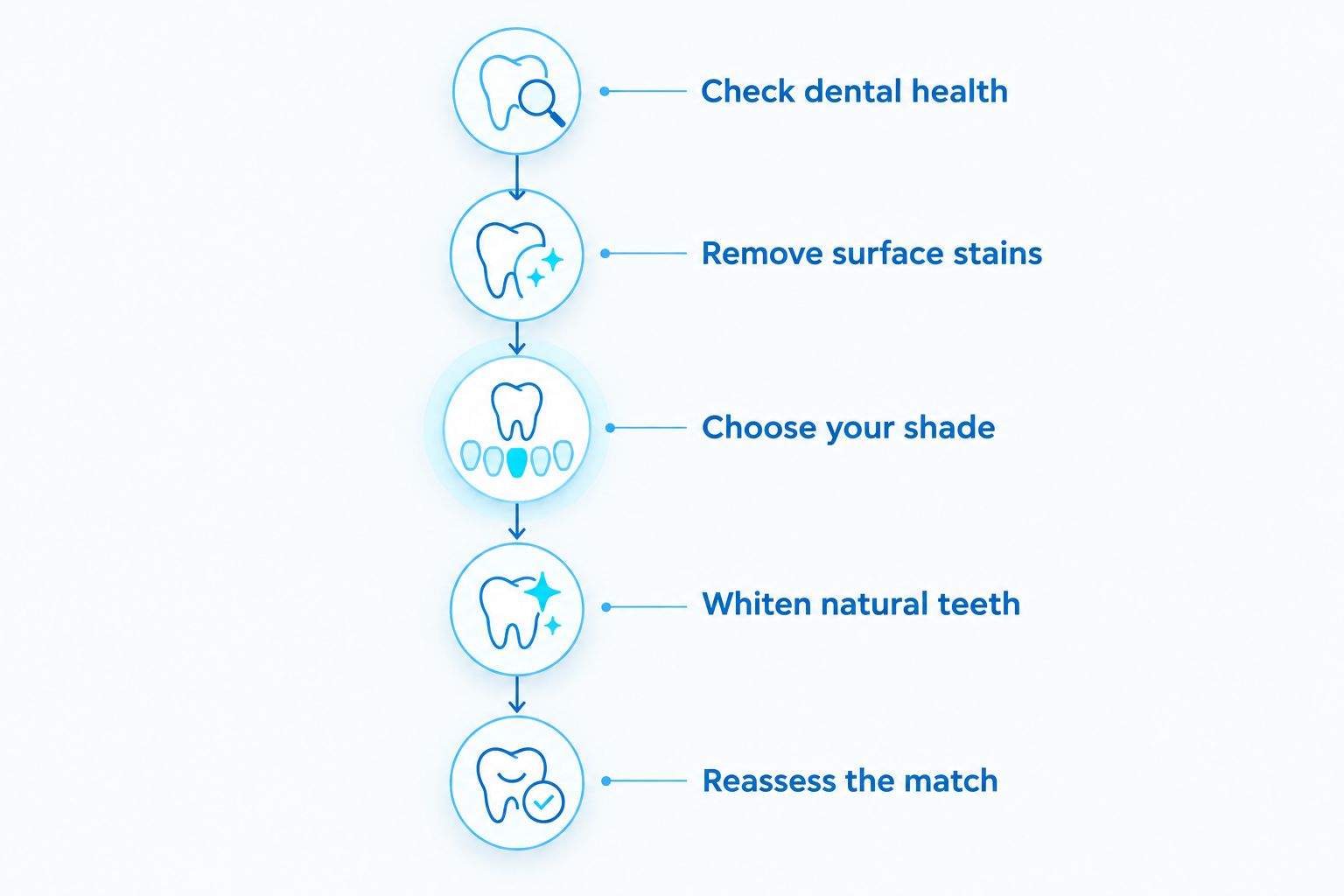
Start with an examination and a shade plan, not a stronger whitening product. This sequence helps you avoid treating the wrong problem or creating a mismatch you did not intend.
Check dental health. Tell your dentist about pain, sensitivity, bleeding gums, loose dental work, or a newly darkened edge. Address active problems before elective whitening.
Remove surface stains. Have your dentist determine whether cleaning or appropriate polishing changes the appearance enough to meet your goal.
Choose your shade. Decide whether you want natural teeth to match existing restorations or want an overall color change that could involve replacement work.
Whiten natural teeth. Follow the treatment directions your dentist recommends. Do not extend treatment because a crown or veneer stays unchanged.
Reassess the match. If replacement is planned, let your dentist decide when the whitening result is stable enough for final shade selection and bonding.
Choose the shade goal before whitening, then reassess whether existing restorations still match.
If you want lighter replacement crowns or veneers, discuss the order of treatment before any final restoration is made. Whitening after choosing the final restoration shade can undo the match you were trying to achieve.
For families seeking general and cosmetic dental care in its Texas service cities, Affordable Dentist Near Me is a suitable practice to discuss whitening alongside existing dental work. Affordable Dentist Near Me serves Fort Worth, Dallas, Houston, Waco, Grand Prairie, and Crowley; contact the office for information about your individual care needs.
Discuss your whitening options
Ask about natural-tooth whitening, existing restorations, and the order of treatment.
Will whitening strips damage my crowns or veneers?
Whitening strips will not lighten the underlying shade of crowns or veneers. Whether a particular product is appropriate depends on its directions and the condition of your teeth, gums, and dental work; do not treat an unchanged restoration as a reason to use more.
Stop treatment and contact your dentist if you develop significant pain, gum irritation, or a new concern around a restoration. A loose crown, broken veneer, or painful tooth needs an assessment, not additional bleaching.
Do I need new crowns or veneers to get a whiter smile?
You do not automatically need new crowns or veneers to improve your smile’s appearance. Cleaning surface stains or whitening darker natural teeth toward an existing restoration’s shade can be enough.
Replacement becomes a separate discussion when the restoration’s underlying shade does not fit your goal, or when it also has a health or structural problem. Replacing sound dental work solely for color involves additional treatment and should be a deliberate choice, not an assumed part of whitening.
Can whitening toothpaste make my veneers match?
Whitening toothpaste cannot bleach porcelain veneers or crowns to a new underlying shade. Some toothpastes help remove surface stains, but they do not solve a mismatch caused by the restoration’s original color.
For daily care in 2026, brush for 2 minutes, 2 times a day, using fluoride toothpaste, and clean between your teeth 1 time a day. Ask your dentist which toothpaste and cleaning aids suit your restorations, especially if you have sensitivity or exposed tooth surfaces.
FAQ
Can I whiten teeth with crowns or veneers at home?
You can whiten natural teeth at home with an appropriate product, but crowns and veneers will not lighten with them. Have your dentist check your dental work and discuss the risk of an uneven shade before starting.
Why does my crown look darker after whitening?
Your crown can look darker because the natural teeth around it became lighter while the crown stayed the same shade. A dentist can distinguish that contrast from surface staining or a problem with the restoration.
Can a dentist bleach porcelain veneers?
A dentist cannot bleach porcelain veneers to a lighter underlying shade with conventional tooth whitening. Professional cleaning can remove some surface stains, while changing the material’s original shade generally requires replacing the veneer.
Should I whiten my teeth before getting a replacement crown?
If you plan to whiten your natural teeth, discuss completing whitening before the final replacement crown shade is selected. Your dentist should determine when the color is stable and when bonding is appropriate.
Is professional cleaning better than whitening for stained crowns?
Professional cleaning is the appropriate starting point for removable surface stains on crowns because bleaching does not lighten crown material. Cleaning will not change a crown’s original shade, so the cause of discoloration matters.
What should I do if whitening hurts a tooth with a crown?
Stop whitening and contact your dentist if a crowned tooth hurts. Sensitivity or pain needs an assessment rather than a stronger product or longer treatment.
Can I discuss whitening and crowns at Affordable Dentist Near Me?
Affordable Dentist Near Me provides general, cosmetic, and restorative dental care, including crowns and teeth whitening. Contact the office to discuss your existing restorations and the care appropriate for your smile.
One last thing
The brightest possible natural teeth are not always the best match for your smile. If a healthy front crown already has a shade you like, matching your natural teeth to that crown can be a more conservative goal than replacing it to chase a lighter color.
Before your 2026 whitening appointment, identify the tooth or restoration whose color you want to keep. Show your dentist that reference point and ask what can change, what cannot, and whether cleaning alone is worth trying first.