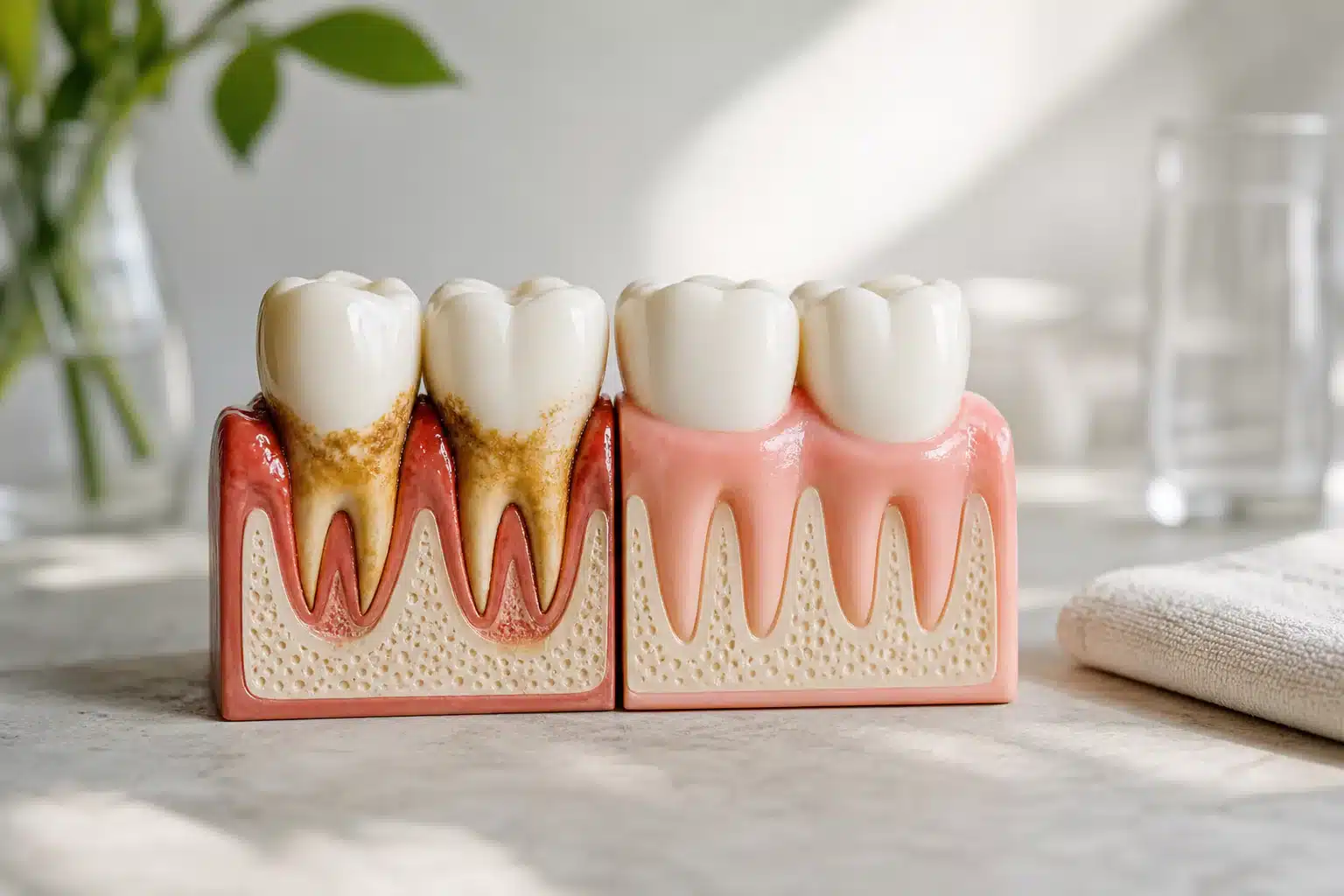
In a deep clean teeth before and after comparison, your gums usually shift from red, puffy, and bleeding to paler pink and firmer tissue, and pocket depths shrink modestly. Expect tenderness and sensitivity for several days, with full gum healing taking about four to six weeks. A deep cleaning is not cosmetic whitening, and the results hold only with good aftercare.
By the end of this article, you will know what happens at each stage of a deep cleaning, what changes you can see and feel, and how to care for your mouth afterward.
What Is a Deep Cleaning, and How Is It Different From a Regular Cleaning?
A deep cleaning, called scaling and root planing (SRP), is a treatment for gum disease that cleans below the gumline and smooths the tooth roots. A regular cleaning only removes plaque and tartar from the visible surfaces of your teeth and just under the gum edge, and it is meant for healthy mouths.
Scaling means removing hardened tartar from the teeth and roots. Root planing means smoothing the root surfaces so gums can settle back against them. Your dentist recommends this when bacteria have built up in the pockets (small gaps) between your teeth and gums. This is common: roughly 47.2% of U.S. adults over age 30 have some form of periodontal disease, according to CDC data cited by WHMCNY in 2025. Severe periodontitis is less common, with a global prevalence of about 11.2% between 1990 and 2010, according to research published in Nature in 2023.
This guide covers the narrower question of what a deep cleaning changes in your gums and teeth. If you are looking for dramatic smile makeovers, see Cosmetic Dentistry: Before and After (Pictures). A deep cleaning is a health treatment, so the changes are mostly in how your gums look and feel, not in how white your teeth are.
Step by Step: What Happens During a Deep Cleaning
A deep cleaning follows a set order: exam, numbing, cleaning, optional antimicrobial treatment, and a follow-up check. Ask your dental team how many visits your mouth needs, since that depends on how much of it is affected.
- Exam with a probe and X-rays. Your dentist measures the depth of the pockets around each tooth with a small probe and uses X-rays to look for bone loss. You will feel light pressure, not pain.
- Numbing. Local anesthesia numbs your gums so you stay comfortable during cleaning below the gumline. You may feel a quick pinch from the injection, then numbness.
- Scaling and root planing. The dental team removes plaque and tartar above and below the gumline using ultrasonic or hand instruments. Ultrasonic scalers use a fine metal tip that vibrates with a water spray to break up tartar and flush out the pockets. The buzzing and water take some getting used to. Hand curettes, curved steel tools that follow the shape of the root, let the clinician feel the root and smooth it until it is glassy rather than gritty. You may feel pressure and scraping, but not sharp pain.
- Antimicrobial rinse or localized antibiotic, if needed. If infection needs more control, your dentist places an antimicrobial rinse or antibiotic directly into the pockets.
- Re-evaluation visit. About four to six weeks later, your dentist re-measures your pocket depths and checks how your gum tissue responded.
Some offices also use a dental laser as an add-on to scaling. It is optional, not a standard part of a deep cleaning, and the evidence of benefit is more modest than marketing claims suggest.
Deep Clean Teeth Before and After: What Changes in Your Gums and Teeth
The biggest changes after a deep cleaning are in your gums: less redness, less swelling, less bleeding, and fresher breath as bacteria and tartar are removed. Your teeth themselves will not look dramatically different, because this is a gum health treatment.
Here is what you can usually expect to see and feel after a deep cleaning:
| What you notice |
Before |
After |
| Gum color |
Red or dark pink |
Paler pink and firmer as inflammation settles |
| Swelling |
Puffy, tender gums |
Less puffiness as tissue heals |
| Bleeding |
Bleeds when you brush or floss |
Bleeds less as the infection clears |
| Breath |
Persistent bad taste or odor |
Fresher as bacteria and tartar are removed |
| Tartar buildup |
Hard deposits above and below the gumline |
Removed from tooth and root surfaces |
| Tooth color |
Yellow or brown stains along the gumline |
Tartar stains lift, but natural tooth shade stays the same |
Healing takes time. It can take 4 to 6 weeks for gums to heal fully after a deep cleaning, according to the American Dental Association as cited by Colgate in 2024. In the first days, your gums may look more swollen or feel sore before they look better.
Can yellow teeth turn white again? Not from a deep cleaning alone. It removes stains caused by tartar, so teeth near the gumline may look cleaner. It does not change the natural shade of your teeth. For a whiter smile, ask your dentist about professional whitening as a separate step.
Do Gums Reattach After a Deep Cleaning, and How Long Does It Take?
Gums can reattach modestly after a deep cleaning, and the pockets around your teeth usually get shallower. They do not fully regrow what gum disease already took, so think of the result as healthier tissue, not restored tissue.
The numbers show a measured improvement. Pooled clinical trial data indicates deep cleanings achieve average pocket depth reductions of 1.3 mm for initial depths of 4 to 6 mm, according to acibademinternational.com in 2026. A clinical study cited by Florida Special Care Dentistry reported an average probing depth improvement of 2.4 ± 0.6 mm over six months. That source is a dental practice, so treat the figure as one data point, not a guarantee. Results differ because they depend on how deep your pockets were to start.
Attachment gain, meaning the gum tissue holding on to the tooth again, is smaller. Research cited by DentPrecious indicates deep cleaning typically results in a 0.5 mm average gain in gum attachment. That is about half a millimeter, so do not expect your gums to climb back up your teeth.
How long does it take? Healing happens in stages. Your gums calm down within days, and your dentist schedules the re-evaluation visit to re-measure your pockets and see how your tissue responded.
None of these figures predict your own results. Your dentist can tell you what to expect based on your starting measurements.
Disadvantages and Side Effects: Did Deep Cleaning Ruin My Teeth?
A deep cleaning does not ruin healthy teeth. It treats an infection that was already damaging the tissue around them. Still, there are real downsides, and knowing them ahead of time helps you plan.
Common side effects include:
- Soreness: Your gums may feel tender for several days once the numbness wears off.
- Sensitivity: Teeth often react to hot, cold, and sweet foods because the roots are cleaner and more exposed.
- Light bleeding: Gums may bleed a little when you brush, especially at first.
- Gums that look like they receded: As swelling goes down, gums shrink and teeth can look longer. The gum tissue was inflamed before, so some of that is a return to its true level.
- Teeth that feel looser: Swollen gums can hold teeth in a way that hides how much support has been lost. As the swelling resolves, teeth may feel looser than you remember.
If your teeth feel loose, it helps to know why. Looseness after a deep cleaning usually comes from the swelling going down, not from the cleaning itself. You cannot tighten loose teeth on your own. In many cases, your gums firm up as they heal over the next several weeks, so give them time, keep cleaning gently, and bring it up at your re-evaluation visit. If a tooth moves a lot, tell your dentist sooner.
So, "deep cleaning ruined my teeth" is usually a reaction to how different everything feels while your gums heal. It is worth taking seriously, though, so call your dentist if you have:
- Pain that gets worse after a few days instead of better
- Swelling, a bad taste, or pus near the gums
- Bleeding that does not slow down
- A tooth that feels very loose or shifts when you bite
Always consult with your dentist about anything that feels wrong. Healing varies from person to person.
After Deep Cleaning: What Can You Eat and What Not to Do
Gentle food, gentle brushing, and patience protect your results. Follow these steps in order, and ask your dentist about anything specific to your mouth.
- First 24 hours. Wait until the numbness wears off before eating, so you do not bite your cheek, lip, or tongue. Rest, and skip strenuous exercise if your dentist advises it.
- Eat soft, cool foods. After deep cleaning teeth, what can you eat? Think yogurt, eggs, oatmeal, mashed potatoes, soup that is warm but not hot, and smoothies (no straw). Soft foods are easier on tender gums.
- Avoid what irritates. What not to do after a deep cleaning: skip hard, crunchy, spicy, or very hot foods, since they can scrape or sting healing gums. Also avoid smoking or tobacco, which slows healing, and do not poke at your gums with fingers or toothpicks.
- Brush and rinse gently. Use a soft-bristled brush and light pressure. Keep brushing and flossing, since leaving plaque in place invites the problem back. A warm saltwater rinse can soothe sore gums.
- Manage sensitivity. If your teeth react to temperature, a toothpaste made for sensitive teeth can help. Ask your dentist which one fits your needs.
- Keep your follow-up. Return for the re-evaluation about four to six weeks later, when your dentist re-measures your pockets and checks your tissue response. That visit shows whether the treatment worked.
Follow these steps and your gums can heal well, which helps your results last.
Nervous About a Deep Cleaning? Sedation Options and What It Costs
If the thought of a deep cleaning makes you tense, you have options. Many dental offices offer sedation for anxious patients, so tell your team about your worries when you book and ask what they offer. To compare options, see how sedation dentistry eases dental anxiety, or use Affordable Dentist Near Me to find a nearby office that offers it.
A deep cleaning typically costs more than a regular cleaning. The price varies based on several factors, including your region, the practice, and how many sections of your mouth need treatment. Ask for a written treatment plan with exact fees before any work begins, and check what your insurance covers.
Prices and plan limits verified as of November 2026.
FAQs
How long does teeth deep cleaning take?
The length depends on how much of your mouth needs treatment and how deep your pockets are. Some people finish in one visit, while others need the work split across several. Your dentist can tell you what to plan for after the exam and X-rays. Ask about the schedule when you book so you can arrange your day around it.
Can yellow teeth turn white again after a deep cleaning?
Not from a deep cleaning alone. It removes tartar and the stains tartar causes, so teeth near the gumline may look cleaner, but it does not change the natural shade of your teeth. If you want a whiter smile, talk with your dentist about professional whitening as a separate treatment once your gums have healed.
Is a deep cleaning the same as a regular cleaning?
No. A regular cleaning removes plaque and tartar from the visible tooth surfaces and just under the gum edge, and it is meant for healthy mouths. A deep cleaning (scaling and root planing) goes below the gumline to clean and smooth the roots, and it treats gum disease. It usually involves numbing, which a regular cleaning typically does not.
Can I go back to work right after a deep cleaning?
Many people do, but plan for numbness and some soreness. Wait until the numbness fades before eating, and expect tender gums for several days. If your job is physically demanding, or if you have sedation, ask your dentist how much rest you need. Taking it easy that day helps your gums settle.
Will my teeth feel loose after a deep cleaning?
They can. Swollen gums may hide how much support you have lost, so as swelling goes down, teeth can feel looser than you remember. Gums often firm up over the following weeks as they heal. Keep brushing gently and mention it at your re-evaluation visit. If a tooth shifts a lot when you bite, call your dentist sooner.
Conclusion
A deep cleaning mostly changes your gum health, not your tooth color. Expect less redness, swelling, and bleeding, modest pocket improvement, and several days of soreness, with full gum healing taking about four to six weeks.
Before your appointment, write down any questions about numbing or sedation, and plan soft foods for the first day. Afterward, brush gently, keep your follow-up visit, and tell your dentist right away about worsening pain, swelling, or a tooth that feels very loose.