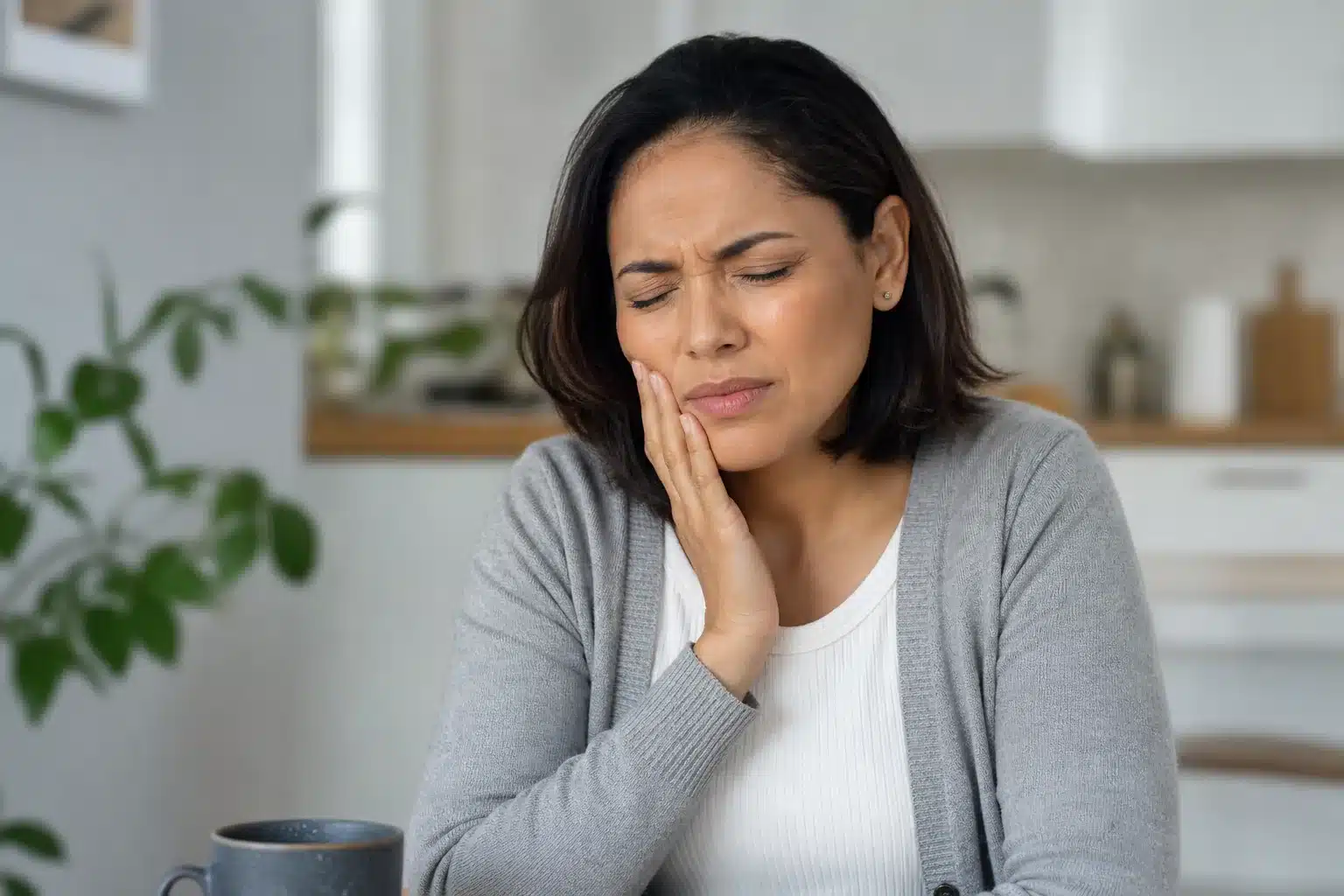
Why does my tooth filling hurt after months? It is usually not normal healing. Common causes are a high bite, new decay under or around the filling, or an irritated nerve (pulpitis). Mild sensitivity fades within weeks, so if your pain lasts for months, gets worse, or comes with swelling and fever, you should see a dentist soon.
This guide covers a filled natural tooth that hurts long after the appointment. If your pain comes from an implant, the self-check below links to that topic. By the end of this article, you will know how to tell normal from abnormal, what likely causes your pain, and what to do next.
How Long Is It Normal for a Filling to Hurt?
Minor sensitivity and gum soreness after a filling are normal and typically fade within a week or two. That is the window to use when you judge your own timeline.
Some sensitivity right after a filling is common. A study of 342 patients in Dutch general practices found that 38.7% of them had sensitivity after a routine filling. So if your tooth zinged on cold water for a few days, you are in good company. The nerve inside the tooth can take a little time to settle after the procedure.
Here is how the timeline usually breaks down:
- Tooth sensitivity after filling at 2 weeks: Mild, brief reactions to cold or pressure can still be part of settling in, but they should be getting better, not worse.
- Filling sensitive after 3 weeks: This is past the usual window. It doesn't always mean something is wrong, but it is worth watching closely and booking a checkup if it isn't clearly improving.
- Anything past a month: Pain at this point is no longer a normal healing pattern, and a dentist should look at it.
The direction of the pain matters as much as the date. Sensitivity that shrinks a little each day is a good sign. Pain that stays the same or grows needs an exam. Knowing this timeline helps you plan with confidence instead of guessing.
Why Does My Tooth Filling Hurt After Months?
Most post-filling discomfort resolves within 30 days, but not all of it. In one study of Class II composite fillings (fillings that restore the back teeth, including the surfaces between them), 4.2% of patients still had sensitivity six months later. That is uncommon, but it is real, so you are not imagining it.
A separate meta-analysis found that persistent pain lasting six months or longer after root canal treatment (called endodontic procedures) occurred in 5.3% of cases. That figure covers a different procedure, so it doesn't predict what will happen with a standard filling. It does show that lingering tooth pain is a recognized problem, not a myth.
The good news is that pain at four months or later usually has a cause your dentist can find. An exam, a bite check, and an X-ray often pinpoint it. The next section helps you gather clues before you go in.
How to Check Your Filling Step by Step
You can't diagnose yourself at home, but a careful self-check gives your dentist useful information and helps you decide how soon to book. Work through these steps over a few days.
- Name the trigger. Notice what sets off the pain: biting down, cold drinks, hot drinks, sweets, or nothing at all. Pain only when you bite points in a different direction than pain that hits with cold.
- Note how long it lasts. A quick zing that fades in seconds is different from an ache that lingers for a minute or more after the trigger is gone.
- Try a gentle tap and bite test. Tap the filled tooth lightly with a clean fingertip, then bite softly on something soft like a piece of bread. Pain on biting can mean the filling sits too high.
- Look for physical changes. Check the filling and the tooth around it for a crack, a rough or sharp edge, a chip, or a dark line along the edge of the filling. These can all signal that the restoration is failing.
- Track the pattern for a few days. Write down when the pain happens and how strong it is. Is it getting better, staying the same, or getting worse?
- Decide whether to book. If the pain has lasted past a month, is getting worse, or comes with swelling, a bad taste, or fever, schedule a visit soon.
Not sure the pain comes from a filled tooth at all? If you have a dental implant and the pain shows up when you chew, read about why does my dental implant hurt when I chew, since implants have their own set of causes.
Whatever you find, write it down. Even simple notes make your appointment faster and more useful.
Common Causes of Filling Pain Months or Years Later
A filling can hurt months or even years after the visit because something has changed in or around the tooth. The restoration (the filling material that replaces the damaged part of your tooth) doesn't last forever, and the tooth underneath keeps changing. Restoration lifespan varies by material, with some types lasting as long as 20 years. Others wear out sooner, so a filling that served you well for a long time can still start to hurt.
These are the main causes dentists look for:
- A high bite: If the filling sits slightly above the surrounding tooth, it takes extra force every time you chew. That overload (called occlusal overload) can leave the tooth sore when you bite down. A high spot can also show up later, after a tooth shifts or the filling material wears unevenly.
- New decay under or beside the filling: Bacteria can creep in along the edge of an older filling and start a fresh cavity. This is called recurrent decay. It often causes pain with sweets or cold, and it can worsen slowly, which is why a toothache after a filling that keeps getting worse deserves attention.
- A cracked, chipped, or leaking filling: Tiny gaps let fluid and bacteria reach the sensitive layer under the surface. You may notice a sharp zing, or pain when you release your bite.
- An irritated or inflamed nerve (pulpitis): The pulp is the soft center of your tooth that holds the nerve and blood supply. A deep filling, repeated dental work, or ongoing decay can inflame it. The next section explains how the pain pattern tells you how serious this is.
- A cracked tooth: Sometimes the tooth itself has a hairline crack that has nothing to do with the filling's quality. These cracks can be hard to spot without an exam.
If a filled tooth starts hurting years later after never bothering you, age is the most common thread. Wear, chewing stress, and slow leakage at the edges add up over time. Only an exam and an X-ray can confirm the cause, so don't guess based on this list alone.
Reversible vs. Irreversible Pulpitis: What the Pain Pattern Tells You
Pulpitis is inflammation of the pulp, and dentists sort it into two types based on whether the nerve can recover. Reversible pulpitis means the nerve is irritated but can calm down once the cause is removed. Irreversible pulpitis means the nerve is too inflamed to heal on its own, and the tooth usually needs a root canal or removal.
The pain pattern gives strong clues. The table below shows how the two usually compare.
| Pain pattern |
Reversible pulpitis |
Irreversible pulpitis |
| Cold or sweet trigger |
Brief sharp zing that fades within seconds |
Pain that lingers for a minute or longer after the trigger |
| Spontaneous pain |
Rare |
Can start on its own, with no trigger |
| Type of pain |
Sharp and short |
Throbbing, aching, or radiating |
| Night pain |
Uncommon |
Can wake you up or get worse when lying down |
| Pain relievers |
Usually enough for comfort |
Often give little relief |
These are general patterns, not a diagnosis. Some teeth don't follow the textbook, and the line between the two types can blur. Only your dentist can tell them apart, using an exam, cold and pressure tests, and an X-ray.
So is it normal for a filling to be sensitive to cold after 2 months? A short zing that fades quickly fits the reversible pattern, while the lingering pain of irreversible pulpitis is more serious. Still, sensitivity at two months is past the usual healing window, so a visit is worth it either way. Research confirms that lasting tooth pain after dental work happens: 4.2% of patients with Class II composite fillings still had sensitivity six months later. It also appears after root canal treatment, where persistent pain at six months or longer showed up in 5.3% of cases. If you are unsure which category fits you, get the tooth checked. Don't wait for the pain to settle the question.
When Filling Pain Is an Emergency
Most filling pain is not an emergency, but some signs mean you should be seen the same day. These can point to an infection (an abscess, a pocket of pus at the root of the tooth) that can spread if left alone. Get care right away if you notice any of these:
- Facial or jaw swelling: Puffiness in your cheek, jaw, or under your eye is a red flag.
- Fever: A fever with tooth pain suggests the infection may be spreading.
- Throbbing or spontaneous pain: Pain that pulses, starts on its own, or keeps you awake at night.
- A pimple on the gum: A small bump near the sore tooth can be a drainage point for infection.
- A bad taste or foul smell: A salty or bitter taste in your mouth can mean pus is draining.
- Trouble swallowing or breathing: This is a true medical emergency. Go to the nearest emergency room or call 911.
You shouldn't have to sit with these symptoms or wait for a free slot. Affordable Dentist Near Me (ADNM) is an independent, Texas-owned dental group with 17 offices across the Dallas, Fort Worth Metroplex, East Texas, and Central Texas. Every Affordable Dentist Near Me office holds same-day appointments for new patients and dental emergencies, Monday through Friday, 9 AM to 6 PM. If you are in pain and not sure how serious it is, call the nearest location and describe your symptoms.
How to Relieve Tooth Pain After a Filling Until Your Appointment
You can ease the discomfort at home while you wait, but these steps only buy you comfort. They do not fix the cause, so keep your appointment.
Start with what you eat and drink. Skip very hot, very cold, and sugary foods and drinks, since those are the most common triggers. Chew on the opposite side so the sore tooth gets a rest. Soft foods like eggs, yogurt, and soup are easier on a tender tooth.
A few other habits help:
- Over-the-counter pain relief: Take it exactly as the label directs, and check with your dentist or pharmacist if you have health conditions or take other medicines.
- Sensitivity toothpaste: A formula made for sensitive teeth can take the edge off a zing over time.
- Gentle brushing: Use a soft brush and light pressure around the tooth, and keep cleaning it so food doesn't sit against the filling.
Pain at months is a different situation from the brief sensitivity that follows a procedure. If relief doesn't last, or the pain keeps getting worse, stop trying home fixes. A bite adjustment, a new filling, or a root canal all need a dentist. For more on comfort measures, see caring for sensitive teeth after having fillings.
What Your Dentist Can Do and What It Costs
A dentist starts by finding the cause. Expect an exam, a bite check, tests with cold or pressure, and an X-ray. What comes next depends on what the dentist finds:
- Bite adjustment: If the filling sits too high, the dentist can smooth it down. This is often quick, and relief can follow soon after.
- Filling replacement: A cracked, leaking, or decayed filling is cleaned out and redone.
- Root canal: When the nerve is too damaged to recover, a root canal (a procedure that removes the inflamed pulp and seals the tooth) can save it.
- Crown or replacement: If the tooth is too damaged to rebuild, a crown may protect it. A tooth beyond saving may need extraction, and you can compare your options in this guide to types of tooth replacement options.
Cost varies based on several factors, including the tooth, the material, and how much work is needed. In general, replacing a filling costs less than a root canal, and a root canal with a crown costs more than either. Some offices list composite fillings starting at about $150, but your total depends on your case.
Ask your dentist for a written treatment plan with fees confirmed before any work begins, so you can make an informed decision without cost surprises.
FAQs
How long should a filling last before it needs to be replaced?
It depends on the material, the size of the filling, and how you care for the tooth. Some types of restorations can last as long as 20 years, but others wear out sooner. Your dentist checks your fillings at routine visits and can tell you when one is wearing down, leaking, or no longer protecting the tooth.
Is it normal for a filling to be sensitive to cold after 2 months?
Not usually. Cold sensitivity at two months is well past the normal healing window. A brief zing that fades fast is less worrying than lingering pain, but it still deserves a checkup. A dentist can find the cause with an exam and X-ray.
How long does reversible pulpitis take to heal?
There is no single timeline, because it depends on the cause. Reversible pulpitis means the nerve can calm down once the trigger is removed, such as a high bite or a leaking filling. Healing time varies from person to person, so a dentist needs to examine the tooth and tell you what to expect.
Can a filling hurt years later even if it never bothered me before?
Yes. Fillings age, and the tooth underneath keeps changing. Wear, a crack, a leaking edge, or new decay can all cause pain long after the filling felt fine. Pain that is new, lingering, or getting worse is a good reason to book an exam instead of waiting.
What can I do at home to relieve tooth pain after a filling until I see a dentist?
Avoid very hot, cold, and sugary foods, chew on the other side, and brush the area gently. You can use over-the-counter pain relief as the label directs. These steps ease discomfort but do not treat the cause, so schedule a visit soon.
Will a painful filling always need a root canal?
No. Many cases come from a high bite, a worn filling, or new decay, and those can be fixed with a bite adjustment or a new filling. A root canal is usually needed only when the nerve is badly inflamed or infected. Your dentist can tell which treatment fits after an exam and X-ray.
Conclusion
The usual causes of late filling pain are a high bite, new decay, a cracked or leaking filling, or an irritated nerve, and a dentist can find which one it is.
Start by noting what triggers the pain and how long it lasts. If it has gone past a month, is getting worse, or comes with swelling or fever, book an exam and X-ray.