Best overall: a local general dentist with a clear written treatment plan. Best for insured patients: a dentist confirmed in your exact network. Best for uninsured patients: an office that explains treatment priorities and payment terms before you agree. Finding the right longview texas dentist in 2026 starts with matching the office to your care needs—not choosing an advertised offer alone.
TL;DR
Choose a longview texas dentist by treatment needs, confirmed insurance participation, and a written estimate.
A local general dentist is the default choice for routine family dental care.
Affordable Dentist Near Me serves families in Fort Worth, Dallas, Houston, Waco, Grand Prairie, and Crowley.
Compare complete treatment plans, including follow-up care, before committing to major dental work.
Why this matters
Affordable dental care starts with understanding what you need. An examination, a routine cleaning, treatment for gum disease, and a crown solve different problems; comparing them as interchangeable services gives you a misleading picture.
Location matters, too. Affordable Dentist Near Me provides general, cosmetic, and restorative dental care in Fort Worth, Dallas, Houston, Waco, Grand Prairie, and Crowley. For ongoing care in Longview, prioritize an office you can reach for examinations, treatment, and follow-up visits.
This guide ranks care routes by patient need, not individual Longview practices. Use it to decide which kind of office to call and what answers to require before booking.
What makes the best affordable dentist in Longview?
Use these criteria for your 2026 search. An office should explain each point plainly, without requiring you to commit to treatment first.
Clinical fit: The dentist evaluates your problem and explains which treatments address it. Cosmetic goals should not replace attention to pain, decay, or infection.
Clear treatment scope: A written plan identifies the proposed procedures, their purpose, and what is included. Ask about necessary follow-up care.
Insurance accuracy: Confirm participation in your specific plan, not simply whether the office submits insurance claims.
Payment clarity: Understand your estimated responsibility and any financing terms before signing. A payment arrangement does not establish whether treatment is appropriate.
Practical access: Consider the journey, appointment requirements, and follow-up process. A difficult trip affects every return visit.
Patient communication: Look for explanations of reasonable alternatives, the consequences of waiting, and which decisions can safely wait.
Affordable dental care options at a glance
These routes serve different needs. The order starts with the default for routine care, then moves to more specific situations.
Care route
Best for
Standout feature to seek
Key limitation
Local general dentist
Routine care without a specific coverage constraint
Examination and ongoing care in one local office
Some treatment requires referral
Confirmed in-network dentist
Patients using dental insurance
Plan-specific participation verification
Network status does not guarantee coverage
Office with phased treatment planning
Uninsured patients managing several needs
Written priorities and payment explanations
Some treatment cannot safely wait
Pediatric dentist
Children needing child-focused care
Training focused on children's oral health
Parents need their own adult-care arrangement
Restorative dentist or specialist
Complex damage or missing teeth
Comparison of repair and replacement options
Treatment can involve multiple stages
1. Local general dentist: best for routine family care
A general dentist is the starting point for checkups, tooth concerns, fillings, and routine preventive care. Choose an office that assesses your oral health before recommending a treatment package.
Best for: Adults and families seeking a regular Longview dental home without a specific specialist need.
Local general dentist pros:
Gives you a consistent starting point for new dental concerns.
Keeps routine examinations and treatment discussions in a local setting.
Provides a place to coordinate referrals when another clinician is needed.
Local general dentist cons:
Not every general practice treats every age group or procedure.
Complex cases require referral when they exceed the dentist's scope.
Before booking, explain whether you need routine care, have symptoms, or are returning after a long gap. Ask what the initial appointment covers and whether the dentist will discuss findings before arranging additional treatment.
For families, confirm the ages the office treats rather than assuming that family dentistry includes every child. Ask how records and treatment recommendations are shared when a referral becomes necessary.
Verdict: Buy—choose this route first for routine care once the office confirms your needs fit its services. Here, “Buy” means proceed with an evaluation, not approve treatment before an examination.
2. Confirmed in-network dentist: best for insured patients
An in-network dentist has a participation arrangement with a particular insurance network. That differs from an office saying it accepts insurance or can submit a claim for you.
Best for: Patients whose main priority is using an existing dental insurance plan correctly.
In-network dentist pros:
Lets you check the dentist against your plan's participating-provider information.
Gives you a basis for asking about covered procedures and your share.
Helps you separate insurance questions from treatment decisions.
In-network dentist cons:
Participation alone does not mean every recommended procedure is covered.
Deductibles, exclusions, waiting periods, and benefit limits depend on the plan.
For a 2026 appointment, confirm participation with both the insurer and the office. Use the dentist's name and practice location, not just the business name.
Ask whether the office can submit a proposed treatment plan for a benefit estimate before major work. An insurer's estimate is not a guarantee of payment, so read the explanation and ask about unresolved items.
Verdict: Buy—use this route when your specific network and expected benefits are confirmed.
3. Office with phased planning: best for uninsured patients
An uninsured patient needs a treatment plan that separates urgent problems from work that can safely wait. Ask the dentist to explain that order and provide a written estimate for each proposed stage.
Best for: Patients paying directly who need help organizing several treatment needs.
Phased treatment planning pros:
Makes treatment priorities easier to understand.
Separates necessary care from elective cosmetic goals.
Gives you a written basis for discussing how to proceed.
Phased treatment planning cons:
Infection, significant pain, or other urgent findings can limit your choices about timing.
Delaying recommended care can allow a problem to worsen.
Start with dental care options for uninsured patients if you need help organizing the questions. Then ask each office whether its written plan identifies the diagnosis, proposed treatment, alternatives, and follow-up requirements.
Do not confuse financing approval with a clinical recommendation. Read any repayment agreement separately, including interest terms, fees, and what happens if a payment is missed.
Verdict: Buy—choose an examination and a prioritized plan; hold elective work until you understand the full commitment.
4. Pediatric dentist: best for children needing focused care
A pediatric dentist has additional training in children's oral health. This route is especially relevant when a child has difficulty tolerating dental visits or a general dentist recommends child-focused care.
Best for: Children whose care needs call for a pediatric dental setting.
Pediatric dentist pros:
Focuses on children's oral development and dental needs.
Gives parents guidance suited to a child's age and circumstances.
Provides a specialist route when a general dentist recommends referral.
Pediatric dentist cons:
Does not replace a separate dental-care arrangement for parents.
Insurance participation and the scope of treatment still require confirmation.
When calling, describe your child's previous dental experiences and any medical or developmental needs. Ask how the dentist explains procedures and involves parents in decisions.
If sedation is proposed, request an explanation of why it is needed, the alternatives, who administers it, and the monitoring arrangements. Do not choose sedation solely to fit a scheduling preference.
Verdict: Buy—choose pediatric care when your child's needs justify a specialist; otherwise, discuss the fit with a general dentist.
5. Restorative dentist or specialist: best for complex dental work
Damaged or missing teeth require a diagnosis before you choose a crown, bridge, denture, or implant. Ask a dentist experienced in the proposed treatment to explain your options and whether specialist input is appropriate.
Best for: Patients considering substantial tooth repair or replacement.
Restorative care pros:
Addresses the function of damaged or missing teeth.
Creates an opportunity to compare suitable repair and replacement approaches.
Brings maintenance and follow-up into the treatment discussion.
Restorative care cons:
Treatment can involve examinations, preparatory work, and multiple visits.
Suitability depends on your oral health, medical history, and examination findings.
Affordable Dentist Near Me provides restorative dental care, including implants and crowns, in its listed Texas cities. Longview patients should weigh the travel required for the entire course of care, not just the first consultation.
For major treatment, request 2 written estimates when you want a second opinion. Compare the diagnosis and included procedures, not merely the final total; different treatment plans are not equivalent purchases.
Verdict: Buy—proceed with a diagnostic consultation; hold irreversible treatment until you understand the alternatives and aftercare.
How these care routes are ranked
The ranking prioritizes clinical fit, clear treatment scope, insurance accuracy, payment clarity, access, and communication. General dentistry comes first because it is the default starting point for routine needs; the remaining routes answer specific insurance, budgeting, pediatric, or restorative concerns.
This is not a ranking of dentists by clinical outcomes or patient ratings. The best choice is the route that matches your needs and gives you enough information to consent confidently.
How to compare a Longview dentist before booking
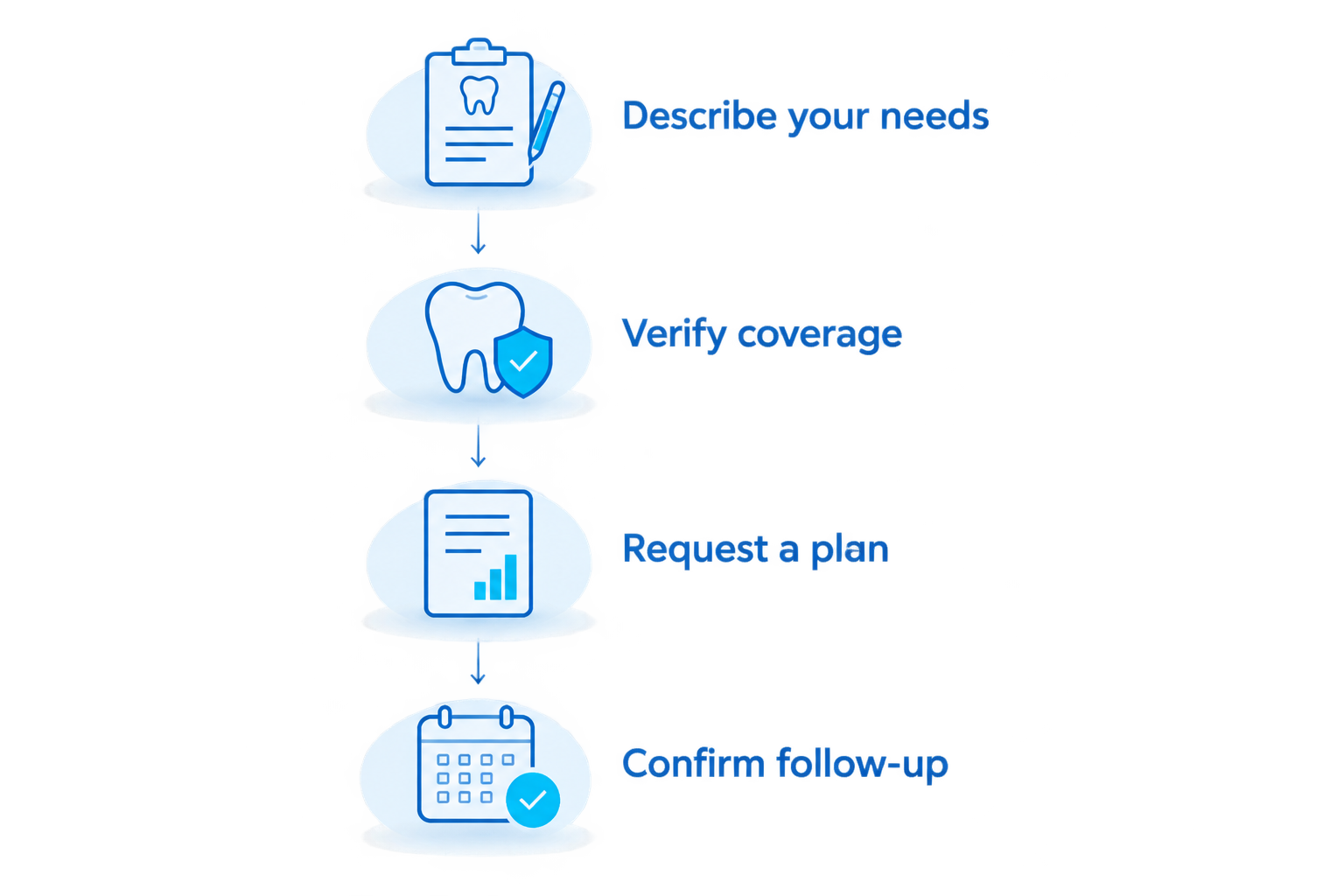
Use this sequence during your 2026 search. Keep the answers together so you can compare offices without relying on memory.
Describe your needs. Explain symptoms, the treatment you are considering, or how long it has been since your last visit. Mention relevant medical conditions and medicines.
Verify coverage. Give the exact plan details if you have insurance. Ask who will confirm participation and explain benefits.
Request a plan. After the examination, ask for the diagnosis, recommended procedures, alternatives, and treatment priorities in writing.
Confirm follow-up. Ask how questions, complications, referrals, and continuing care are handled.
Compare the whole care process, not just the first appointment.
Bring 3 documents when applicable: your medication list, insurance information, and previous treatment plan. Tell the office about recent dental images and ask whether existing records can be reviewed before repeating them.
Do not wait for comparison shopping if symptoms suggest an emergency. Trouble breathing or swallowing requires emergency medical attention. Contact a dentist promptly for swelling, severe tooth pain, or a dental injury.
Which dental care route should you choose?
Choose a local general dentist as your default for routine care in Longview. If insurance is your main constraint, confirm the network first; if you are uninsured, require a written plan that explains priorities and payment terms.
Choose pediatric or restorative care when the patient's needs warrant it. For your 2026 decision, a clear explanation of diagnosis, alternatives, and follow-up matters more than a broad promise of affordability.
Affordable Dentist Near Me is an option for families seeking general, cosmetic, and restorative dental care in its listed Texas cities. For Longview care, choose a location you can reasonably return to throughout treatment.
FAQ
What’s the best Longview Texas dentist for affordable care?
For routine care, start with a licensed local general dentist who explains findings, alternatives, and a written treatment estimate. Confirm your insurance network when applicable and choose an office you can return to for follow-up.
Does Affordable Dentist Near Me list a Longview location?
Affordable Dentist Near Me’s listed service cities are Fort Worth, Dallas, Houston, Waco, Grand Prairie, and Crowley. Confirm the exact office location before planning a visit.
Is a dentist who accepts insurance always in my network?
No. An office can submit insurance claims without participating in your specific network. Confirm the dentist and practice location with both the office and your insurer.
How do I compare dentists without dental insurance?
Compare written treatment plans, clinical priorities, and payment terms. Ask what each recommended procedure addresses and what the dentist considers safe to postpone.
Should I choose a family dentist or a pediatric dentist for my child?
Choose based on your child’s needs and the dentist’s scope of care. A pediatric dentist has additional training in children’s oral health, while a general practice should confirm which ages and needs it treats.
Should I get a second opinion before major dental work?
A second opinion is useful when you need help understanding a major or irreversible treatment recommendation. Ask both dentists to explain the diagnosis, alternatives, and follow-up, but do not postpone urgent care without clinical advice.
What should I ask a dental office before booking in 2026?
Ask whether the office treats your concern, participates in your exact insurance network, and explains the initial appointment before you agree. For proposed treatment, request a written plan and an explanation of follow-up care.
One last thing
Ask what happens after treatment. Before agreeing to a crown, filling, extraction, or tooth replacement, find out whom to contact about discomfort, what follow-up is expected, and which further care is included in the plan.
A dentist's explanation of aftercare helps you judge the full treatment commitment. Make that question part of every 2026 consultation—not an afterthought once work has begun.