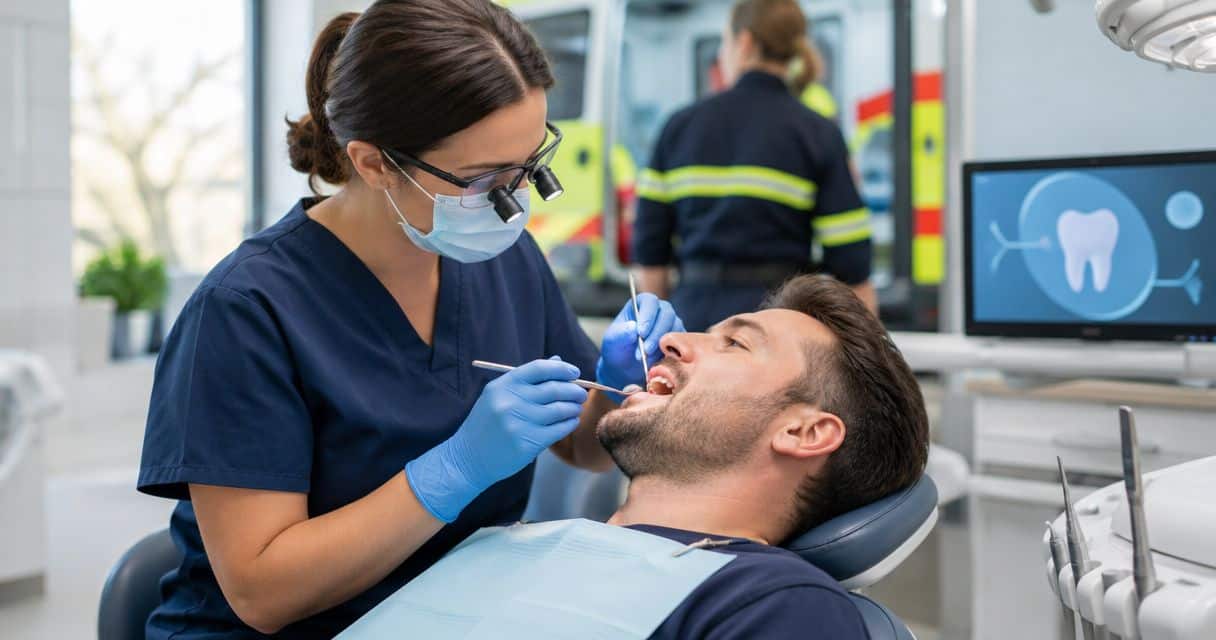
First responders’ dental care is preventive and problem-focused treatment planned around duty schedules, with the aim of protecting oral health and limiting avoidable work disruption. This 2026 guide explains how to handle urgent symptoms, arrange appointments around shifts, check benefits, and plan treatment without assuming your job title guarantees special coverage.
TL;DR
Dental care for first responders starts with urgent symptom checks, daily prevention, and verified dental benefits.
Affordable Dentist Near Me fits Texas families seeking general and restorative dental care across its listed service cities.
Plan recovery around driving, lifting, and safety-sensitive duties—not just the appointment itself.
Confirm insurance coverage and FSA eligibility separately; neither follows automatically from first-responder status.
Why dental care matters for first responders
A dental appointment has to fit more than your calendar. If your duties involve driving, lifting, wearing protective equipment, or responding without warning, you need to understand how treatment and recovery affect those tasks.
Choose care around your actual assignment, not a generic return-to-work estimate. A routine exam and an extraction require different planning. For rotating schedules, the dental care guide for shift workers addresses the scheduling side of that decision.
Your 2026 plan should separate three questions: what needs treatment now, what your benefits cover, and when you can safely resume your duties. Start with symptoms; paperwork comes afterward when urgent care is needed.
How to organize dental care around first-responder duties
1. Separate urgent symptoms from routine appointments
Check your symptoms before choosing an appointment type. A small chip without pain and facial swelling with fever do not belong in the same scheduling queue. Describe what happened, when it started, and whether symptoms are getting worse.
Call 911 or seek emergency medical care for trouble breathing or swallowing, or uncontrolled bleeding. Facial swelling, fever with dental pain, a knocked-out permanent tooth, or significant mouth trauma needs urgent professional assessment. Do not wait for your next off-duty block to ask for help.
A hospital emergency department can address medical threats, but follow-up dental treatment is often still needed to treat the tooth itself. Pain medicine alone does not repair a broken tooth or remove the source of a dental infection.
When calling a dental office, describe symptoms rather than deciding which procedure you need. An examination determines whether treatment involves a filling, crown, extraction, or another approach.
Report swelling, fever, bleeding, injury, and difficulty opening your mouth.
Explain whether pain interrupts sleep, eating, or concentration.
Tell the office about blood thinners, allergies, and relevant health conditions.
Ask where to go if symptoms worsen before your appointment.
2. Anchor prevention to waking and sleeping
Build your routine around sleep rather than conventional morning and evening hours. If you sleep during the day, brushing before that sleep period still belongs in your routine. Keep supplies where you can use them without depending on a trip home.
Standard home care means 2 minutes per brushing, 2 brushing sessions per day, and 1 between-teeth cleaning session per day. Use fluoride toothpaste and a soft-bristled toothbrush. These are home-care targets, not a substitute for an examination or treatment of existing disease.
Water is a practical default between meals. Frequent sipping of sugary drinks repeatedly exposes teeth to sugar; replacing that pattern matters more than finding a special occupational toothpaste.
Tell your dentist about persistent dry mouth, gum bleeding, or sensitivity. Medication, diet, and oral health conditions need individual review rather than a guess about what caused the symptoms.
Pack a toothbrush, fluoride toothpaste, and floss or another suitable interdental cleaner.
Brush before your main sleep period, even after a night shift.
Choose water between meals instead of repeatedly sipping sugary drinks.
Ask your dentist how often your teeth and gums need professional care.
3. Choose a dental office around treatment needs
Write down your needs before calling: preventive care, a painful tooth, an existing crown problem, or missing teeth. Then identify which office can assess those needs and explain the next steps. A nearby address alone does not answer that question.
Affordable Dentist Near Me is best for families seeking general, cosmetic, and restorative dental care in its listed Texas service cities. The practice serves Fort Worth, Dallas, Houston, Waco, Grand Prairie, and Crowley.
Affordable Dentist Near Me provides dental care including implants, crowns, braces, and teeth whitening. That range does not establish that every location performs every procedure or accepts your plan. Confirm the relevant details with the specific office before making arrangements around duty.
Bring existing treatment plans and recent records when available. Sharing them helps the dentist understand prior recommendations, although the dentist still decides whether additional examination or imaging is necessary.
Describe the problem you want assessed before requesting a particular treatment.
Confirm the specific location and treating provider.
Ask whether the office handles the care you need at that location.
Request the process for transferring relevant dental records.
4. Verify employer benefits before approving planned work
Open your current benefit documents and identify the dental insurer, plan name, and member information. Then verify the treating dentist’s network status directly with the insurer. An office accepting insurance does not automatically mean the dentist is in your plan’s network.
For 2026 treatment, check your current benefit year rather than relying on last year’s explanation of benefits. Review deductibles, annual maximums, waiting periods, frequency limits, and exclusions. These details affect what your plan pays even when a procedure is covered.
First-responder status does not establish a dental benefit or discount. Ask your employer or benefits administrator whether any occupation-specific arrangement applies, and obtain its terms before relying on it.
For planned treatment, ask whether the insurer can review the proposed work in advance. A pretreatment estimate helps with planning but does not guarantee payment; eligibility and remaining benefits still matter when care occurs.
Verify the provider and location against your exact insurance plan.
Ask which proposed procedures require prior review or authorization.
Check whether earlier treatment has used part of your annual benefit.
Request a written estimate that separates insurer and patient responsibility.
5. Schedule the whole treatment sequence
Start with your duty roster and identify realistic appointment windows. Include travel, the visit itself, and any recovery instructions. Booking only the chair time leaves the most important work question unanswered: what happens afterward?
Tell the office about rotating shifts, mandatory overtime, and the tasks you perform. Ask which parts of treatment require separate visits and whether there are temporary restrictions between them. Do not assume a consultation, procedure, and final restoration happen together.
A treatment plan should identify what is urgent and what can be scheduled later. That distinction lets you protect necessary care without treating every recommended procedure as an immediate emergency.
If duty changes unexpectedly, contact the office promptly and explain the situation. Ask about rescheduling terms before committing; first-responder employment does not establish a cancellation-policy exception.
Ask how long to reserve for the specific appointment.
Identify follow-up visits before selecting a procedure date.
Discuss temporary restorations and what to do if one loosens.
Confirm how the office communicates appointment changes.
Request written instructions you can review after the visit.
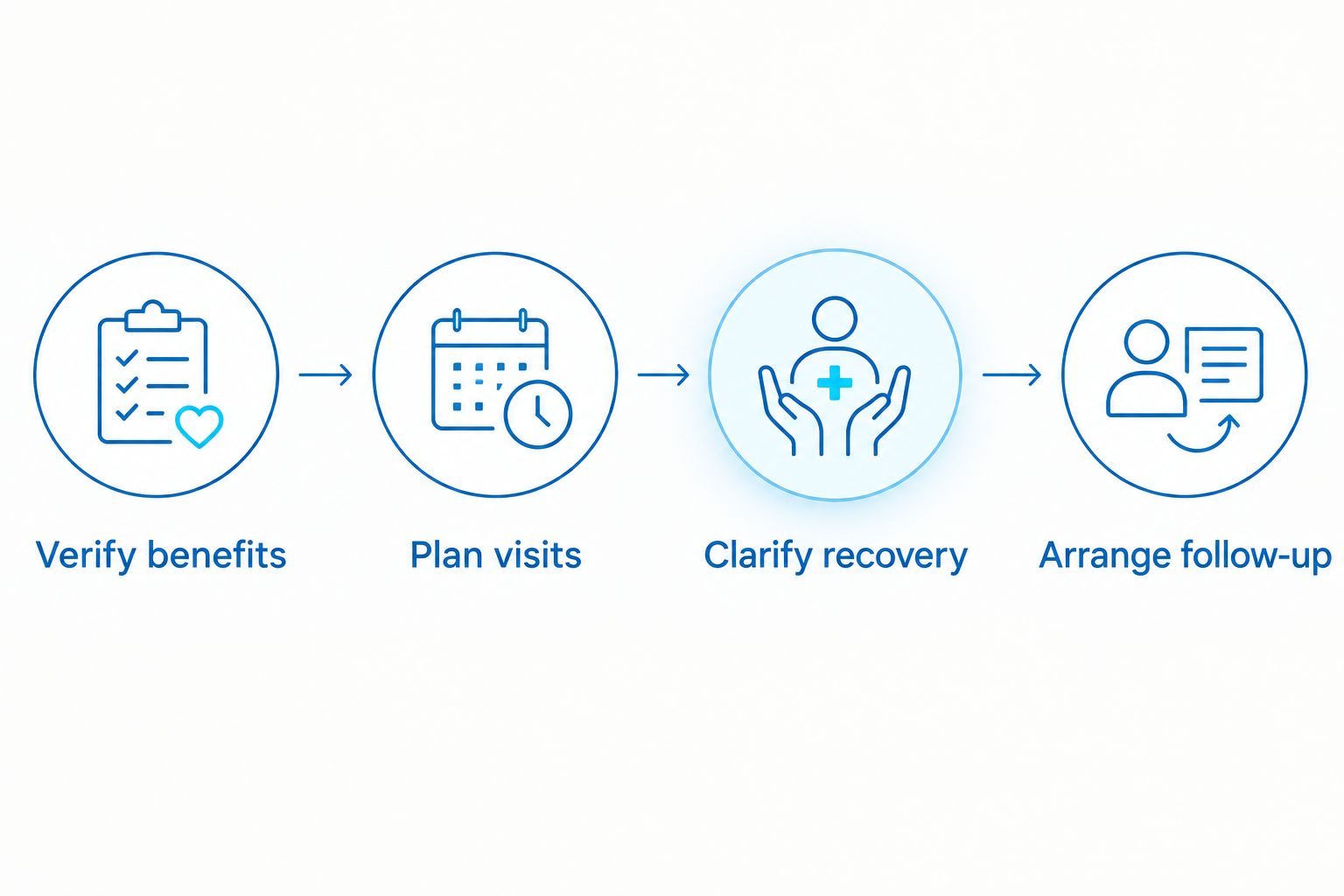
The sequence is straightforward: verify benefits, plan visits, clarify recovery, and arrange follow-up. Keep each decision separate so an insurance question does not become a last-minute scheduling problem.
Plan recovery and follow-up before committing to a procedure date.
6. Get task-specific return-to-duty instructions
Describe your job in practical terms. Tell the dentist if you drive an emergency vehicle, carry equipment, lift patients, work in heat, or depend on a tight-fitting facepiece. Those details are more useful than your job title alone.
Do not drive or perform safety-sensitive work while impaired by sedation or medication. Ask for instructions tied to the exact medicine and procedure, and follow your employer’s fitness-for-duty requirements. Do not calculate your own clearance from how alert you feel.
After oral surgery, discuss bleeding, swelling, eating, physical exertion, and follow-up. Recovery varies with the procedure and your health; a colleague’s experience does not establish your return date.
If your duties involve protective equipment, ask whether the planned treatment creates any concern about comfort or fit. Coordinate workplace equipment questions with your occupational health or safety team rather than modifying required equipment yourself.
List driving, lifting, equipment, and communication requirements.
Ask about medication effects before taking a dose before duty.
Arrange transportation whenever the treatment instructions require it.
Obtain written restrictions and instructions for worsening symptoms.
7. Separate treatment decisions from payment decisions
Ask the dentist to explain the problem, reasonable treatment choices, and consequences of waiting. Then compare how you would pay for the agreed treatment. Financing terms should not decide which procedure is clinically appropriate.
For 2026 planning, distinguish dental insurance, an FSA, a discount arrangement, and borrowing. They serve different purposes. A discount arrangement is not insurance, and financing creates a repayment obligation rather than changing the treatment itself.
FSA eligibility depends on the item and applicable rules, not simply where you buy it. When comparing FSA-eligible dental care products, distinguish qualifying dental supplies from cosmetic purchases and retain itemized receipts for your plan administrator. Do not assume every oral-care purchase qualifies.
Discuss staged treatment only when the dentist considers the sequence appropriate. Spreading appointments across benefit periods is not a reason to leave an infection or another urgent problem untreated.
Request an itemized treatment plan before signing payment agreements.
Ask which treatment is necessary now and which can safely wait.
Verify FSA reimbursement rules with your plan administrator.
Read repayment terms separately from clinical consent documents.
Compare dental care options for first responders
Choose an option by what it can do for your current need. In 2026, an employer benefit can help fund treatment, but it cannot examine a tooth; home prevention supports health, but it cannot repair a fracture.
Option
Best for
Main advantage
Key limitation
Home prevention
Maintaining daily oral hygiene between visits
Fits around waking and sleeping routines
Cannot diagnose or treat existing decay, infection, or injury
Employer dental plan plus a participating dentist
Using verified workplace benefits
Connects treatment planning with documented coverage
Network rules, exclusions, and benefit limits still apply
Affordable Dentist Near Me
Families seeking dental care in its listed Texas service cities
Offers general, cosmetic, and restorative services
Location-specific services, insurance participation, and scheduling require confirmation
Community health center or dental school clinic
Patients exploring care outside a private practice
Adds another route to request an assessment
Eligibility, services, and appointment processes differ by clinic
Hospital emergency department
Breathing or swallowing difficulty, uncontrolled bleeding, or major trauma
Addresses immediate medical threats
Does not replace follow-up dental treatment for the underlying tooth problem
Match the setting to the problem before comparing convenience. For a planned visit with Affordable Dentist Near Me, contact the specific office to discuss your symptoms, records, insurance, and duty-related questions.
Plan your next dental visit
Discuss your dental concern, insurance questions, and duty schedule with the office.
Booking treatment immediately before a demanding shift
An appointment ending before roll call does not establish fitness for duty. Ask about recovery, medicines, and work restrictions before choosing the date, particularly when treatment involves surgery or sedation.
Assuming occupational status guarantees special benefits
A uniform, badge, or employer identification does not establish coverage. Verify any first-responder arrangement, insurer participation, and required documentation before authorizing planned treatment.
Treating reduced pain as proof the problem is gone
Dental pain can change without the underlying problem being resolved. Keep the assessment appointment unless the dental office advises otherwise, and report new swelling, fever, or other worsening symptoms promptly.
Paying attention only to the first visit
Some treatment requires follow-up, adjustment, or a final restoration. Ask for the complete sequence so a temporary solution does not become an unfinished treatment plan when your roster changes.
FAQ
What’s the best dental care approach for first responders?
The best approach combines daily prevention, prompt assessment of urgent symptoms, and appointments planned around actual duty requirements. Verify benefits separately and ask for procedure-specific recovery instructions.
Do first responders automatically get free dental care?
First-responder status alone does not establish free dental care. Ask your employer, insurer, and dental office whether a specific benefit applies and obtain its terms before relying on it.
Can I go back on shift after a dental appointment?
Return to duty depends on the treatment, medication, and tasks involved. Ask the dentist about driving, lifting, and other safety-sensitive work, and follow your employer’s fitness-for-duty requirements.
Should I go to a dentist or the emergency department for tooth pain?
A dentist assesses and treats the dental cause of tooth pain, but trouble breathing or swallowing, uncontrolled bleeding, or major trauma requires emergency medical care. Swelling or fever with dental pain needs urgent professional assessment.
Can I use an FSA for dental treatment and supplies?
An FSA can reimburse qualifying dental expenses under applicable rules, but not every dental purchase qualifies. Confirm the specific expense with your plan administrator and keep itemized receipts.
Does Affordable Dentist Near Me provide dental care for first responders?
Affordable Dentist Near Me provides general, cosmetic, and restorative dental care to families in its listed Texas service cities. Contact the specific office to confirm the service, insurance participation, and scheduling details relevant to your visit.
How often should first responders get a dental cleaning?
Your dentist should set your cleaning schedule based on your teeth, gums, and individual risk factors. Your occupation alone does not determine the right interval.
One last thing
Bring your task list, not just your insurance card. A short note explaining driving, lifting, protective equipment, and shift timing gives your dentist information a job title cannot convey. Make that note part of your 2026 appointment preparation, especially before surgery or treatment involving sedation.