What Are the Best Practices for Dental Implant Care? Your Complete Guide to Implant Maintenance and Hygiene
Dental implants replace missing teeth by anchoring a prosthetic crown, bridge, or denture to a surgically placed fixture in the jawbone, and their long-term success depends on meticulous care that protects both soft tissues and the osseointegrated bone interface. This guide explains evidence-backed daily hygiene routines, professional maintenance schedules, lifestyle and dietary adjustments, prevention of complications such as peri-implantitis, material- and prosthesis-specific care, and practical aftercare for the healing period. Readers will learn how targeted brushing, interdental cleaning, appropriate rinses, and risk-factor management reduce biofilm, preserve bone, and extend implant longevity. The article maps practical step-by-step daily routines, tool comparisons, tailored guidance for different implant types and comorbidities, and updates on innovations like smart monitoring and minimally invasive techniques. Throughout, keywords such as dental implant care, how to clean dental implants, peri-implantitis prevention, and implant maintenance schedule are integrated to help clinicians and patients quickly find actionable recommendations. After a clear set of daily actions, the article progresses to lifestyle habits that support bone health, the role of professional maintenance, strategies to prevent complications, material differences, innovation trends, and immediate post-surgery aftercare.
How Should You Perform Daily Oral Hygiene for Dental Implants?
Daily oral hygiene for dental implants focuses on removing biofilm from the implant crown, abutment interface, and surrounding peri-implant mucosa to prevent inflammation and preserve osseointegration. Effective daily care reduces bacterial load and the mechanical stresses that lead to mucositis or peri-implantitis, and it directly supports long-term stability of the implant–bone interface. Patients benefit from a simple, repeatable routine that includes gentle brushing, interdental cleaning, and an antimicrobial rinse to keep tissues healthy. The next subsections break down brushing mechanics, safe brushes and toothpastes, interdental cleaning techniques, and appropriate mouthwashes with practical steps and tool comparisons.
Daily implant hygiene checklist (featured-snippet style) — this list gives a quick, actionable routine to perform twice daily and after meals when possible:
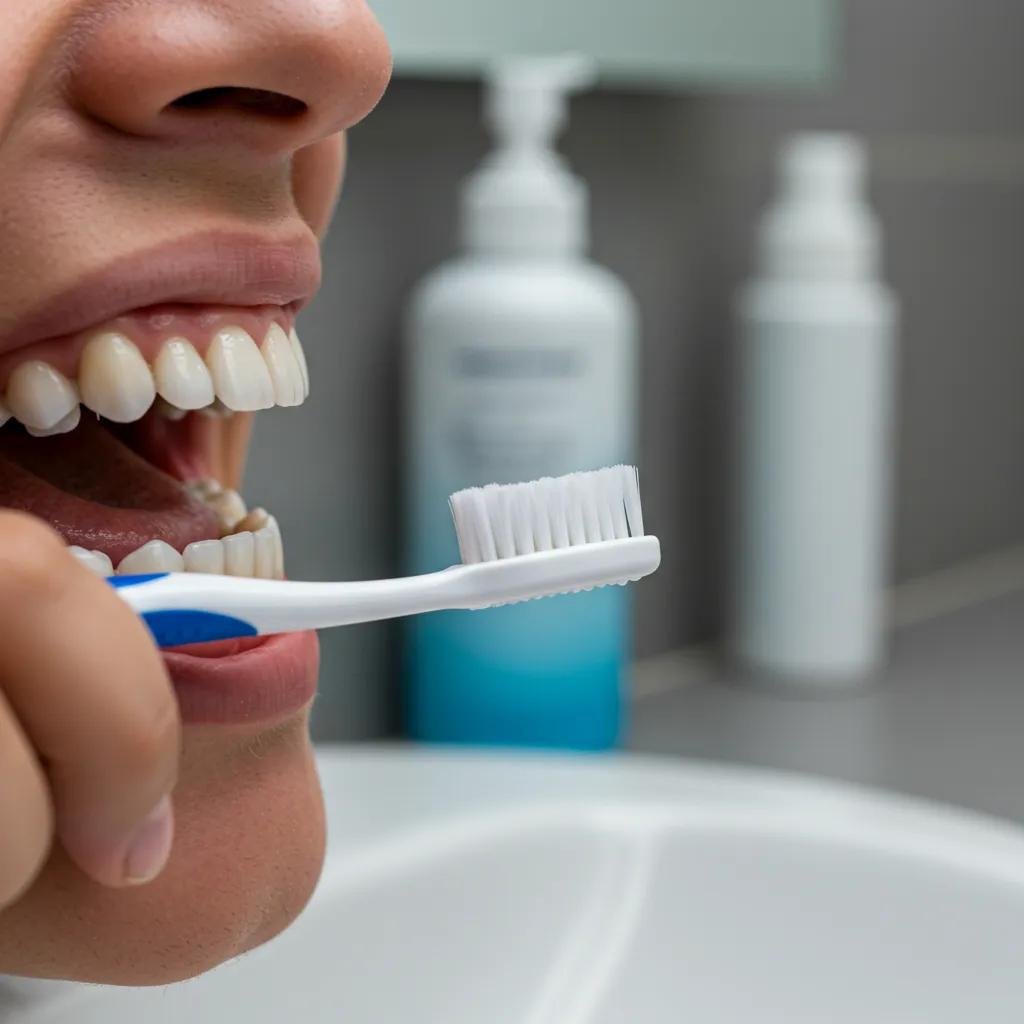
Brush gently twice daily: Use a soft-bristle or low-abrasive electric brush for two minutes, focusing on the crown and gumline.
Clean between implants once daily: Use interdental brushes, floss threaders, or a water flosser depending on prosthesis type and space.
Rinse with an alcohol-free antimicrobial: Short daily rinses reduce microbial load without drying tissues.
This checklist summarizes core actions that control biofilm; the following sections explain technique, tool selection, and how each choice protects implant surfaces and peri-implant tissues.
What Are the Best Brushing Techniques for Dental Implants?
Brushing for implants emphasizes gentle, controlled strokes that clear plaque without abrading peri-implant tissues or prosthetic surfaces. Use a soft circular or modified Bass motion around the gingival margin and abutment connections, keeping pressure light to avoid soft-tissue recession while ensuring plaque removal; this approach reduces mechanical trauma and supports tissue health. Oscillating-rotating electric toothbrushes with pressure sensors are effective because they combine consistent motion with overload protection, which prevents excessive force that can irritate the mucosa and abutment interfaces. Proper brushing technique complements interdental cleaning and should be re-evaluated during professional visits to correct any harmful habits that could increase bacterial colonization or wear.
Which Toothbrushes and Toothpastes Are Safe for Implants?
Select brushes and pastes that minimize abrasive wear to prosthetic materials while maximizing plaque removal and fluoride delivery, because abrasive agents and stiff bristles can damage surfaces and roughen crowns or abutments. A soft-bristle manual toothbrush or an electric brush with a soft head provides effective plaque disruption while protecting titanium or zirconia surfaces; pressure sensors on powered brushes help prevent overbrushing that irritates peri-implant tissue. Toothpaste should be non-abrasive and fluoride-containing; avoid highly abrasive whitening formulas or those with pumice-like agents that can alter prosthetic textures and promote plaque retention. Choosing ergonomically designed brush heads and low-abrasivity pastes supports long-term aesthetics and reduces micro-roughness where biofilm can accumulate.
How Do You Floss and Clean Between Dental Implants Effectively?
Interdental cleaning around implants requires methods that remove subgingival and interproximal biofilm without traumatizing the soft tissues or damaging prosthetic components, and technique selection depends on the prosthesis design and interproximal gaps. For single crowns, implant-specific floss or a floss threader with the “C” technique gently adapts floss to the crown surface and abutment margins to dislodge biofilm, while fixed bridges and full-arch prostheses often need interdental brushes sized to the embrasure without forcing the filament into tight contacts. Water flossers (oral irrigators) provide a useful alternative when access is limited or for patients with dexterity issues; they reduce microbial load via pulsatile irrigation and are particularly helpful for cleaning under overdenture bars and around attachments. Proper selection and sizing of interdental brushes and flossing technique should be reviewed with a hygienist to optimize daily effectiveness and avoid inadvertent damage.
What Mouthwashes Are Recommended for Implant Care?
Mouthwashes for implant maintenance should reduce microbial burden while avoiding ingredients that impair tissue healing or alter implant surfaces, because prolonged antiseptic exposure can disrupt the oral microbiome and mucosal resilience. Alcohol-free antimicrobial rinses with essential anti-plaque ingredients are suitable for daily use; they lower surface bacteria and provide adjunctive benefit to mechanical cleaning without causing mucosal dryness. Chlorhexidine is a potent prescription rinse for short-term use during healing or when acute inflammation is present, but clinicians typically limit duration due to staining and microbiome effects. Patients should follow clinician guidance on rinse type and duration, using alcohol-free daily rinses for maintenance and reserving chlorhexidine for targeted therapeutic intervals to manage inflammation.
Different cleaning tools deliver distinct trade-offs in effectiveness and gentleness for implant care; the table below compares common options and their best use-cases to guide patient-specific selection. The table clarifies attributes such as effectiveness at biofilm removal, gentleness on implant surfaces, best clinical scenarios, and recommended frequency of use.
Cleaning Tool
Effectiveness
Gentleness on Implant Surface
Best Use-Case
Soft-bristle manual toothbrush
Moderate
High — low abrasion
Daily brushing for patients with good dexterity
Oscillating-rotating electric toothbrush
High
High with pressure sensor
Daily brushing for consistent plaque control
Water flosser (oral irrigator)
High for subgingival irrigation
Very gentle
Cleaning under bridges, around attachments, limited dexterity
Interdental brush (various sizes)
High for embrasure spaces
Gentle if correctly sized
Bridges, wide contacts, full-arch prostheses
Implant-specific floss / floss threader
High for tight contacts
Gentle when used correctly
Single crowns and under prosthetic bridges
What Lifestyle and Dietary Habits Support Long-Term Dental Implant Success?
Lifestyle and diet influence bone metabolism and mucosal health, and they directly affect osseointegration stability and peri-implant tissue resilience. Nutrients such as adequate protein, calcium, and vitamin D support bone remodeling and repair, while harmful habits like smoking and excessive alcohol intake impair microvascular supply and wound healing, increasing infection risk and implant failure. Behavioral factors such as bruxism produce mechanical overload that can loosen prosthetic components or induce bone resorption, so management strategies like nightguards and occlusal adjustments are important. The following sections outline immediate post-op diet, long-term nutrition, smoking/alcohol impacts, and bruxism management to align habits with implant longevity.
Which foods to favor and avoid depends on the healing phase and long-term bone health, because mechanical loads and nutrient supply both influence osseointegration and prosthetic integrity. In the immediate post-operative period, prioritize soft, non-chewy, nutrient-rich foods—broths, mashed vegetables, smoothies, and protein-rich purées—to protect the surgical site while supplying essential macronutrients for healing. Long-term, emphasize calcium-rich foods, vitamin D sources, lean protein, and foods high in anti-inflammatory micronutrients to support bone turnover and mucosal health; avoid habitual biting on hard or sticky items that can stress crowns and abutments. Transition gradually back to normal diet following clinician guidance to prevent overload during the critical osseointegration phase.
Which Foods Should You Eat and Avoid with Dental Implants?
A short-term soft-food strategy minimizes mechanical stress and promotes healing, while long-term nutrition supports bone remodeling and tissue health, both of which reduce failure risk. During the first one to two weeks after surgery, choose soft, nutrient-dense options like cooked cereals, yogurt, and blended soups that supply protein and vitamins without requiring forceful chewing. Over the long term, include calcium-rich dairy or fortified alternatives, oily fish for vitamin D, and adequate protein for bone matrix synthesis; avoid habitual chewing of ice, hard nuts, sticky candies, or hard crusts that can apply excessive load to prostheses. These dietary choices lower the chance of mechanical complications and support systemic factors that influence osseointegration.
How Do Smoking and Alcohol Affect Dental Implant Longevity?
Smoking compromises blood flow and immune response in peri-implant tissues, which undermines osseointegration and increases the incidence of peri-implantitis and implant loss, and even moderate alcohol can impede healing when used excessively during the early post-op period. Tobacco use reduces microvascular perfusion and oxygenation at the surgical site, making infection more likely and delaying bone integration; cessation before and after placement meaningfully lowers complication rates. Alcohol in large amounts impairs nutrient absorption and immune competence and should be minimized especially during the initial healing months. Clinicians should counsel cessation and moderation, and patients with nicotine exposure require more intensive monitoring and possibly more frequent professional maintenance.
Understanding the detrimental effects of smoking and alcohol is crucial for maintaining implant health.
Peri-Implantitis: Causes, Prevention, and Treatment Strategies for Dental Implants
Peri-implant inflammations represent serious diseases after dental implant treatment, which affect both the surrounding hard and soft tissue. Due to prevalence rates up to 56%, peri-implantitis can lead to the loss of the implant without multilateral prevention and therapy concepts. Specific continuous check-ups with evaluation and elimination of risk factors (e.g. smoking, systemic diseases and periodontitis) are effective precautions. In addition to aspects of osseointegration, type and structure of the implant surface are of importance. For the treatment of peri-implant disease various conservative and surgical approaches are available. Mucositis and moderate forms of peri-implantitis can obviously be treated effectively using conservative methods. These include the utilization of different manual ablations, laser-supported systems as well as photodynamic therapy, which may be extended by local or systemic antibiotics. It is possible to regain osseointegration. In cases with advanced peri-implantitis surgical therapies are more effective than conservative approaches. Depending on the configuration of the defects, resective surgery can be carried out for elimination of peri-implant lesions, whereas regenerative therapies may be applicable for defect filling. The cumulative interceptive supportive therapy (CIST) protocol serves as guidance for the treatment of the peri-implantitis. The aim of this review is to provide an overview about current data and to give advices regarding diagnosis, prevention and treatment of peri-implant disease for practitioners.
Definition, etiology, prevention and treatment of peri-implantitis–a review, O Jung, 2014
How Can You Manage Teeth Grinding to Protect Your Implants?
Bruxism introduces repetitive mechanical overload that increases micro-motion at the implant–bone interface and accelerates prosthetic wear, so identify and mitigate grinding early to protect implant longevity. Custom nightguards distribute occlusal forces and reduce concentrated stress on individual implants; occlusal adjustments and careful prosthetic design further reduce detrimental torque on fixtures. In cases of severe parafunction, consider prosthetic modifications (e.g., reinforced materials), splinting strategies, or referral for sleep evaluation and management to address underlying causes. Managing bruxism protects both bone and prosthetic components and reduces the need for reparative interventions.
Why Is Professional Dental Implant Maintenance Essential?
Professional maintenance detects early biological or mechanical problems that are not always apparent to patients and provides interventions—cleaning, debridement, radiographic monitoring—that preserve implant health and prevent progression to complex treatment. Clinicians inspect for signs like bleeding on probing, pocket depth changes, radiographic bone loss, mobility, and soft-tissue inflammation; they use implant-safe instruments and protocols to remove subgingival biofilm and calculus. Regular professional care also reinforces patient home care techniques and adjusts maintenance frequency for systemic risk factors such as diabetes or smoking. The subsections below cover recommended recall intervals, what happens during a professional cleaning, and how early detection prevents escalation.
Routine scheduling balances risk and resource use, with baseline guidance tailored to individual risk profiles because patients with prior peri-implant disease or systemic risk factors require more frequent surveillance. For most patients, six-month recalls with targeted implant assessment are common, while higher-risk individuals often benefit from three- to four-month maintenance intervals to control recurrent inflammation and biofilm accumulation. Clinical visits include visual inspection, peri-implant probing with careful technique, radiographic checks of marginal bone, and assessment of occlusion and prosthetic integrity; frequency is adjusted based on findings. This structured approach enables proactive interventions that reduce the need for surgical therapy.
How Often Should You Schedule Dental Check-Ups for Implants?
Scheduled check-ups should reflect individual risk: routine maintenance every six months for stable, low-risk cases and every three to four months for higher-risk patients, because increased surveillance improves early detection and outcomes. Factors that increase recall frequency include a history of peri-implantitis, poor plaque control, smoking, uncontrolled diabetes, and parafunctional habits like bruxism; clinicians use these criteria to create personalized intervals. Each visit assesses soft-tissue health, probing depths, occlusion, and radiographic bone levels to detect subtle changes early. Early, tailored follow-ups reduce the likelihood of extensive surgical management and support long-term implant function.
Australian practitioners’ approaches to implant maintenance highlight the importance of tailored protocols.
Dental Implant Hygiene and Maintenance Protocols: Australian Practitioner Survey
ABSTRACT: AbstractPurpose:Dental implant care and maintenance is of critical importance as implants grow in popularity as a tooth replacement option. The purpose of this study was to investigate the implant-related training and clinical practices of oral health practitioners (OHPs) in Australia regarding oral hygiene instructions (OHI) and maintenance protocols, and to better understand their role in providing peri-implant services.Methods:A 42-item web-based survey was forwarded to the members of the Dental Hygienists Association of Australia and the Australian Dental and Oral Health Therapists’ Association. Survey items included participant’s demographics, types of peri-implant services provided in the workplace, implant-related information sources, peri-implant diagnostic preferences, implant maintenance protocols and oral hygiene instructions (OHI) for dental implants. Descriptive statistics were used to analyse the data. Comparisons were made with a similar survey of the implant maintenance
Dental Implant Hygiene and Maintenance Protocols: A survey of oral health practitioners in Australia, MS Hopcraft, 2021
What Happens During Professional Cleaning of Dental Implants?
Professional cleaning of implants uses instruments and techniques that remove subgingival biofilm and calculus without damaging implant surfaces, because surface roughness increases bacterial adherence and complicates maintenance. Hygienists commonly use plastic or titanium scalers, implant-safe ultrasonic tips, and air-polishing with glycine or erythritol powders to debride around implants while preserving prosthetic materials. The procedure also includes polishing prosthetic crowns, checking and cleaning attachment components, and reinforcing home care instructions to close the loop between professional and daily maintenance. Comfort measures and topical anesthetics can be provided when needed, and clinicians document findings to guide next-visit planning.
Maintenance Procedure
Frequency
Primary Benefit
Routine check-up and exam
3–6 months (risk-based)
Early detection of pocketing, mobility, inflammation
Professional implant-safe cleaning
3–6 months (risk-based)
Removal of subgingival biofilm and prevention of peri-implantitis
Clinics and specialized practices play an important role in delivering these services, and patients often receive maintenance from local dental hygienists or specialized centers. Shelby Dental Care Center, Bluebird Family Dentistry, Bloor West Smiles, Metrolina Periodontics, and Auburn (Advanced Dental Hygiene Practices) are examples of providers who perform implant maintenance in their practices. Patients should seek clinicians who use implant-safe instruments and evidence-based protocols to align professional care with the best-practice maintenance schedule described above.
How Can You Prevent Common Dental Implant Complications?
Preventing complications centers on controlling biofilm, managing systemic risk factors, and optimizing prosthetic design and occlusion to avoid both biological and mechanical failure modes. Peri-implant mucositis (reversible inflammation) can progress to peri-implantitis (inflammatory bone loss) if biofilm and host risk factors are not addressed; therefore, combined patient home care and professional maintenance are critical to halt progression. Early warning signs include bleeding on probing, persistent redness, swelling, and increasing pocket depths; prompt professional assessment prevents extensive bone loss. The following subsections define peri-implantitis, list signs of infection or failure, and describe prevention and management of peri-implant bone loss.
What Is Peri-Implantitis and How Can It Be Prevented?
Peri-implantitis is a destructive inflammatory condition characterized by progressive loss of supporting bone around an implant due to bacterial biofilm and host response, and prevention targets both local plaque control and systemic risk modification. Mechanistically, biofilm accumulation at the abutment–implant interface triggers a sustained immune response leading to bone resorption, especially when compounded by poor glycemic control, smoking, or inadequate maintenance. Prevention includes meticulous daily hygiene, appropriate prosthetic design to reduce plaque traps, regular professional debridement, and management of systemic contributors such as diabetes and smoking cessation. Early non-surgical interventions can often reverse mucositis and reduce microbial burden before bone loss advances.
What Are the Signs of Dental Implant Infection and Failure?
Recognizing early signs—redness, bleeding on probing, persistent pain, suppuration, or any new mobility—enables timely clinical action and reduces the likelihood of irreversible bone loss and implant failure. Patients should differentiate normal post-operative discomfort from persistent or worsening symptoms; increasing pain beyond the expected healing window, visible pus, or loosening of the prosthesis all warrant urgent professional assessment. Clinicians use clinical probing, radiographs, and microbial assessment when indicated to confirm infection and plan treatment. Immediate avoidance of self-treatments and prompt reporting to the provider facilitate quicker control and better prognoses.
How Is Bone Loss Around Implants Addressed and Prevented?
Bone loss management begins with eliminating etiologic factors, optimizing plaque control, and adjusting occlusion; when non-surgical measures fail, regenerative surgical approaches are considered to restore lost bone. Non-surgical care involves mechanical debridement, antiseptic rinses, and systemic or localized antimicrobials as indicated, with re-evaluation to determine progression. Surgical options include guided bone regeneration and recontouring to reconstruct defects when infection is controlled, and prosthetic correction may reduce future overload. Long-term radiographic monitoring and occlusal management are essential for preventing recurrence and preserving implant stability.
What Are the Different Types and Materials of Dental Implants?
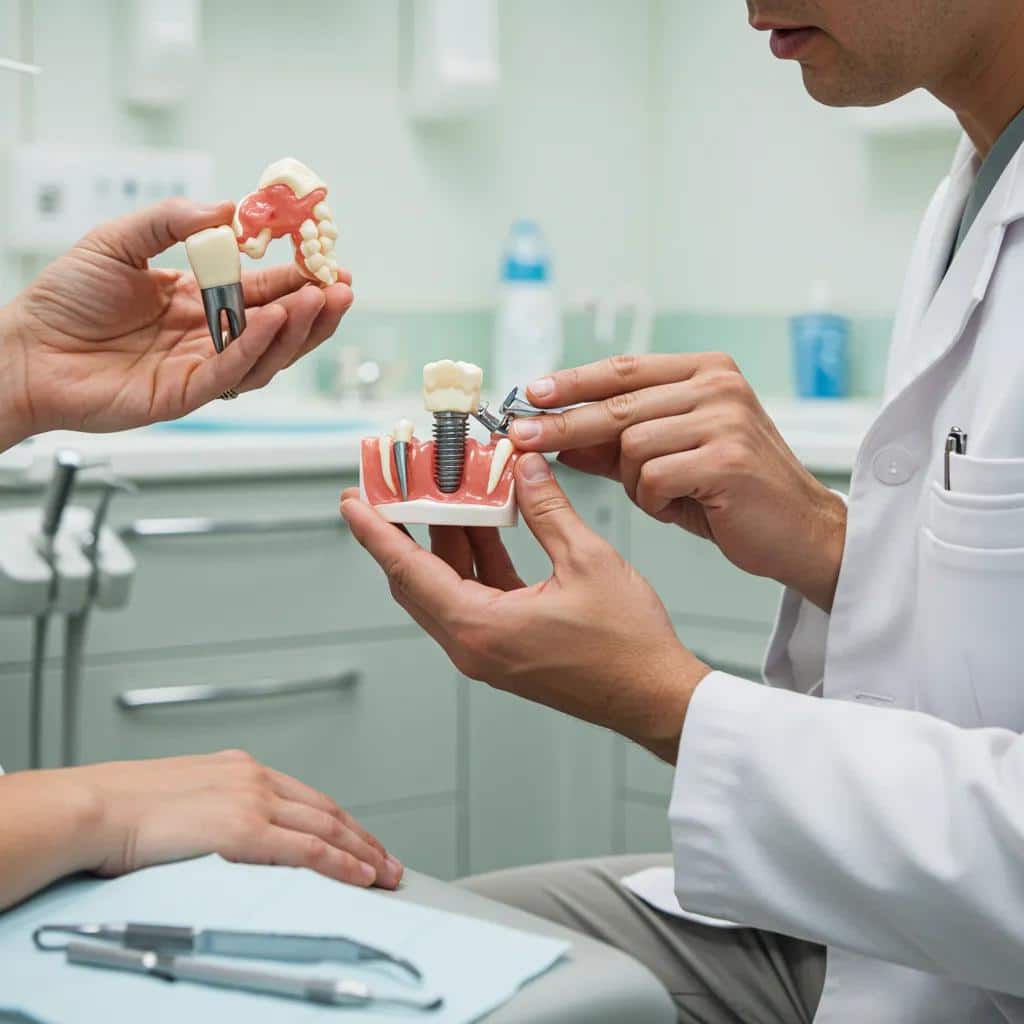
Implant systems vary by material and prosthetic configuration, and these differences influence clinical indications, aesthetic outcomes, and cleaning considerations. Titanium alloys are the most widely used implant fixtures due to proven osseointegration and mechanical strength, while zirconia implants provide a metal-free, aesthetic alternative with evolving evidence. Prosthesis types include single crowns, implant-supported bridges, and full-arch solutions such as All-on-X or overdentures, each with different hygiene access and maintenance needs. The subsections below compare titanium and zirconia, explain prosthesis-specific care, and recap the osseointegration process that underpins long-term success.
Implant Material
Biocompatibility
Aesthetics
Care Differences
Titanium (alloys)
High — proven osseointegration
Metallic hue may show under thin tissue
Robust surface; standard maintenance protocols
Zirconia
Good — ceramic, metal-free
Superior aesthetics in thin biotypes
Smooth ceramic surface; avoid abrasive cleaners that can scratch
What Are the Benefits of Titanium vs. Zirconia Implants?
Titanium implants have a long track record of successful osseointegration and high mechanical strength, making them suitable for most clinical situations and load-bearing restorations. Zirconia implants appeal in cases where a metal-free option is preferred for aesthetic reasons or patient preference, and their ceramic surfaces present different bacterial adhesion profiles that may influence maintenance strategies. Cleaning considerations differ: titanium surfaces tolerate standard professional instruments, while ceramic surfaces require care to avoid abrasive polishing that could alter surface smoothness. Both materials support predictable outcomes when selected and maintained according to prosthetic and tissue considerations.
How Do Implant Types Affect Care and Maintenance?
Single crowns generally allow straightforward interdental flossing and brushing, whereas implant-supported bridges and full-arch prostheses create undercontours and connectors that require interdental brushes, floss threaders, or irrigators to maintain cleanliness. Removable overdentures introduce additional maintenance for attachments and the intaglio surface; cleaning both the prosthesis and attachment sites prevents biofilm accumulation and peri-implant inflammation. Prosthetic design choices—contour, emergence profile, and access—directly affect plaque retention and should be planned to facilitate patient-performed hygiene. Tailored instructions and periodic professional review ensure the chosen prosthesis remains maintainable over time.
What Is the Osseointegration Process and Its Role in Implant Success?
Osseointegration is the process by which bone remodels to form direct structural and functional contact with the implant surface, providing stability and load transfer necessary for long-term success. This biological sequence unfolds over weeks to months, influenced by bone quality, surgical technique, loading protocol, and the absence of infection or excessive micro-motion. Proper postoperative care—avoiding premature overload, controlling infection risk factors, and providing nutritional support—promotes stable osseointegration. Disruption through infection, smoking, or uncontrolled parafunction can impede integration and increase early failure risk, underscoring the importance of integrated care.
What Are the Latest Innovations and Future Trends in Dental Implant Care?
Recent advances in materials, digital planning, and monitoring technologies are reshaping implant dentistry by improving precision, reducing invasiveness, and enabling earlier detection of biological problems. Smart implants and sensor-enabled prosthetics show promise for remotely monitoring load, temperature, or biochemical markers that could flag early inflammation before clinical signs emerge, while AI-assisted imaging and planning improve surgical accuracy and restorative predictability. Minimally invasive, guided placement techniques reduce tissue trauma and may shorten recovery, but they still require rigorous hygiene and monitoring. The subsections below explore smart implants, minimally invasive placement, and material innovations that enhance longevity and maintenance.
How Are Smart Implants and AI Improving Implant Monitoring?
Smart implants and integrated sensors conceptually collect data—load patterns, temperature changes, or local biomarkers—that can signal abnormal stress or early inflammation, enabling proactive clinician intervention before clinical deterioration. AI algorithms applied to radiographic and clinical datasets can detect subtle changes in bone levels or tissue morphology, improving risk stratification and personalized maintenance schedules. Practical adoption remains in early stages, requiring robust validation, data security safeguards, and seamless clinical workflows to translate signals into actionable care. These technologies promise earlier detection and targeted interventions, but clinical evidence and cost-effectiveness will guide broader implementation.
What Are Minimally Invasive Techniques in Implant Placement?
Minimally invasive approaches—such as flapless placement guided by digital surgical templates—minimize tissue trauma and often reduce postoperative discomfort and swelling, which can speed initial recovery. Guided surgery improves implant positioning and prosthetic outcomes while reducing the need for extensive tissue manipulation; however, these techniques still demand careful hygiene and professional follow-up to confirm integration. Flapless methods may limit direct visualization of bone and require precise planning and imaging, and patient selection is critical to ensure adequate bone volume and soft-tissue conditions. When appropriate, minimally invasive placement complements contemporary restorative workflows and patient-centered care.
How Do New Materials and Technologies Enhance Implant Longevity?
Advances in surface treatments, coatings, and prosthetic materials aim to accelerate osseointegration, reduce bacterial adhesion, and improve wear resistance of prostheses, all of which contribute to longer-lasting restorations. Surface modifications—microroughening, bioactive coatings, and engineered topographies—promote bone cell attachment and may shorten integration timelines while resisting colonization. CAD/CAM prosthetic workflows and improved prosthetic materials reduce microgaps and wear, decreasing plaque-retentive niches. These material and digital innovations complement daily hygiene and professional maintenance to optimize clinical outcomes and reduce long-term failure rates.
What Are the Most Effective Aftercare Practices Following Dental Implant Surgery?
Immediate aftercare focuses on bleeding control, infection prevention, and protection of the surgical site, while subsequent weeks emphasize gradual reintroduction of mechanical hygiene and nutrition to support osseointegration. Clear do/don’t directives and a timeline help patients avoid actions that produce micro-motion or contamination of the site; early adherence reduces complications and shortens healing time. Medication adherence, sleep, hydration, and smoking cessation strongly affect healing quality, and clinicians should provide explicit red-flag symptoms that require prompt contact. The following subsections provide a healing timeline, recommended habits to promote recovery, and criteria for contacting the dentist.
How Should You Care for Implants During the Healing Process?
During the first 24–72 hours, control bleeding with gentle pressure and avoid vigorous rinsing or spitting that can disrupt clots; use cold packs to limit swelling and keep activity low to optimize perfusion to the surgical site. In the first one to two weeks, prefer gentle rinses and avoid direct pressure on sutured areas; slowly reintroduce careful brushing near—but not directly on—the surgical site as healing allows, following clinician instructions. Over the first three to six months, maintain gentle hygiene and avoid heavy occlusal loading until osseointegration is confirmed; attend scheduled follow-ups for professional assessment and radiographs. These staged actions protect the healing interface and support stable integration.
Post-operative do/don’t checklist for immediate care — clear actions to follow right after surgery:
Do control bleeding with clean gauze and rest: Light pressure and elevation help clot stability.
Do use prescribed medications as directed: Pain control and any antibiotics should be taken per instructions.
Don’t smoke or consume alcohol during healing: Both impair blood flow and immune response.
Don’t apply direct pressure or chew on the surgical site: Avoid mechanical disruption of the clot or sutures.
What Are the Recommended Habits to Promote Implant Healing?
Sustained recovery depends on balanced nutrition, adequate sleep, hydration, and avoidance of harmful substances, because systemic health directly influences cellular repair and bone remodeling. Prioritize protein intake and micronutrients like vitamin D and calcium, maintain glycemic control if diabetic, and abstain from tobacco and excessive alcohol to preserve microvascular function. Gentle oral hygiene tailored to the healing stage prevents biofilm formation while avoiding trauma, and attend all scheduled follow-ups for clinical and radiographic evaluation. These habits collectively reduce infection risk and foster stable osseointegration for long-term success.
When Should You Contact Your Dentist About Post-Surgery Concerns?
Contact your provider promptly for persistent heavy bleeding, fever, severe or worsening pain not controlled by medication, visible pus, or any sudden mobility of the implant, because these signs suggest infection or implant instability requiring immediate assessment. Routine concerns such as mild swelling or transient numbness can be discussed at the next scheduled visit if they follow the expected healing course, but any progressive symptoms or systemic signs (fever, spreading swelling) warrant urgent contact. While awaiting care, avoid disturbing the site and follow emergency instructions provided by the surgical team. Timely communication enables early intervention and improves the likelihood of preserving the implant.
This article provided a comprehensive, evidence-linked set of best practices for dental implant care—from daily hygiene and tool selection to lifestyle management, professional maintenance, complication prevention, materials considerations, innovations, and practical aftercare—to help clinicians and patients collaborate on long-term implant success.