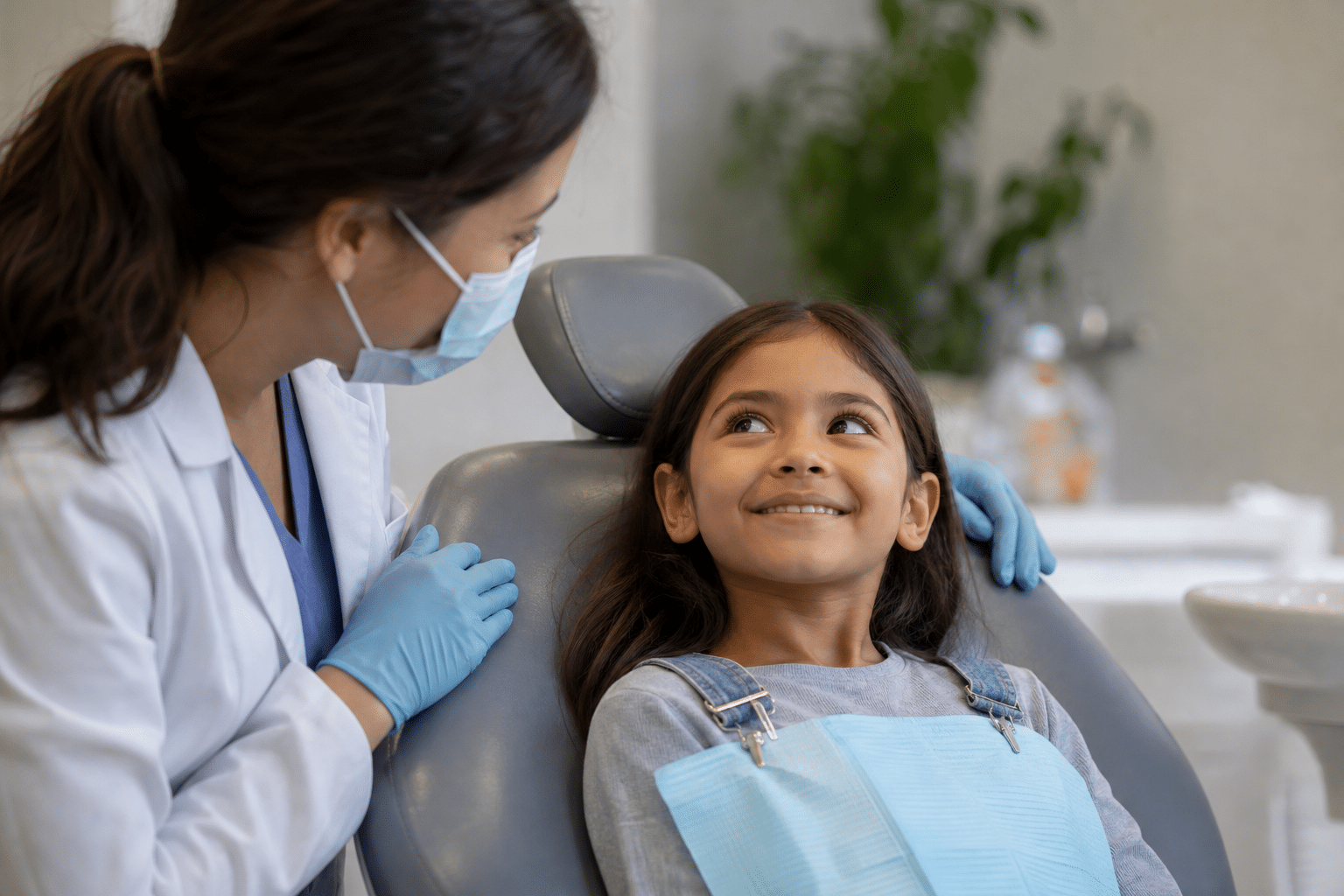
If you've searched "free dental exam near me" and landed here, you want a straight answer. Here it is: yes, free dental exams exist in Texas, but who qualifies depends on your age, income, insurance status, and which program you're looking at. This guide covers every real pathway available to Texas residents in 2026, what each one actually covers, and what to expect once the exam is done.
Why So Many Texans Are Looking for Free Dental Care
The demand makes sense when you look at the numbers. According to carequest.org's 2026 research, 28% of U.S. adults — 76 million people — have no dental coverage at all. That same research found 68% of adults reported a dental visit within the past year, which means roughly one in three simply didn't go.
Texas makes the national picture worse. A 2024 United Way of Northern NJ report found that 49% of Texas adults below the ALICE Threshold — households that earn above the poverty line but still can't cover basic costs — had a dental visit in the prior year, compared with 65% of those above it. That 16-point gap represents hundreds of thousands of Texans who want care but can't comfortably pay for it.
If you're in that gap, you're not alone, and you're not out of options.
What “Free” Actually Means in Dental Care
This is where a lot of people get frustrated, because "free dental exam" can mean very different things depending on the source:
- Free screening: A quick visual check, usually at a community event. No X-rays, no written treatment plan, no follow-up care.
- Free exam: A clinical examination by a licensed dentist or hygienist, sometimes with basic X-rays. This is what most people are actually looking for.
- Free exam plus X-rays: The full diagnostic package. This is what new-patient promotions at private practices typically offer.
- Free treatment: Rare outside of charitable events or dental school clinics, and usually limited to extractions, fillings, or cleanings depending on the program.
Knowing which type you're getting matters before you drive across town.
For most Texas adults, this is the most accessible route regardless of income. Many private practices offer a free new-patient exam and X-rays to introduce their services. No income requirement, no government paperwork, no waiting list.
Affordable Dentist Near Me offers new patients a free exam and X-rays — a $99 value — at any of its 17 Texas locations, including offices in Fort Worth, Grand Prairie, Denton, Waco, Crowley, Mansfield, Lancaster, Longview, and Tyler. You also get a written treatment plan with exact fees confirmed before any work begins, so there's no guessing about what comes next.
Who qualifies: New patients only. No income limit. No insurance required.
What to bring: A valid ID and your insurance card if you have one. If you're uninsured, ask about the in-house discount plan and financing options when you arrive.
This is the right route if you want to understand your full oral health picture quickly and don't want to deal with program paperwork.
Pathway 2: Federally Qualified Health Centers (FQHCs)
Federally Qualified Health Centers are community clinics required by federal law to serve patients regardless of ability to pay. They use a sliding-fee scale based on household income and family size, so costs adjust to what you can actually afford. For some households, that fee is zero.
Texas FQHCs offer dental exams, cleanings, fillings, extractions, and sometimes dentures, though services vary by location.
Who qualifies: Anyone, but the lowest fees go to patients at or below 100% of the federal poverty level. You'll need proof of income — pay stubs, a tax return, or a signed self-declaration in some cases — and proof of residency.
How to find one: The Health Resources and Services Administration (HRSA) has a searchable directory by ZIP code. Texas 2-1-1, which Texas DSHS confirms is available in more than 90 languages around the clock, can also connect you to the nearest FQHC by phone.
What to expect: Non-emergency wait times typically run two to six weeks. Some locations accept walk-ins for urgent issues.
Pathway 3: Dental Schools and Hygiene Programs
Texas has several accredited dental schools with clinics open to the public. Students perform procedures under close faculty supervision, and fees are significantly lower than at private practices. Some schools offer exams and X-rays at very low cost or free during intake appointments.
Major programs include the Texas A&M College of Dentistry in Dallas, UT Health San Antonio School of Dentistry, and the Texas Tech University Health Sciences Center El Paso dental program. Community college dental hygiene programs across the state also offer free or low-cost cleanings.
Who qualifies: Generally open to any adult. Some schools prioritize patients with complex cases since they offer better learning opportunities.
What to expect: Appointments run longer than at a private practice — students work methodically and faculty review each step. Plan for two to three hours for an initial exam, and expect your treatment plan to unfold over multiple visits.
Pathway 4: Texas Mission of Mercy (TMOM)
Texas Mission of Mercy is a charitable program that sets up large-scale free dental clinics at rotating locations across the state. According to Texas DSHS, TMOM hosts 2-day events at each location it visits.
These events are first-come, first-served and open to anyone who shows up. No income verification or ID is required at most events. Services typically include exams, X-rays, cleanings, fillings, and extractions — all at no charge.
Who qualifies: Anyone who arrives during the event. No income, residency, or insurance requirements at most TMOM events.
What to expect: Lines form before dawn. Once volunteer capacity is reached, late arrivals may be turned away. Events aren't scheduled year-round at any single location, so check the TMOM calendar for upcoming dates near you.
One important limitation: TMOM provides treatment at the event but doesn't offer ongoing care or follow-up appointments. If you need a crown, implant, or root canal, you'll need to pursue those through a separate provider.
Pathway 5: Medicaid and CHIP in Texas
Texas Medicaid covers dental care for children enrolled in CHIP and Medicaid, including exams, cleanings, fillings, and some orthodontic care when medically necessary. For children under 21, this is the strongest public dental benefit available in the state.
Adult Medicaid dental coverage is a different story. Texas does not provide comprehensive dental benefits for most non-pregnant adults on Medicaid. Emergency extractions may be covered in some circumstances, but routine exams and cleanings generally are not.
Who qualifies for children's coverage: Children enrolled in Texas Medicaid or CHIP. Enrollment is income-based.
Who qualifies for adult coverage: Pregnant women on Texas Medicaid have access to dental benefits during pregnancy. Adults with certain disabilities may have limited coverage. Most other adults on Medicaid do not have routine dental benefits.
What to bring: Medicaid or CHIP card, proof of enrollment, and the child's birth certificate for pediatric appointments.
If you're looking for a provider that accepts Medicaid and CHIP for children, confirm participation before booking — not every dental office is enrolled.
Pathway 6: County and City Programs in Texas
Some Texas counties and municipalities run dental assistance programs for low-income residents, seniors, and people experiencing homelessness. These vary significantly by location and funding cycle.
Dallas County, Tarrant County, and Travis County have historically offered dental assistance through county health departments or contracted nonprofits. What existed last year may not be funded this year, so it's worth checking directly.
How to find current programs: Call Texas 2-1-1 or visit your county health department's website. Residency within the county is typically required, and some programs require proof of income below a set threshold.
What Happens After a Free Exam
Most guides skip this part, but it's the one that matters most.
A free exam tells you what's going on in your mouth. It doesn't automatically mean free treatment. After your exam, you'll have a treatment plan — and what happens next depends on where you went:
- Private practice new-patient exam: You'll receive a written treatment plan with exact fees. From there, you can use insurance, apply for financing, or use an in-house discount plan to manage costs.
- FQHC: Treatment is available on the sliding scale, so costs are reduced based on income.
- Dental school: Treatment continues at reduced rates through the student clinic.
- TMOM event: Anything beyond what was done at the event needs to be handled through a separate provider.
The gap between "free exam" and "free treatment" is where most people get stuck. Having a plan for that gap before your appointment saves a lot of stress.
How to Choose the Right Pathway
No insurance, no income restrictions: A new-patient promotion at a private practice is the fastest route. No paperwork, no waiting list, and you leave with a full treatment plan the same day.
Very low income and need ongoing care: An FQHC is your best long-term option. The sliding fee scale applies to all services, not just the exam.
Need treatment and can wait a few weeks: A dental school clinic offers quality care at reduced rates and is open to most adults.
Need immediate free care and can get to an event: Watch the TMOM calendar and plan to arrive early.
Your child is on Medicaid or CHIP: Find a participating dentist. Children's dental benefits under these programs are comprehensive.
Frequently Asked Questions
Is a free dental exam actually free, or are there hidden fees?
It depends on the source. New-patient promotions at private practices like Affordable Dentist Near Me are genuinely free for the exam and X-rays. FQHC exams are free or very low cost based on income. TMOM events are free with no strings attached. Always ask what's included before your appointment.
Do I need insurance to get a free dental exam in Texas?
No. New-patient promotions at private practices, FQHC sliding-scale clinics, dental schools, and TMOM events are all available to uninsured patients. Most of these programs exist specifically for people without coverage.
Can adults get free dental care through Texas Medicaid?
In most cases, no. Texas Medicaid doesn't cover routine dental exams or cleanings for most non-pregnant adults. Children enrolled in Texas Medicaid or CHIP have strong dental benefits, and pregnant women on Medicaid have some coverage. For most adults, private practice promotions, FQHCs, or dental schools are the more realistic options.
What documents do I need to bring?
For private practice promotions, a valid ID is usually enough. For FQHCs, bring proof of income and residency. For TMOM events, most locations require nothing. For Medicaid or CHIP appointments, bring the insurance card and the child's birth certificate for pediatric visits.
How long does a free dental exam take?
At a private practice, an exam with X-rays typically takes 45 to 90 minutes. At a dental school, plan for two to three hours. At a TMOM event, wait times before being seen can stretch to several hours depending on how many people arrived before you.
What if I need treatment after the free exam?
You'll receive a treatment plan with costs outlined. At a private practice, you can use insurance, financing, or an in-house discount plan. At an FQHC, treatment is available on the sliding scale. At dental schools, treatment continues at reduced rates. At TMOM, anything beyond what was done at the event needs a separate provider.
Are there free dental exams specifically for seniors in Texas?
Some county programs and nonprofits prioritize seniors, and dental schools often welcome older patients with complex cases. Texas 2-1-1 can help identify senior-specific dental programs in your county. Some private practices also offer senior discounts separate from new-patient promotions.
Your Next Step
The fastest way to get a free exam in Texas — no paperwork, no waiting list — is a new-patient appointment at a private practice. Affordable Dentist Near Me offers a free exam and X-rays at 17 locations across the DFW Metroplex, East Texas, and Central Texas. You'll leave with a written treatment plan and confirmed fees before any work begins. Financing is available for patients without insurance, and every office has Spanish-speaking team members on staff.
Book your appointment at affordabledentistnearme.com or call the location nearest you to get started.