Best overall: the Medicaid dental plan your child’s dentist accepts. Best for complex treatment: the plan with a confirmed specialist referral. Best for routine visits: the plan with an accessible local dental home. This 2026 guide explains how to compare Medicaid dental plans for kids in Texas without choosing by insurer name alone.
TL;DR
For medicaid dental plans for kids texas, confirmed dentist participation matters more than a carrier ranking.
Compare DentaQuest, MCNA Dental, and UnitedHealthcare Dental against the options on your child’s enrollment materials.
Choose specialist access first when your child needs treatment beyond routine pediatric dental care.
Affordable Dentist Near Me provides family dental care; confirm location-specific Medicaid participation before booking.
Why this matters
A dental plan and a dental office are different things. Your child needs both active coverage and a dentist who participates in that specific plan. A familiar insurer name does not establish that a nearby office can bill your child’s benefits.
Affordable Dentist Near Me is a family dental care option for families in Fort Worth, Dallas, Houston, Waco, Grand Prairie, and Crowley. Before arranging a Medicaid visit at Affordable Dentist Near Me, confirm the chosen location’s participation in your child’s exact dental plan.
For a 2026 enrollment decision, start with your child’s current enrollment materials. Texas Health and Human Services Commission, or HHSC, identifies DentaQuest, MCNA Dental, and UnitedHealthcare Dental in its children’s dental managed-care program. Use the choices shown for your child rather than treating any general list as a personalized enrollment notice.
What makes the best Medicaid dental plan for your child?
The best plan is the one that connects your child to appropriate care. Compare these criteria before you select a carrier:
Dentist participation: Confirm that the specific office accepts the exact dental plan, not simply Medicaid in general.
Patient acceptance: Ask whether the office accepts new patients in your child’s age group under that plan.
Treatment access: Check access to the services your child needs, including specialist care when required.
Continuity: Find out whether choosing or changing plans affects ongoing treatment and existing approvals.
Practical access: Consider travel, school schedules, accessibility needs, and language support.
Benefit verification: Separate covered care from procedures that need approval or are outside the benefit.
Do not let optional rewards or promotional extras outweigh these checks. A benefit is useful only when it supports care your child can actually receive.
Medicaid dental plans at a glance
This ranking orders selection priorities, not insurer quality. DentaQuest, MCNA Dental, and UnitedHealthcare Dental must each pass the same local checks; none earns a statewide recommendation from its name alone.
Ranked selection
Best for
Standout advantage
Key limitation
Current-dentist plan
Children with an established dental home
Keeps care connected to a familiar office when participation is confirmed
The dentist must participate in the exact plan
Specialist-access plan
Children with treatment or referral needs
Connects plan selection to the required treatment pathway
Specialist participation does not establish treatment approval
Accessible routine-care plan
Children establishing a dental home
Prioritizes a usable office for preventive and follow-up care
A directory entry does not establish patient acceptance
When comparing carriers, ask each plan the same questions. Record the office name, location, provider participation, and any referral requirements. Consistent questions make the answers comparable.
1. Current-dentist plan: best for an established dental home
Best for: children who already see a dentist and want to continue there. Start by asking the office which Texas Medicaid dental plans it currently accepts for children. Then confirm that participation with the plan before selecting it.
An established dental home gives the dentist access to your child’s treatment history and previous findings. Keeping that relationship avoids an unnecessary change of office, but familiarity alone does not resolve coverage.
Current-dentist plan pros
Supports continuity with a familiar dental team.
Keeps follow-up care connected to previous examinations.
Lets you check participation with a known office before enrollment.
Current-dentist plan cons
Participation can differ between locations within a practice.
An office’s acceptance of Medicaid does not mean it accepts every dental plan.
Staying with one dentist does not establish access to every specialist.
Ask whether the office can continue any treatment already underway. If a plan change is involved, have the office and plan clarify whether an existing approval transfers or requires another review.
For 2026, make your decision using current participation information rather than a previous visit or an old insurance card. Verdict: choose the current-dentist plan when both the office and plan confirm the match. Hold if either answer is unclear.
2. Specialist-access plan: best for a specific treatment need
Best for: children who need a specialist referral or treatment beyond a routine visit. Ask the treating dentist what type of care your child needs before comparing networks. A broad provider directory is less useful than a confirmed pathway to the right clinician.
Specialist access includes more than finding a name. You need to know whether the specialist participates, accepts children under that plan, and can evaluate the treatment your dentist recommends.
Specialist-access plan pros
Makes the child’s actual treatment need the selection priority.
Helps identify referral requirements before changing plans.
Gives the treating office a clear coverage question to resolve.
Specialist-access plan cons
An in-network specialist does not guarantee approval of a procedure.
Some treatment requires supporting records and advance authorization.
Changing plans during treatment creates additional verification work.
Ask the plan how referrals and prior authorization work for the recommended procedure. Ask the dental office who submits the request and how you will receive the decision.
For a 2026 selection, verify the specialist pathway before choosing a plan for an advertised extra. Verdict: choose the specialist-access plan when the required provider and approval process are confirmed. Wait on a switch until ongoing treatment is addressed.
3. Accessible routine-care plan: best for a first dental home
Best for: children who do not yet have a regular dentist. Compare participating offices you can realistically reach, then call the offices directly. A directory is a starting point, not a booking confirmation.
Choose an office that can provide age-appropriate care and explain how follow-up visits work. Consider the whole visit: travel, school arrangements, accessibility, and communication with the dental team.
Accessible routine-care plan pros
Connects enrollment to a specific office rather than a general network claim.
Helps you establish a dental home for preventive care.
Makes practical barriers visible before the first visit.
Accessible routine-care plan cons
A nearby office might not accept new patients under your child’s plan.
Routine-care access does not establish specialist access.
The most convenient office still needs to meet your child’s treatment needs.
Ask whether the dentist sees children of your child’s age and how the office handles referrals. If your child has anxiety or additional support needs, discuss those needs before arranging care.
Use the current 2026 directory, then verify the details by phone. Verdict: choose the accessible routine-care plan after confirming a suitable participating office. Skip a directory-only decision.
What children’s Medicaid dental coverage includes
Children’s Medicaid dental benefits are different from adult Medicaid dental benefits. Federal Medicaid’s Early and Periodic Screening, Diagnostic, and Treatment benefit, commonly called EPSDT, applies to eligible members under 21 years old and includes dental services.
Medicaid.gov describes children’s dental services as including relief of pain and infection, restoration of teeth, and maintenance of dental health. That does not mean every requested procedure receives automatic approval. The treating dentist must connect the proposed care to the child’s needs and the applicable coverage rules.
In Texas, Texas Health Steps is the state’s EPSDT program. Ask the dental plan and office about examination schedules, preventive care, treatment documentation, and any authorization requirements.
Do not assume braces are covered simply because a child has Medicaid. Orthodontic coverage depends on the applicable medical-necessity requirements; appearance alone does not establish eligibility.
CHIP is a separate program. If your child’s enrollment notice says CHIP rather than Medicaid, ask questions using that exact program name. Similar insurer names do not make the benefits identical.
Match dental care to your child’s age
The American Academy of Pediatric Dentistry recommends a first dental visit within 6 months of the first tooth appearing and no later than 12 months of age. You do not need to wait until a child has a full set of teeth to establish dental care.
For an infant or toddler, ask whether the participating office provides early-childhood visits. For an older child, explain any tooth pain, previous treatment, or difficulty with dental visits when you speak with the office.
Follow-up timing should reflect the child’s needs and the dentist’s recommendations. Do not use a generic cleaning schedule as a substitute for advice about an active cavity, injury, or other problem.
Bring relevant dental records when changing offices. Tell the dentist about medicines, allergies, and health conditions so the dental team can plan appropriate care.
Verify coverage before the first visit
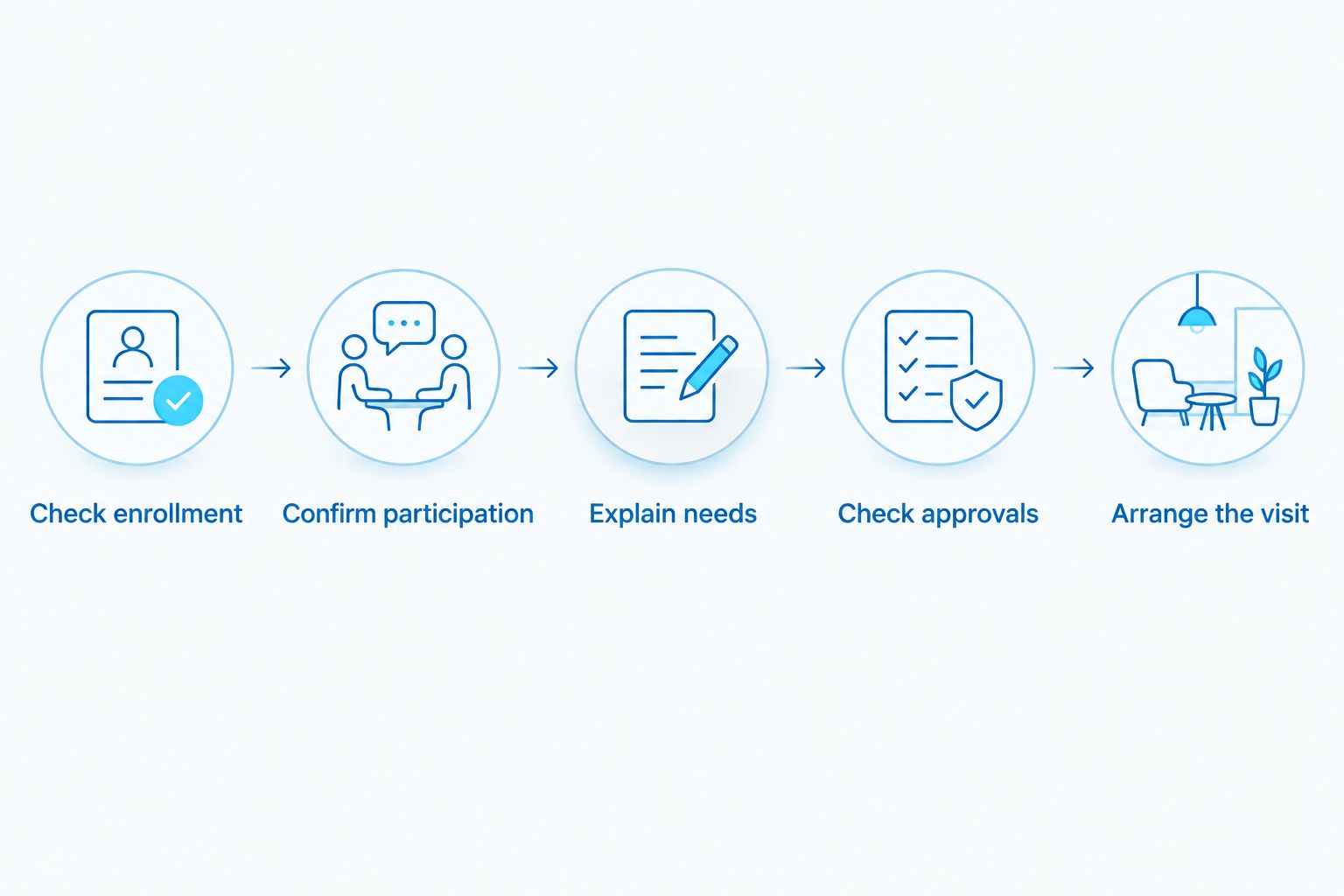
Use this sequence after you identify a promising plan and office. Verification connects enrollment to an actual appointment; it does not replace the dentist’s examination.
Check enrollment: Confirm the child’s program, dental plan, and coverage effective date.
Confirm participation: Give the office the exact plan name and identify the location you want to visit.
Explain needs: Describe the child’s age, symptoms, current treatment, and any referral.
Check approvals: Ask whether the planned service needs authorization and who handles it.
Arrange the visit: Confirm what identification, insurance information, and records to bring.
Confirm enrollment and office participation before arranging the visit.
Keep a note of the answers and the people you spoke with. If the office and plan give conflicting information, ask them to resolve the participation question before proceeding with nonurgent care.
The ranking puts continuity first for a child with an established dentist, specialist access first for a child with a treatment need, and practical routine-care access first for a child starting care. Each recommendation follows the same criteria: participation, patient acceptance, treatment access, continuity, practical access, and benefit verification.
These are decision rules, not carrier performance scores. A plan that fits one child’s office and treatment needs can be a poor fit for another child living nearby.
The coverage explanation draws on Texas HHSC’s children’s dental managed-care and Texas Health Steps guidance, Medicaid.gov’s dental coverage guidance, and the American Academy of Pediatric Dentistry’s first-visit recommendation. For 2026 enrollment, the child’s current enrollment notice, plan documents, and provider confirmation govern the choice.
Which Medicaid dental plan should you choose?
Choose the plan that confirms access to your child’s existing dentist unless a specific treatment need makes another confirmed provider pathway more appropriate. If your child has no dentist, identify a suitable participating office before selecting the plan.
Do not switch just because another carrier sounds more familiar. First establish what the change solves: continuity, specialist access, or a usable dental home. Then check how the switch affects existing treatment.
Affordable Dentist Near Me provides general, family, cosmetic, and restorative dental care. For children’s Medicaid dental care, contact the chosen office for more information and confirm plan participation; the practice’s services do not establish Medicaid coverage.
FAQ
What’s the best Medicaid dental plan for kids in Texas?
The best plan is the one that confirms access to a suitable dentist and your child’s needed care. Compare the choices on the child’s enrollment materials, then verify office participation and any specialist requirements.
Is DentaQuest better than MCNA Dental or UnitedHealthcare Dental?
The carrier name alone does not establish which plan is better for your child. Compare confirmed dentist participation, treatment access, and continuity using the same questions for each plan.
Can my child keep the same dentist after changing dental plans?
Your child can continue with that dentist under the new plan only if the office participates and can accept the child under that coverage. Confirm ongoing treatment and authorization requirements before switching.
Does Texas Medicaid cover braces for kids?
Texas Medicaid orthodontic coverage depends on medical-necessity requirements, not appearance alone. Ask the dentist and dental plan about evaluation, documentation, and prior authorization before starting treatment.
Are children’s Medicaid dental benefits the same as adult benefits?
No, children’s Medicaid dental benefits differ from adult benefits. Eligible members under 21 years old receive dental benefits through EPSDT, so a parent’s coverage does not describe the child’s benefits.
When should my baby first see a dentist?
The American Academy of Pediatric Dentistry recommends a visit within 6 months of the first tooth appearing and no later than 12 months of age. Confirm that the participating office sees infants before arranging the visit.
Does Affordable Dentist Near Me accept my child’s Medicaid dental plan?
Confirm your child’s exact dental plan with the specific Affordable Dentist Near Me location before booking. A practice’s family dental services do not establish participation in every Medicaid dental plan.
One last thing
Ask the office to confirm the dental plan, not just Medicaid. That wording separates general program participation from the exact network your child uses. Bring the dental plan information as well as the child’s Medicaid information, and tell the office about any recent coverage change.