Your deep cleaning gum disease cost in 2026 depends on the areas that need treatment, the care included, and your dental benefits; an itemized estimate after a gum examination gives you the amount relevant to your case. The cleaning itself is only part of the plan: examinations, necessary X-rays, follow-up checks, and ongoing gum maintenance need separate clarification. Ask for both the treatment total and your expected responsibility before scheduling.
TL;DR
Deep cleaning gum disease cost depends on treatment scope; request an itemized estimate after a gum examination.
Scaling and root planing treats below the gumline; a routine cleaning is not an interchangeable substitute.
Confirm insurance benefits for the exact procedure, not simply for a dental cleaning.
Affordable Dentist Near Me serves Texas families seeking general, cosmetic, and restorative dental care.
How much does deep cleaning for gum disease cost in 2026?
The useful figure is your written, case-specific estimate—not an advertised cleaning offer. Deep cleaning, also called scaling and root planing, removes plaque and hardened deposits from tooth surfaces below the gumline. Your dentist determines where that treatment is needed after examining your gums and supporting bone.
For the broader treatment choices, see the guide to gum disease treatment options. The comparison below explains why different kinds of cleaning should not be treated as equivalent purchases.
Removes plaque and hardened deposits as part of preventive care
Does not replace prescribed treatment for periodontitis
Scaling and root planing
Patients with periodontitis who need nonsurgical treatment
Cleans affected tooth and root surfaces below the gumline
Requires reassessment; some patients need additional treatment
Periodontal maintenance
Patients needing ongoing care after periodontal treatment
Supports continued monitoring and cleaning of affected areas
Does not eliminate the need for daily home care or further treatment when indicated
A complete estimate should identify the procedure, the teeth or areas involved, and the follow-up plan. If those details are absent, ask the office to explain the treatment before comparing totals.
Why this matters
Gum disease treatment is not simply a more thorough version of a routine cleaning. Periodontitis affects the tissues and bone supporting your teeth, so the examination must establish what is happening below the gumline.
Choosing care based only on the label “cleaning” creates an unfair comparison. One estimate might cover preventive care, while another includes treatment for diagnosed gum disease. Compare the diagnosis and treatment scope first, then compare your financial responsibility.
This distinction also matters when you use insurance. A benefit for preventive cleanings does not automatically describe the benefit for scaling and root planing.
What belongs in a deep-cleaning estimate?
Ask the office to separate the treatment plan into clear line items. You should understand which services are included, which are separate, and which depend on how your gums respond.
Estimate component
What to confirm
Why it matters
Examination
Whether the gum evaluation is included
Establishes the diagnosis and treatment needs
X-rays
Which images are necessary and whether they are separate
Helps the dentist evaluate supporting bone and other dental concerns
Scaling and root planing
The areas and teeth being treated
Defines the scope of the deep cleaning
Comfort measures
What numbing is planned and what is included
Clarifies how discomfort will be managed
Additional treatment
Whether any medicine or other procedure is recommended
Separates the main treatment from additional recommendations
Reassessment and maintenance
What happens after the initial cleaning
Makes the ongoing care plan clear
Not every patient needs every item in this table. The purpose is to clarify your plan, not to request unnecessary services.
For a 2026 estimate, ask whether the document reflects your current benefits and the treatment currently recommended. An older estimate or a different patient's plan does not establish your responsibility.
Localized treatment: confirm the affected teeth
Localized deep cleaning addresses the areas where the examination shows a need for treatment. It does not mean that every tooth automatically requires scaling and root planing.
Ask the dentist to show you the affected areas on your gum chart. That chart records measurements around your teeth and helps explain the recommendation alongside bleeding, X-rays, and other findings.
The advantage of an area-specific plan is clarity: you can see what is being treated. Its limitation is that a smaller treatment area does not make follow-up optional; the dentist still needs to assess your response.
More extensive treatment: confirm the full scope
Dentists divide the mouth into 4 quadrants: upper right, upper left, lower right, and lower left. An estimate organized by quadrant describes treatment areas, not necessarily separate visits.
Ask which quadrants need care and which teeth within them are involved. Then confirm how the office plans to schedule treatment and manage comfort.
A broader plan can address disease affecting multiple areas. The trade-off is more treatment to coordinate, with reassessment still needed afterward. Do not assume that treating all 4 quadrants means you will need exactly 4 appointments.
Ongoing maintenance: separate it from initial treatment
Periodontal maintenance follows active gum disease treatment when the dentist recommends ongoing periodontal care. It includes monitoring and cleaning based on your condition, rather than simply returning to a routine preventive schedule.
Ask for the maintenance plan before starting the initial treatment. You need to understand what the dentist recommends afterward and how those visits are handled by your benefits.
Maintenance supports continued care, but it is not a guarantee that gum disease will never progress. Your home care, health factors, and response to treatment remain important.
Why deep cleaning estimates vary
Different treatment plans should not be expected to produce identical estimates. These are the details to compare when reviewing your 2026 deep cleaning plan:
Treatment area: Confirm the affected teeth and quadrants rather than assuming the entire mouth needs treatment.
Diagnostic services: Check whether the examination and necessary X-rays are included or listed separately.
Comfort measures: Ask what numbing or other comfort arrangements the plan includes.
Additional recommendations: Have the dentist explain the purpose of any proposed medicine or additional procedure.
Follow-up care: Separate the initial cleaning, reassessment, and ongoing maintenance.
Dental benefits: Confirm the applicable deductible, coverage rules, benefit limits, and network status.
These details explain what you are comparing. They do not establish a universal treatment package or predict an insurer's payment.
How do you get an estimate you can compare?
Use this sequence to keep the clinical recommendation and the coverage discussion connected. Do not start with a cleaning promotion and work backward toward a diagnosis.
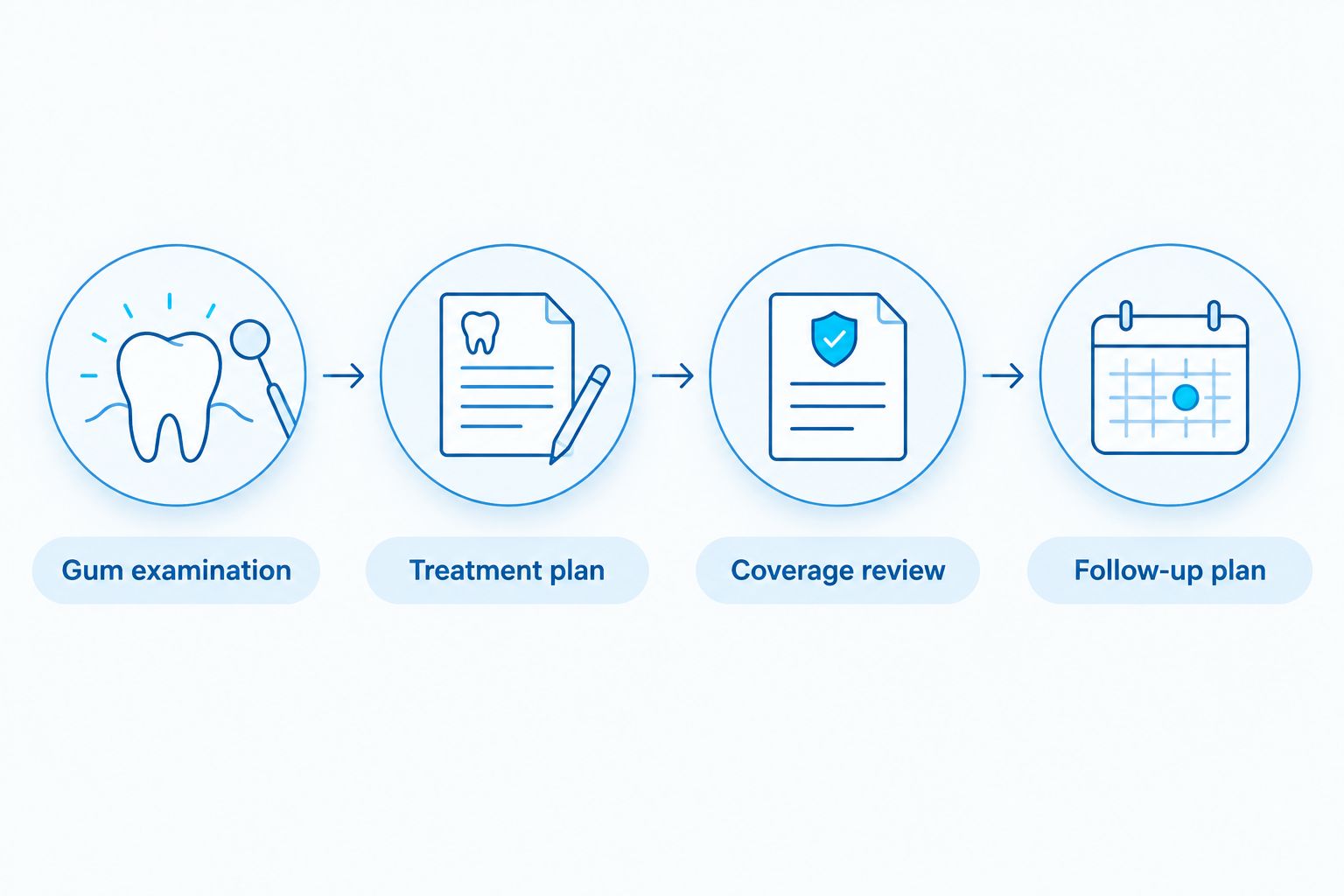
Gum examination: Ask what findings support the diagnosis, including gum measurements, bleeding, and any bone changes visible on X-rays.
Treatment plan: Request the exact procedure names, areas involved, and services included in writing.
Coverage review: Have the office and insurer clarify benefits for those procedures, including your expected responsibility.
Follow-up plan: Confirm how the dentist will reassess your gums and what maintenance is recommended.
Confirm the treatment scope before comparing estimates or checking benefits.
Keep a copy of the written plan when speaking with your insurer. Using the same procedure details helps prevent a discussion about routine cleaning benefits when the recommendation is actually periodontal treatment.
Does dental insurance cover deep cleaning for gum disease?
Coverage depends on your specific plan and the submitted treatment details. Ask about scaling and root planing by name, not just whether your policy covers cleanings.
For your 2026 benefits, confirm the deductible, remaining annual benefit, network rules, and any documentation or frequency requirements. Ask whether the office can request a pretreatment estimate from the insurer.
A pretreatment estimate helps you plan, but it is not a guarantee of final payment. Your responsibility can change if benefits, eligibility, or the submitted services differ when the claim is processed.
What if you do not have dental insurance?
Without insurance, start with the same clinical questions: what needs treatment, what is included, and what happens afterward. Then request a written self-pay estimate and ask the office what payment arrangements are currently available.
Do not assume that a discount card is insurance or that it applies to every procedure. Confirm the exact treatment, participating office, and terms before relying on a discount.
A lower estimate is useful only when it covers appropriate care. If the difference between two plans is unclear, ask each dentist to explain the diagnosis and scope instead of choosing solely by the total.
Can you get a regular cleaning instead of a deep cleaning?
A routine cleaning is not an interchangeable substitute when scaling and root planing is indicated for periodontitis. The treatments address different clinical needs.
You can ask why deep cleaning is recommended and request an explanation of the findings. A second opinion is also reasonable when you do not understand the diagnosis or the proposed treatment.
Do not try to remove hardened deposits below the gumline yourself. Home care supports gum health, but it does not replace professional treatment for diagnosed disease.
How do you choose a local dental office?
Look for an office that explains the diagnosis in plain language, provides a written treatment plan, and answers questions about benefits and follow-up. Those details give you a sound basis for deciding where to seek care.
Affordable Dentist Near Me is a local dental-care option for families in Fort Worth, Dallas, Houston, Waco, Grand Prairie, and Crowley. Ask the office about an evaluation for your gum concerns and confirm the services recommended for your case.
The practice's general, cosmetic, and restorative dental services are relevant to families seeking dental care. The limitation of choosing by a practice description alone is that it cannot establish your diagnosis, insurance coverage, or treatment needs; those require individual confirmation.
Discuss your gum concerns
Ask about an evaluation, your treatment needs, and a written estimate.
How do I find my deep cleaning gum disease cost in 2026?
Request an itemized estimate after a gum examination. Confirm the treated areas, included services, insurance assumptions, and follow-up plan before scheduling.
Is a deep cleaning the same as a regular dental cleaning?
No, scaling and root planing treats affected tooth and root surfaces below the gumline for patients with periodontitis. A routine cleaning is not a substitute when that treatment is indicated.
Does deep cleaning always involve all 4 quadrants?
No, treatment does not automatically involve all 4 quadrants. Your dentist determines the affected teeth and areas from the examination and supporting findings.
Will dental insurance pay for my entire deep cleaning?
Your plan determines coverage; full payment should not be assumed. Confirm the deductible, remaining benefits, network rules, and requirements for the exact procedures in your treatment plan.
Can I ask for a second opinion before having a deep cleaning?
Yes, you can seek a second opinion if the diagnosis or recommendation is unclear. Ask for an explanation of your gum measurements, X-rays, and affected areas so you can compare the recommendations.
Will I need more visits after scaling and root planing?
Reassessment is part of determining how your gums respond to treatment. Your dentist will explain whether ongoing periodontal maintenance or additional care is appropriate.
Can Affordable Dentist Near Me help me discuss my dental care needs?
Affordable Dentist Near Me serves families in Fort Worth, Dallas, Houston, Waco, Grand Prairie, and Crowley with general, cosmetic, and restorative dental services. Contact the office to discuss your gum concerns and confirm the evaluation and care available for your case.
One last thing
The most useful question is not just what the cleaning includes, but how the dentist will check whether treatment worked. Ask what findings will be reassessed and what would prompt a change in your care plan.
The American Dental Association's home-care guidance recommends brushing for 2 minutes twice a day with fluoride toothpaste and cleaning between your teeth once a day. These habits support professional care; they do not replace treatment for periodontitis.
Before accepting a deep cleaning plan in 2026, make sure you can explain three things in your own words: why you need it, what you are agreeing to, and what happens afterward.