Best first option to discuss for mild anxiety: nitrous oxide. Best for a child who can manage without medicine: behavioral support. Best for extensive treatment when lighter approaches are unsuitable: general anesthesia after an individual assessment. This 2026 guide compares pediatric sedation dentistry options by your child's needs—not by which approach produces the deepest sleep.
TL;DR
Nitrous oxide is a first option to discuss among pediatric sedation dentistry options for mild anxiety and mask-tolerant children.
Behavioral support avoids sedation medicines when a child can participate safely in dental treatment.
Oral sedation and IV sedation require individual assessment, monitoring, and clear recovery instructions.
General anesthesia suits selected children with extensive needs; it is not the default for ordinary dental nervousness.
Why this matters
Sedation helps a child tolerate treatment; it does not fix the tooth itself. The right plan must address anxiety, pain control, the dental work, and your child's medical history together.
Affordable Dentist Near Me provides family dental care across Fort Worth, Dallas, Houston, Waco, Grand Prairie, and Crowley. Start with its pediatric dental care for young children guide to understand the broader appointment process, then ask the treating office about your child's specific sedation needs.
Choose the least intensive approach that allows necessary treatment to happen safely. A child's age alone does not determine that choice, and a medicine's delivery method does not reliably tell you how deeply the child will be sedated.
What makes the best pediatric sedation dentistry option?
Use these criteria to compare recommendations for your child's 2026 appointment:
Medical suitability: The assessment covers medicines, allergies, breathing problems, snoring, previous anesthesia experiences, and current illness.
Child participation: The plan reflects whether your child can accept a nose mask, follow directions, and remain still enough for treatment.
Treatment needs: A brief procedure and extensive dental work need different discussions.
Sedation depth: The team explains the intended level of awareness and what happens if sedation becomes deeper than intended.
Monitoring and rescue: Staff, equipment, and emergency skills match the sedation level and the child's needs.
Recovery planning: You receive preparation, supervision, discharge, and emergency instructions before treatment.
A reassuring explanation is useful, but it is not a substitute for a medical assessment. Ask who administers the medicine, who monitors your child, and who remains responsible during recovery.
Pediatric sedation dentistry options at a glance
Option
Best for
Standout feature
Key limitation
Nitrous oxide with oxygen
Mild anxiety in children who accept a nose mask
Adjustable inhaled anxiety relief
Requires cooperation and breathing through the nose
Behavioral support without sedation
Children who can participate with coaching
Avoids sedation medicines
Does not meet every child's treatment needs
Oral sedation
Selected children needing more support than coaching or nitrous oxide
Medicine taken by mouth
Response varies and cannot be adjusted as directly as an IV medicine
IV sedation
Selected cases needing medicine adjusted during treatment
Direct access for administering medicine
Requires needle placement and a suitably trained team
General anesthesia
Extensive treatment or inability to tolerate necessary care
Child is unconscious during treatment
Requires anesthesia care and a fuller recovery plan
The table separates treatment approaches, not guaranteed levels of sleep. Oral or IV medicine can produce different sedation depths depending on the medicine, dose, combinations, and individual response.
1. Nitrous oxide: best for mild dental anxiety
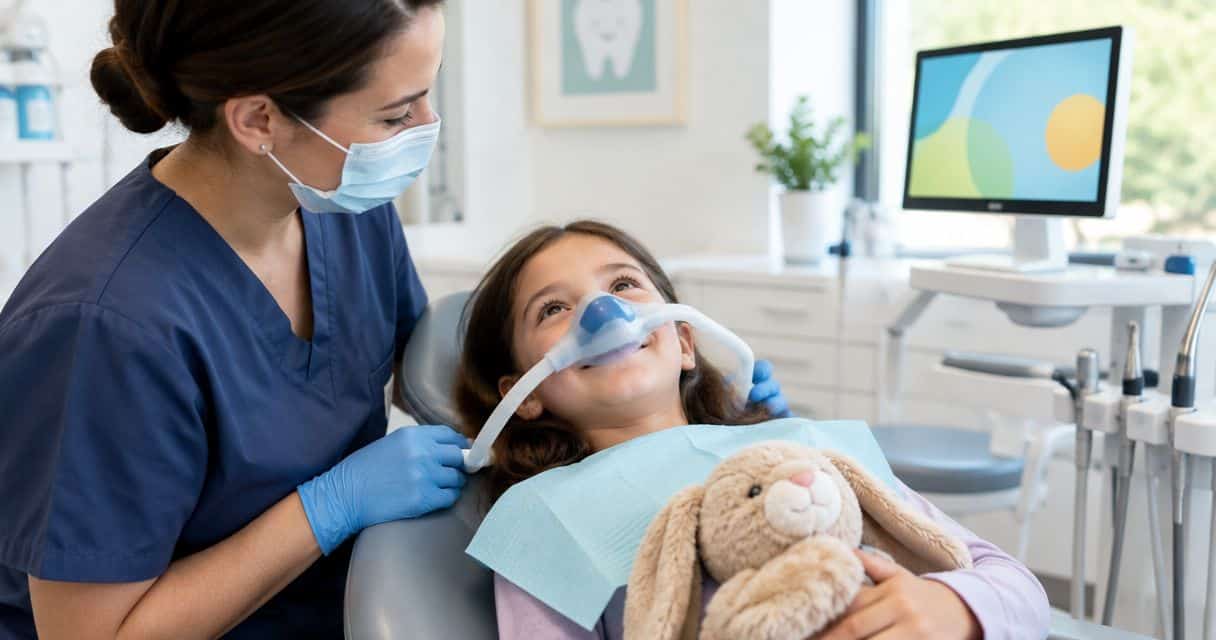
Nitrous oxide, often called laughing gas, is mixed with oxygen and delivered through a small nose mask. Used alone at appropriate concentrations, it generally allows your child to remain awake and responsive while feeling less anxious.
The dental team adjusts the gas during treatment. Your child still needs to accept the mask, breathe through the nose, and participate enough for the procedure.
Nitrous oxide pros:
The team can adjust delivery during the appointment.
Your child generally remains able to communicate.
Its effects wear off quickly after administration stops.
Nitrous oxide cons:
A blocked nose or refusal of the mask limits its usefulness.
Nausea and vomiting are possible.
Severe distress or extensive treatment can require another approach.
Best for: A child with mild anxiety who can tolerate the mask and follow directions.
Nitrous oxide does not automatically replace local numbing medicine. Ask how the dentist will prevent pain during the actual dental work, rather than assuming feeling relaxed means the tooth is numb.
Verdict: Hold the choice until assessment; discuss nitrous oxide first for mild anxiety, not as a universal answer.
2. Behavioral support: best for children who can participate without sedation
Behavioral support uses explanations, demonstrations, encouragement, and gradual exposure to make treatment less frightening. A dentist might show an instrument before using it or agree on a signal your child can use to request a pause.
This is not sedation. It belongs in the comparison because medicine is not necessary for every nervous child, and supportive communication remains useful even when sedation is chosen.
Behavioral support pros:
Avoids sedation medicine and its recovery effects.
Helps your child understand what happens next.
Builds skills for future dental visits.
Behavioral support cons:
Requires enough participation to complete treatment safely.
Does not remove pain or replace local numbing medicine.
Repeated attempts are inappropriate when distress prevents necessary care.
Best for: A child whose anxiety becomes manageable with preparation, communication, and breaks.
For a 2026 visit, describe your child's specific triggers rather than simply saying the child dislikes dentists. Fear of needles, unfamiliar sounds, and difficulty tolerating sensations call for different adjustments.
Verdict: Skip sedation when behavioral support and appropriate pain control are sufficient.
3. Oral sedation: best for selected children needing additional support
Oral sedation involves taking a prescribed medicine by mouth before treatment. Depending on the medication and response, your child can become relaxed, drowsy, or more deeply sedated than expected.
A swallowed dose cannot be reduced once it has been taken. That makes careful selection, monitoring, and readiness to manage breathing problems essential.
Oral sedation pros:
Does not require an IV as the initial medicine delivery route.
Provides additional support when lighter approaches are insufficient.
Can help selected children tolerate necessary dental care.
Oral sedation cons:
The response differs between children.
Medicine effects can continue after the dental procedure ends.
Breathing problems and unintended deeper sedation remain risks.
Best for: A child whom the clinician assesses as suitable for oral medicine when coaching or nitrous oxide alone is insufficient.
Do not give your child leftover medicine, an extra dose, or a calming supplement to improve the result. Follow the treating team's administration instructions, and report everything your child has taken.
Verdict: Hold until the team explains the intended sedation depth, monitoring, and discharge requirements.
4. IV sedation: best for selected cases needing adjustable medication
IV sedation delivers medicine through a small tube placed in a vein. It gives the treating team direct access to administer and adjust medication during the procedure.
IV describes the route, not a guaranteed state of consciousness. Ask whether the proposed plan is moderate sedation or deep sedation and who is qualified to manage that level.
IV sedation pros:
Allows medication adjustment during treatment.
Provides direct access for administering medicines.
Offers an alternative when an oral approach is unsuitable.
IV sedation cons:
Placing the IV can distress a needle-anxious child.
Requires appropriate monitoring, personnel, and emergency preparation.
Deeper sedation can affect breathing and protective responses.
Best for: Selected children whose clinical needs justify adjustable medication under an appropriately trained team.
A child who fears needles does not automatically need oral medicine instead. The team should explain how IV placement would be handled and whether a different setting or approach better fits the child.
Verdict: Hold until the clinician establishes why IV sedation fits better than a lighter option.
5. General anesthesia: best for extensive or otherwise intolerable treatment
General anesthesia makes your child unconscious during treatment. The anesthesia team manages breathing and monitors the child while the dental team completes the planned work.
It is considered for selected children with extensive dental needs, inability to cooperate safely, or circumstances in which other approaches cannot support necessary care. It is not simply a stronger version of laughing gas.
General anesthesia pros:
Allows treatment when conscious participation is not possible.
Supports extensive care in a planned treatment session.
Avoids requiring the child to remain voluntarily still throughout treatment.
General anesthesia cons:
Requires anesthesia personnel, equipment, and an appropriate setting.
Carries breathing and other anesthesia-related risks.
Requires preparation and supervised recovery afterward.
Best for: A child whose dental and medical assessment supports unconscious treatment rather than lighter approaches.
Ask which treatment is planned, whether alternatives exist, and how the team will handle unexpected findings. Your 2026 consent discussion should cover the dental work and anesthesia separately.
Verdict: Hold until the dental and anesthesia teams establish a clear clinical reason and recovery plan.
How these options are ranked
This ranking prioritizes matching the approach to the child, limiting unnecessary sedation, and making monitoring and recovery requirements clear. Nitrous oxide leads the sedation discussion for mild anxiety; behavioral support remains the first consideration when medicine is unnecessary.
The American Academy of Pediatrics and American Academy of Pediatric Dentistry guidance on pediatric sedation addresses assessment, monitoring, rescue capability, and recovery. Those safety principles—not a promise that a child will sleep—should shape your 2026 decision.
What to confirm before the appointment
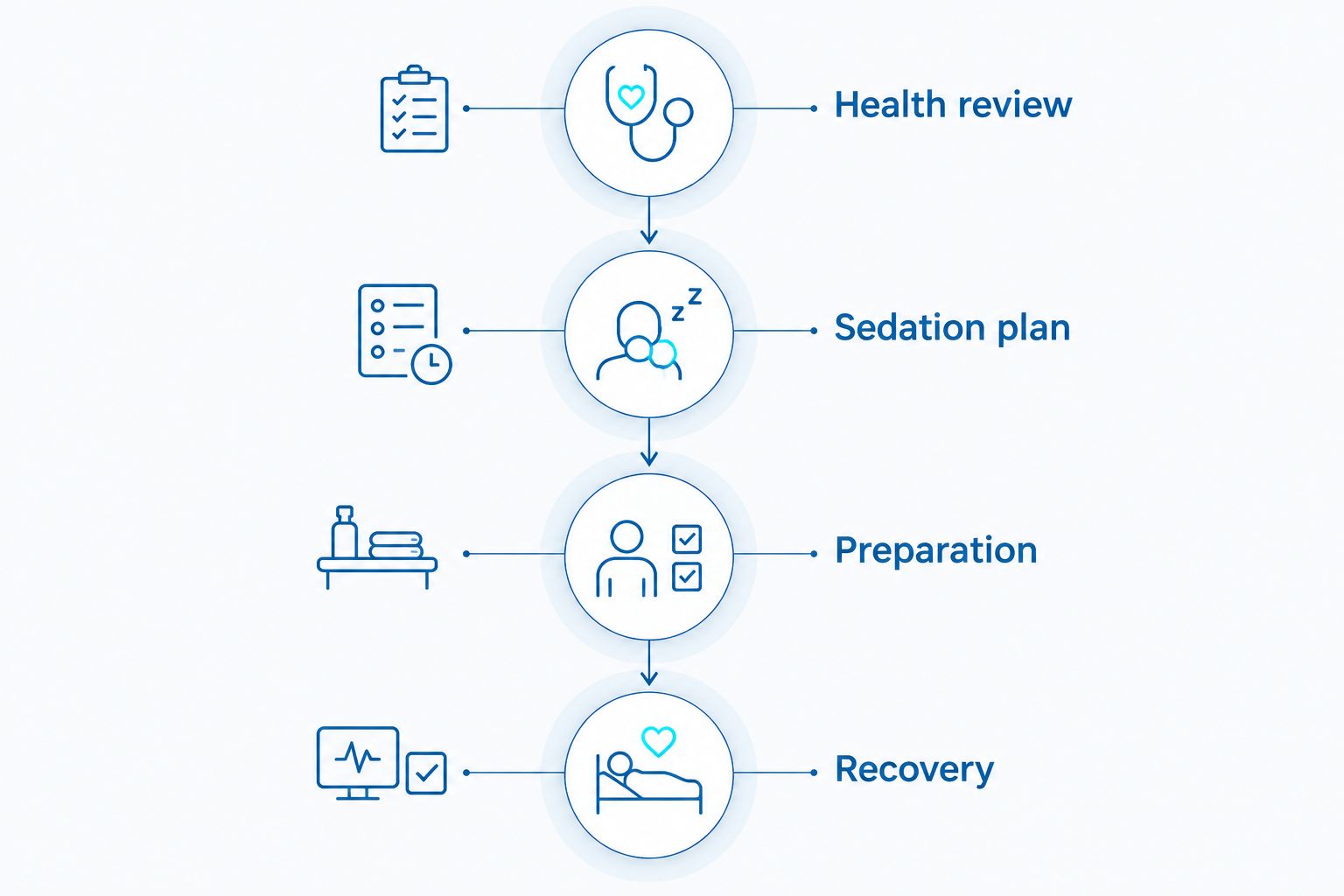
Use this sequence with the treating team. Get the answers before the treatment day, when you have time to ask follow-up questions.
Health review
Share your child's medical conditions, medicines, allergies, previous sedation experiences, and history of snoring or breathing pauses during sleep. Report a new cough, fever, congestion, or other illness before arriving; the team decides whether the plan needs to change.
Sedation plan
Ask for the medicine route, intended sedation depth, pain-control plan, and reason for choosing that approach. Confirm whether the dental office provides the proposed care or whether referral to another clinician or setting is needed.
Preparation
Get written eating, drinking, and medication instructions specific to the procedure. Do not substitute an online fasting schedule or stop prescribed medicines without the team's direction.
Recovery
Confirm who supervises your child, what discharge criteria apply, and which activities to avoid afterward. Ask whom to contact for problems; difficulty breathing or inability to wake your child requires emergency help.
Confirm preparation and recovery instructions before the treatment day.
Which option should you choose?
For an undecided parent, the next move is an assessment—not selecting a sedative. Start with whether supportive care is enough, then discuss nitrous oxide for mild anxiety if your child can accept it.
Affordable Dentist Near Me is a family dental care starting point for parents comparing pediatric sedation dentistry options. Contact the treating office for information about your child's needs; confirm the specific provider, setting, and sedation services before making arrangements.
What’s the best pediatric sedation dentistry option for a nervous child?
Nitrous oxide is a first option to discuss for mild anxiety when a child accepts the nose mask and can participate. Behavioral support alone is preferable when it allows safe treatment without sedation medicine.
Is laughing gas the same as putting my child to sleep?
No, nitrous oxide used alone at appropriate concentrations generally leaves a child awake and responsive. General anesthesia makes the child unconscious, while other sedation medicines can produce varying levels of awareness.
Is oral sedation safer than IV sedation for kids?
The medicine route alone does not determine safety. The child’s health, intended sedation depth, medication, monitoring, and team’s ability to manage complications all matter.
Will my child still need numbing medicine with sedation?
Sedation does not automatically replace local numbing medicine. Ask the dentist how pain will be controlled for the planned treatment, even if your child is relaxed or drowsy.
Can my child eat before dental sedation?
Follow the treating team’s written eating and drinking instructions. Requirements depend on the proposed approach and clinical circumstances, so do not use a general online schedule instead.
What if my child has a cold before the appointment?
Tell the treating team before the appointment if your child develops a cold, cough, fever, or congestion. Breathing symptoms can affect the sedation assessment, and nasal congestion can interfere with nitrous oxide delivery.
How do I compare the financial details of children’s dental sedation?
Ask for a written treatment estimate that separates dental work, sedation or anesthesia, facility services, and follow-up care. Confirm coverage with your insurer and the treating providers before agreeing to the plan.
Does Affordable Dentist Near Me provide every sedation option listed here?
Confirm the specific approach directly with the treating office. Affordable Dentist Near Me provides family dental care, but this comparison does not establish which pediatric sedation methods an individual location provides.
One last thing
Sedation helps complete treatment, but prevention reduces the chance of another difficult visit. The American Academy of Pediatric Dentistry recommends a first dental visit within 6 months of the first tooth appearing and no later than 12 months of age; parents should help young children brush 2 times daily with age-appropriate fluoride toothpaste.
For your family's 2026 care plan, ask Affordable Dentist Near Me about prevention alongside any treatment discussion. Leave with instructions for keeping new problems from developing—not just instructions for recovering from sedation.