Healthcare workers’ dental care is preventive and restorative care organized around clinical duties, with the aim of protecting your teeth without disrupting necessary treatment or work. This 2026 guide to dental care for nurses and healthcare workers explains how to fit home care, appointments, benefits checks, and recovery around changing shifts.
TL;DR
Dental care for nurses and healthcare workers starts with fluoride toothpaste, daily between-teeth cleaning, and appointments planned around sleep.
Affordable Dentist Near Me provides general and restorative dental care; confirm location-specific scheduling and insurance participation before booking.
Verify employer dental benefits before treatment, especially when changing jobs or taking a travel assignment.
Schedule recovery around clinical duties, and seek emergency help for swelling that affects breathing or swallowing.
Why dental care matters for healthcare workers
Your dental routine should follow your waking and sleeping schedule, not a conventional workday. If you sleep during daylight hours, brushing before your main sleep matters more than whether the clock says morning or evening.
Rotating assignments also create practical questions: which office can you return to, when does your coverage change, and will treatment affect your next clinical shift? These are planning issues, not reasons to postpone symptoms.
For your 2026 care plan, separate daily prevention from appointment logistics. A toothbrush routine does not require an office visit, while a broken tooth needs an assessment rather than a better brushing schedule. The dental care guide for shift workers addresses the broader scheduling problem.
Build a dental plan around your clinical schedule
1. Anchor home care to waking and sleeping
Start with a written routine or phone reminder. Brush for 2 minutes, twice a day, using fluoride toothpaste, and clean between your teeth once a day with floss or another suitable tool. These are standard home-care recommendations, not a reason to brush harder after a missed session.
Treat brushing before your main sleep as a fixed task. If you rotate from days to nights, move the reminder with your sleep period rather than keeping an alarm that rings while you are working.
Keep the routine realistic enough to repeat after a demanding shift. Extra products do not replace careful brushing and between-teeth cleaning.
Set reminders around waking and your main sleep.
Keep fluoride toothpaste and a soft-bristled toothbrush accessible.
Choose floss or an interdental tool you can use comfortably.
Store backup supplies in a clean, dry place outside patient-care areas.
2. Plan drinks and snacks before your shift
Use your own shift notes to identify repeated sipping or snacking. Frequent sugary drinks expose teeth to repeated sugar intake, while acidic drinks can contribute to enamel wear. Water is the simplest default between meals when workplace rules allow drinking.
Coffee does not need to become an all-or-nothing decision. Look at what you add and how long you sip it. A sweetened drink stretched across a shift creates a different pattern from a drink consumed with a meal.
If your mouth feels persistently dry, tell your dentist and review medications with the prescribing clinician. Do not stop a prescribed medicine yourself.
Choose water for routine hydration when permitted.
Keep sweetened drinks with meals rather than sipping continuously.
Pack snacks that do not depend on frequent sugary grazing.
Report persistent dry mouth, soreness, or trouble swallowing.
3. Choose an office you can return to
Before contacting a practice, map your commute, home location, and likely follow-up needs. You can do this with your calendar and a short call; no special scheduling service is necessary. Choose continuity over proximity to a temporary assignment when treatment will require return visits.
Affordable Dentist Near Me is best for families seeking general and restorative dental care in its listed Texas service cities. The practice serves Fort Worth, Dallas, Houston, Waco, Grand Prairie, and Crowley. Its limitation for your decision is that location-specific hours, insurance participation, and treatment arrangements still need confirmation.
For dental care in 2026, review Affordable Dentist Near Me as a local practice option, then ask the office whether the proposed visit fits your shift and follow-up needs.
Confirm the exact office location before arranging time away.
Ask how long your particular visit is expected to take.
Explain when you finish work and normally sleep.
Ask whether follow-up visits belong at the same office.
4. Verify benefits before authorizing treatment
Start with your employer’s benefits documents, insurer portal, or benefits team. Employment in healthcare does not establish what a dental plan covers. Medical and dental benefits also require separate checks.
Ask about the specific procedure, treating office, and coverage dates. If you are changing hospitals or taking a travel assignment, confirm which plan applies on the treatment date. Do not assume a previous office’s network status carries over to a new insurer.
A written estimate helps you understand the proposed work, but an insurer’s estimate is not a guarantee of final payment. Resolve unclear items before elective treatment begins.
Confirm your coverage start and end dates.
Verify network participation for the treating office and clinician.
Check deductibles, annual benefit limits, and waiting periods.
Request an itemized treatment plan and written estimate.
5. Match the appointment to recovery needs
Begin with your work calendar, then ask the treating dentist what restrictions apply to the planned procedure. A cleaning and a surgical extraction do not create the same recovery needs. Your duties matter too: lifting, speaking continuously, driving, and safety-sensitive work need separate consideration.
Do not schedule sedation between shifts and assume sleep alone makes you ready to work. Follow the treating team’s instructions about transport, supervision, driving, and returning to clinical duties.
Book the follow-up before leaving when the treatment plan requires one. That reduces the chance of discovering a scheduling conflict after treatment has started.
Describe your actual clinical duties, not just your job title.
Ask about eating, lifting, speaking, and driving restrictions.
Arrange an escort when the sedation instructions require one.
Request written aftercare and return-to-work guidance.
Confirm how to reach the office with postoperative concerns.
6. Separate urgent symptoms from routine care
Write down when symptoms started, what triggers them, and whether swelling or fever is present. Call a dentist for persistent toothache, a broken tooth, or gum swelling rather than waiting for your next convenient stretch off.
Trouble breathing or swallowing with dental or facial swelling requires emergency medical help. Rapidly spreading swelling and severe illness also need immediate assessment. Do not use a future cleaning appointment as the response to these symptoms.
For your 2026 work plan, save an urgent dental contact before you need it. Antibiotics do not replace treatment of the source of a dental infection, and using leftover medication is not a safe substitute for assessment.
Record the symptom location, onset, and changes.
Tell the office about swelling, fever, and relevant medical conditions.
Seek emergency medical help for breathing or swallowing difficulty.
Do not take someone else’s or leftover antibiotics.
7. Keep records ready for job or location changes
Use a secure personal folder to track treatment plans, insurance information, and the treating office’s contact details. If you move for an assignment, ask how another dentist can obtain relevant records with your permission.
Record access helps a new office understand previous treatment, but it does not replace an examination. The dentist decides whether existing images answer the current clinical question or whether new imaging is needed.
Tell your dentist about medication changes, pregnancy, diabetes, allergies, and other health updates relevant to treatment. Working in healthcare does not mean your dental team already knows your medical history.
Keep an updated medication and allergy list.
Save treatment plans and aftercare instructions securely.
Request record transfers before a planned move.
Update insurance details when employment changes.
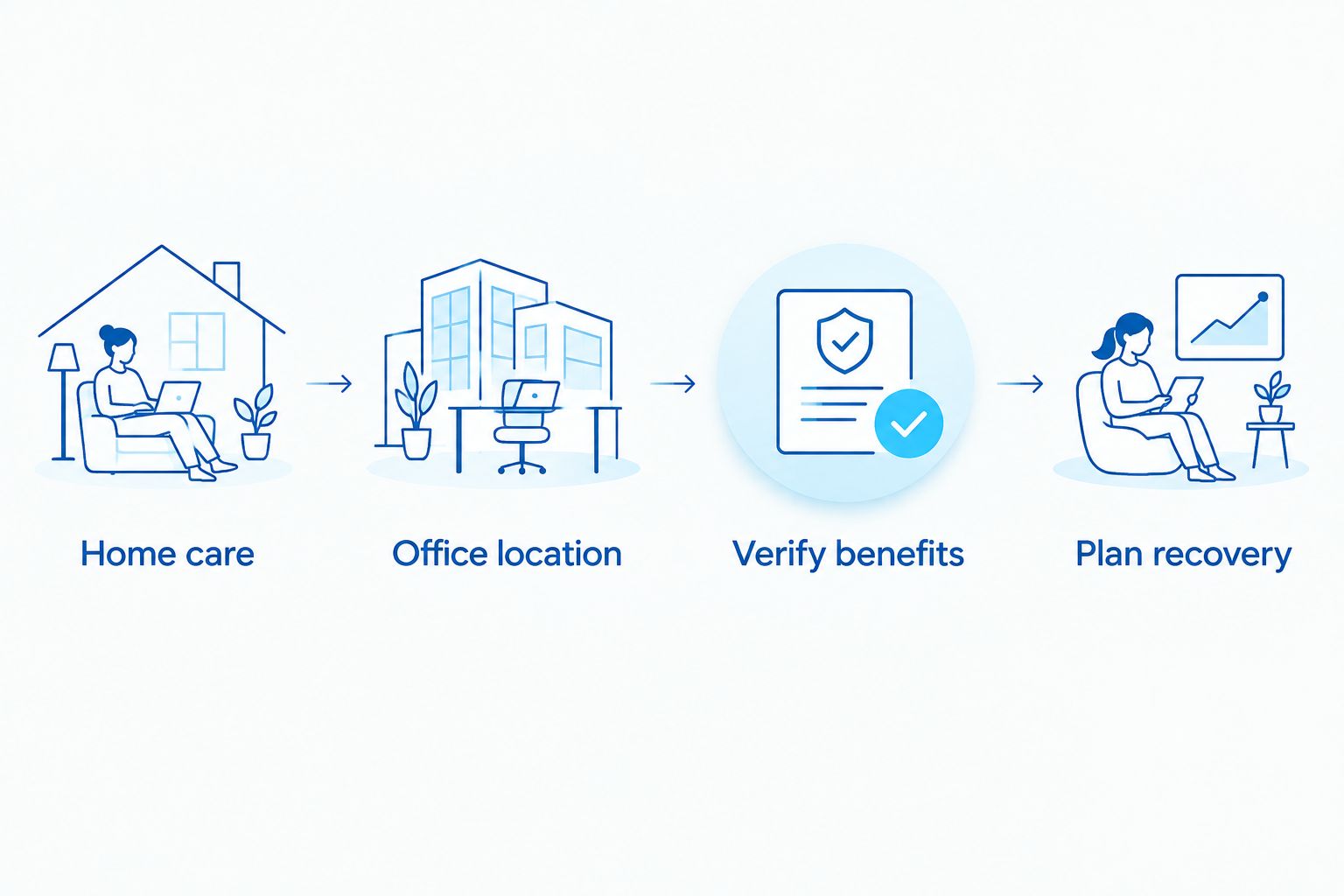
These steps create a repeatable sequence: establish home care, choose a workable office, verify benefits, and plan recovery before treatment. Keep urgent symptoms outside that routine sequence because they need prompt assessment.
Compare dental care options for your work pattern
Choose the care setting by the problem you need solved. Routine continuity, an urgent assessment, and complex treatment planning are different needs; the most convenient setting is not automatically the right one for every visit.
Option
Best for
Main advantage
Key limitation
Regular general dental practice
Ongoing prevention and routine treatment
Keeps examinations, treatment history, and follow-up together
Appointment times must fit your roster
Affordable Dentist Near Me
Families seeking general, cosmetic, and restorative care in its listed Texas cities
Offers several categories of dental care through a multi-location practice
Confirm office-specific scheduling, coverage, and treatment arrangements
Urgent dental appointment
Toothache, a broken tooth, or localized swelling needing assessment
Focuses the visit on the immediate problem
Does not replace continuing preventive care
Dental school clinic
Patients willing to receive supervised student care
Provides care in a teaching setting
Teaching appointments can require additional time
Specialist referral
A condition needing focused expertise
Matches care to a specific treatment need
Adds another office and coordination requirements
Choose a regular dental practice for continuity and use urgent care for urgent problems. A hospital emergency department is appropriate for serious medical warning signs, but it generally does not provide the ongoing dental treatment needed to repair a tooth.
When discussing dental care with Affordable Dentist Near Me, explain both your symptoms and your work constraints. Do not assume a request for a short visit means a procedure can safely be shortened.
Discuss your dental care needs
Ask about your preferred location, proposed treatment, and scheduling around clinical shifts.
These are specific planning traps to avoid, not claims about every nurse or healthcare employee. Use them to check your 2026 routine before a busy roster makes decisions harder.
Booking immediately after a night shift without considering sleep. Choose a time when you can participate in treatment discussions and follow instructions; tell the office if fatigue affects your plans.
Assuming clinical knowledge replaces an examination. Recognizing possible causes of pain does not establish which tooth or tissue needs treatment. Arrange an assessment rather than treating your own diagnosis.
Treating a new badge as proof of active dental coverage. Confirm the effective date and plan details after changing employers or assignments.
Fitting surgery between clinical shifts without a recovery discussion. Get procedure-specific advice before committing to work, driving, or on-call responsibilities.
Waiting for pain before arranging ongoing care. A dentist uses your examination and risk factors to recommend follow-up; symptoms alone do not set a preventive schedule.
FAQ
What’s the best dental routine for nurses working nights?
Brush with fluoride toothpaste twice daily and clean between your teeth once daily, anchoring the routine to waking and your main sleep. Brush for 2 minutes each time; the clock time matters less than consistency.
Do healthcare workers automatically get dental insurance through work?
Healthcare employment does not automatically establish dental coverage. Check your employer’s benefits documents for enrollment, effective dates, network rules, and covered services.
Can I book dental treatment immediately after a night shift?
Discuss fatigue, the planned procedure, and transport needs with the dental office before booking. Sedation and surgical treatment require specific instructions that take priority over fitting the appointment between shifts.
Is Affordable Dentist Near Me suitable for healthcare workers?
Affordable Dentist Near Me is an option for healthcare workers seeking general, cosmetic, or restorative care in its listed Texas service cities. Confirm the chosen office’s scheduling and insurance participation before arranging time away from work.
Should I wait until my next day off if my face is swollen?
Do not wait for a routine day off to seek assessment of facial swelling. Trouble breathing or swallowing requires emergency medical help, and rapidly spreading swelling needs immediate assessment.
Do I need a dental cleaning every six months?
Your dentist should set your cleaning and examination schedule using your oral health and risk factors. Gum disease, previous treatment, and other findings affect the recommended interval.
What should I bring when changing dentists for a travel assignment?
Bring current insurance information, your medication and allergy list, and details of unfinished treatment. Ask your previous office to transfer relevant records securely with your permission.
One last thing
Put your next dental appointment in the same calendar you use for shifts. Add any required recovery arrangements and follow-up at the same time. An appointment that looks workable on its own can still conflict with sleep, transport, or a clinical duty immediately afterward.