Are Dental Implants Worth It? A Transparent Look at Healing Compared to Other Tooth Replacement Options
Dental implants are a permanent tooth replacement that replicates the root-and-crown structure of a natural tooth, and many patients weigh healing time as a key factor when deciding whether implants are worth pursuing. This article explains how implants heal biologically through osseointegration, compares healing timelines with bridges and dentures, and walks readers through realistic, week-by-week expectations for recovery. You will learn about common discomfort patterns, how bone grafting changes schedules, what recent success-rate reporting and longevity data imply for cost-to-value decisions, and practical steps to prepare for surgery. The guide also highlights pain management, sedation dentistry as a comfort tool, and financing and maintenance considerations that affect long-term value. Finally, local readers in Crowley, TX will find clinic-specific logistics and booking instructions so they can move from information to action with confidence. The aim is to give an evidence-forward, patient-centered perspective so you can judge whether the healing trade-offs for implants deliver the long-term benefits you need.
What Are Dental Implants and How Does Their Healing Process Work?
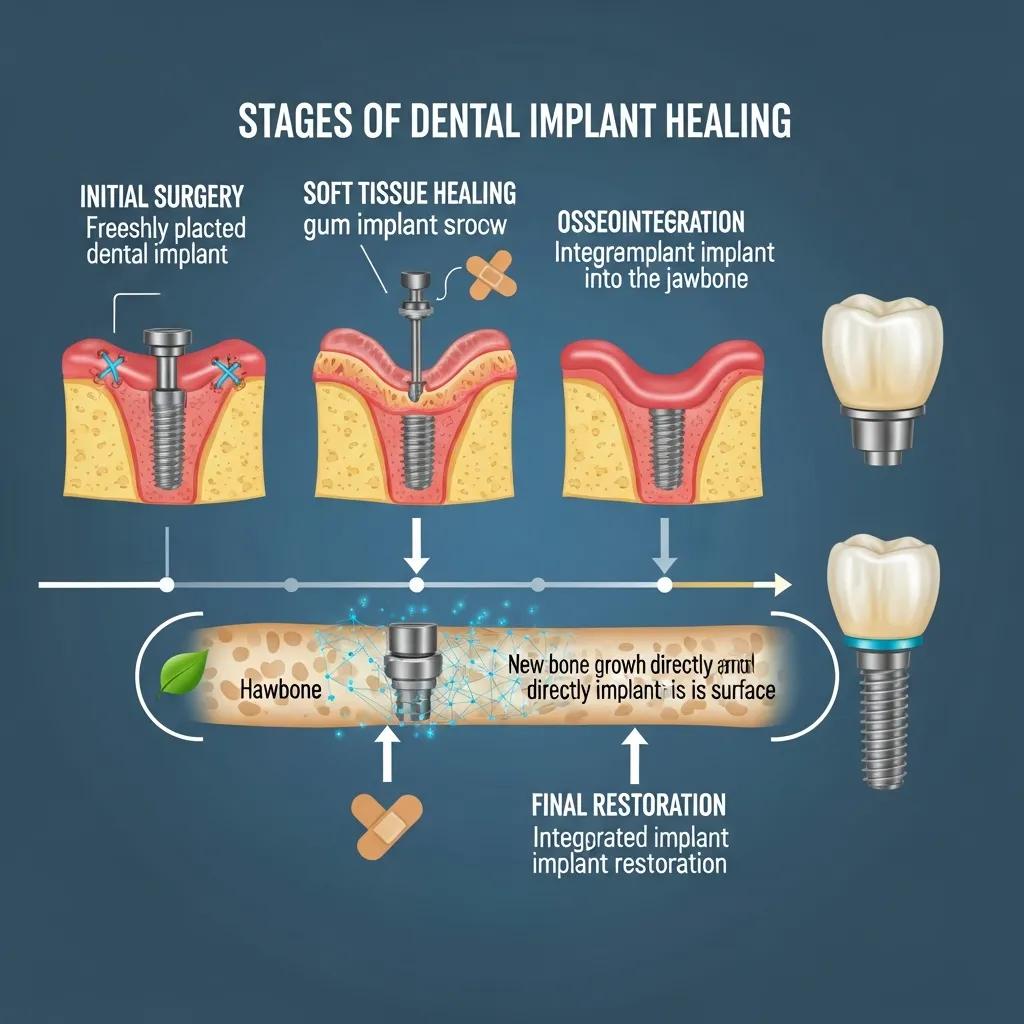
Dental implants are titanium or zirconia fixtures placed into the jawbone that act as artificial tooth roots, and they heal by integrating with surrounding bone in a process called osseointegration. Osseointegration is a biologic bonding where bone cells grow onto the implant surface, providing stable anchorage for an abutment and final crown; this mechanism restores chewing function and preserves jawbone volume. The healing process produces predictable functional benefits but requires staged clinical checkpoints—initial wound healing, soft tissue maturation, radiographic monitoring, and eventual prosthetic restoration—so patients should expect follow-up visits over months. Understanding the stages and what to expect during each phase reduces anxiety and improves adherence to aftercare instructions, which in turn supports better outcomes. The section below breaks implants down by component and timeline so patients can visualize exactly what “healing” entails and why it takes longer than some alternatives.
What Is a Dental Implant and How Does It Replace Missing Teeth?
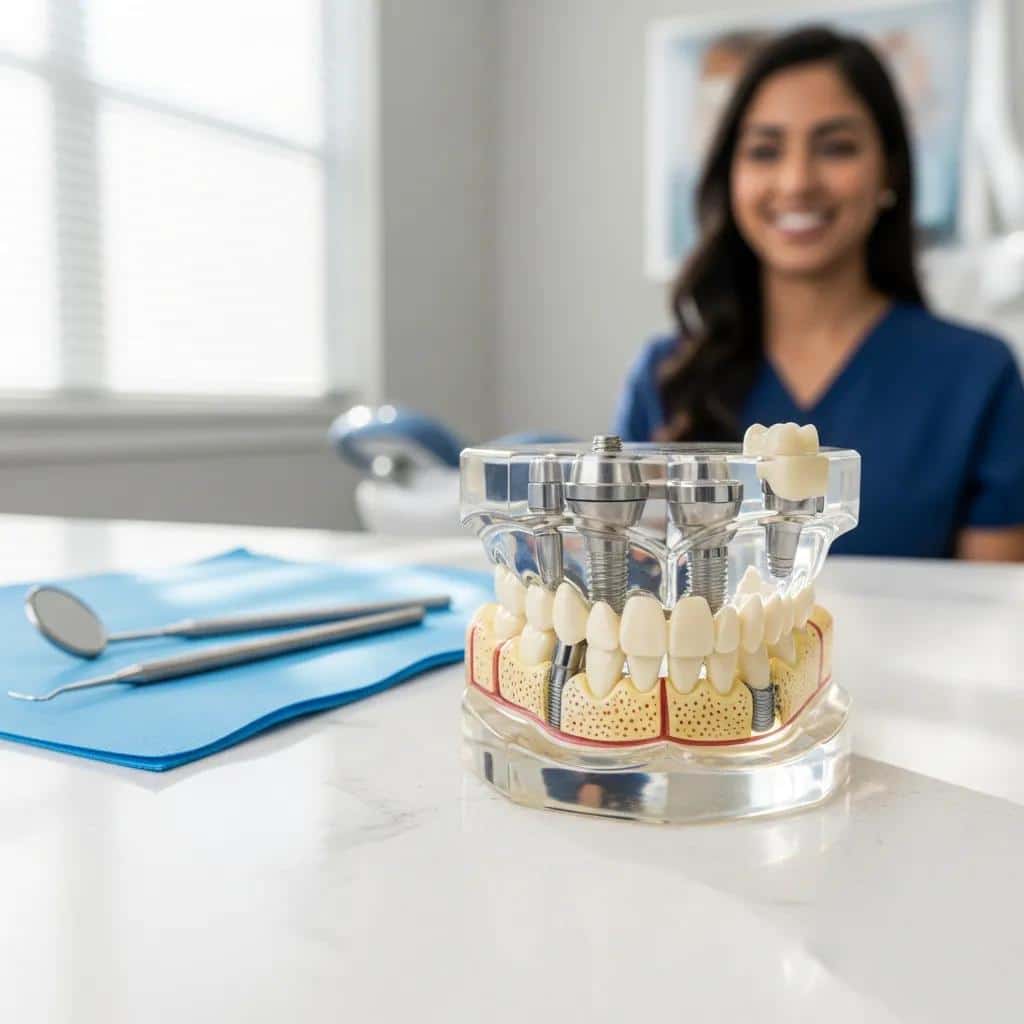
A dental implant consists of three main parts: the implant fixture that sits in bone, the abutment that connects the fixture to the visible tooth, and the crown or prosthetic that restores appearance and function. The implant fixture acts as an artificial root and is typically made from biocompatible materials such as titanium or zirconia that encourage bone attachment, improving long-term stability and reducing the risk of rejection. During the restorative workflow, the fixture is placed surgically, soft tissues are allowed to heal, an abutment is attached after sufficient integration, and a custom crown is cemented or screwed in to complete the restoration. Materials matter for healing because surface characteristics and biocompatibility influence early bone response and long-term integration, so clinicians select fixtures and restorative components to optimize osseointegration and prosthetic fit. This appliance-level understanding leads directly into the practical timeline patients experience during recovery.
What Are the Stages and Timeline of Dental Implant Healing?
Implant healing follows predictable stages: immediate post-op wound closure, early soft-tissue healing, the osseointegration phase, and final prosthetic restoration, with variability based on site and systemic factors. In the first 1–2 weeks patients typically manage swelling, minor bleeding, and soft-diet restrictions while sutures and soft tissue begin to mature; pain is usually controllable with prescribed or over-the-counter medications and cold therapy. From about 2–8 weeks soft tissue continues to heal and margins become stable while clinicians monitor for signs of infection or compromised healing through exams and imaging; in many cases tissue health guides timing for abutment exposure. The osseointegration window generally spans roughly 3–6 months depending on bone quality, grafting needs, and patient health, during which functional loading is gradually introduced according to clinical judgment. Final restoration occurs after confirmation of stable integration, and maintenance visits then focus on hygiene, occlusal checks, and periodic radiographs to preserve longevity.
How Does Dental Implant Healing Compare to Bridges and Dentures?
Dental implant healing is slower biologically than the immediate soft-tissue recovery from bridges or the initial adaptation to dentures, but implants deliver distinct long-term benefits for bone preservation, function, and durability. Whereas bridges rely on prepared adjacent teeth and dentures sit on mucosa, implants integrate with bone and therefore change the jaw’s biology by maintaining stimulation that slows resorption; this difference underpins many long-term outcome distinctions. In the short term, bridges typically produce quicker cosmetic results and faster functional return, but they can create sensitivity or stress on neighboring teeth that require attention. Removable dentures may be delivered quickly and adjusted through relines, yet they often need repeated maintenance as bone remodels and fit changes; conversely implants promote a more stable prosthetic foundation once osseointegration is complete. Below is a concise comparison table to clarify timelines, discomfort, aftercare needs, and long-term tissue impact so patients can weigh the trade-offs clearly.
Days–weeks for soft tissue; restoration in 2–4 weeks
Tooth sensitivity, gingival healing
Protect abutment teeth, routine care
May stress adjacent teeth; no bone stimulation
Removable denture
Immediate fit; adaptation over weeks
Sore spots, mucosal irritation
Relines, adhesives, hygiene
Ongoing bone resorption and fit changes
This table clarifies why implants require more time initially but tend to maintain oral anatomy and function better over years. The next paragraphs explore bridges and dentures in more detail so you can compare patient experiences during each healing window.
What Is the Healing Process and Recovery Time for Dental Bridges?
Fixed dental bridges replace missing teeth by preparing adjacent teeth to support a prosthetic span, and the healing process centers on periodontal and pulpal responses in those abutment teeth. Immediately after tooth preparation patients often experience sensitivity, mild swelling, and temporary cosmetic restorations until final crowns are fitted, with soft-tissue healing generally settling within a few weeks. Unlike implants, bridges do not require osseointegration, so the timeline to final function is usually shorter; however, reduced tooth structure on abutment teeth can increase long-term risks for decay or root canal treatment. Maintenance focuses on cleansing under pontics and monitoring the health of supporting teeth, with periodic checks to ensure margins remain intact and no secondary problems develop. Understanding this trade-off between faster initial recovery and potential future stress on adjacent teeth helps patients decide when a bridge may be appropriate.
How Do Dentures Heal and Adjust Compared to Implants?
Removable dentures involve an early adaptation period when the soft tissues and neuromuscular system learn to accept an appliance that rests on mucosa rather than integrates with bone. Sore spots and frictional ulcers are common during the first few weeks, and routine adjustments such as relining, tissue conditioning, or soft liners help improve fit and comfort while tissues remodel. Because dentures do not provide direct stimulation to the jawbone, progressive resorption of alveolar bone often occurs and necessitates refitting or remaking over the years, which impacts long-term chewing efficiency and facial support. Some patients adapt well and tolerate dentures with minimal issues, while others struggle with stability and dietary limitations; interventions such as implant-supported prostheses can bridge that gap but involve the longer implant healing window. The following subsection compares comfort and stability during these different healing and adaptation phases to highlight practical patient experiences.
What Are the Comfort and Stability Differences During Healing?
Comfort and stability differences are substantial: implants gradually increase stability as bone bonds to the fixture, bridges offer immediate mechanical stability but transfer forces to adjacent teeth, and dentures often start with the least inherent stability. Implants typically produce a rising curve of comfort and function—initial soreness gives way to improved chewing and confidence as osseointegration completes—while bridges provide immediate occlusal function but may cause prolonged sensitivity for supporting teeth. Dentures require ongoing adjustment and patient adaptation; cushion-like liners and progressive reline appointments can mitigate initial discomfort but do not replicate the fixed feel of an implant crown. Practical management strategies for each option include using temporary crowns for implants during healing, protective occlusal guards for bridges if bruxism exists, and routine denture adjustments; knowing these differences prepares patients for realistic recovery expectations.
Is the Healing Time for Dental Implants Worth It? Long-Term Benefits and Value Explained
Yes — for many patients the healing time for dental implants is worth it because implants preserve jawbone, restore near-natural chewing efficiency, and often last decades with proper care. Evidence-based benefits include bone stimulation that slows resorption, restoration of masticatory force close to natural teeth, and esthetic outcomes that maintain facial support; these advantages translate into measurable quality-of-life improvements for patients in active midlife (ages 40–60). Success rates reported in the literature and clinical summaries commonly exceed 90–95% over multi-year follow-up when implants are placed and cared for appropriately, and patient satisfaction for function and appearance is consistently high. The long-term value calculation favors implants when considering reduced replacement cycles, fewer adjustments, and lower cumulative maintenance compared with removable options; patient scenarios in the 40–60 bracket who want durable, stable function often find implants deliver a favorable ROI. Below are three evidence-backed reasons illustrating why the trade-off of longer initial healing is justified for many patients.
Bone Preservation: The fixture stimulates bone and prevents the resorption that accelerates with missing teeth.
Durability and Longevity: With success rates often above 90–95% in clinical series, implants reduce the frequency of future replacements.
Functional Restoration: Chewing efficiency and comfort approach natural teeth, improving diet and confidence.
Get Dental Patients to schedule a free consult
What Are the Long-Term Advantages of Dental Implants Over Other Options?
Long-term advantages of dental implants include durable support for prosthetics, preservation of alveolar bone, improved comfort and chewing efficiency, and reduced need for frequent prosthetic replacements. By acting like a natural tooth root, an implant preserves the vertical dimension of bone, which maintains facial contours and reduces the sunken appearance associated with long-term tooth loss. Functionally, implant-supported crowns and dentures restore bite force far better than conventional dentures, enabling a more varied and nutritious diet and improving overall oral function. Economically, while implants have higher upfront costs, the extended lifespan and lower frequency of replacements and relines often make them a better value over decades, especially for patients seeking stable, long-term outcomes. Recognizing these advantages helps patients prioritize treatment choices based on lifestyle, health, and expected longevity.
What Do Success Rates and Patient Satisfaction Studies Reveal?
Recent clinical summaries and practice audits indicate implant success rates frequently fall in the high 80s to mid-90s percentile range over five to ten years, with many series reporting greater than 90–95% survival under ideal conditions. Patient satisfaction studies consistently report high marks for aesthetics, comfort, and masticatory function among implant recipients, and satisfaction correlates strongly with preoperative education and attentive aftercare. Factors that improve success and satisfaction include healthy bone volume, non-smoking status, good glycemic control in diabetics, and adherence to hygiene and maintenance visits—elements clinicians assess during planning. Interpreting statistics pragmatically, implants are predictable when placed in appropriate candidates and when patients commit to post-op instructions; this reliability explains why many clinicians and patients consider the initial healing investment worthwhile.
How Can You Prepare for a Smooth Dental Implant Healing Journey in Crowley, TX?
Preparing well before surgery reduces complications and shortens the subjective recovery experience, and local logistics in Crowley, TX make planning straightforward for area residents seeking implant care. Pre-operative optimization includes thorough medical and dental histories, smoking cessation if applicable, and control of chronic conditions such as diabetes to support bone healing and reduce infection risk. At the practical level, arranging transport for the day of surgery, stocking soft foods, and planning time off from strenuous activity help patients focus on recovery and adherence to post-op instructions. Sedation dentistry options can reduce intraoperative anxiety and perceived surgical discomfort, which often improves the patient’s early healing window and overall satisfaction. The next subsections describe what to expect during a free consultation and how sedation supports comfort so Crowley patients can step into the process with confidence and clarity.
What Should Patients Expect During the Free Dental Implant Consultation?
A free dental implant consultation typically begins with a comprehensive medical and dental history review, followed by a clinical exam and imaging when indicated to assess bone volume and adjacent structures. During this visit clinicians explain viable tooth-replacement options—dental implants, bridges, or dentures—outline a proposed timeline, and discuss potential need for bone grafting or sinus lift procedures if necessary. The consultation is also an opportunity to review sedation choices, expected healing stages, and financing considerations so patients leave with a clear treatment plan and cost estimate tailored to their situation. Patients should bring a list of medications, prior dental records or x-rays if available, and any questions about recovery or maintenance; this preparation streamlines planning and sets realistic expectations for the healing journey ahead.
Pre-consult checklist for Crowley patients:
Bring current medication list and relevant dental records. Plan light transportation for the day of surgery if sedation is chosen. Prepare a soft-food supply for the initial recovery period.
How Does Sedation Dentistry Improve Comfort During Implant Healing?
Sedation dentistry reduces anxiety and perceived discomfort during implant surgery and can lead to a calmer, more controlled immediate recovery experience by minimizing intraoperative stress responses. Common sedation approaches range from minimal sedation (nitrous oxide) to oral sedatives and deeper IV sedation; each option influences consciousness level, post-op requirements, and recovery protocols. Patients who choose sedation often report lower intraoperative memory of the procedure and reduced early-day anxiety, and this emotional calm can make the early healing phase feel less burdensome and more manageable. Sedation is part of comprehensive patient comfort offerings at many clinics and should be discussed during the consultation so clinicians can match sedation mode to medical history, procedure complexity, and patient preferences. Clear sedation planning also informs post-op logistics such as transportation and companion care.
What Are the Common Pain and Discomfort Experiences During Dental Implant Recovery?
Pain and discomfort after implant surgery are typically moderate and short-lived, peaking in the first 48–72 hours and improving steadily as soft tissues heal and swelling resolves. Most patients manage discomfort with a combination of prescribed or over-the-counter analgesics, cold therapy for the first 48 hours, and careful oral hygiene that avoids disturbing sutures or graft sites. Expect localized swelling, mild bruising, and transient numbness or tingling in some cases; these symptoms usually diminish within days to a few weeks depending on the extent of surgery and whether grafting was performed. Red flags include uncontrolled pain, persistent fever, heavy drainage, or increasing redness—symptoms that warrant prompt evaluation to rule out infection or complications. The following subsections provide practical pain-management steps and diet/lifestyle guidance that support a smoother recovery.
How Can Pain and Swelling Be Managed After Implant Surgery?
Immediate home-care strategies reduce pain and swelling effectively when applied consistently in the first days after surgery, and patients should begin with cold-compress cycles and head elevation to limit edema. Medication regimens—whether OTC anti-inflammatories or prescribed analgesics—should be followed exactly as directed, and patients should avoid aspirin if advised by their clinician because it can increase bleeding risk. Gentle oral rinses, soft-bristled brushes around unaffected teeth, and temporary avoidance of the surgical site during the first 24–48 hours help prevent disruption of sutures or graft materials. Patients should contact their clinician if they experience escalating pain despite medication, fever, or purulent drainage, as these could signal infection requiring intervention. These management steps reduce acute discomfort and support predictable healing toward the osseointegration phase.
Key red-flag checklist:
Fever higher than 100.4°F or chills. Increasing pain after initial improvement. Excessive bleeding or pus-like drainage.
What Diet and Lifestyle Changes Support Faster Healing?
Diet progression after implant placement follows a predictable sequence: liquids and very soft foods for the first 24–72 hours, soft-to-mashed foods for the first one to two weeks, and gradual reintroduction of firmer foods after clinical clearance. Foods rich in protein and vitamin C support tissue repair, while avoidance of crunchy, hard, or sticky items reduces mechanical stress on the surgical site. Lifestyle changes that significantly impact healing include quitting smoking, limiting alcohol intake, and avoiding heavy exertion during the initial healing window; smoking in particular impairs blood flow and bone healing and is strongly discouraged. Maintaining good oral hygiene through gentle cleaning of non-surgical areas and prescribed antimicrobial rinses prevents bacterial overgrowth and supports graft and implant success. These behavior adjustments shorten complications and improve the predictability of osseointegration.
What Role Do Bone Grafts Play in Dental Implant Healing and Success?
Bone grafts are used when existing jawbone volume or quality is insufficient to support an implant, and they serve to rebuild or augment bone so fixtures can achieve stable osseointegration. Common indications include ridge loss after tooth extraction, sinus pneumatization in the upper jaw, or localized defects that compromise implant positioning; grafts change the implant timeline by adding an additional healing phase prior to or concurrent with fixture placement. Graft materials range from socket-preservation particulates to larger block grafts, and the chosen technique determines typical healing windows and follow-up care. Proper graft handling, strict infection prevention, and patient behavior modifications (e.g., smoking cessation) directly influence graft incorporation and subsequent implant success. The table below summarizes graft types, typical healing times, and their impact on the overall implant timeline to help patients set realistic expectations.
Graft Scenario
Graft Type
Typical Healing Time
Impact on Implant Timeline
Key Risks/Care Tips
Socket preservation
Particulate graft
3–4 months
May allow implant placement at 3–4 months
Avoid disturbing site; soft diet
Lateral ridge augmentation
Block graft
4–6+ months
Often staged; implants placed after graft matures
Avoid smoking; monitor for graft exposure
Sinus augmentation
Graft + sinus lift
4–6 months
May delay implant placement until graft integrates
Sinus symptoms warrant prompt review
How Does Bone Grafting Affect the Overall Healing Timeline?
Bone grafting can add weeks to months to the overall treatment plan because the graft must integrate and form a stable host bed before reliably supporting an implant in many cases. Socket-preservation grafts placed at the time of extraction commonly need roughly 3–4 months before sufficient bone quality allows implant placement, whereas large block grafts or more complex ridge augmentations often require 4–6 months or longer for maturation. In some clinical situations simultaneous graft-and-implant placement is possible and shortens total time, but this depends on initial bone stability and clinician assessment; staged approaches are chosen when primary stability cannot be achieved safely. Clinical factors such as patient age, systemic health, and whether the graft uses autogenous versus particulate materials influence healing pace and risk, so individualized planning during the consultation is essential to set accurate timelines.
What Are the Risks and Care Tips for Bone Graft Recovery?
Bone graft recovery requires careful post-op care focused on infection prevention, avoiding mechanical disruption of the graft site, and adherence to medication and hygiene protocols to maximize incorporation. Key do/don’t guidance includes avoiding smoking and vigorous rinsing in the early days, following antimicrobial or antibiotic prescriptions as directed, and attending scheduled follow-up visits for suture removal and radiographic checks. Signs of graft compromise include increasing localized pain, swelling beyond the expected window, graft exposure to the oral cavity, or fever; these warrant prompt evaluation. With proper patient compliance and surgical technique, graft success rates are high, but patient behaviors such as tobacco use or poor glycemic control can materially reduce the likelihood of predictable outcomes.
How Do Dental Implant Costs and Longevity Compare to Other Tooth Replacement Options?
Dental implants have higher initial costs than bridges or dentures, but their longer lifespan and lower replacement frequency often make them more cost-effective over the long term for many patients. Implant cost components include the fixture, abutment, crown, surgical fees, and any necessary adjunctive procedures such as bone grafting or sinus lifts; these elements vary by case complexity and clinical choices. Financing options and payment plans can make implants accessible by spreading costs over time, and a free consultation provides a personalized estimate that factors in grafting, sedation, and prosthetic choices. The table below provides a transparent cost-to-value comparison across options to illustrate typical initial costs, expected lifespan, and maintenance considerations so patients can evaluate ROI in practical terms.
Replacement Option
Average Initial Cost
Typical Lifespan
Maintenance Costs
Value Notes
Single dental implant
Higher up-front
15–25+ years with care
Routine hygiene, occasional crown work
High long-term value for active patients
Fixed bridge
Moderate up-front
7–15 years typical
Replacement or abutment tooth care
Lower initial cost; potential load on neighbors
Removable denture
Lower up-front
5–10 years with adjustments
Relines, remakes, adhesives
Requires ongoing adjustments as bone resorbs
What Is the Cost Breakdown and Financing Options for Dental Implants?
Typical cost lines include the surgical placement of the implant fixture, the abutment connection, the final crown or prosthesis, and any supplemental procedures such as bone grafting or sedation; these components drive variability in total fees. Financing options commonly available through dental practices or third-party lenders let patients distribute payments over months or years, making implants more affordable without compromising clinical choices. Because each case differs, a free consultation is the appropriate setting to generate a transparent, itemized estimate that factors in any grafting, sedation, or additional restorations required; patients benefit from comparing projected lifetime costs across options rather than only upfront prices. Discussing payment plans and what is included in the estimate during the consult reduces sticker-shock and supports informed decision-making.
Common financing pathways:
In-house payment plans allowing staged payments. Third-party monthly payment programs that spread costs. Combining savings with partial payments to reduce interest.
How Does Implant Longevity Impact Overall Value Compared to Bridges and Dentures?
Implant longevity reduces cumulative costs because durable fixtures and well-maintained crowns often obviate the need for frequent replacements or major relines required by bridges and dentures. For a patient in their 40s–60s, an implant placed once with proper care can avoid multiple cycles of denture remakes or bridge replacements over decades, shifting the economic balance in favor of implants despite the larger initial expense. Maintenance for implants typically centers on routine hygiene and occasional prosthetic servicing rather than the periodic structural remakes common with removable prostheses, which lowers long-term inconvenience and cumulative expense. Beyond monetary value, implants provide qualitative improvements—eating comfort, confidence, and reduced dietary limitations—that factor into perceived worth and quality-of-life assessments.
Where Can You Schedule a Free Dental Implant Consultation in Crowley, TX?
Patients in Crowley, TX can schedule a free dental implant consultation at Affordable Dentist Near Me – Crowley, located at 200 E Main St, Crowley, TX 76036, where comprehensive implant evaluations are offered alongside other restorative and sedation services. The consultation includes a clinical exam, diagnostic imaging as indicated, and a detailed discussion of treatment options, expected timelines, and cost estimates so patients leave with a clear, personalized plan. The clinic emphasizes affordability, comprehensive in-house care from consultation through post-implant maintenance, patient comfort options including sedation dentistry, and extended hours to fit busy schedules, making the consult a low-barrier first step. For readers ready to move forward, the booking process is straightforward and designed to answer questions and tailor treatment to individual health profiles and goals.
How to Book Your Free Consultation at Affordable Dentist Near Me – Crowley
Booking a free consultation typically involves contacting the clinic to request the appointment and providing basic health information so the team can prepare appropriate imaging and time allocations for the visit. When scheduling, mention that you are interested in an implant consultation so the clinic reserves adequate time to review bone needs, potential grafting, sedation options, and financing considerations; this ensures the visit is efficient and productive. Bring any recent dental records or x-rays if available, a list of medications, and a summary of medical history to accelerate planning and reduce the need for additional appointments. The free consult provides a no-obligation cost estimate and treatment timeline that helps patients decide on next steps.
What to bring and how to prepare:
Current medication and medical history summary. Any prior dental records or radiographs if available. Questions about sedation, financing, and expected healing stages.
What Do Local Patients Say About Their Dental Implant Healing Experience?
Local patient sentiment in Crowley reflects high satisfaction with comprehensive care when clinicians provide clear timelines, attentive follow-up, and comfort-focused options such as sedation dentistry during surgical visits. Aggregated review counts indicate positive experiences reported by many patients, and prospective clients are encouraged to ask the clinic for anonymized case examples or to review practice ratings during the consultation to set realistic expectations. While individual healing experiences vary with age, medical history, and whether grafting was required, consistent themes among satisfied patients include clear pre-op communication, attentive early follow-up, and effective pain management strategies. Readers should discuss typical local outcomes and recovery timelines during the free consult to understand how the clinic’s protocols map to personal needs and to prepare for a successful healing journey.
What are the costs for wisdom teeth removal in Fort Worth?
The cost for wisdom teeth removal in Fort Worth can vary depending on factors like the complexity of the extraction, anesthesia used, and any additional procedures needed. On average, the cost ranges from $200 to $600 per tooth without insurance. It's recommended to consult with a dentist for an accurate estimate.
Can I get a free dental consultation in Fort Worth?
Yes, you can get a free dental consultation in Fort Worth at our dental practice. We offer free exams, X-rays, and consultations for new patients. Simply schedule an appointment at our Fort Worth location to take advantage of this offer and discuss your dental needs with our experienced team.
Do Fort Worth dentists offer financing options for treatment?
Yes, Fort Worth dentists offer financing options for treatment. Dental financing is available for services such as dental implants, braces, crowns, and more. Patients can inquire about payment plans and insurance coverage when scheduling appointments for comprehensive dental care.
Can I get a dentist near me to fix my broken tooth?
Yes, you can find a dentist near you to fix your broken tooth. Our dental practice has six locations, including Fort Worth, Houston, Dallas, Waco, Grand Prairie, and Crowley, offering services such as dental implants, restorative crowns, extractions, and more. Contact us for an appointment.
Who offers the cheapest dental implants in Fort Worth?
Our dental practice in Fort Worth offers affordable dental implants with various financing options available. Contact us for a consultation to discuss the cost and payment plans for dental implants tailored to your budget and needs.
Can I get a free consultation for cosmetic dentistry near me?
Yes, you can receive a free consultation for cosmetic dentistry near you at our dental practice. We offer complimentary consultations for cosmetic dental services, including teeth whitening, dental veneers, and more. Contact us to schedule your free consultation today.
Can I get a second opinion for cosmetic dentistry near me?
Yes, you can always seek a second opinion for cosmetic dentistry near you. It's common practice and can provide valuable insights. Simply schedule a consultation with another cosmetic dentist to discuss your options and ensure you're making an informed decision about your dental care.
How much does a teeth cleaning cost near me?
The cost of a teeth cleaning near you can vary depending on the location and specific dental practice. On average, a routine teeth cleaning can range from $75 to $200 without insurance. However, many dental offices offer discounts or packages that may lower the cost. It's best to contact your local dental office for accurate pricing information.
What is the cost of affordable cosmetic dentistry near my location?
For information on the cost of affordable cosmetic dentistry near your location, please contact our office directly at (817) 984-5419. We offer a range of cosmetic dental services, including teeth whitening, dental veneers, and Invisalign, and our team will be happy to provide you with detailed pricing information based on your specific needs.
Where can I find a low-cost dentist in Fort Worth?
You can find a low-cost dentist in Fort Worth at our dental practice, where we accept Medi-Cal, Medicare, and other health policies. We offer free exams, x-rays, and consultations, along with affordable dental services such as dental implants, braces, and more. Contact us for details.
How much does a dental cleaning cost in Fort Worth?
The cost of a dental cleaning in Fort Worth can vary depending on the dental office and any additional services needed. On average, a routine dental cleaning in Fort Worth can range from $75 to $200. It's recommended to contact the specific dental office for accurate pricing information.
What is the average cost of a dentist visit in Fort Worth?
The average cost of a dentist visit in Fort Worth can vary depending on the specific services needed, but generally, a routine exam and cleaning can range from $100 to $300 without insurance. Additional procedures like fillings, extractions, or x-rays may incur extra charges. It's recommended to check with the dental office for precise pricing.
Can I find an affordable dentist near me in Fort Worth?
Yes, you can find an affordable dentist near you in Fort Worth. Our dental practice accepts Medi-Cal, Medicare, and other health policies. We offer free exams, x-rays, and consultations. Services include dental implants, braces, and more. Contact us at (817) 984-5419 to schedule an appointment.
What are the prices for dental crowns in Fort Worth?
For information on the prices for dental crowns in Fort Worth, please contact our office directly at (817) 984-5419. Our team will be happy to provide you with detailed pricing information and answer any questions you may have regarding dental crown procedures in Fort Worth.
What are the cheapest cosmetic dentistry options available?
The cheapest cosmetic dentistry options available typically include teeth whitening, dental bonding, and composite fillings. These procedures can enhance the appearance of your smile without breaking the bank. Additionally, some dental offices offer discounts or financing options for cosmetic treatments.
Are there any dentists near me who speak my language?
We have a diverse team of dentists who speak multiple languages at our locations in Fort Worth, Houston, Dallas, Waco, Grand Prairie, and Crowley. Feel free to inquire about language options when scheduling your appointment for personalized care.
Who is the best affordable dentist in Fort Worth?
Our dental practice in Fort Worth offers affordable dental care, accepting Medi-Cal, Medicare, and other health policies. Services include dental implants, restorative crowns, orthodontics, and more. Patients praise our gentle care and professionalism.
Are there any free dental clinics in Fort Worth?
Yes, we offer a free exam, x-ray, and consultation at our dental clinic in Fort Worth. Additionally, we accept Medi-Cal, Medicare, and other health policies to provide affordable dental care to our patients.
Can I get a dental crown for under $500 in Fort Worth?
Dental crowns in Fort Worth typically cost between $800 to $1,500. However, some dental offices may offer discounts or payment plans that could bring the cost closer to $500. It's best to contact local dental practices directly to inquire about specific pricing and any available options for affordable dental crowns.
Can I get a payment plan for cosmetic dentistry near me?
Yes, payment plans for cosmetic dentistry are available at our dental practice locations near you. We offer financing options for various cosmetic dental procedures, including dental implants, teeth whitening, dental veneers, and more. Contact us to discuss payment plan options tailored to your cosmetic dentistry needs.
Are there any low-cost cosmetic dentistry alternatives?
Yes, our dental practice offers low-cost cosmetic dentistry alternatives, including dental crowns, teeth whitening, and dental veneers. We provide affordable options to enhance your smile without breaking the bank. Contact us for more information on cost-effective cosmetic dental treatments.
Can I get a same-day appointment with a dentist near me?
Yes, you can often get a same-day appointment with a dentist near you by calling our office. We strive to accommodate urgent dental needs promptly. Contact us at (817) 984-5419 to inquire about availability for a same-day appointment.
Do dentists near me have good reviews?
Yes, dentists near you have excellent reviews. Patients praise the staff's professionalism, gentle care, and welcoming environment. Services include dental implants, braces, and more. Locations in Fort Worth, Dallas, Waco, Grand Prairie, Crowley, and Houston offer comprehensive dental care.
What are the payment options for dentist services in Fort Worth?
We accept Medi-Cal, Medicare, and other health policies at our dental practice in Fort Worth. Additionally, we offer a Dental Discount Plan and provide free exams, x-rays, and consultations. Dental implants are available with $0 money down options. Contact us for more details on insurance and financing options.
Are there any affordable dental clinics near me?
Yes, we offer affordable dental care at our multiple locations in Fort Worth, Houston, Dallas, Waco, Grand Prairie, and Crowley. We accept Medi-Cal, Medicare, and other health policies. Contact us for a free exam, x-ray, and consultation.
Can I get a quote for cosmetic dentistry near me?
For a quote on cosmetic dentistry near you, please contact our office directly to discuss your specific needs and receive a personalized estimate. Our team is happy to provide information on cosmetic services, pricing, and financing options available to you. Contact us today for more details.
Do dentists near me accept my insurance?
Our dental practice accepts various insurances, including Medi-Cal, Medicare, and other health policies. We have locations in Fort Worth, Houston, Dallas, Waco, Grand Prairie, and Crowley. Contact us at (817) 984-5419 to inquire about your specific insurance coverage.
Are there any dentists near me who specialize in cosmetic dentistry?
Yes, we have dentists specializing in cosmetic dentistry at our locations in Fort Worth, Dallas, Waco, Grand Prairie, Crowley, and other areas. Our cosmetic dentistry services include dental veneers, teeth whitening, dental implants, and more. Contact us to schedule a consultation for cosmetic dental treatments near you.
How to find affordable cosmetic dentists in my area?
To find affordable cosmetic dentists in your area, consider the following steps:
Check if the dentist accepts your insurance or offers payment plans.
Look for special promotions or discounts on cosmetic procedures.
Read reviews and ask for recommendations from friends or family.
Compare prices and services offered by different cosmetic dentists in your area.
What are the average prices for dental fillings in Fort Worth?
The average prices for dental fillings in Fort Worth typically range from $100 to $300 per filling, depending on the type of filling material used and the complexity of the procedure. It's recommended to consult with a dentist for an accurate estimate based on individual needs.
What is the cost of teeth bonding near my location?
The cost of teeth bonding near your location can vary depending on the dental practice and specific needs. It's best to contact local dentists for accurate pricing information. Dental insurance or discount plans may help reduce costs. Consider scheduling a consultation for an exact quote.
What is the average cost of teeth whitening near me?
The average cost of teeth whitening near you can vary depending on the location and the type of treatment. On average, professional teeth whitening can range from $300 to $1,000. It's best to schedule a consultation with a dentist near you to get an accurate estimate based on your specific needs.
Do dentists near me offer orthodontic treatment?
Yes, dentists near you offer orthodontic treatment, including traditional braces and clear aligners. Services also include general dentistry, dental implants, restorative crowns, extractions, and more. Contact us for a free consultation to discuss your orthodontic needs.
What are the prices of veneers in my local area?
For information on the prices of veneers in your local area, please contact our dental office directly. Veneer costs can vary based on location, materials used, and individual treatment needs. Our team will be happy to provide you with detailed pricing information and answer any questions you may have regarding veneers.
How much does a dentist near me charge for a cleaning?
The cost of a dental cleaning near you can vary based on location and specific services needed. On average, a routine cleaning can range from $80 to $200 without insurance. However, it's best to contact the dental office directly for an accurate quote based on your individual needs.
Are there any discounts for cosmetic dentistry near me?
We offer a Dental Discount Plan that includes discounts for cosmetic dentistry services at our locations in Fort Worth, Dallas, Waco, Grand Prairie, Crowley, and Houston. Contact us for more information on the discounts available for cosmetic dental procedures near you.
What services do dentists near me offer?
Dentists near you offer a range of services, including general dentistry, dental implants, restorative crowns, periodontics, endodontics, orthodontics, extractions, and more. These services cater to various dental needs, ensuring comprehensive care for patients of all ages.
Can I get a dental exam without insurance in Fort Worth?
Yes, you can receive a dental exam without insurance in Fort Worth at our dental practice. We offer a free exam, x-ray, and consultation for new patients, providing access to quality dental care regardless of insurance coverage. Contact us to schedule your appointment.
Are there any dentists in Fort Worth that offer discounts?
Yes, there are dentists in Fort Worth that offer discounts. Our dental practice in Fort Worth accepts dental discount plans and provides various offers, including free exams, x-rays, and consultations. Contact us for more information on available discounts and promotions.
Are there any cheap cosmetic dentistry options near me?
Yes, we offer affordable cosmetic dentistry options at our locations in Fort Worth, Dallas, Waco, Grand Prairie, Crowley, and Houston. Our services include teeth whitening, dental veneers, and more. Contact us for detailed pricing and to schedule a consultation.
Are there any Fort Worth dentists that offer sliding scale fees?
Yes, our dental practice in Fort Worth accepts sliding scale fees for patients with financial constraints. We strive to make quality dental care accessible to all individuals, including those who may need assistance with payment options. Contact us for more information on our sliding scale fee structure.
What are the benefits of affordable cosmetic dentistry?
Affordable cosmetic dentistry offers benefits such as improved self-confidence, enhanced appearance, and the ability to correct dental imperfections without breaking the bank. It allows individuals to achieve a brighter smile and address aesthetic concerns at a budget-friendly cost, leading to overall satisfaction with their dental appearance.
How do I find the best affordable cosmetic dentist near me?
To find the best affordable cosmetic dentist near you, start by researching local dental offices that offer cosmetic services. Check reviews, inquire about pricing and payment options, and consider any current offers or discounts. Additionally, verify if the dentist accepts your insurance or offers financing plans for cosmetic procedures. Schedule a consultation to discuss your needs and budget with the dentist before making a decision.
Can I book an appointment with a dentist near me online?
Yes, you can book an appointment with a dentist near you online. Simply visit our website and use our online appointment scheduling tool to choose a convenient time slot at one of our six locations in Fort Worth, Houston, Dallas, Waco, Grand Prairie, or Crowley.
How affordable is teeth whitening in Fort Worth?
Teeth whitening in Fort Worth is affordable, with various financing options available. Our dental practice offers competitive pricing and promotions for teeth whitening services. Contact us for specific pricing details and current offers on teeth whitening in Fort Worth.
What Fort Worth clinics offer affordable orthodontics?
In Fort Worth, our dental clinics offer affordable orthodontic services, including traditional braces and clear aligners. We accept various insurance plans, including Medicaid and Medicare, to make orthodontic treatment accessible to all patients. Contact us for a free consultation to discuss your orthodontic needs and financing options.
Who does low-cost dental bonding in Fort Worth?
Low-cost dental bonding services in Fort Worth are provided by our dental practice. We offer affordable options for dental bonding procedures to help improve the appearance of teeth at a budget-friendly price point. Contact us for more information on our low-cost dental bonding services in Fort Worth.
Which dentist offers economical veneer treatments locally?
For affordable veneer treatments locally, consider our dental practice with locations in Fort Worth, Dallas, Waco, Grand Prairie, Crowley, and Houston. We offer economical veneer treatments along with a range of other dental services. Contact us for more information and to schedule a consultation.
Are same-day cosmetic dental services available nearby?
Yes, same-day cosmetic dental services are available at our dental practice locations in Fort Worth, Dallas, Waco, Grand Prairie, Crowley, and Houston. Contact us for more information and to schedule an appointment for immediate cosmetic dental services.
How much are Fort Worth pediatric dental visits?
Fort Worth pediatric dental visits typically range from $50 to $200 for a routine check-up and cleaning. Costs may vary based on additional services needed. It's recommended to contact the dental office directly for specific pricing information and to inquire about insurance coverage or payment plans.
Is emergency dental care available at reduced costs?
Emergency dental care is available at reduced costs at our dental practice. We accept various insurances, including Medicaid and Medicare, and offer a dental discount plan. Contact us for more information on affordable emergency dental services.
Do any local dentists offer inexpensive teeth cleanings?
Yes, local dentists may offer affordable teeth cleanings. It's recommended to inquire about pricing and any available discounts or payment plans. Consider contacting dental offices in your area to compare costs and find the best option for inexpensive teeth cleanings.
Which clinics provide discounted wisdom tooth extractions?
Discounted wisdom tooth extractions are available at our clinics in Fort Worth, Dallas, Waco, Grand Prairie, Crowley, and Houston. Contact us for more information on our affordable dental services.
Can I find budget-friendly dentures in Fort Worth?
Yes, budget-friendly dentures are available in Fort Worth at our dental practice. We accept various insurance plans, including Medicaid and Medicare, to help make dental care affordable for all patients. Additionally, we offer dental discount plans and financing options to assist with the cost of dentures.
Who provides cost-effective root canals in Fort Worth?
Our dental practice in Fort Worth offers cost-effective root canals as part of our comprehensive dental services. We accept various insurance plans, including Medicaid and Medicare, to make quality dental care accessible to all. Contact us for affordable root canal treatment in Fort Worth.
Are economical dental implants offered in my area?
Yes, we offer economical dental implants in your area. Our dental practice provides dental implants with $0 money down options. We accept various insurance plans, including Medi-Cal and Medicare, making quality dental care accessible and affordable for all. Contact us for more information on our affordable dental implant options.
Which Fort Worth dentists provide sliding fee scales?
Fort Worth dentists that provide sliding fee scales include those at our dental practice. We accept Medi-Cal, Medicare, and other health policies, ensuring affordable dental care for all. Contact us for more information on our sliding fee scale options.
Where to get affordable cosmetic braces locally?
For affordable cosmetic braces locally, visit our dental practice in Fort Worth, Dallas, Waco, Grand Prairie, Crowley, or Houston. We offer clear aligners and traditional braces as part of our orthodontic services. Contact us for a consultation and learn about our financing options.
cheap dentist arlington tx, affordable dentist arlington tx, affordable dentist on meadowbrook, affordable cosmetic dentistry near me, dentist near me, cheap dentist near me, dentist, affordable dentist, affordable dentist near me, affordable dental care
Providing Affordable Dental Care for Everyone
At our dental practice, we believe that quality dental care should be accessible to everyone, regardless of their financial situation. That's why we offer a range of affordable services, including free exams, consultations, and x-rays. Whether you need a simple cleaning or complex restorative work, we have options that fit your budget and insurance coverage.
Our team of skilled dentists and friendly staff are dedicated to providing exceptional care in a comfortable and welcoming environment. We understand that visiting the dentist can sometimes be intimidating, so we strive to make every patient feel at ease and well taken care of. With locations in Fort Worth, Houston, Dallas, Waco, Grand Prairie, and Crowley, we are here to serve as your dental home for all your oral health needs.